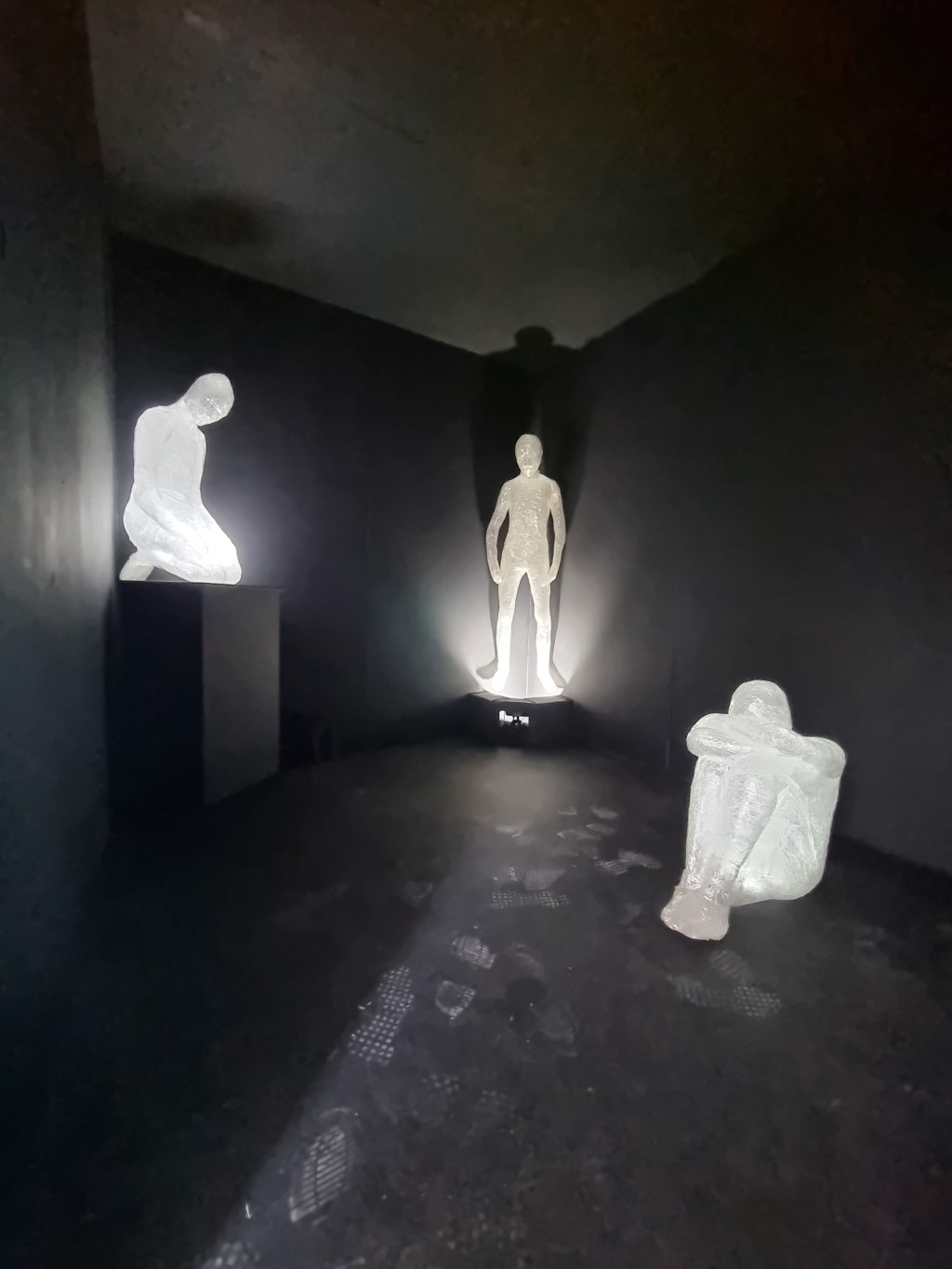
Inspiration for this work is drawn from my experiences. This project began to evolve last year while working on my dissertation and the “Refining Studio Practice” module.
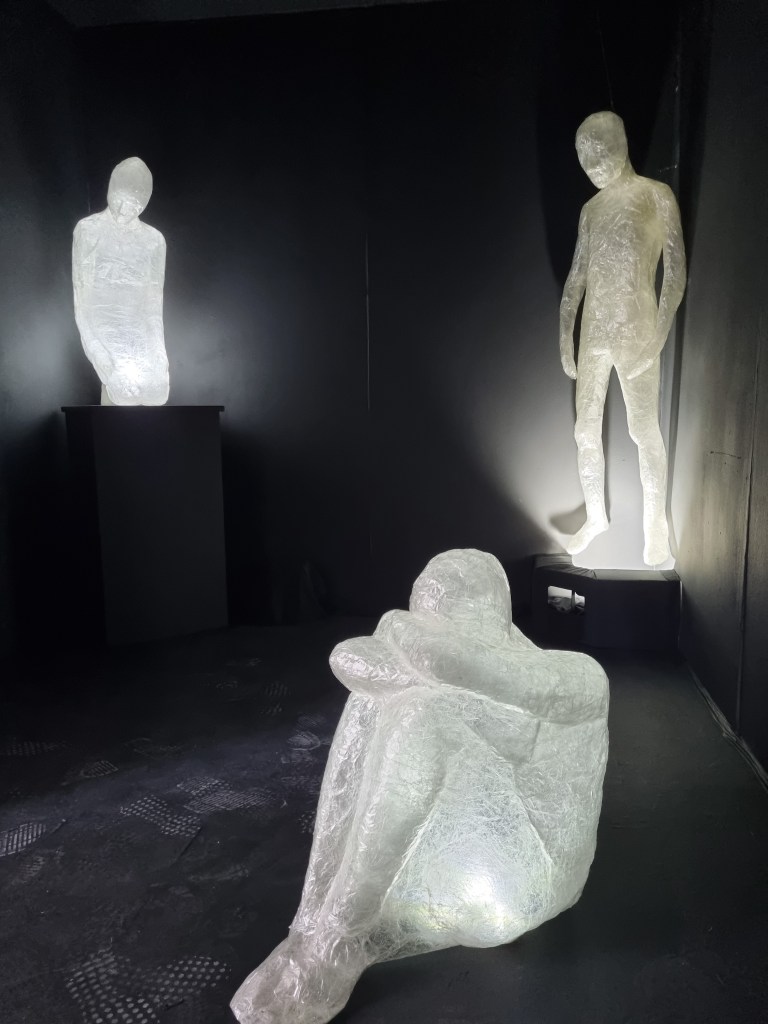
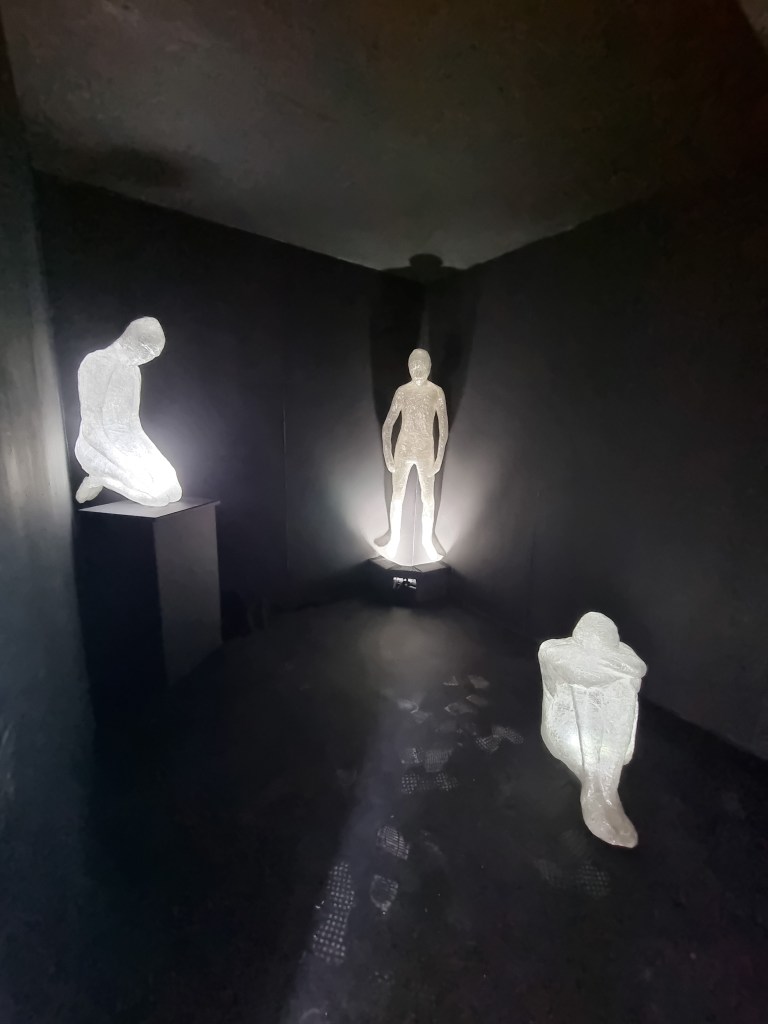
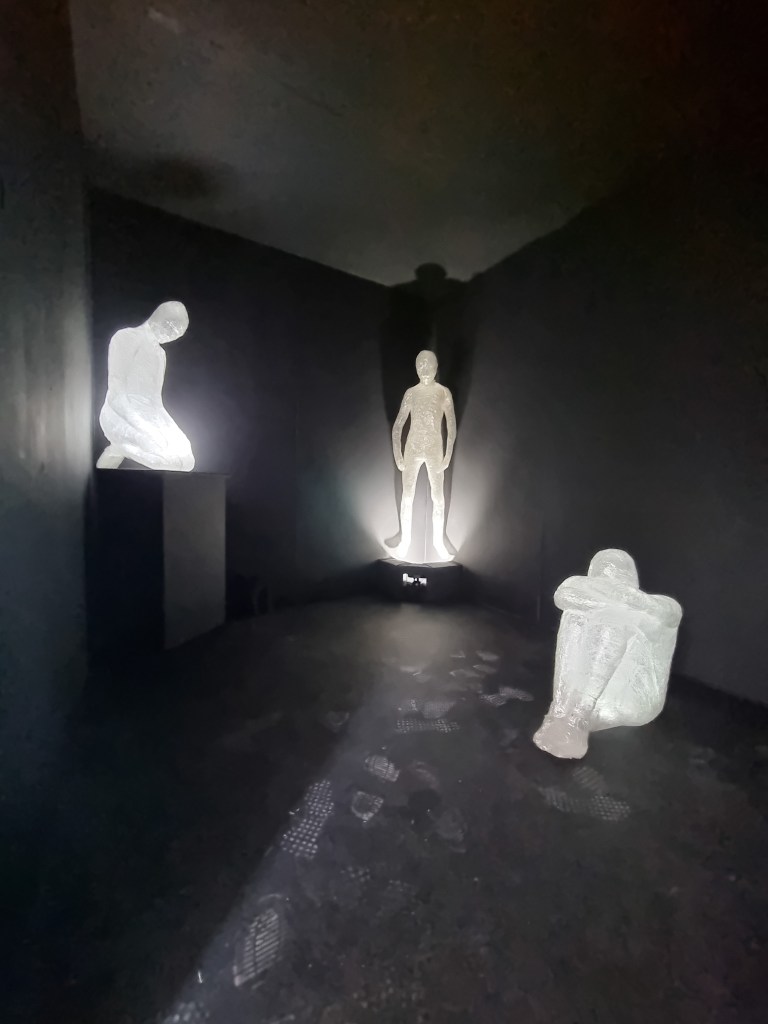
The idea in this module is to create human-size body sculptures, to express the purity of the human soul, and connect the core of being through an installation. I want to include a more contemporary approach in this project to communicate through the statues’ body language, involving sound and visual interpretation of light to represent the source of being.
I will support this project by researching contemporary artists such as Jaume Plensa, Antony Gormley, Moto Waganari, Edoardo Tresoldi, Marina Abramovic, Jackson Pollock, Ivan Navarro and Mark Rhotko. In addition, I want to explore the element of light and sound and how this research could reinforce and give volume to my work.
Personal Experiences’ Connection
A human could transport to the spiritual world by creating regular breathing patterns. Once these breathing patterns helped me leave my body and consciously travel through the air. I was eleven or twelve when I concentrated so intensively on the breathing pattern. The intensity of the breathing pattern led me to awareness of my breath that I could perceive loudly. The sound frequency was comparable to a similar sound as we would have ears underwater. It sounded noticeable and very regular, in a ridged pattern. Hearing loud breathing helped me keep the pattern in regular order. There was an element of physical sensation, which I interpreted as vibration. This memory of the being transmission to the different realms brought the term vibration to the surface. The vibration is what we are, and we can heal ourselves by awakening the vibration to a higher level. We can heal mentally and physically through these vibrating frequencies if we pay attention and meditate regularly. We can keep the vibration high and active through meditation, which I want to include in my work. The meditative state/poses should simulate the physical aspect, the body. The sound should represent the mystical and spiritual elements of the human being, and light should be associated with the source of the human soul.
My experience with the supernatural world was so vivid that the search for the unknown never left me, albeit unconsciously.
The aim is to have the viewer experience sensations and become aware of the inner being to get to the core of the human being. Then, through a breathing simulation of regular rhythm, the connection separates the inner being from the outside world. In this project, I want the viewer to discover the truth about the incredible human ability, and meditation can make it possible with the help of intention and attention.
These memories of astral experiences led me to seek and search for spirituality. Although my grandparents were Christians, my upbringing was strictly atheistic. As a result, my grandparents weren’t allowed to speak to me about God.
In addition, the experienced restriction of faith was also strongly supported by the Communist Government where I grew up. Nevertheless, I found the way to my beliefs, even if manipulated or led differently. The connection to God (we can call the phenomena God) or the mysterious energy of human beings perhaps led me to this conclusion through the experience I had as a child.
Planning and refining the concept
The sculptures are going to be in full human size. The model will be wrapped in clingfilm first. I must cover the limbs separately to emphasise the body’s shape. I will use sellotape as the primary material for the sculpture installation. I made a sculpture from sellotape as a part of a different experiment and received a good critique for the concept, for which I am immensely thankful. While wrapping the model with sellotape, I have to make sure the model has enough air to breathe and is comfortable. The poses could be hard to hold for a long time; therefore, I must work quickly and precisely to avoid remaking.
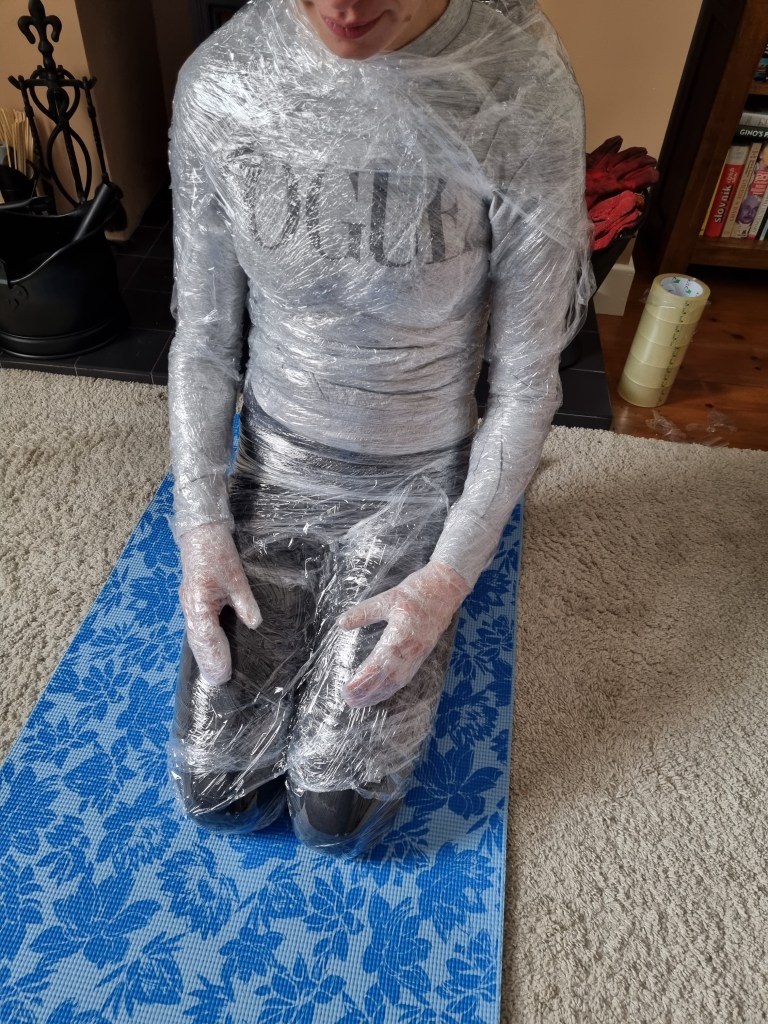
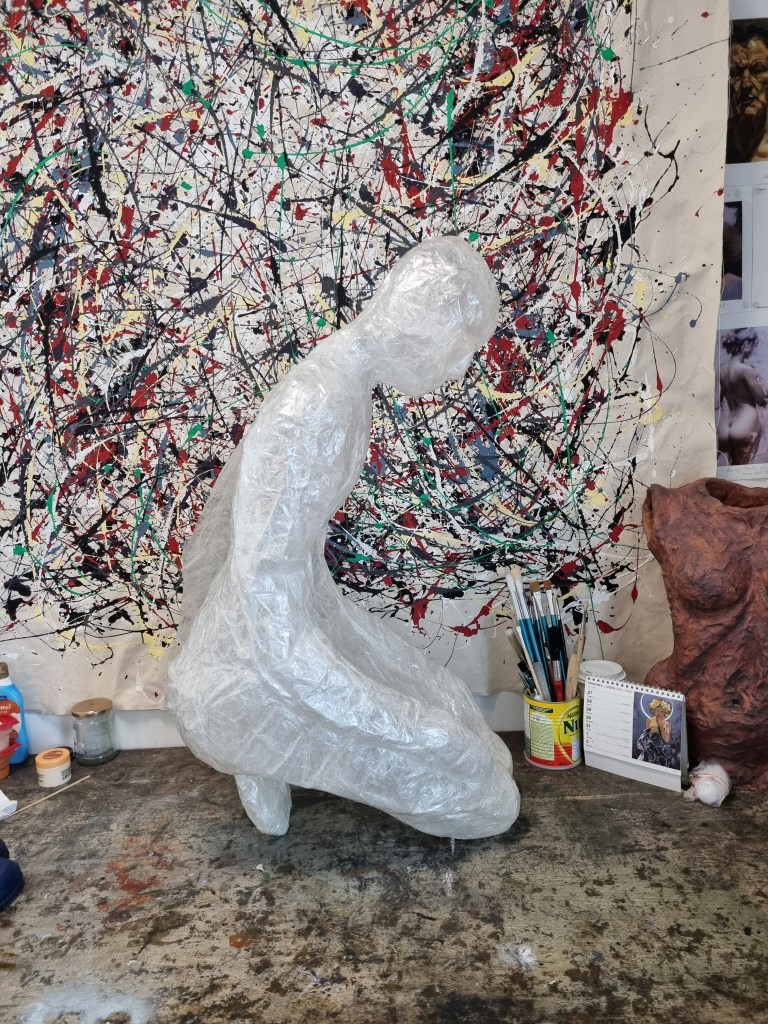
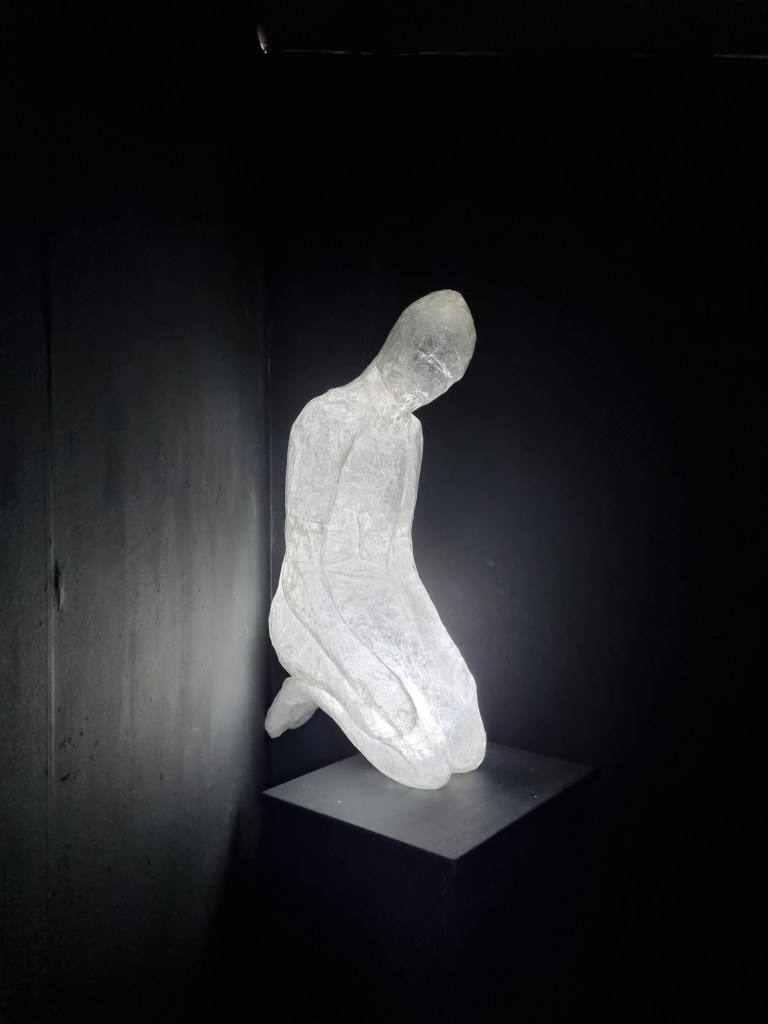
First pose – Kneeling pose: with head tilled a bit down, arms left open, palms facing down placed on the legs creating a meditative or Zen-like position.
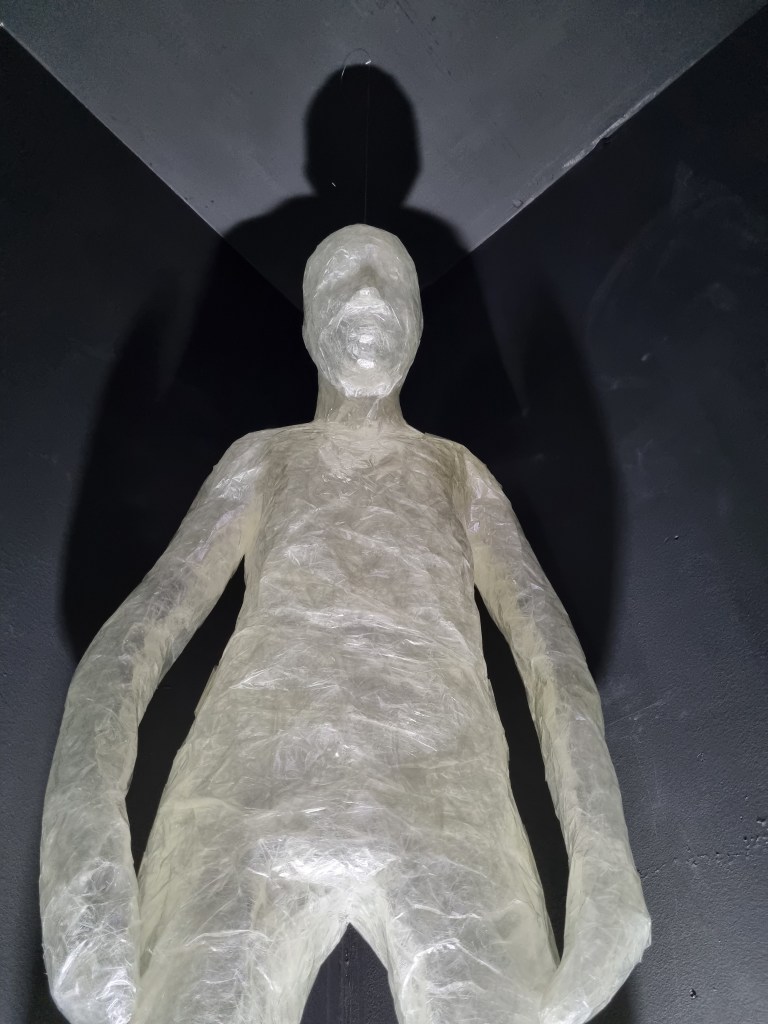
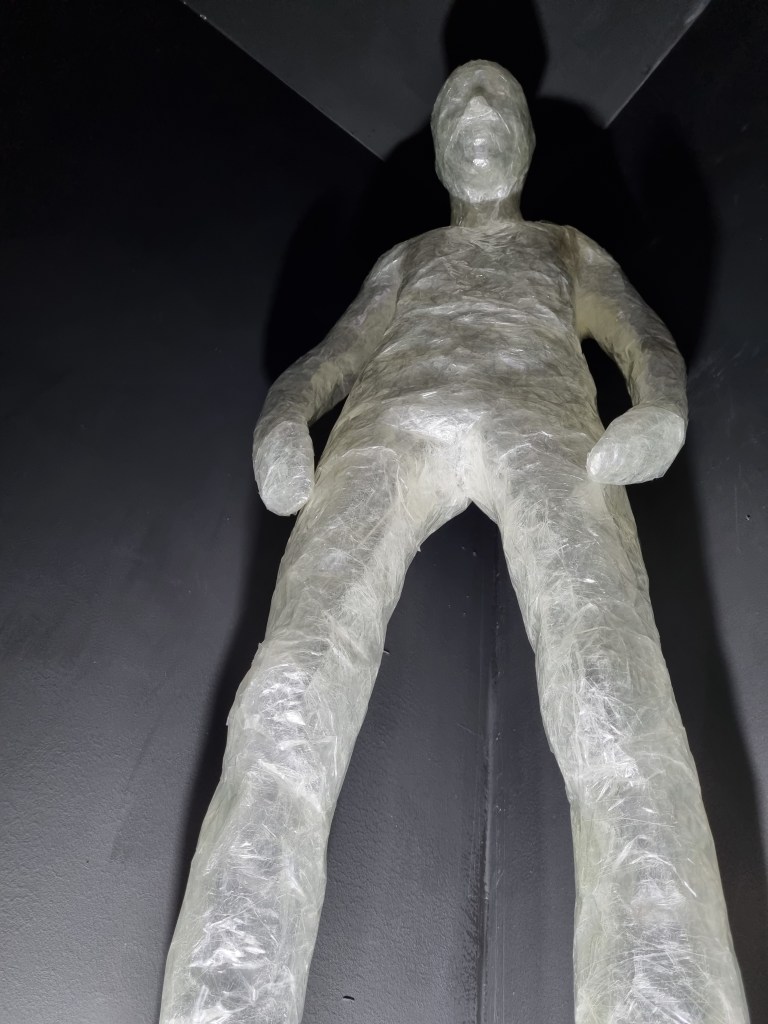
Second pose- Standing pose: with head tilled back as it looked up, arms relaxed but stretched out a bit, palms facing up. The chest is slightly pushed up as the heart wants to escape from the rib cage.
I also wanted to make a pose in a laying position: legs bent and facing to the side, sloped arms slightly lifting the upper body as it would struggle with gravity. But, again, I must modify the head position while practising the poses to understand better and emphasise the body language. I have yet to learn about the last posture, but I must consider body language more thoroughly. This pose should represent the ego and the strong attachment to human needs and emphasise human conditions.
The public, as a part of the project.
I am drawing inspiration from artist Jaume Plensa. The artist describes concepts as a message in a bottle. The people walking inside or around the installation or artwork represent the message and a part of the installation. Because every individual is the real message, it’s the most crucial concept of the installation.
Apart from embodying the hidden contrasts in human nature, Plensa also includes the people visiting the space of installations. The performance becomes part of the displayed objects with contemporary human involvement. Plensa involves the public in his installations to make the piece complete in a particular moment. That aspect of the moment takes me to ‘Aura’ Walter Benjamin’s philosophical theory.
‘Even the most perfect reproduction of a work of art is lacking in one element: Its presence in time and space, its unique existence at the place where it happens to be’.
Walter Benjamin
With the philosophical approach and the effect of poetry, Plensa portrays the concept of contemporary physical human involvement also an expression of a spiritual being.
As Plensa created Zen-like feeling in his sculptures, I want to simulate a standstill feeling at that moment of viewing experienced by the public. Therefore, using sound instead of words or poetry would be more suitable to avoid the words affecting or influencing the viewers. However, poetry has a sound too. The sound in my installation represents the human being by the unnoticeable element but vital for life, breathing. The words could affect the viewers’ perception of the object/s and performance. I want the viewer to have their own experience without verbal interpretation or interference from the outside world. The marriage of the physical and internal human beings is incorporated in Plensa’s work with such a variety. I perceive the modern Plensa’s work as a celebration of the human being, good and evil, beauty and ugliness executed through contrasting mediums. However, Plensa’s artwork also reflects his inner being by incorporating the love for poetry that projects the celebration of human beings and life itself.
The aim is to connect the sculpture/s with the viewers’ inner beings through the unnoticed and powerful mysterious energy. The breath is infinite, as is the heartbeat (until the time for rest comes). However, it is possible to slow or speed up breathing and, therefore, slow or speed up the heartbeat, of course, with limitations. The heart is physical. Unlike the breath, we can feel the power of the air flowing while breathing in and out. The breath represents the window to the other-dimensional world we cannot yet access quickly or easily.
The Sound & Vibration
“If you want to know the secrets of the Universe, think in terms of energy, frequency and vibration.“
Nikola Tesla
Ancient civilisations worldwide have known the power of sound, frequency, and vibration for thousands of years. In the essence of all religions and spiritual teachings, we can find how the ancients used the power of words. This power has been utilised in prayers for Christians and Muslims, mantras for Hindus and Buddhists, and chants for the Shamanic traditions. It shows us how words and vibrations have an immense power, which the ancients often utilise and use for many purposes.
In the article “The Secret Power of Sound, Vibrations, and Frequencies”, I found an examination of the ancient practices and the scientific findings on the power of vibrations. For example, scientists are currently using vibrations and frequencies to alter and reprogram the DNA of living beings and how the Tibetans used sound to levitate and transport heavy stones. So levitating and transporting heavy objects by vibration are fascinating and powerful elements of the magical energy of sound and vibration that I am learning about and considering the connection with this project.
Vibration
In the article “Human Vibration Frequency Explained,” Jean-Paul Blommaert explains the vibration frequency.
The rational, analytical mind limits a very logical perception. Highly Sensitive People or Empaths would agree that you can’t see or touch this. They will, however, confirm that this is something you can feel! Even some high sensitives have such a degree in extrasensory perception (or physic abilities) that they can see the colours of the human aura field. Reiki Healers are “touching” the energy field of people regularly (without touching the physical body), which can be felt by the client.
As Nikola Tesla said in his quote above, it is essential to remember that our thoughts, feelings and emotions also send out a specific kind of vibration. These can stay in the energy field and send a powerful vibration into the Universe. Everything in this Universe exists out of energy, a vibrational frequency. It’s the study of quantum physics. The energy we can’t perceive with our five basic senses. Do we have a 6th sense? Is the 6th sense how humans modify and project their perception through energy into the artwork? More information about Human Vibration Frequency is Here.
Energy
Plensa’s sculptures prompt the public to breathe, meditate, and perhaps, take the time and listen to our inner being with closed eyes. I intend to create sculpture/s with a Zen-like impression that the statue/s would make the viewers zoom out of this world and enable them to visit the inner world through energy.
The public involvement will be their presence and the time they stop and listen to the breathing and heartbeat soundtrack (I am still determining that). The sound will be in a regular pattern so the audience can regulate their breath and heart rhythm to synchronise with the soundtrack. I don’t know whose breath and heartbeat I will use at this moment. However, the sound will be selected as the best part recorded in the loop to create regular stable audio. The recording needs to resemble the underwater-like sound. I am still determining how this will be executed, but I will discuss the soundtrack and equipment with my tutor Paul Nataraj. The public’s participation will also be their involvement performed unconsciously with the possibility of written feedback on the experience of individuals.
Meditative State
The fundamental key is the meditative state I want to capture in my work. I believe the out-of-body phenomenon was triggered by the meditative state and led me to another dimensional world. At the age of 11 or 12, not knowing what meditation was, I managed to get into the supernatural state without any previous training or knowledge. It is challenging to prove something as intangible as meditation or OBE without physical evidence.
The separation from my body enabled me to travel wherever I wanted and be fully conscious of every movement.
I remember asking questions such as: Where am I?! Am I dreaming? Why am I feeling the pressure of the air but not being cold?! And why am I feeling the impact of the air in the first place?! I also asked; where is everyone?! There was also a realisation about the consciousness of my inner dialogue, which was not usual while in a dream.
Scientific research?
During my research, I came across an audiobook, “Infinite Awareness”, The Awakening of a Scientific Mind. Written by: Marjorie Hines Woollacott, Pim van Lommel – foreword, and narrated by: Paul Hawkwood – foreword, Marjorie Hines Woollacott, you can listen Here.
The most efficient and effective way to explore any Newly uncovered aspect of reality is thought to be a scientific inquiry. Such investigation requires you, the researcher, to make systematic observations to posit various theories called alternative hypotheses and to make predictions. Your predictions are tested and retested by you and others. Once there is repeated evidence to support one of your theories, you have results that will stand up in the court of science. This template is, as Woollacot implied by the term scientific inquiry, which is how the neuroscientist was trained and how she conducted doctoral studies and scientific research on physical rehabilitation. Woollacot stated that it seemed the most logical way to approach her personal experiments with meditation. From the very beginning, she wanted to approach meditation with intelligence as a scientist. (Woollacot, M. H. 2017)
Woollacot used her own experiences of the meditative state as a source for the research recorded as evidence. This element resonates with the installation. I want to connect the experiences I incorporate into my work with those supported by documented evidence, like Woollacot.
Woollacot also stated she always valued thinking academically from that perspective, it seemed the more thoughts she had, the better. Academics are judged on their ability to develop brilliant arguments and envision alternative solutions to find creative explanations. Therefore, pursuing helpful thoughts has been the goal of her professional life. However, the initial taste of meditation had been quite blissful for her. Woollacot stated there were benefits to a temporarily quiet mind. From this perspective, she was willing to explore the idea of the quiet mind, and her first hypothesis was that one way to quiet the mind was to repeat a mantra. Specifically, she intended to repeat the mantra Om Namah Shivaya. Om Namah Shivaya. This phrase translates roughly as I honour Shiva, Shiva being one of the names of divinity in India. Woollacot would silently focus on the sound of the mantra rather than on any sensory input, and then, her mind was quiet. (Woollacot, M. H. 2017)
Woollacot used her own experiences of the meditative state as a source for the research recorded as evidence. This element resonates with the installation. I want to connect the experiences I incorporate into my work with those supported by documented evidence, like Woollacot. However, it is a repeated experience observed feeling perceived differently each time. I chose to use a person for the body casts because of the experience the model expresses while being wrapped in a tight unpleasant material that can bring to the surface mixture of emotions and feelings. For example, the sculpture Anxiety was made quickly and dynamically because the model was starved of oxygen, restricted and felt imprisoned, experiencing anxiety. I named it Anxiety for the struggle and lived feelings that, in my opinion, are imprinted in the posture of the sculpture. I want to include this vital point and concept in my work, the projection of experiences expressed through the sculptures. As I described earlier, the effect of negative feelings could be sensed while viewing the piece. However, I believe the viewer can also perceive the positive energy incorporated into work.
Woollacot also stated she always valued thinking academically from that perspective, it seemed the more thoughts she had, the better. Academics are judged on their ability to develop brilliant arguments and envision alternative solutions to find creative explanations. Therefore, pursuing helpful thoughts has been the goal of her professional life. However, the initial taste of meditation had been quite blissful for her. Woollacot stated there were benefits to a temporarily quiet mind. From this perspective, she was willing to explore the idea of the quiet mind, and her first hypothesis was that one way to quiet the mind was to repeat a mantra. Specifically, she intended to repeat the mantra Om Namah Shivaya. Om Namah Shivaya. This phrase translates roughly as I honour Shiva, Shiva being one of the names of divinity in India. Woollacot would silently focus on the sound of the mantra rather than on any sensory input, and then, her mind was quiet.
A meditative state can help the mind slow down to a level where the meditator can sense the core of the inner being. To be able to resonate with the inner being and sense the core brings a lot of benefits. There are not only emotional but also physical values gained through meditation. Meditators can gain a new perspective on stressful situations; by building skills to manage stress; increasing self-awareness; managing focus on the present; reducing negative emotions; increasing creativity, patience and tolerance; lowering resting heart rate and blood pressure and improving sleep.
With that in mind, some research suggests that meditation may help people manage symptoms of conditions such as anxiety, asthma, cancer, chronic pain, depression, heart disease, IBS, and tension headaches.
I want to connect the sculpture with the public through the installation. The installation is to prompt the viewers to slow down, sit down and resonate with the heartbeat rhythm and breath. The visual perception of the articulated sculptures shows the concept of humanity and humility. Through meditation, calmness and rhythm can start the process of healing. While the viewer joins the exhibition to resonate with the installation, the sculptures become a part of the public allowing the viewers to live and absorb the moment of tranquillity.
Types of meditation
Meditation is an umbrella term for the many ways to achieve a relaxed state of being. Many types of meditation and relaxation techniques have meditation components. All share the same goal of achieving inner peace.
Ways to meditate can include:
- Guided meditation. Sometimes called guided imagery or visualisation, with this method of meditation, you form mental images of places or situations you find relaxing.
- You try to use as many senses as possible, such as smells, sights, sounds and textures. You may be led through this process by a guide or teacher.
- Mantra meditation. In this type of meditation, you silently repeat a calming word, thought or phrase to prevent distracting thoughts.
- Mindfulness meditation. This type of meditation is based on being mindful or increasing awareness and acceptance of living in the present moment.
- In mindfulness meditation, you broaden your conscious awareness. You focus on what you experience during meditation, such as the flow of your breath. You can observe your thoughts and emotions. But let them pass without judgment.
- Qi gong. This practice combines meditation, relaxation, physical movement and breathing exercises to restore and maintain balance. Qi gong (CHEE-gung) is part of traditional Chinese medicine.
- Tai chi is a form of gentle Chinese martial arts training. In tai chi (TIE-CHEE), you perform a self-paced series of postures or movements in a slow, graceful manner while practising deep breathing.
- Transcendental meditation. Transcendental meditation is a simple, natural technique. In this form of meditation, you silently repeat a personally assigned mantra, such as a word, sound or phrase, in a specific way.
- This form of meditation may allow your body to settle into a state of profound relaxation and your mind to achieve a state of inner peace without needing to use concentration or effort.
- Yoga. You perform a series of postures and controlled breathing exercises to promote a more flexible body and a calm mind. As you move through poses that require balance and concentration, you’re encouraged to focus less on your busy day and more on the moment.
Elements of meditation
Different types of meditation may include various features to help you meditate. These may vary depending on whose guidance you follow or who’s teaching a class. However, some of the most common features of meditation include the following:
- Focused attention. Focusing your attention is generally one of the most essential elements of meditation.
- Focusing your attention helps free your mind from the many distractions that cause stress and worry. You can focus on things such as a specific object, an image, a mantra, or even your breathing.
- Relaxed breathing. This technique involves deep, even-paced breathing using the diaphragm muscle to expand your lungs. The purpose is to slow your breathing, take in more oxygen, and reduce the use of shoulder, neck and upper chest muscles while breathing so that you breathe more efficiently.
- A quiet setting. If you’re a beginner, practising meditation may be more effortless in a quiet spot with few distractions, including no television, radios or cell phones.
- As you get more skilled at meditation, you can do it anywhere, especially in high-stress situations where you benefit the most, such as a traffic jam, a stressful work meeting or a long line at the grocery store.
- A comfortable position. You can practice meditation whether sitting, lying down, walking, or in other positions or activities. Try to be comfortable to get the most out of your meditation. Aim to keep a good posture during meditation.
- Open attitude. Let thoughts pass through your mind without judgment.
The light
While researching artists using light in their artwork, I came across Ivan Navarro. I chose this artist because of the similarities in our upbringing, mainly of the collective psychological trauma he experienced in his country.
I am intrigued by the influence of his upbringing and how that impacted the manifestation of his work. Gormley’s work also shows the impact of experiences that affected his perception. The exposure to a sensation that influenced Gormley’s work during his childhood is briefly described in my essay. The connection between experiences and feelings can affect our perceptions expressed in our work. This extraordinary power to reveal the inner being through art and work by different manifestations unites people. However, the representation is distinctive and unique.
Navarro is a Chilean artist born during the Pinochet dictatorship. The politics and government profoundly impacted his work, both in his choice of media and the meaning and thought process applied to his works. His experience growing up under the oppressive martial law of the Pinochet regime has inextricably shaped his artistic practice. His early conceptual works reflect the collective psychological trauma of his native country, combining mundane and domestic symbols with the visual language of power. During his childhood, Navarro was used to the electricity shut off to keep citizens at home and isolated;
“All the pieces that I’ve made reference to controlling activity, and electricity was a way to control people.”
Ivan Navarro
Navarro works extensively with light and infinity mirrors, in which viewers lose themselves in infinite space as neon phrases or structures loom out and suggest what lies beyond. These abyss-like works have been linked to Navarro’s fear of being abducted as a child. In addition, his works’ recurrent use of electricity alludes to the torture and human rights violations inflicted upon the Chilean population under Pinochet’s reign. Similar themes are applied in a global context visiting ideas such as capital punishment, migration and propaganda as key points. Navarro’s works activate his viewer’s sensory and psychological experiences. Best known for these socio-politically charged sculptures of neon, fluorescent, and incandescent light.
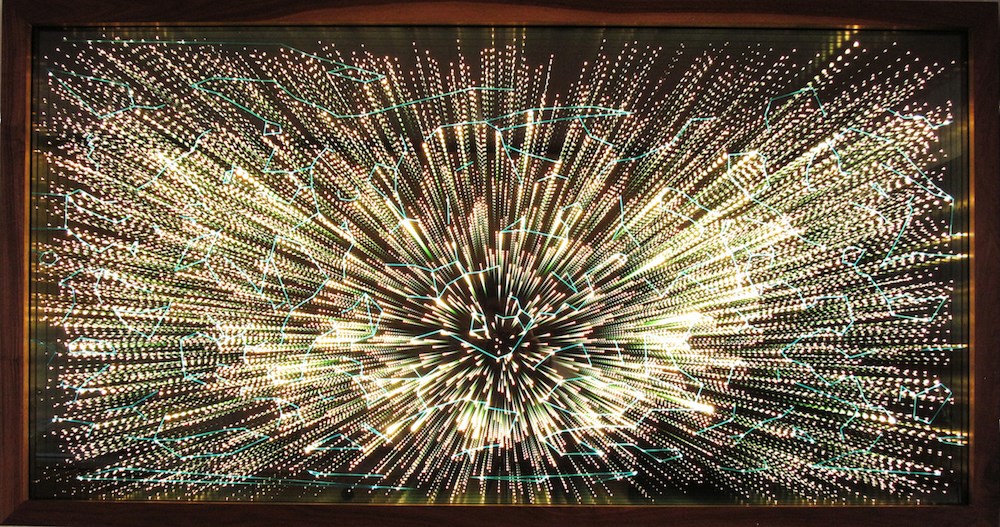
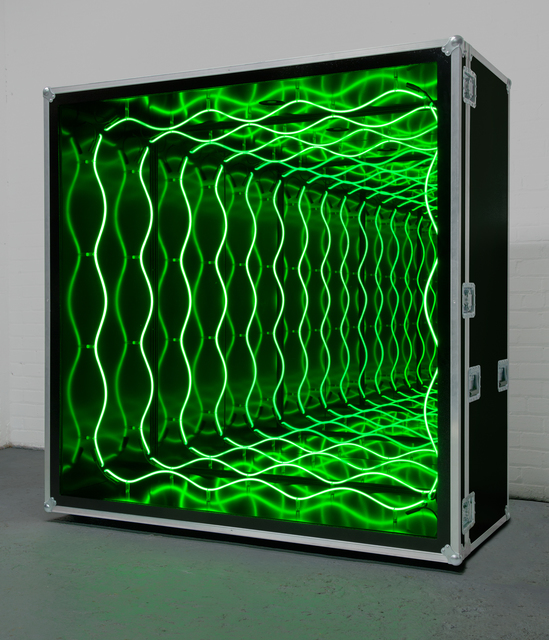
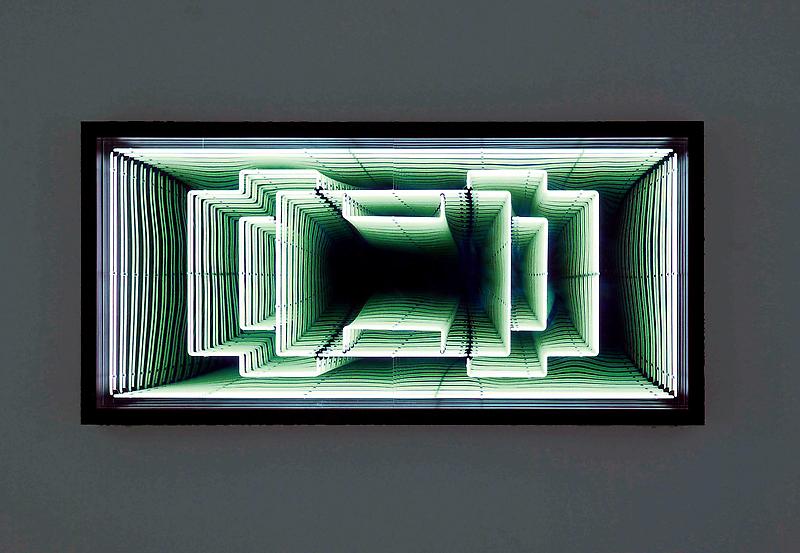
In this project, I want the lights inside the sculptures to create a visual perception of the human soul source. The white light is for the visual interpretation reflecting the human soul. The audience could search for experiences and connect with feelings with closed or opened eyes to connect visually with the energy or unknown elements.
However, this experiment needs to be tested with friends, tutors, and colleagues beforehand with recorded individual reflections.
The light and Aura
The possibilities of what we see by looking at someone’s Aura are endless. Learning to read and protect our Aura can be essential to individuals’ physical, emotional, and spiritual health. People don’t have to be mystic to read an aura. It’s widely believed we all have auric sight (the ability to read auras) and could see them quickly when we were children. The meditative atmosphere in this performance and the connection with the light could be healing.
This performance could never reawake the audience’s ability to see auras or the awareness of the light’s healing power. However, this experiment could also reflect the light on the inner human being and the realization that we are very similar or, the same, united. In addition, this project’s concept is to simulate and acknowledge the experience by tapping into the unknown.
Auras are thought of as distinctive atmospheres surrounding a person. However, auras are more specific than that, and they are considered to be composed of vibrations-electro-photonic vibrations generated in response to some external excitation. What’s vital about an Aura is that it contains information about the essence of the person or object it surrounds. This aspect shows that the specific experiences are more likely to differ because of the nature of the individuals. For example, the energy could be Samadhi, the magical power I will write about in connection to Antony Gormley’s work. Although the location of Aura is outside of the body, I believe that by entering the Aura energy, we could tap into a different dimensional world and link to the core of the human being—more info about how to read Aura here. 3 Ways to See Auras – wikiHow
Antony Gormley
The human beings’ symbolic element recalls the human form we know and naturally associate with Gormley’s sculptures. However, the meditative pose in those sculptures will be like the recollection of the inner realm of human beings. It is the recollection of the forgotten or ignored part of the human, the soul, that Gormley conveys in his work.
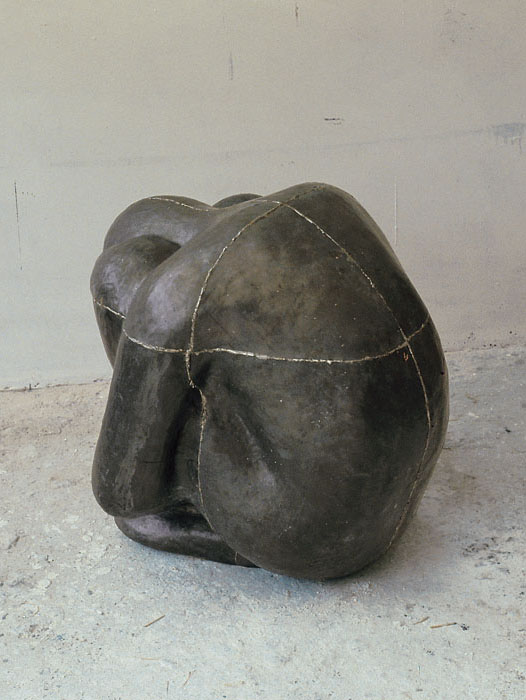
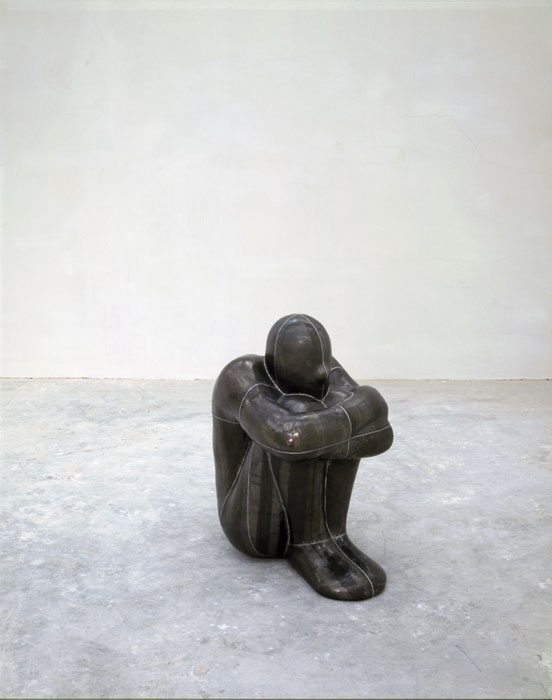
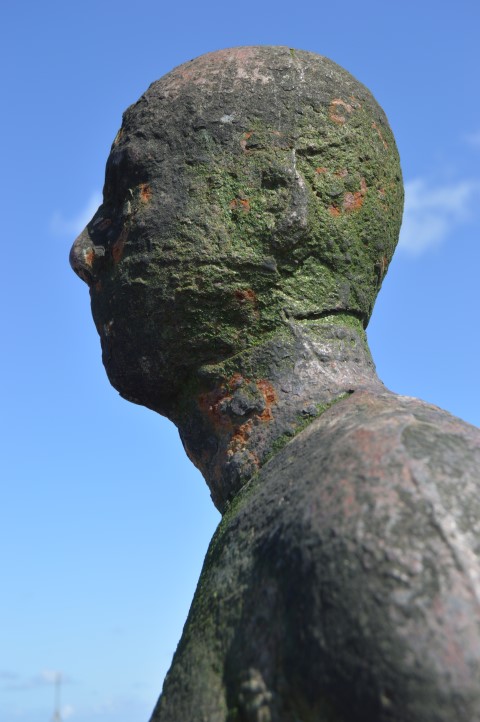
Gormley uses his body as a template, a place and space of a body to express the natural conditions of human beings as a trace of the body in time. For example, his sculpture ‘Another Place’ reflects the sentimental and deeply emotional ties to a place we live, and Gormley manifests it through a human form. Most of his work takes the human body as its subject.
Gormley’s work is essential for contemporary art. It is how he articulates his artwork through the concept of the inner being. The energy Samadhi is the magical power that makes it possible to transfer those elements spontaneously into artists’ artwork.
Jagadish “Jaggi” Vasudev (born 03rd September 1957), better known as Sadhguru, is an Indian yoga guru and proponent of spirituality. He stated that; In people’s spiritual lexicons, a common word is ‘Samadhi’, interpreted as a certificate of mystical attainment. It is a state of serenity where the intellect goes beyond its normal discrimination function.
The state of serenity that leads beyond our understanding is the central concept of this project. For example, Artist Antony Gormley travelled and spent two years in India and a few months in Sri Lanka, where he practised Buddhism and meditation in monasteries. The exercise of Buddhism and meditation could help Gormley understand another world, the world we can access through meditation. The viewers’ perception and interpretation mixed with experiences to analyze artwork give them personal meaning. That could be a significant element that plays a role in artists’ work.
For example, Gormley’s childhood memories of his parents insisting he has an afternoon nap. He was never tired enough to sleep, so he would lie there and tell himself that he had to stay still. Nevertheless, as a child, he suffered terrible claustrophobia as a precursor to his motionless, stiff body, particularly after being sent to a Catholic boarding school, where tightly cornered bedclothes closed him in.
The strict rules with religious roots could be paralyzing and restricting. However, Gormley’s study and practice of different cultures’ religions might impact Gormley’s perception of human beings and art.
Gormley’s work is about engaging his own body into sculptures in a way that confronts questions of the connection between human beings and the cosmos. It shows that the profound feelings are so vivid that the influence of the experiences draws the artists to manifest them in their specific and unique way. The personal experiences are also reflected in Navarros’ work. Activating the viewer’s sensories and psychological experiences connects to the individual’s perceptions.
So the lived experiences connect artists, and their perceptions manifest through artwork. I realized that I also try to embody my experiences in my work. I want to connect to the higher power and the unknown with the human being.
The artist Marina Abramovic shares a similar concept with a different manifestation.
Marina Abramovic and experiences
Marina Abramovic uses her body as a medium for artistic experiences. Behind the execution lies the idea of purification of the spirit, aiming to pass on energy to the audience. I use a form of the human body as a symbol in my work. Similarly, Gormley uses the human form of his body as a template for his sculptures.
The fascinating film The Artist is Present is Marina’s performance of sitting on the chair behind a table and looking at a person without words and motion, resembling the sensation of falling into a trance. The reactions of some people were extraordinary. Some viewers were so emotionally affected and touched by the performance that they decided to return. Marina revoked emotional experiences in people she probably never met, strangers, but made the connection to their inner being.
Marina’s concept of purification links to the idea of my project. However, I want to connect through the audience’s senses to the core of the human being with the synchronization of breathing, heart beating and sculpture, which is the idea of connectivity in this project.
In this project, I also want to explore the connectivity and unity of human beings. With audio of breathing and a beating heart, the audience could synchronize into the regular rhythm to take the individuals to a different dimensional world. I want to synchronize the performance with the audience’s experience through audio and visual perceptions of individuals right into the core of their souls.
I am unsure about the heart beating soundtrack because I have yet to hear the combination of the two sounds. However, it would be great to have the heart beating because of synchronizing the heart rhythm.
A bit about the so important heart: there is no organ quite like the human heart. The brain often gets a lot of recognition, as it should; however, the heart is inherently unique and deserves more acknowledgement. It is one of the most important muscles. The heart pumps blood throughout our circulatory system to supply the necessary oxygen and nutrients to tissues all over the body. Roughly six quarts of blood circulate in the body three times a minute. The heart’s contractions while pumping blood are what produce the eponymous beat. The average human heart beats nearly 100,000 times a day, 35 million times a year, and more than 2.5 billion times in one lifetime. Scientists, cardiologists, and the general populace have known the aforementioned facts about the heart for many years. Although this is true, there are still questions about the heart that have not yet been answered.
Specifically: Why does a heartbeat sometimes synchronize with other heartbeats, and what causes this phenomenon?
In the article “The Synchronicity Of The Human Heartbeat”, Roman Jones also gives us an example of the synchronization of a heartbeat.
A study conducted by Ferrer, E., Sbarra, D., & Helm, J. (2012) observed thirty-two heterosexual couples’ heart rates and breathing patterns while sitting a few feet across each other. In addition, the study found that couples’ heart rates and breathing patterns synchronized while sitting across from each other without speaking or touching. For more info, Here.
The concept and aspiration of this project is the unity and tapping into a different dimension through the human senses.
Collaborative conversations with Paul Nataraj
I met my tutor Paul Nataraj to discuss the breath recordings.
At the first meeting, we discussed the concept of the project collaboratively. I wanted Paul to be part of the project. We could create something extraordinary by working together on this concept. Paul’s knowledge, experience and passion for sound are essential for this work, and I welcomed the cooperation and help.
Meeting & Collaboration: Mili · Meeting Paul Nataraj For Collaboration For Sound Recording Otter.ai
Recording Studio
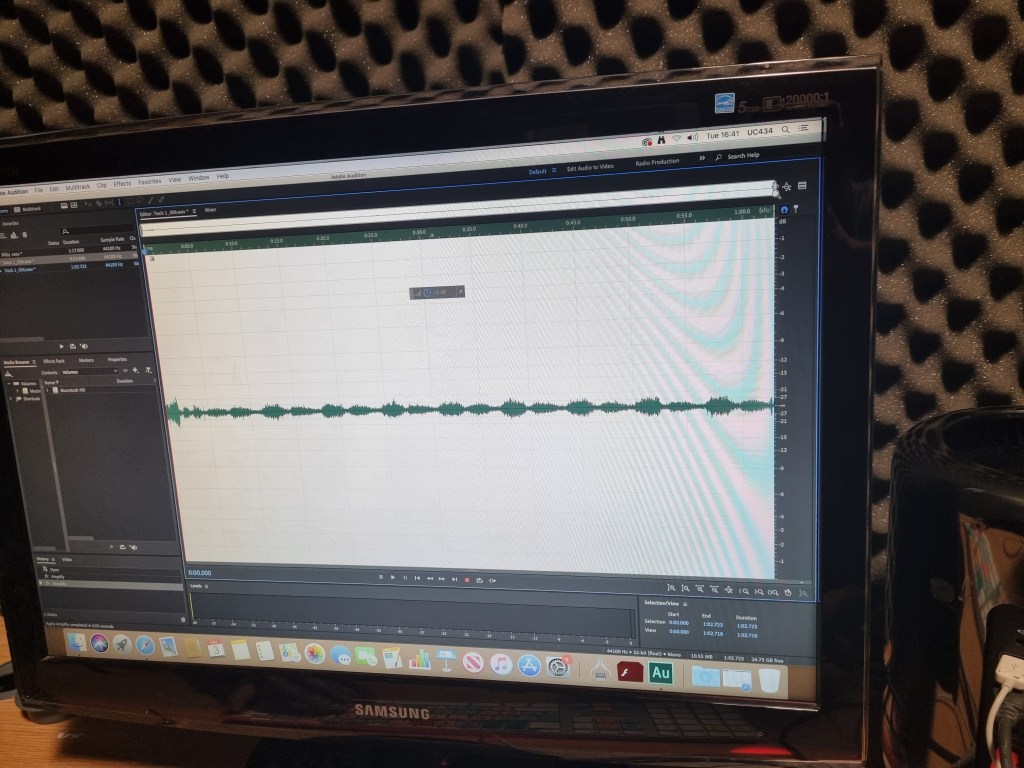
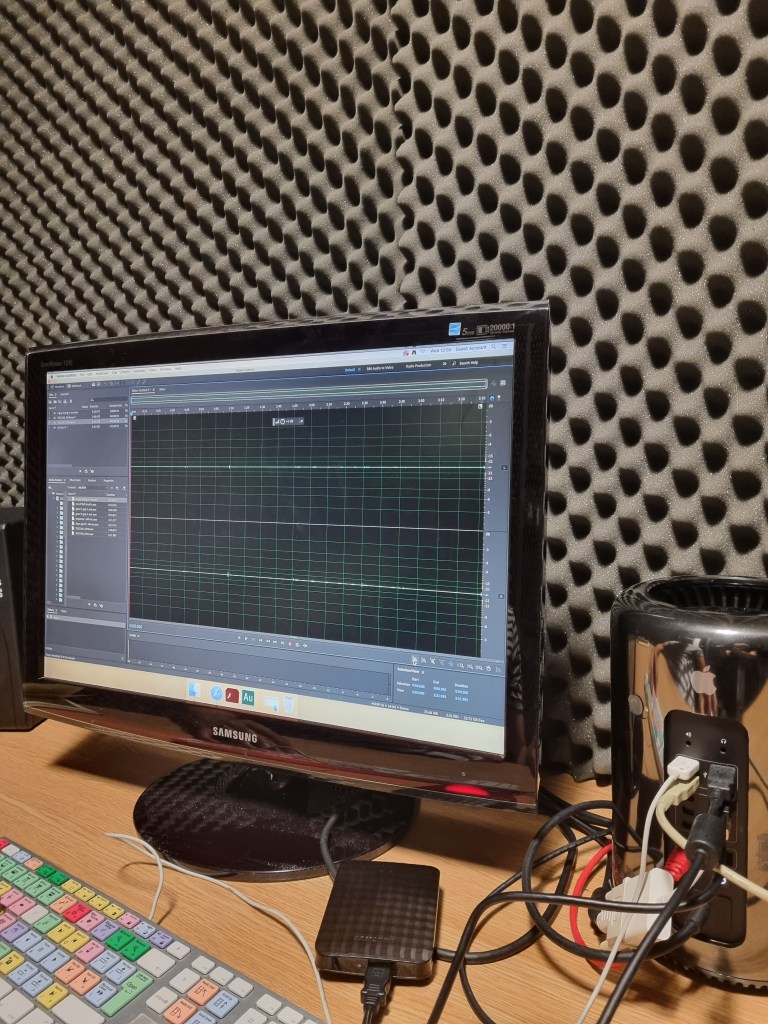
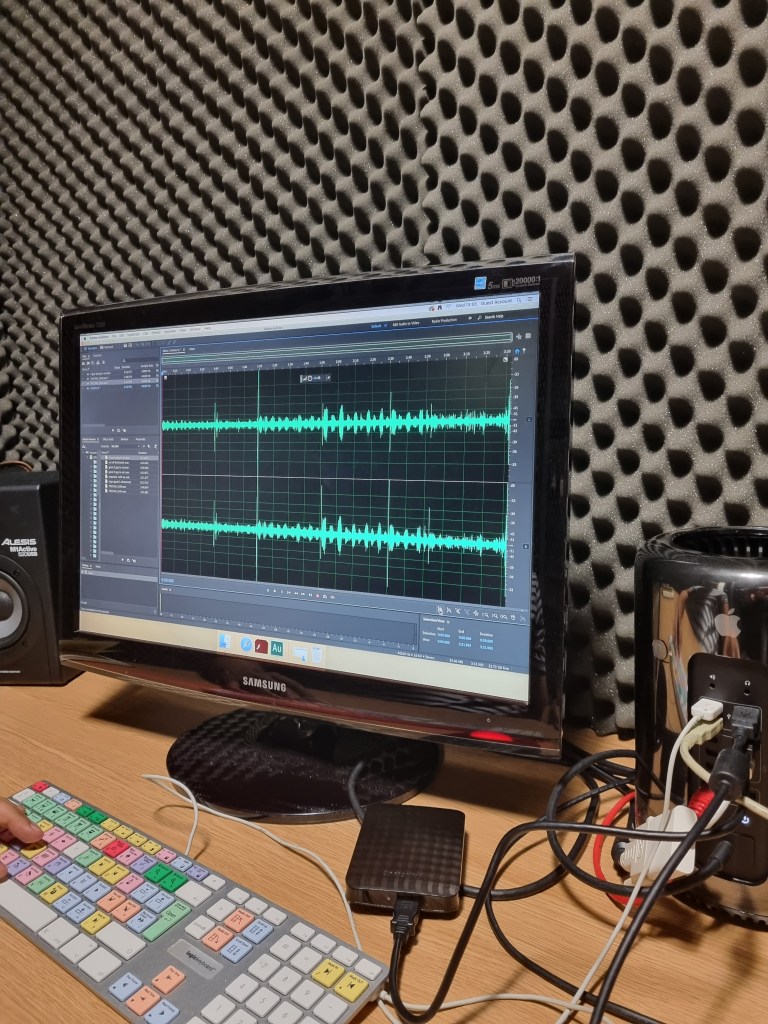
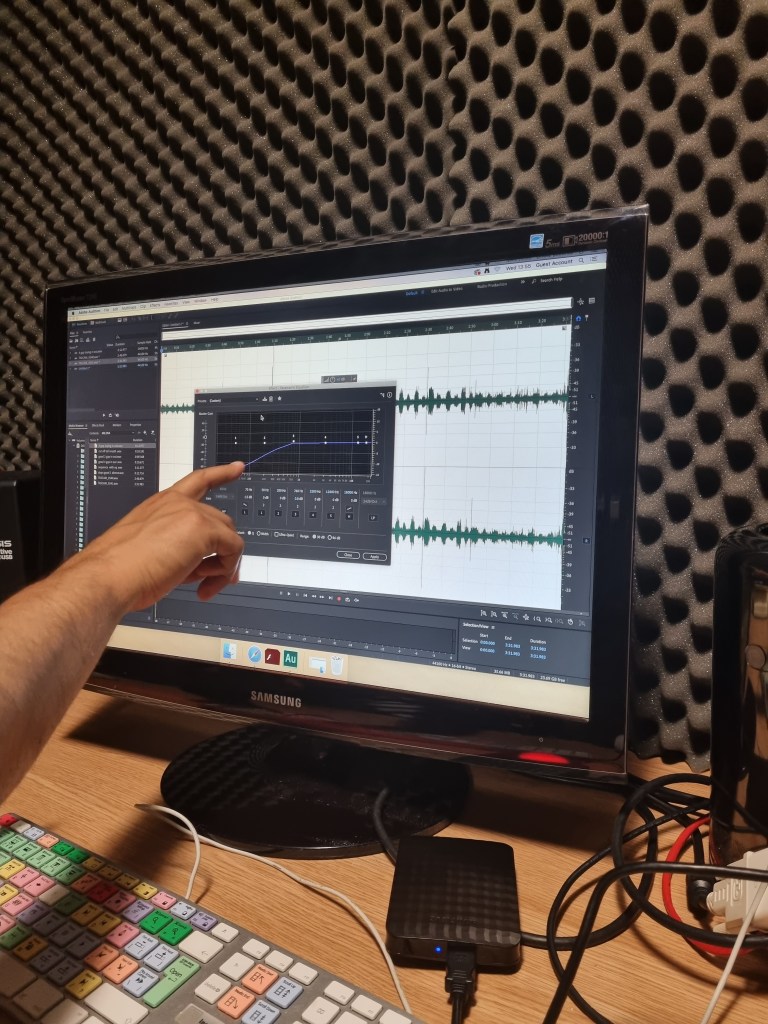
Meeting Paul every Tuesday after work in the recording Studio at UCBC was fascinating and rewarding. We started to record the sound of my breath to learn if we could use the Studio equipment for the task. Although the quality of the recordings was excellent, the device also picked up different disruptive noises from the air conditioning. So we agreed that I would use my phone to make more tapes as a sample in my house, which is triple glazing. I suggested locking myself in the wardrobe. Paul agreed and advised that clothing is perfect for absorbing sound, and I should be able to make some good tapes.
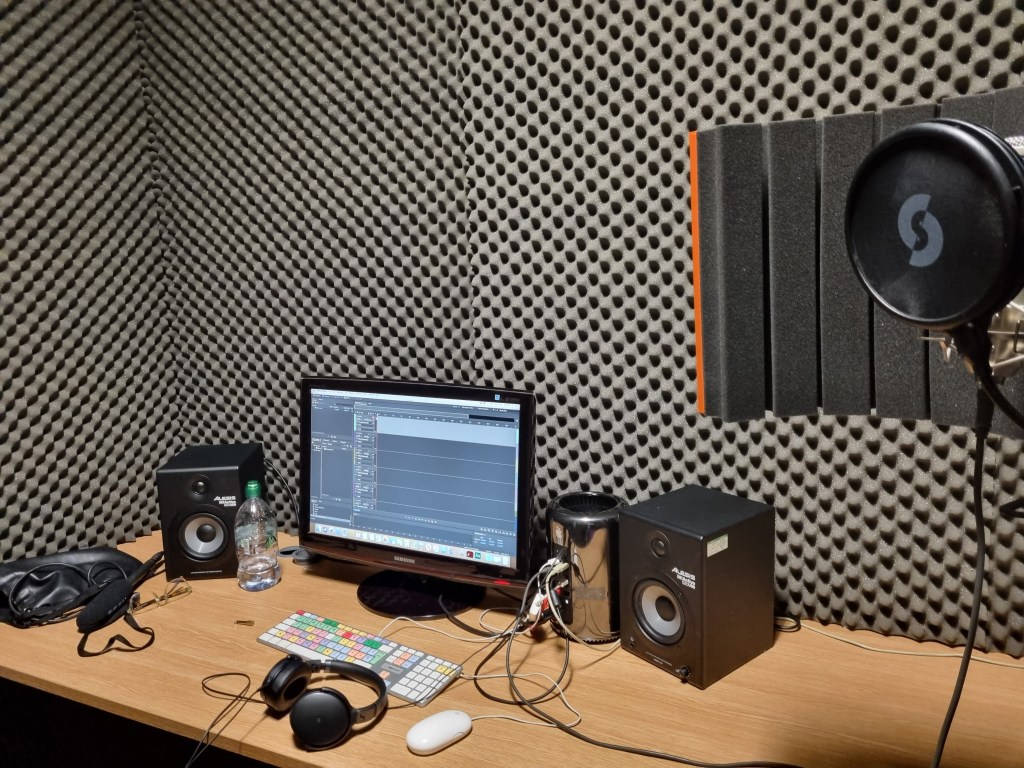
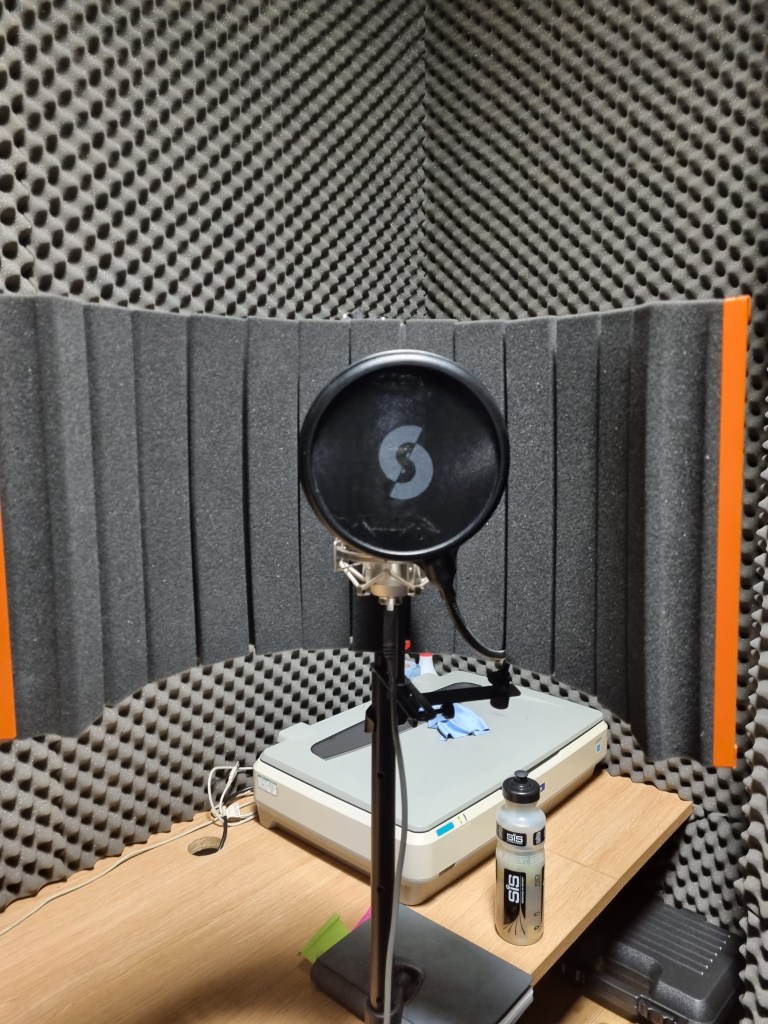

I made the first breath recordings through the “Otter” application I downloaded on my phone. The recordings were made on Saturday, 07th May 2022, at about 5.26 am. It was a tranquil moment. After that, Paul listened to the tapes I made, which were still too noisy. He tried to modify the noise and separate disruptions from the breath sound. However, the modification would affect the sound too much. We both agreed on starting from the beginning with a different solution.
Meeting & Collaboration: Mili · Meeting Paul Nataraj Collaboration For Sound Recording Otter.ai
Notes on how we recorded the sound to monitor the best conditions of the process.
Mili · Breathing Normally Otter.ai
Mili · Open Breathing With Shut Off The End Laying Position Otter.ai
Mili · Open Breathing With Count 4 Gap Laying Position Otter.ai
Mili · Open Breathing With Count 3 Gap Sitting Position Otter.ai
Mili · Breathing With Shut Off The End In Sitting Pose 1st Otter.ai
Mili · Open Breathing Normal 1 Laying Position Otter.ai
Mili · Breathing With Shut Off The End Laying Position Otter.ai
Mili · Breathing With Count 4 Gap Otter.ai
Mili · Breathing With Count 2 Gap Otter.ai
Discussions with Paul
While discussing the project’s concept, we talked about sound and vibration. Then, I remembered that bees create honey by vibration. It is magical that bees can make honey just by vibration. However, they are making a buzzing sound as breathing creates sound and vibrations.
Vibration & Matter
Bees and other Neoptera insects don’t flap their wings directly. Instead, the flight muscles pull on the springy thorax wall to make it ‘ping’ in and out. Bees also have muscles that can contract multiple times from a single nerve impulse. Together these adaptations allow bees to beat their wings at 200-230Hz (cycles per second). We hear this in a buzzing tone. Bees also buzz when not flying to shake pollen from a flower onto their body.
According to Jaggi Vasudev – Sadhguru, the frequency could be the entrance to a different dimension, as he stated in the book “Inner Engineering”. It is like tuning a radio to the right frequency. The tuning is the sound of breath involved in this project. The created pattern could tune to the right frequency to enable us to tap into different dimensional worlds.
Recording Studio
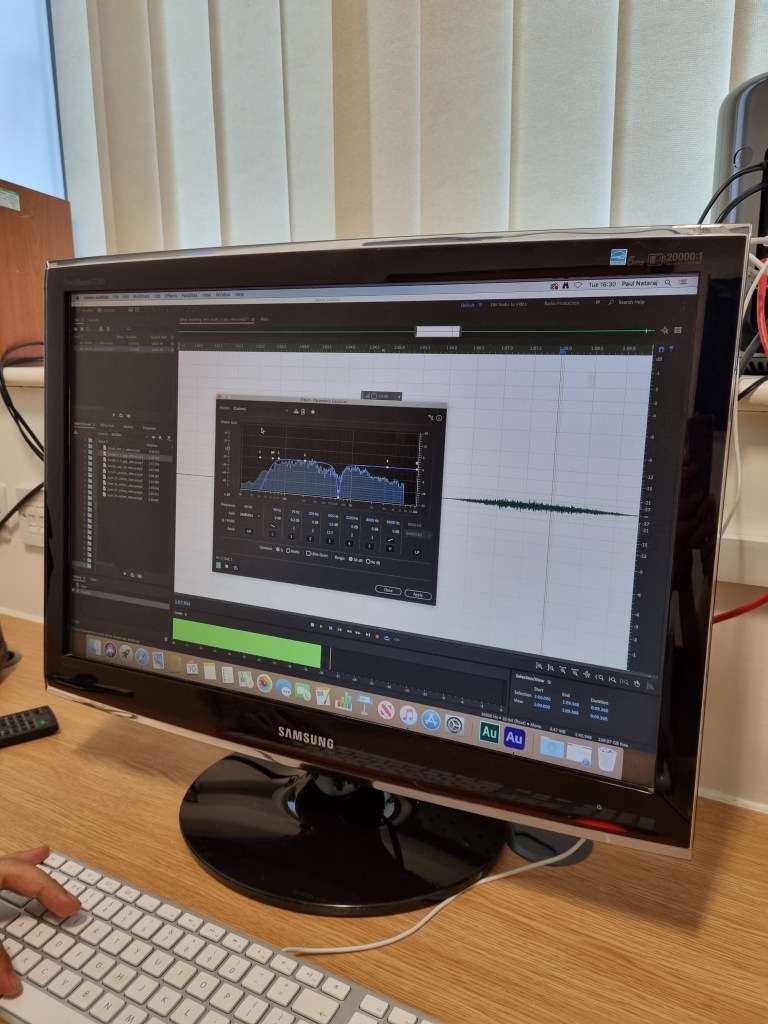
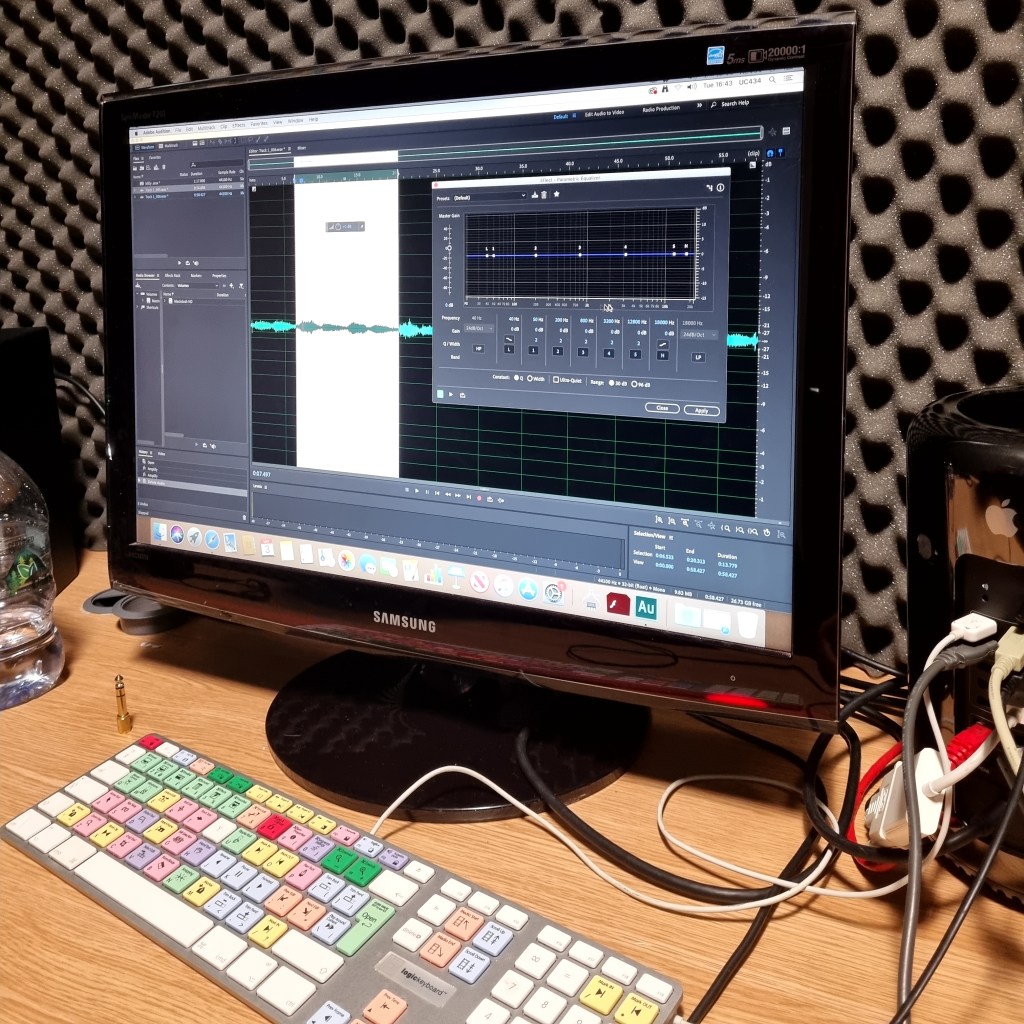
At the next meeting, Paul brought his professional recording device. Although Paul tried to modify the sound, it still needed to be corrected for the project. In addition, the sound would lose its authenticity with too much technology interference. So we agreed to make other recordings with a professional sound recorder.
Meeting & Collaboration: Mili · Meeting Paul Nataraj Collaboration Sound Recording Otter.ai
Tascam portable DR 4OX
The DR-05X is the standard in stereo handheld recorders with its high value, powerful features, simple interface and excellent sound quality, and It is the first choice for recording meetings, music, audio-for-video, dictation, and more.
Recording Media: microSD card (64MB to 3GB), microSDHC card (4GB to 32GB), microSDXC card (up to 128GB)
- New DR-05X now features a stereo omnidirectional condenser microphone, which captures everything from the quietest detail to the loudest peaks.
- Overwrite function for Punch-In recording with one level of Undo.
- Functions as a 2in/ 2out USB Audio Interface for Mac, PC or iOS recording
- Auto recording function that can detect the sound input signal level and automatically start recording
- Power: 2 AA Batteries, USB bus power, AC 100 to 240V (optional AC Adapter)
Meeting & Collaboration: Mili · Recording Sessions With Paul Nataraj Otter.ai
Stream Being Sound Final by Mili | Listen online for free on SoundCloud
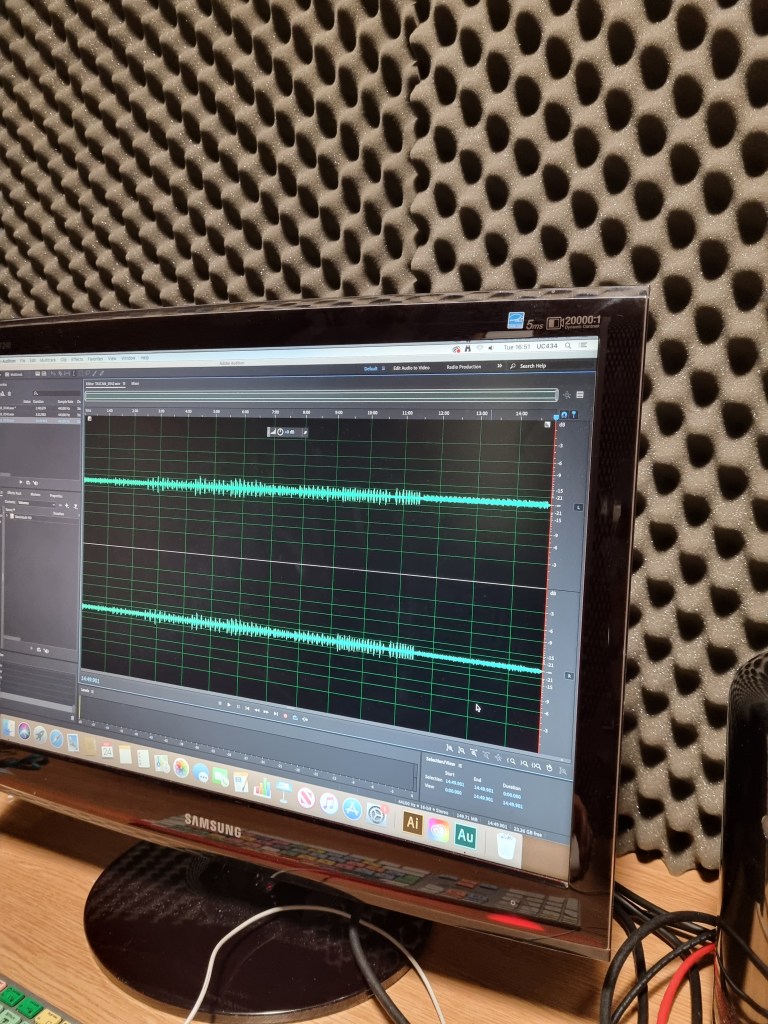
The recording is 14.49min long and contains various versions of breathing patterns accompanied by a heartbeat. This installation represents the connection among all human beings. I didn’t make the recording that long intentionally. Initially, I wanted to make a series of different breathing patterns to see which would be the best to loop up for the audio experience. However, after listening to the record, Paul and I agreed to use the whole series as it is. It represents the different experiences of human beings and reminds them of the breath and heartbeat connection that is so important but taken for granted. I needed clarification about the heartbeat sound, but it worked well. The background drum-like sound gives the breath a more powerful experience and a volume to this work.


Experimenting and Reflectiong on Sound/Research
John Milton Cage, Jr. was born on 05th September 1912 in Los Angeles, California, US—died on 12th August 1992 in New York. American avant-garde composer whose inventive compositions and unorthodox ideas profoundly influenced mid-20th-century music.
In the following years, Cage turned to Zen Buddhism and other Eastern philosophies and concluded that all the activities that makeup music must be part of a single natural process. He came to regard all kinds of sounds as potentially musical. He encouraged audiences to take note of all sonic phenomena rather than only those elements selected by a composer. To this end, he cultivated the principle of indeterminism in his music. He used several devices to ensure randomness and thus eliminate any element of personal taste on the part of the performer: unspecified instruments and numbers of performers, freedom of duration of sounds and entire pieces, inexact notation, and sequences of events determined by random means such as by consultation with the Chinese Yijing (I Ching). In his later works, he extended these freedoms over other media so that a performance of HPSCHD (completed 1969) might include a light show, slide projections, costumed performers, and the seven harpsichord soloists and 51 tape machines for which it scored.
Cage published several books, including Silence: Lectures and Writings (1961) and M: Writings’ 67–’72 (1973). His influence extended to such established composers as Earle Brown, Lejaren Hiller, Morton Feldman, and Christian Wolff. In addition, his work was significant in developing traditions ranging from minimalist and electronic music to performance art.
Cage’s work reminds me of the infinitive, the different dimensional world which resonates with this project. The light draws attention and naturally awakens curiosity because it looks like it is leading somewhere. To the space, place at the moment the audience is present. Another link to Cage’s work is performance art, which is the element I am looking for—the performance of the public and the human being as a part of the installation.
Process of making
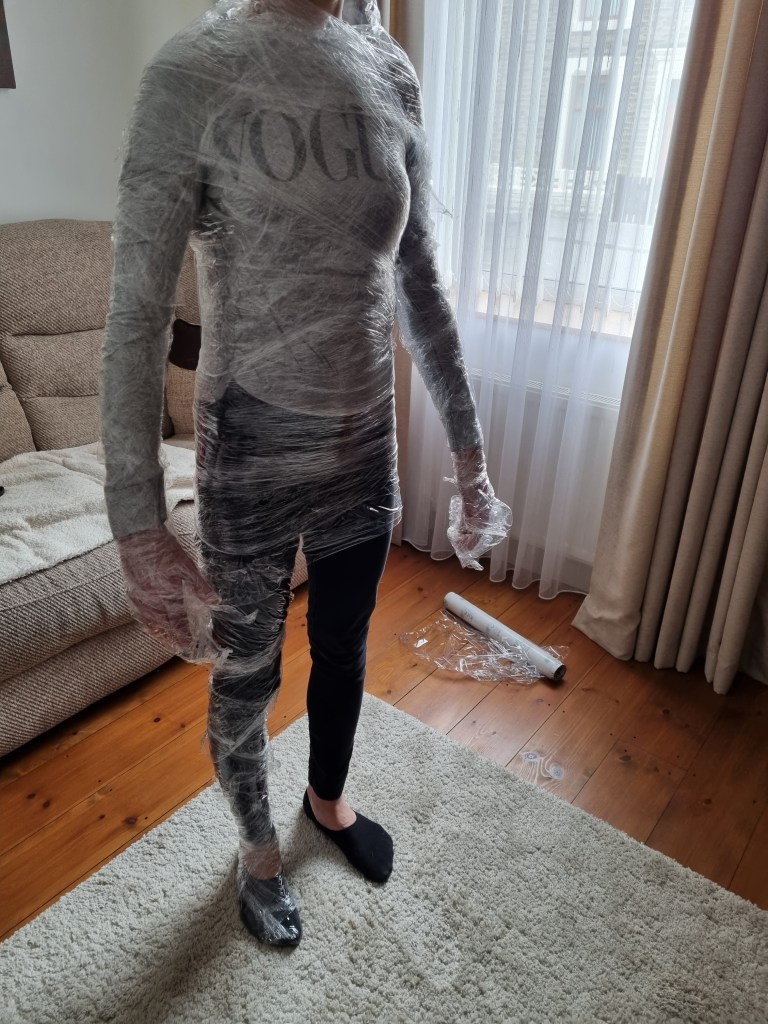
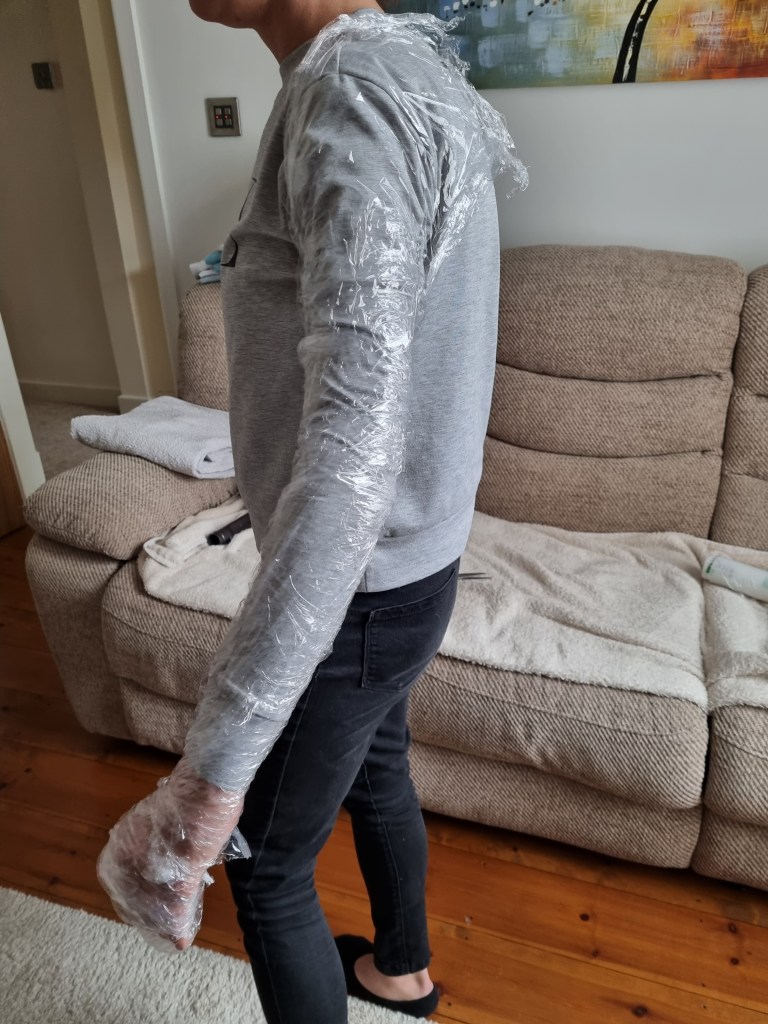
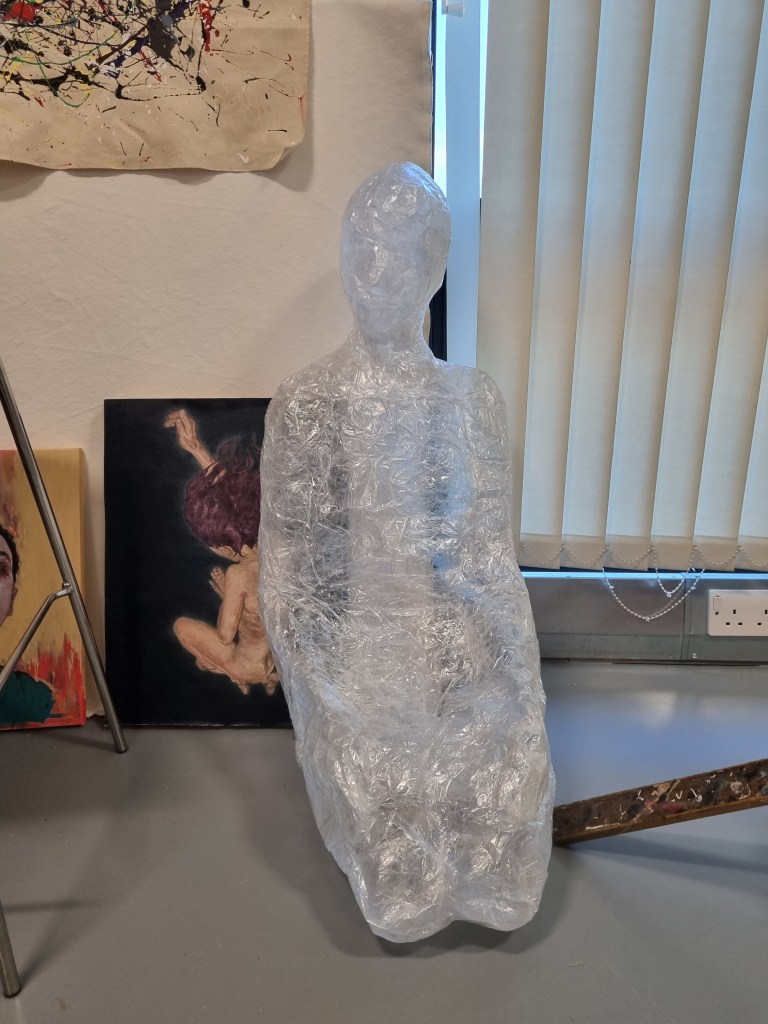
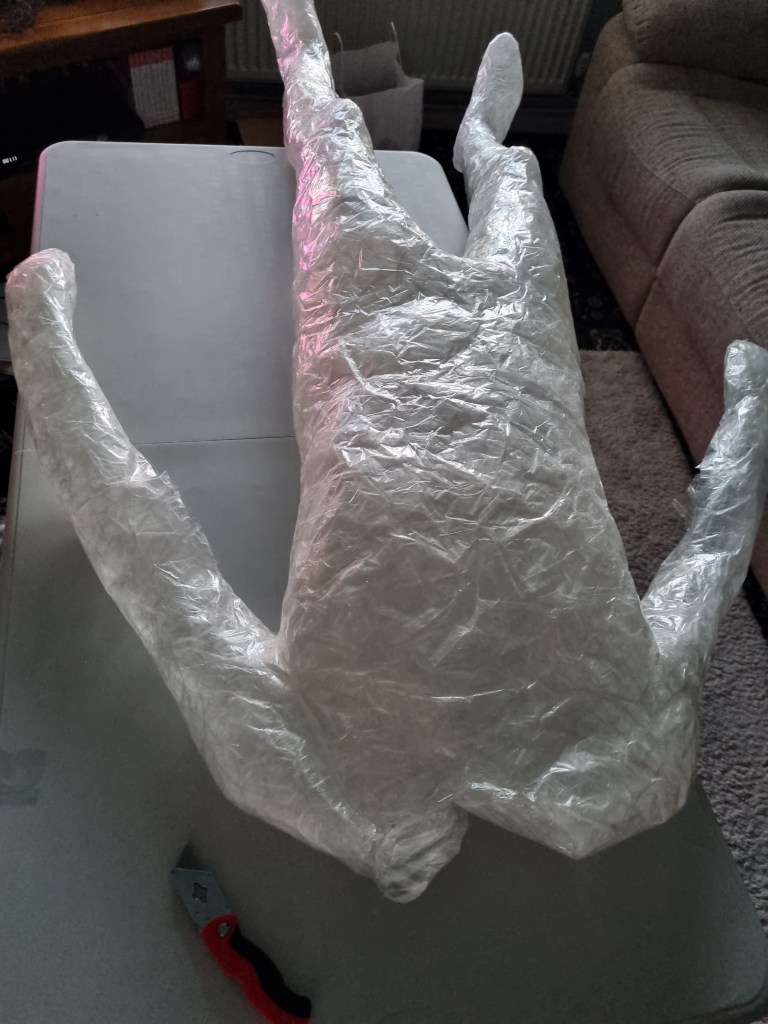
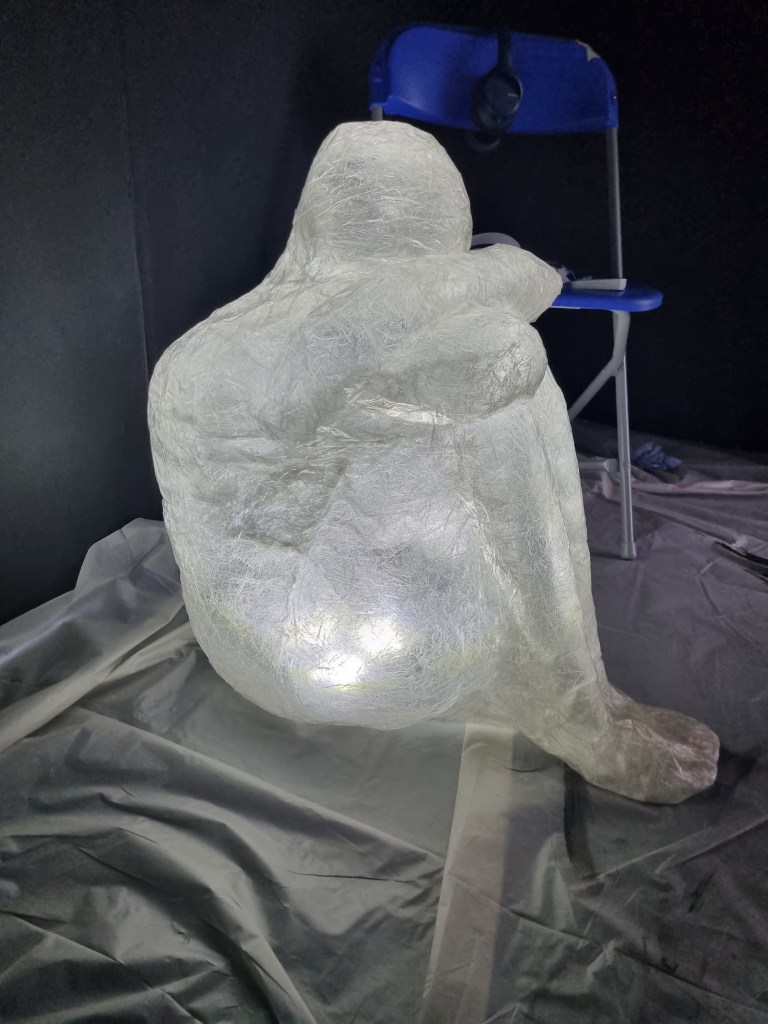
I started with the first sculpture, “The meditative pose”. I used my daughter as a model again. I explained what I had in mind and demonstrated the pose to her. Because the pose was challenging, we decided to cast the head at the end. I started to wrap the model into cling film without the head. I wanted to have visibly prominent forms of the body shape. I covered the limbs separately with cling film to emphasize the body conditions.
Challenges
It was a slow and challenging process. It took me about three hours to cover the body without the head with one layer of sealing tape. I also had to turn the model to the sides several times to release the pressure of the pose. Moving the model side to side enabled me to reach other body parts. However, there was the risk that I could lose perspective, and the articulation of the body could occur out of proportion.
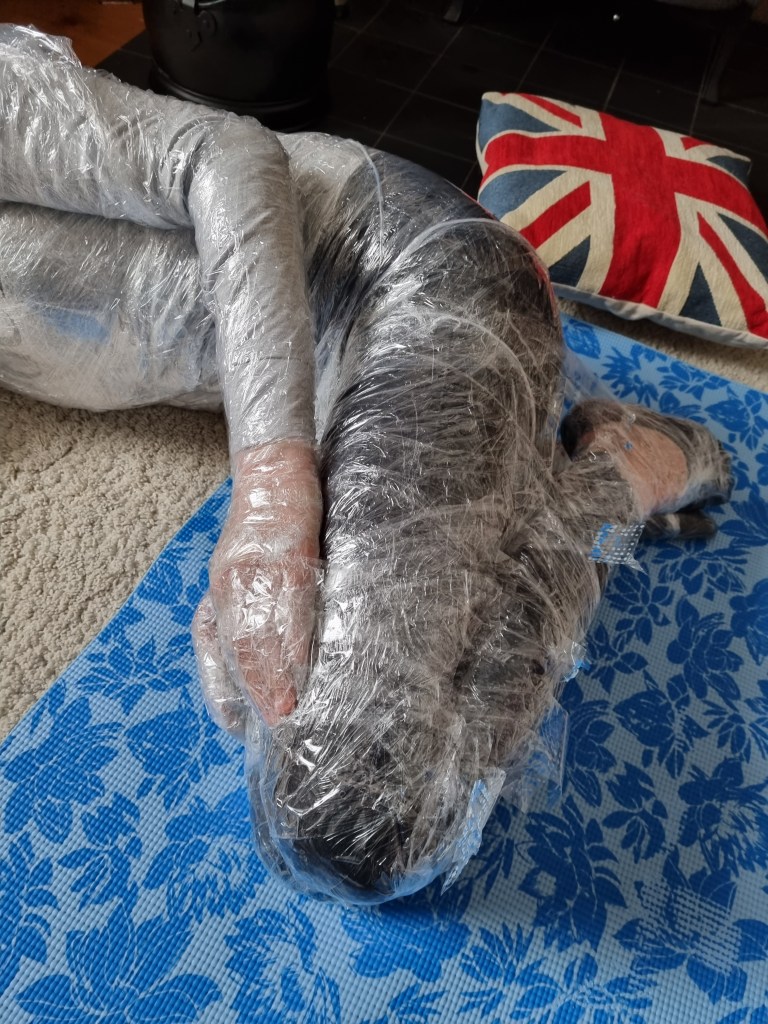
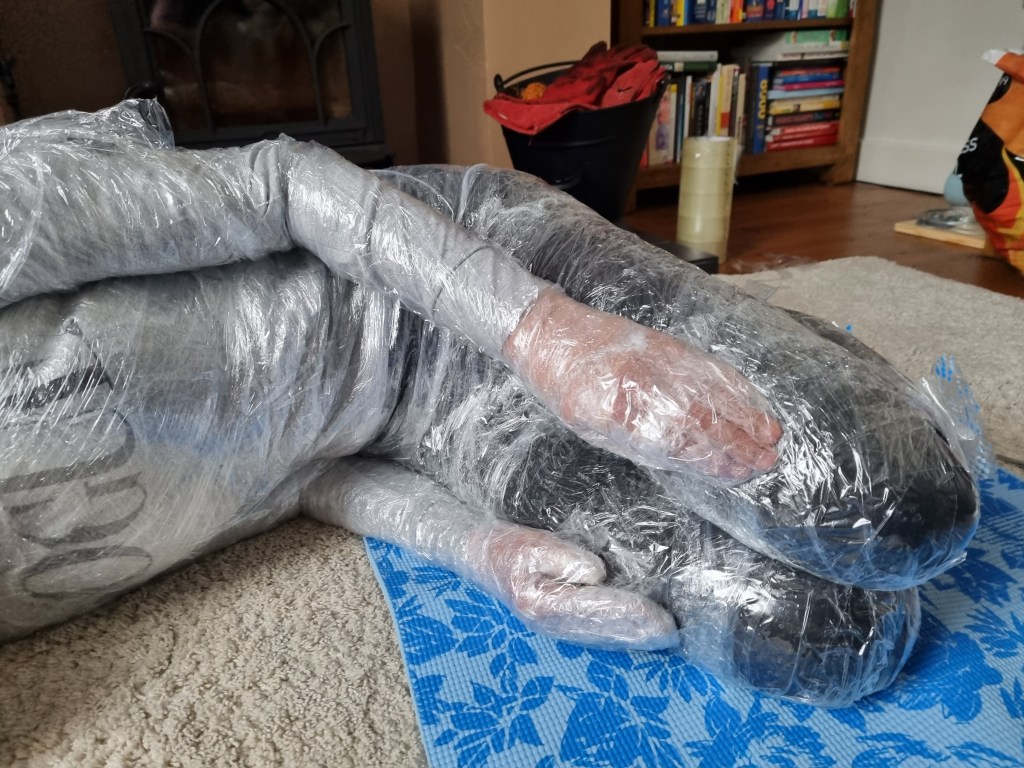
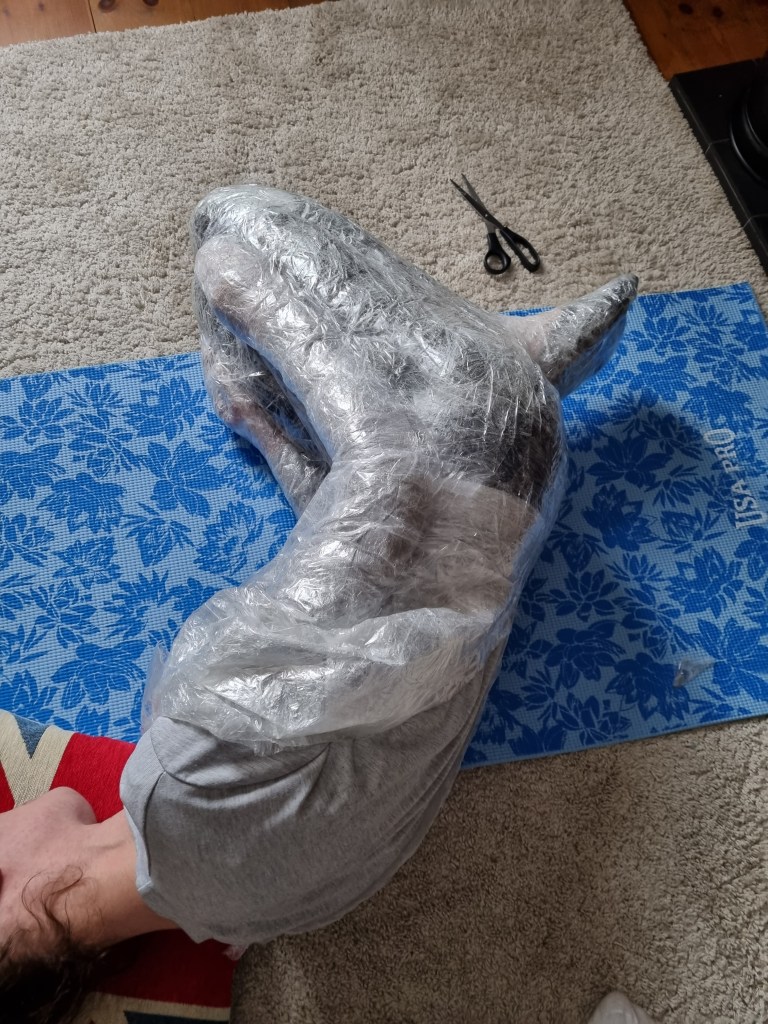
The first impression is that the pose looks stiff. The arms being covered apart from the body would make it difficult to get them out afterwards. The pose was very challenging. However, I wanted to keep the arms as close as possible to avoid the struggle of releasing the cast or cutting the material far too much to enable me to remove the model from the form. I also wanted to cut and add more sealing tape to the places needed to create the right shape.
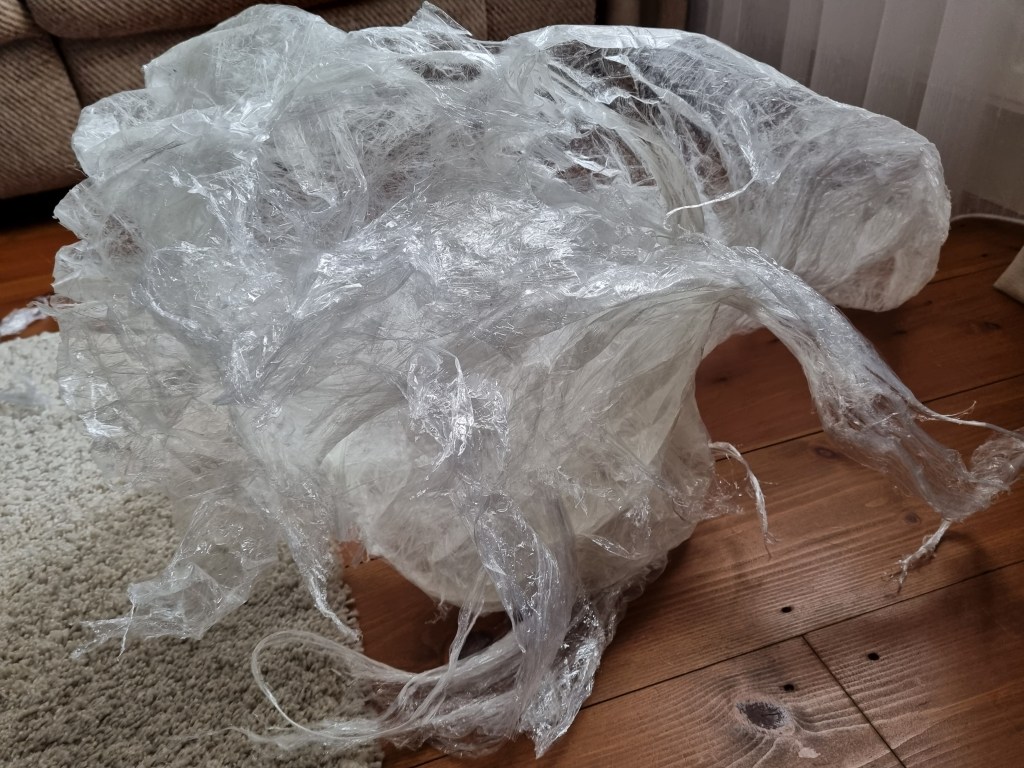
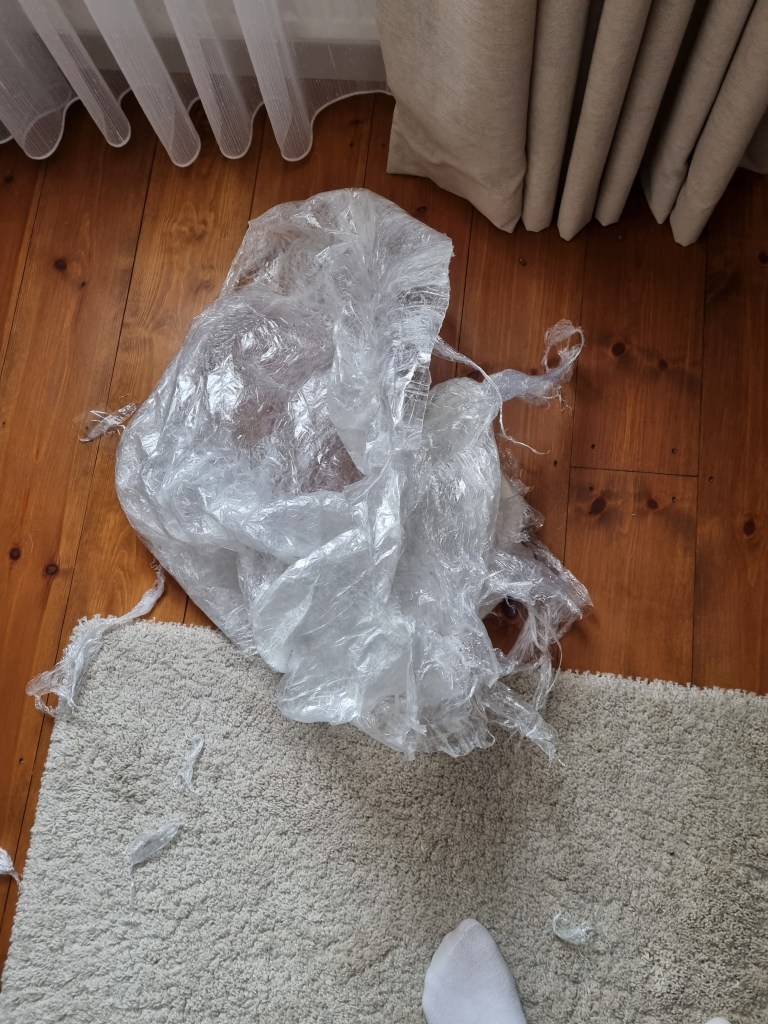
Releasing the model from the cast was very difficult. First, I had to cut some cast connections near the wrists to enable me to separate the model from the material. Then I struggled to release the legs because they were very tight. I tightened the legs this way to keep the shape of the limbs and position as realistically as possible. After releasing the model from imprisonment, the sealing tape form looked like a piece of crumbled, damaged plastic bag.

Problem-Solving and Progress
Although I faced many problems, I proceeded anyway because I believed I could fix them later. In addition, if I lost the body’s shape, I could use pictures as references to work on the body shape. I struggled to release the model from the sellotape. However, when I liberated her from the cocoon, the figure was distorted and unrecognisable, almost inside-out.
I removed the extra access of the clingfilm, and then I started to attach more sellotape to secure the shape. I used the sellotape that was donated to me specifically for this project which was helpful because I used a lot of sellotape for this sculpture.
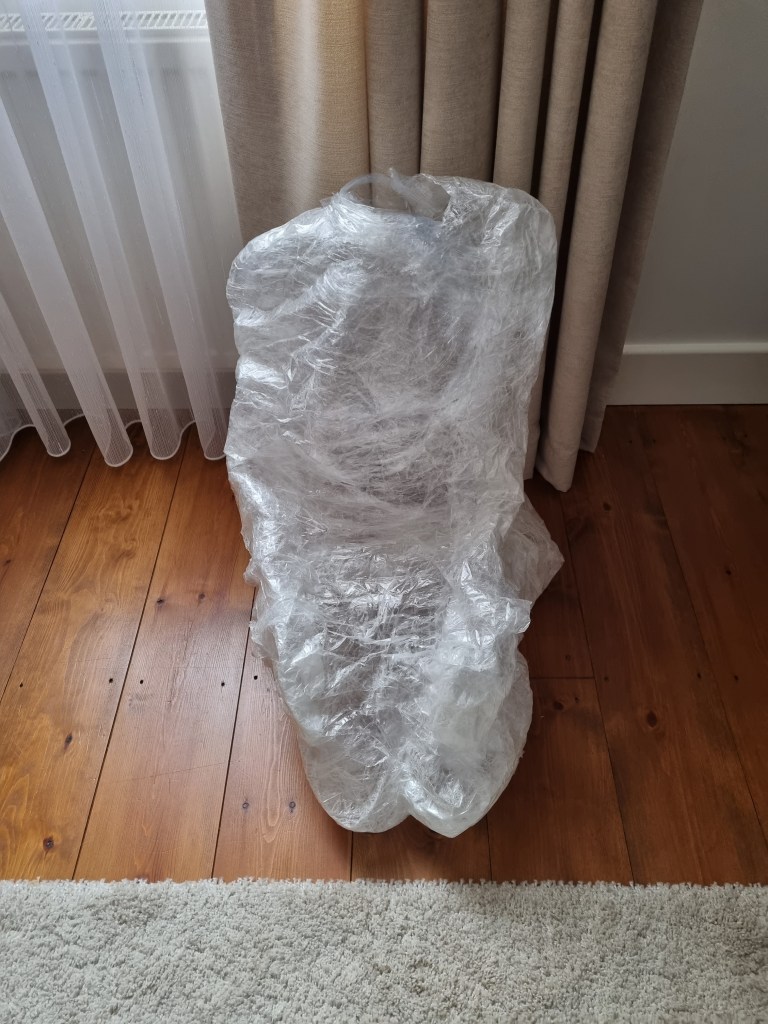
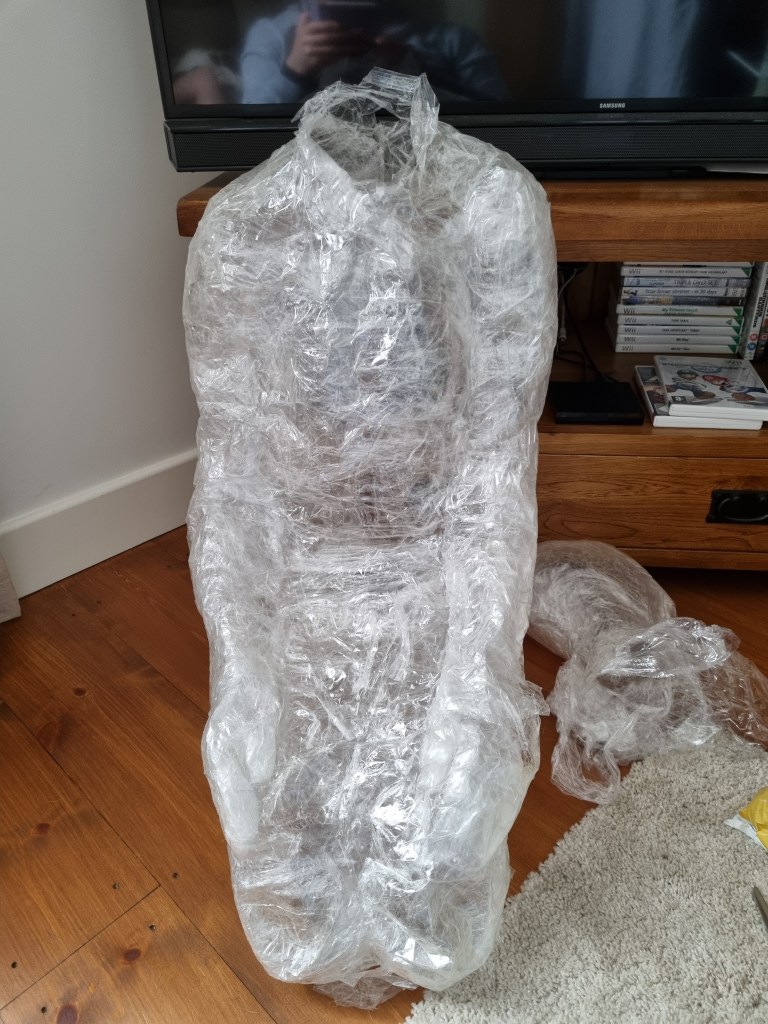
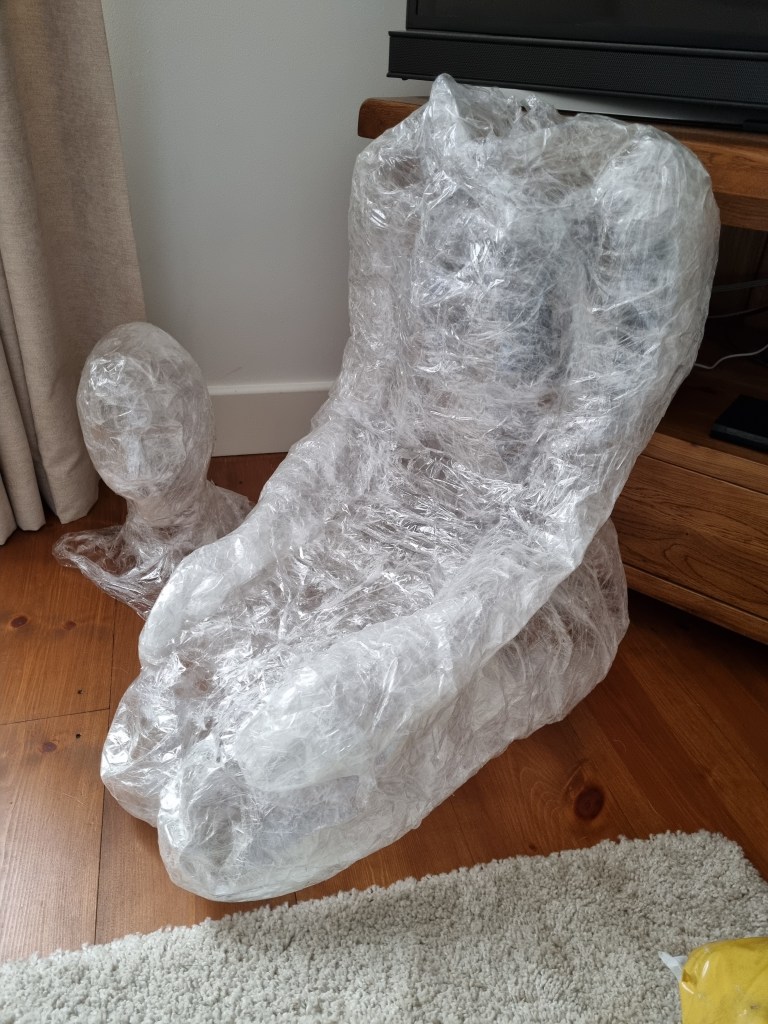
I made a sculpture from the sellotape called ‘Anxiety’. I articulated the body language well, so I used the same technique with this sculpture, hoping it would work out. Instead, I learned that the pose for this sculpture was more difficult. However, I could support the structure by applying more layers to build up the strength of the body. Then, I could work on it with more structure support instead of struggling with soft materials and facing difficulties keeping the shape in the proper proportions.
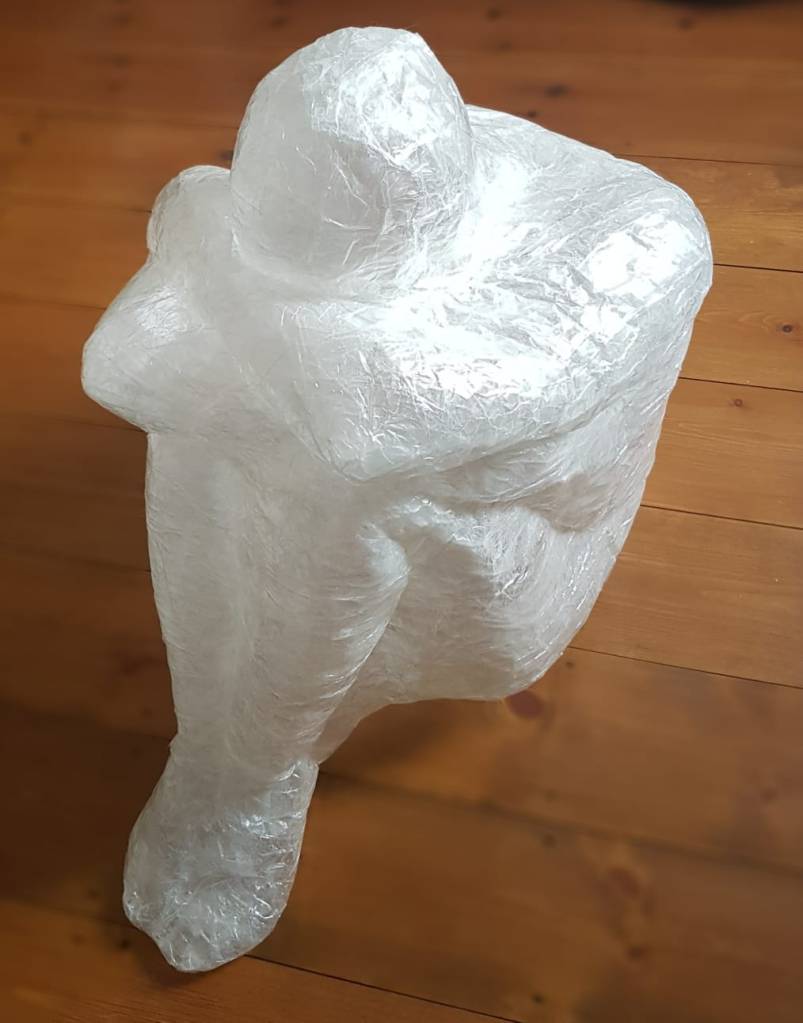
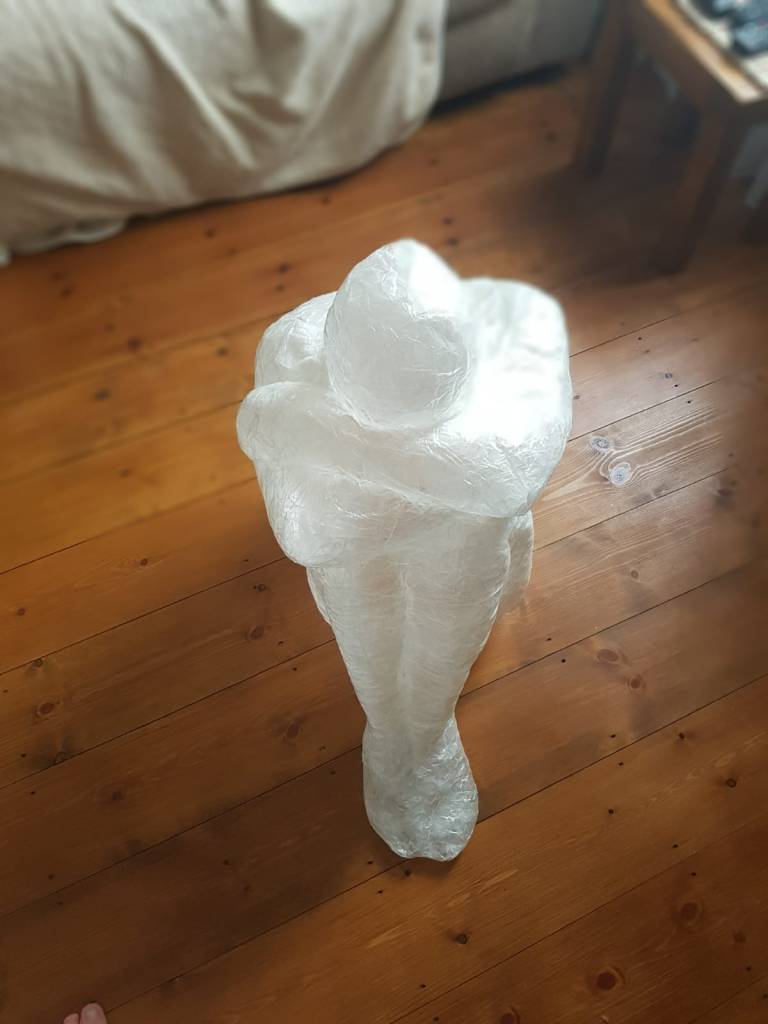
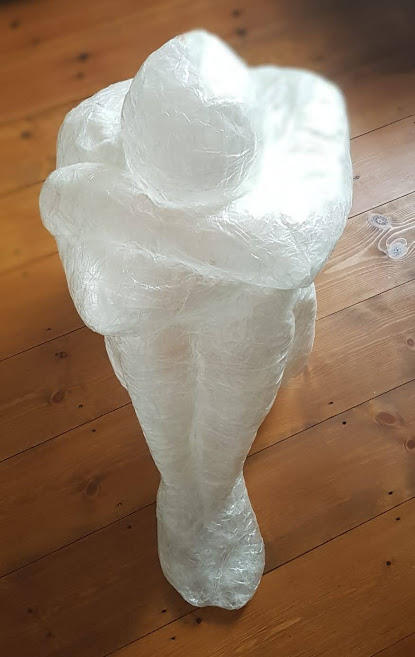
I am including the sculpture “Anxiety” in the installation to support the concept of the final piece. The installation is also a representation of human conditions. The “Anxiety” expresses the feelings imprinted in the sculpture through the process. The connection of the human element (the model) who experienced fear of suffocation while trapped in the cocoon of sellotape is the energy that resonates with the installation.
More information about the process of sculpture “Anxiety” Here
I started to layer the sealing tape to form the body’s shape. I supported vulnerable parts from inside and outside. I had some shape at this stage of the process. However, it needed more layers to apply, not just for the condition but also to get the proportions right.
I applied the sealing tape to the cast inside and outside to support the firmness of the sculpture. Getting to some decent firmness was challenging because the structure was soft, and I had to work on it without firm support. I had to wrestle with the bunch of material until the structure was more supported to handle it without struggle.
Head cast
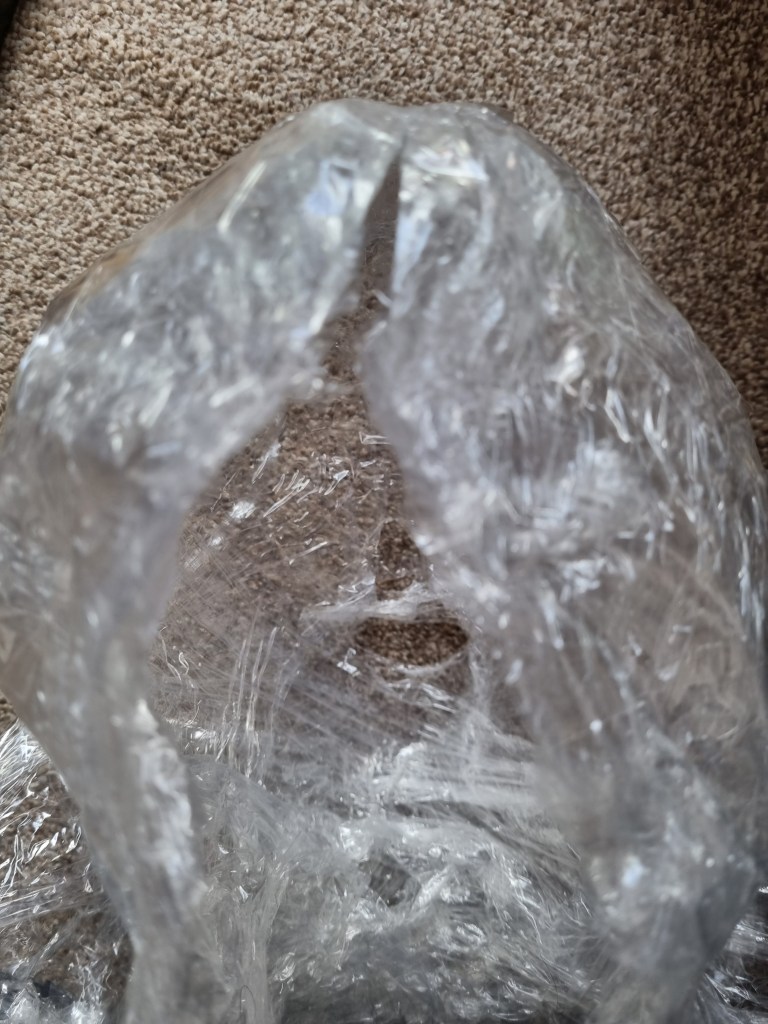
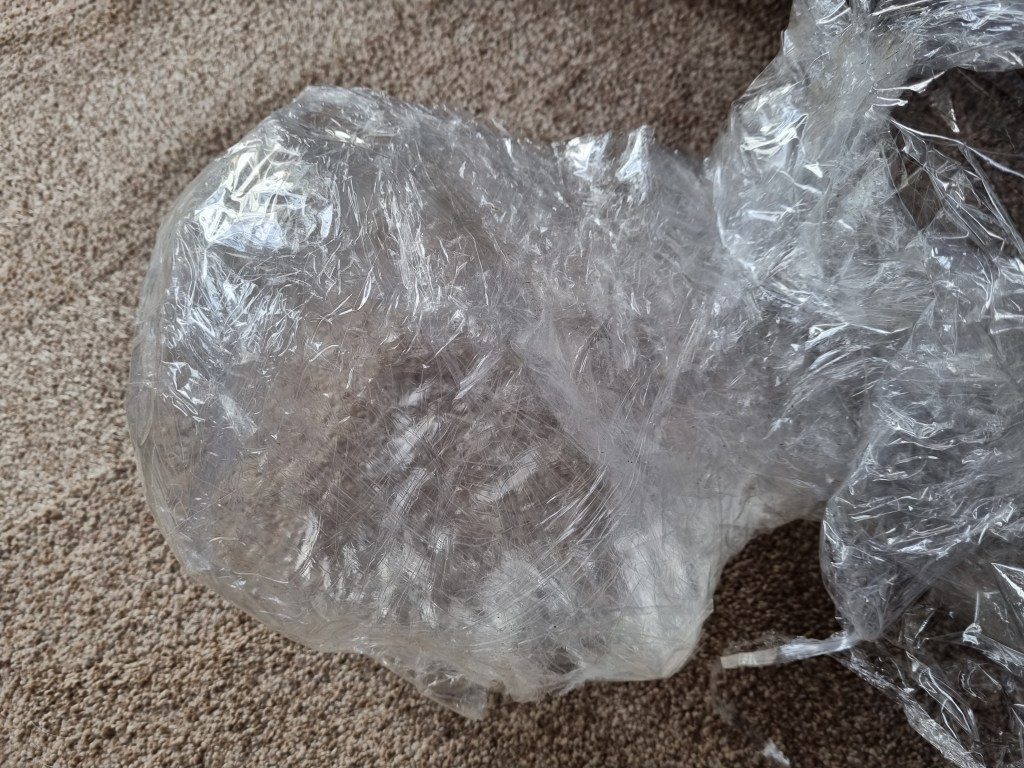
I started with the same methodology as with the body. First, I wrapped the head of the model with cling film and then applied the sealing tape. I remembered to extend the neck lower to the chest because of the attachment to the body.
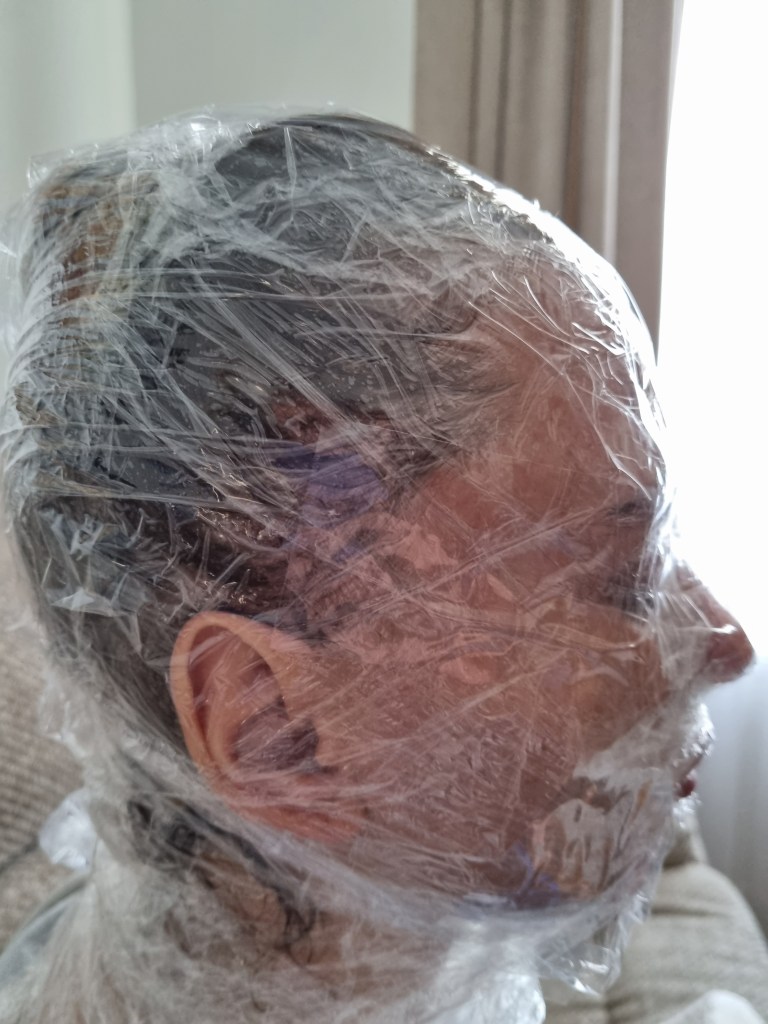
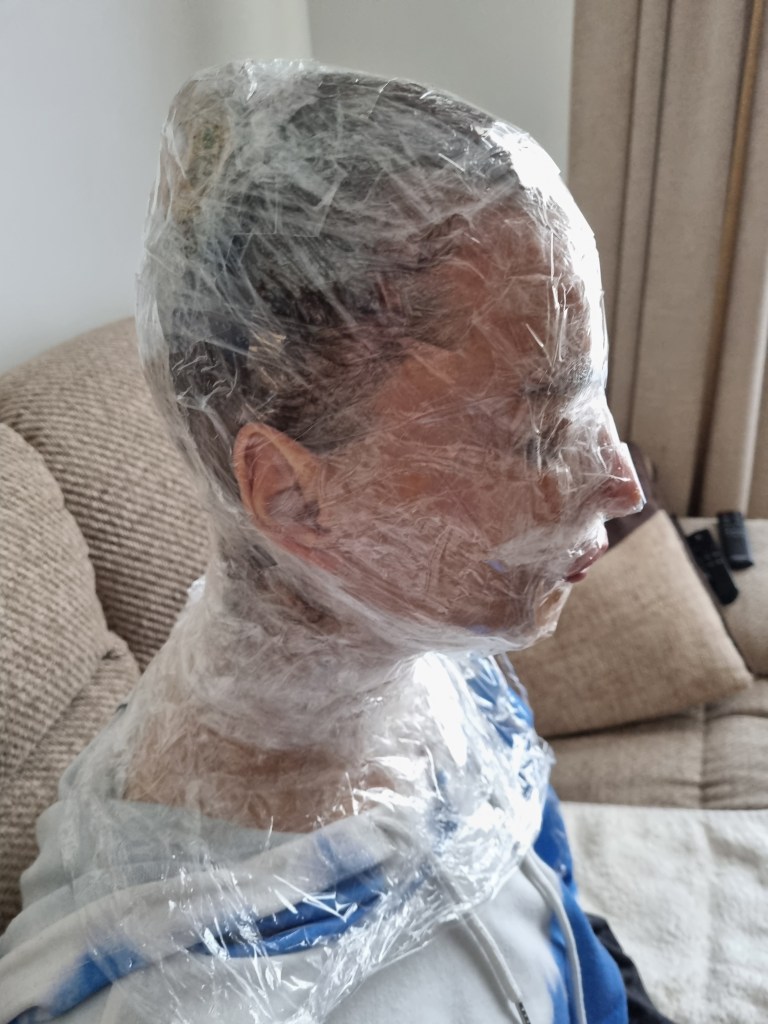
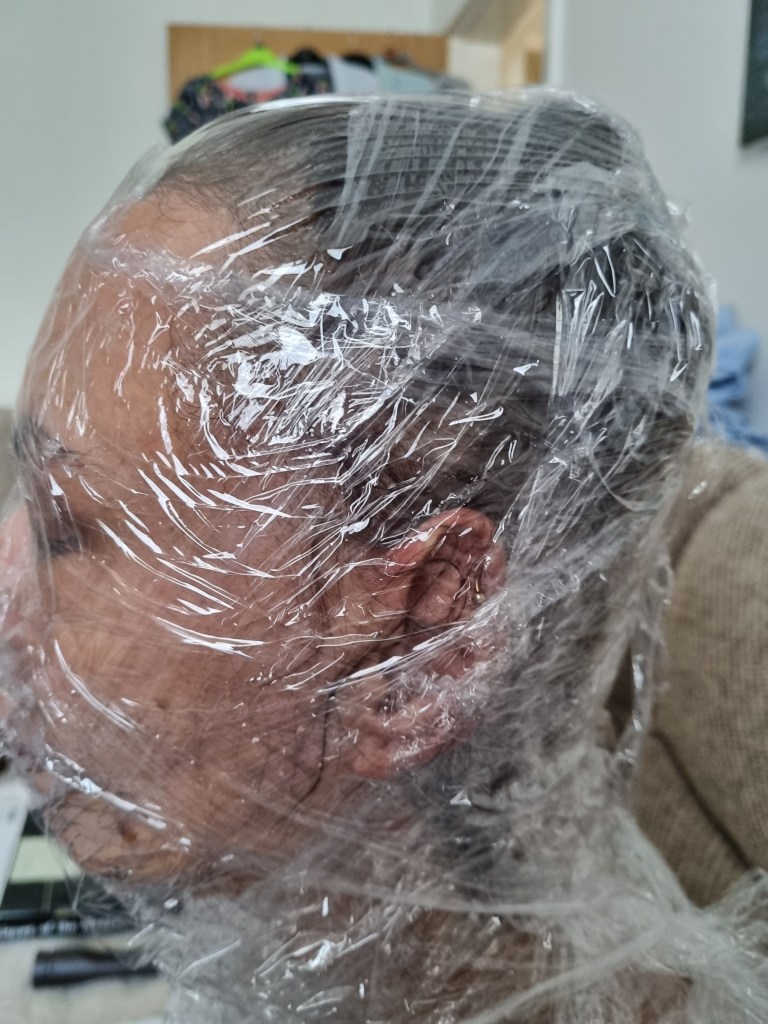
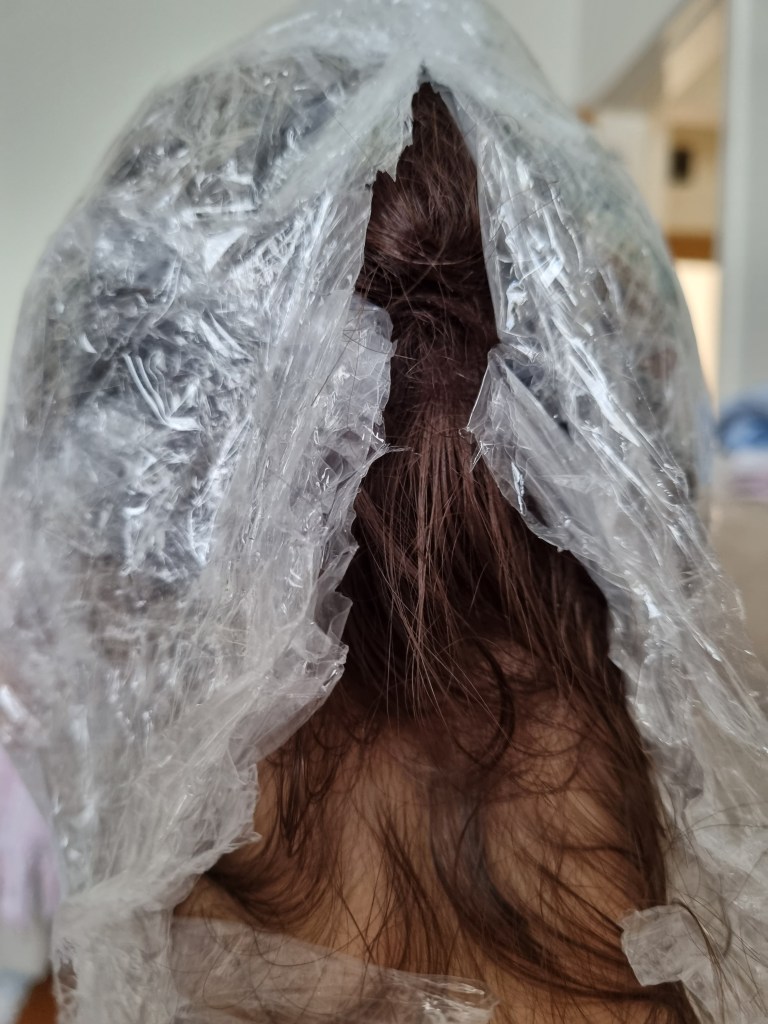
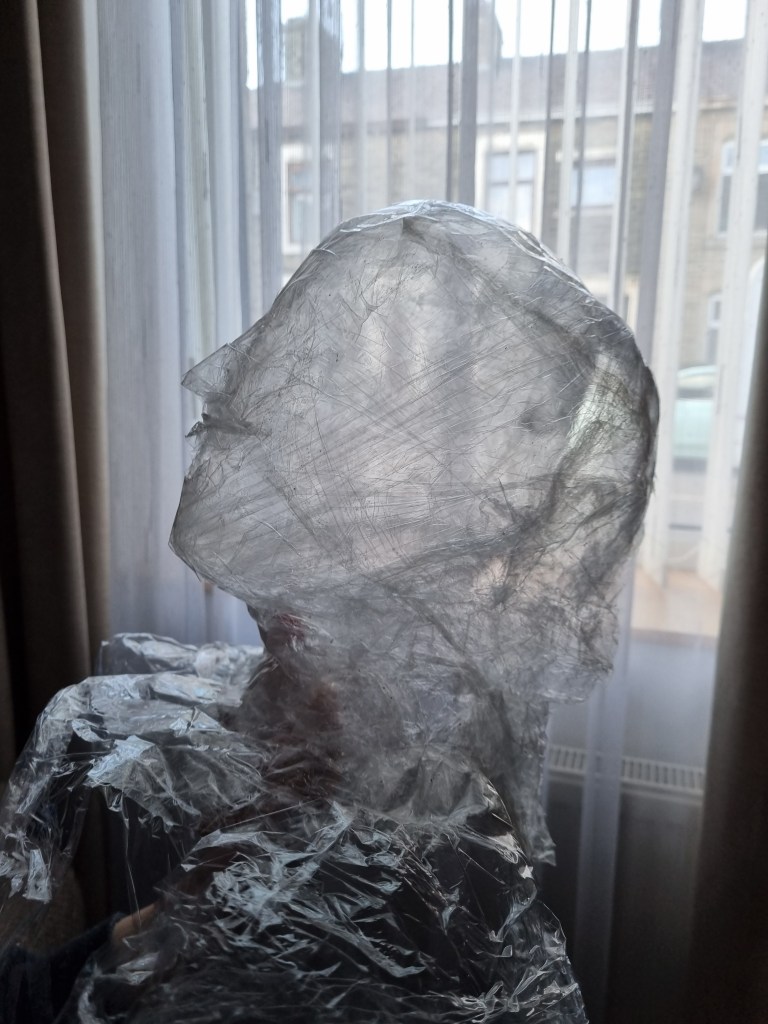
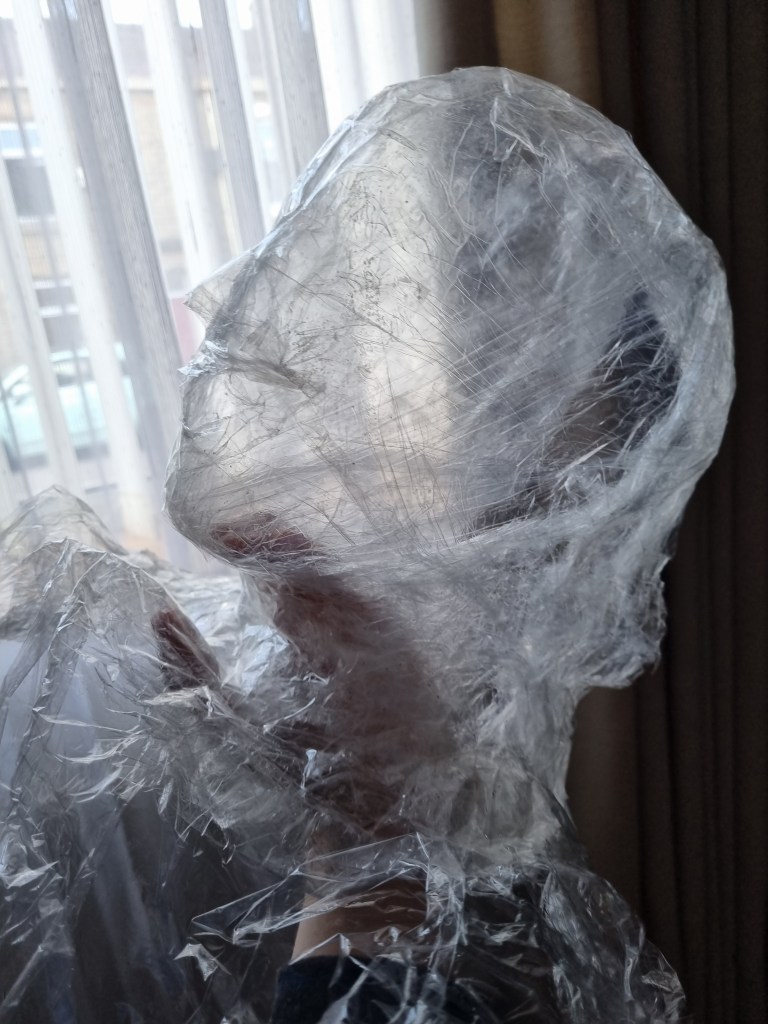
Progress of layering and forming the human feature.
I applied and layered the structure, then cut the cast at the back so I could release the model. The form looked great. It was transparent and looked delicate. First, however, I needed to add more layers of sealing tape to create firm consistency. Next, I added layers to the outside and inside to support the shape.
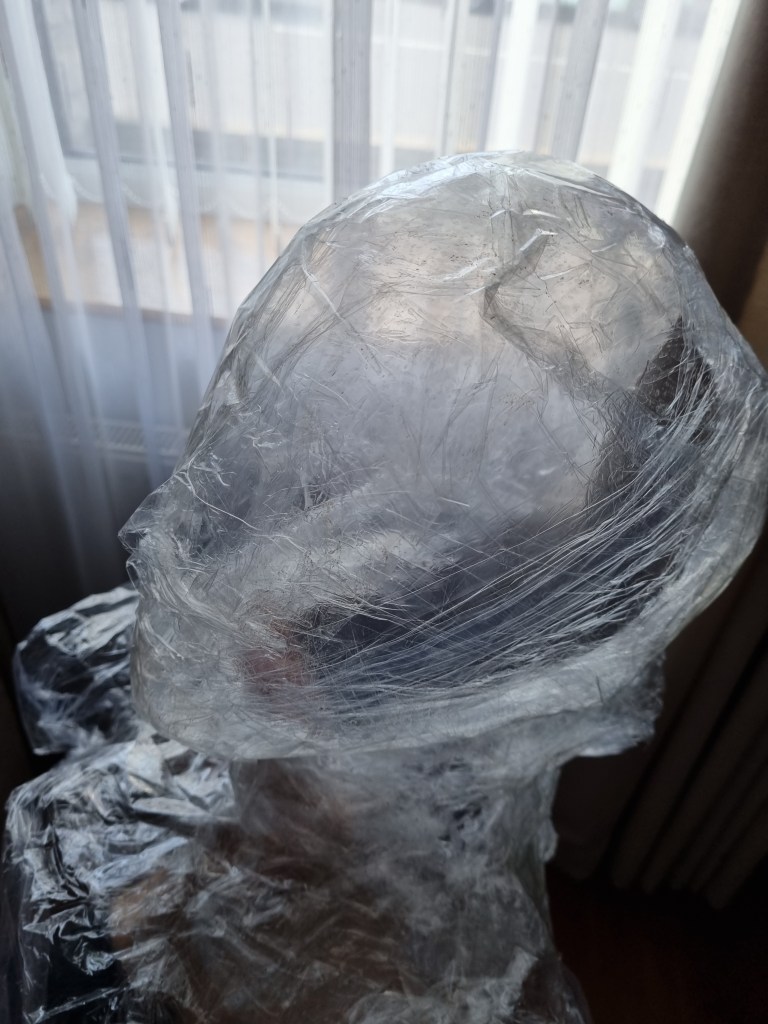
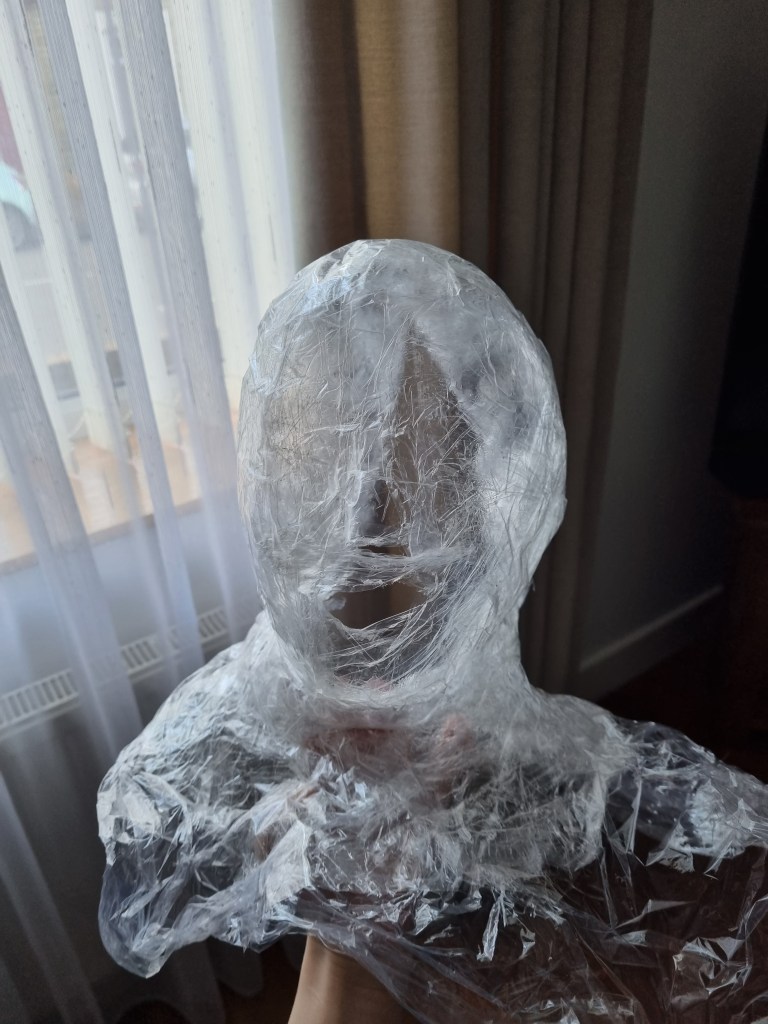
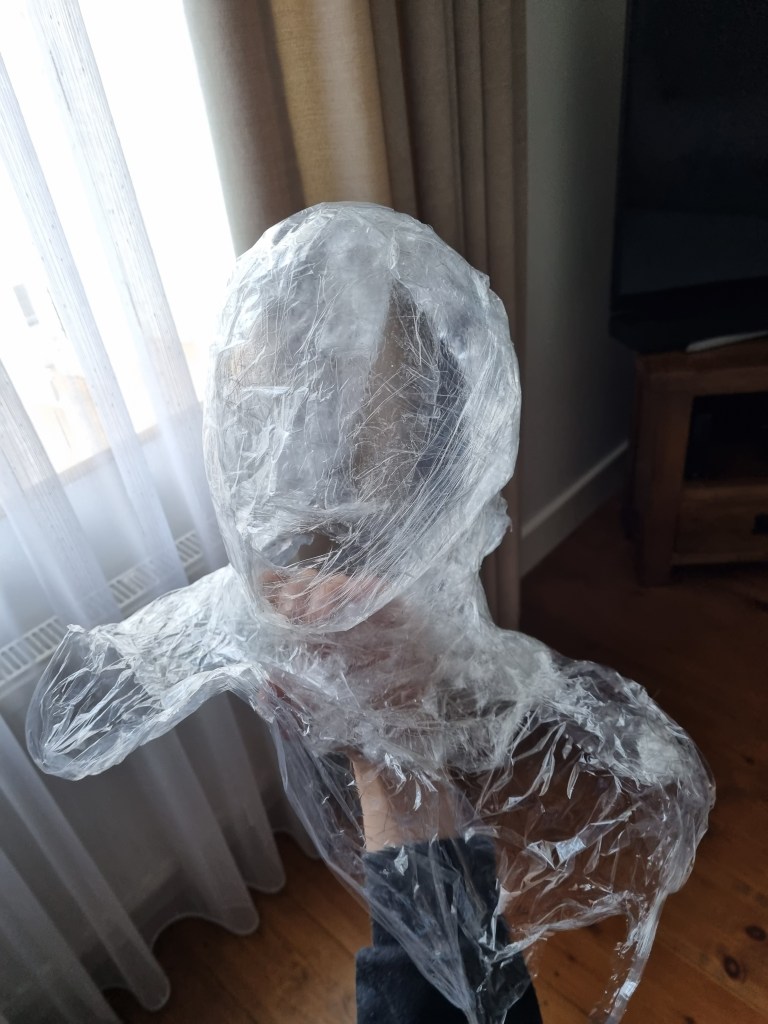
While working on the consistency of the head, I noticed the head shape showed a trace of a lump of hair from the model. That was created by tightening the hair into a bun. Next, I filled the dents with bits of cling film and covered them with sealing tape. It was challenging, and the alteration didn’t work. However, I am going to work on it gradually.



Connecting the head with the body
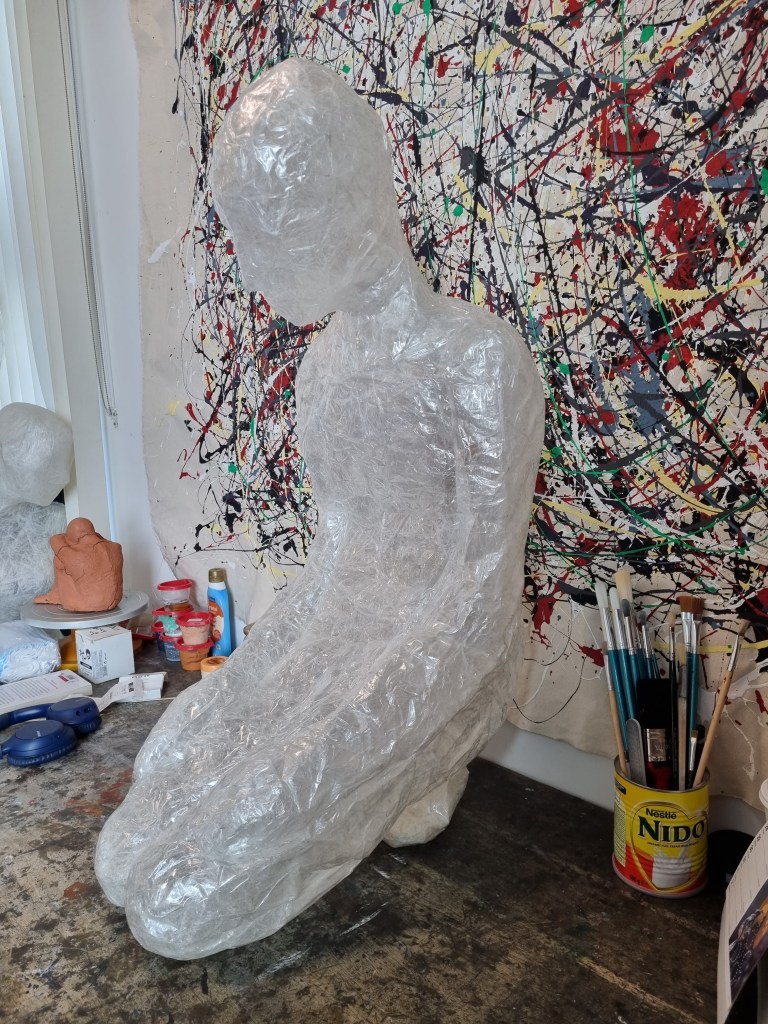
I attached the head to the body to see and examine if the position and length of the neck would appear as natural as possible. I placed the head tilted a bit down so it would appear relaxed.
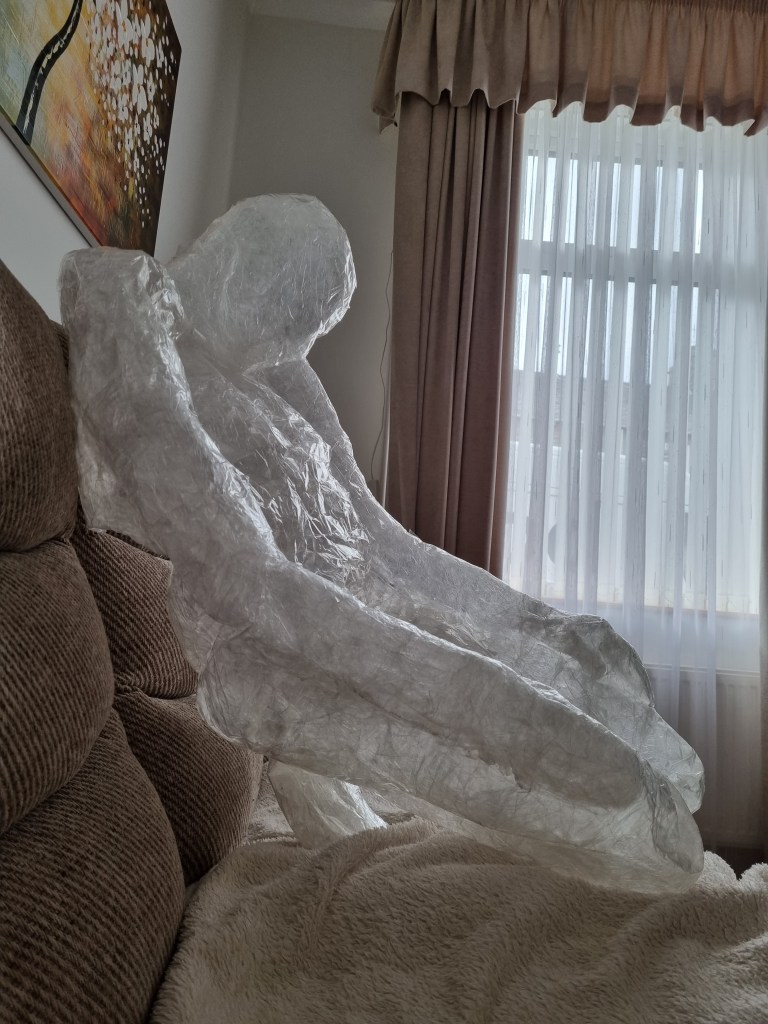
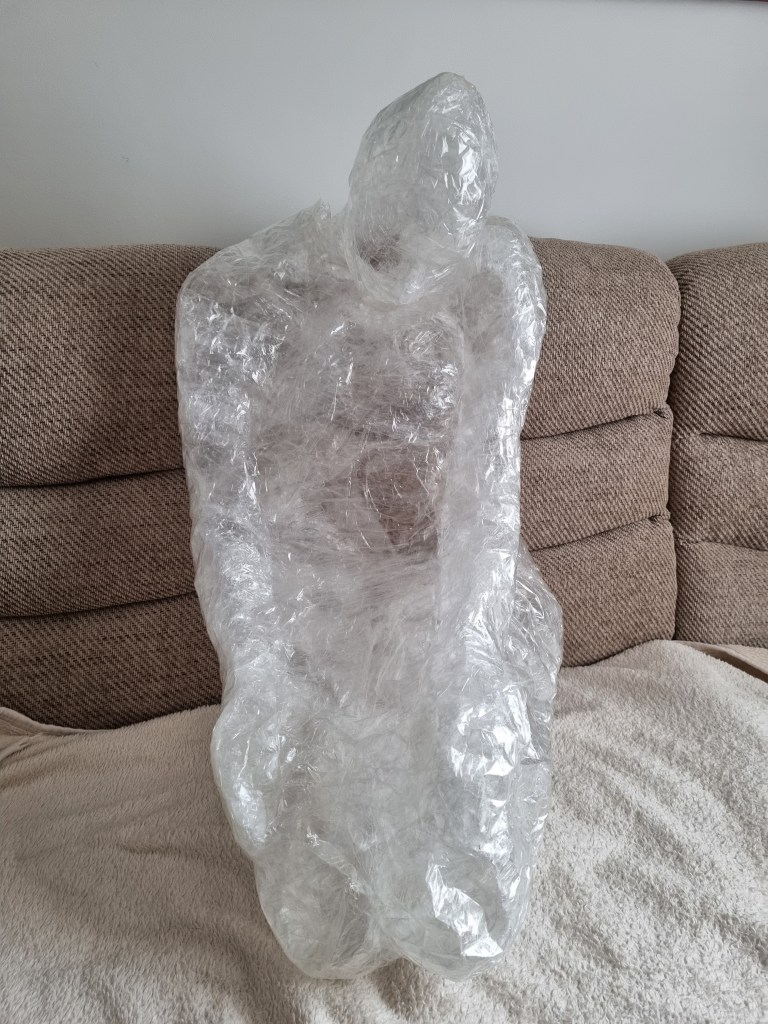
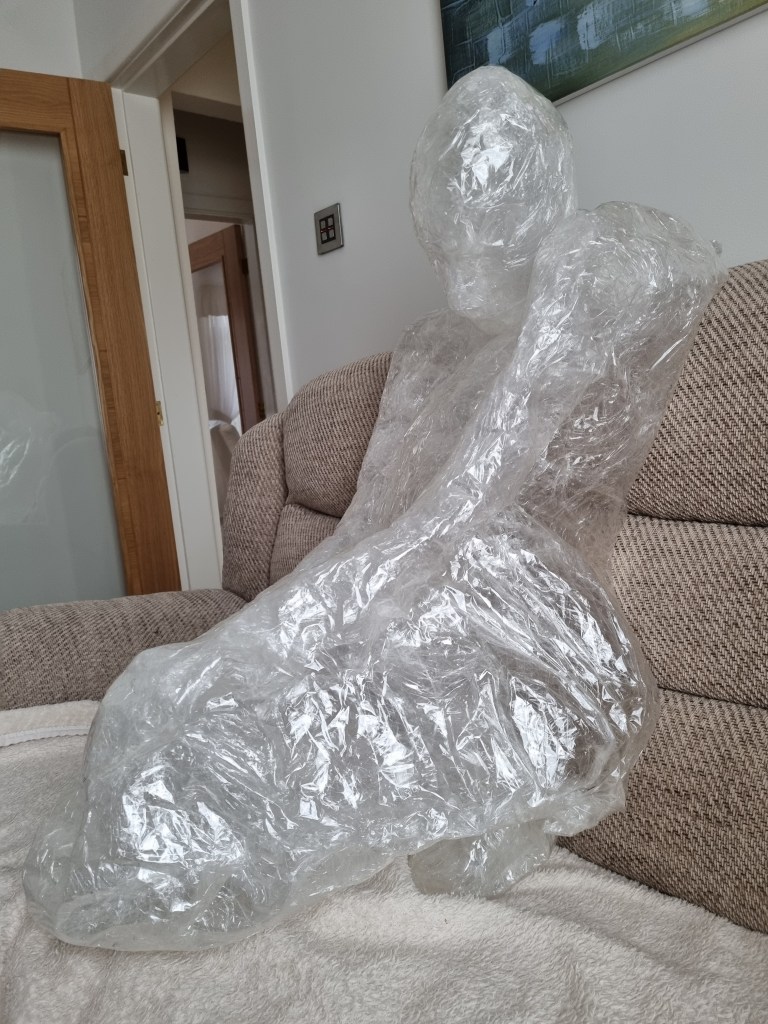
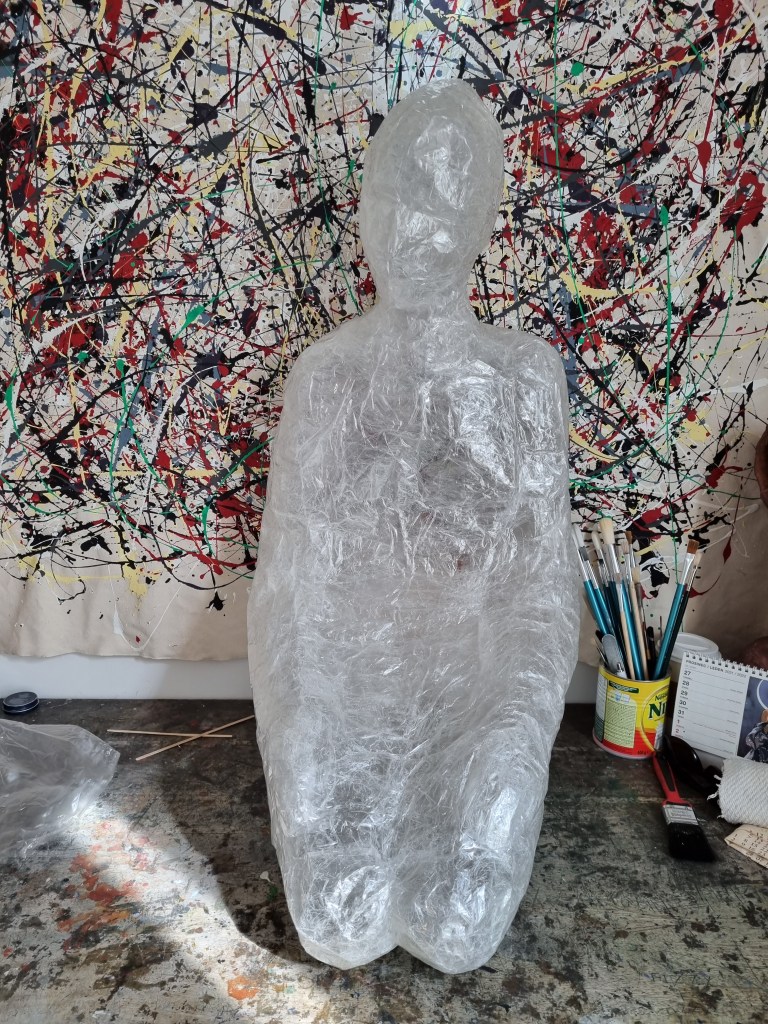
After adding more firmness to the sculpture, I attached the head after investigating the position again to the body to see if the proportions were correct. Again, I struggled because the consistency of the head and body needed to be firmer to get it in the proper position. At this point, I started from the beginning and began to work on firmness again.
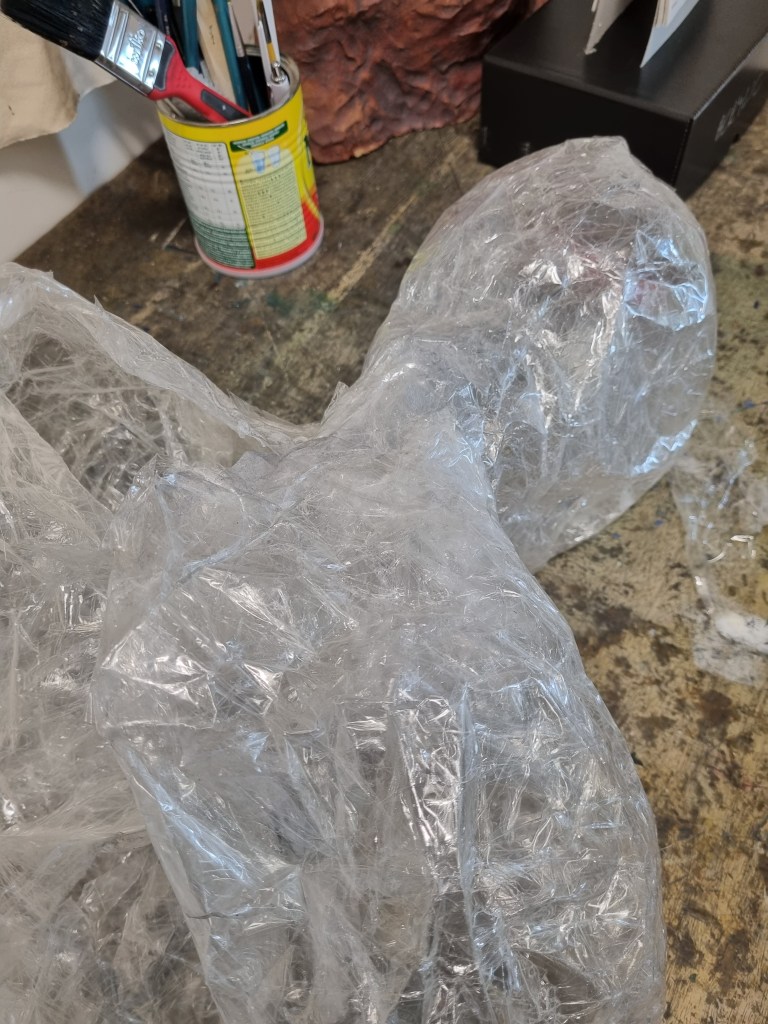
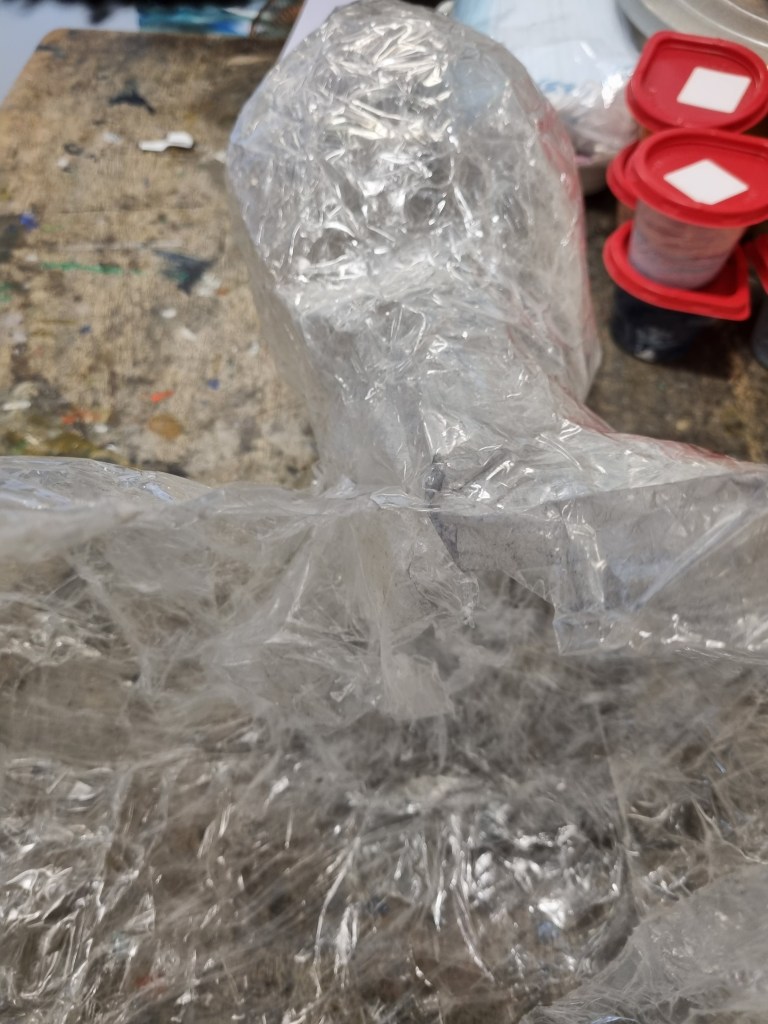
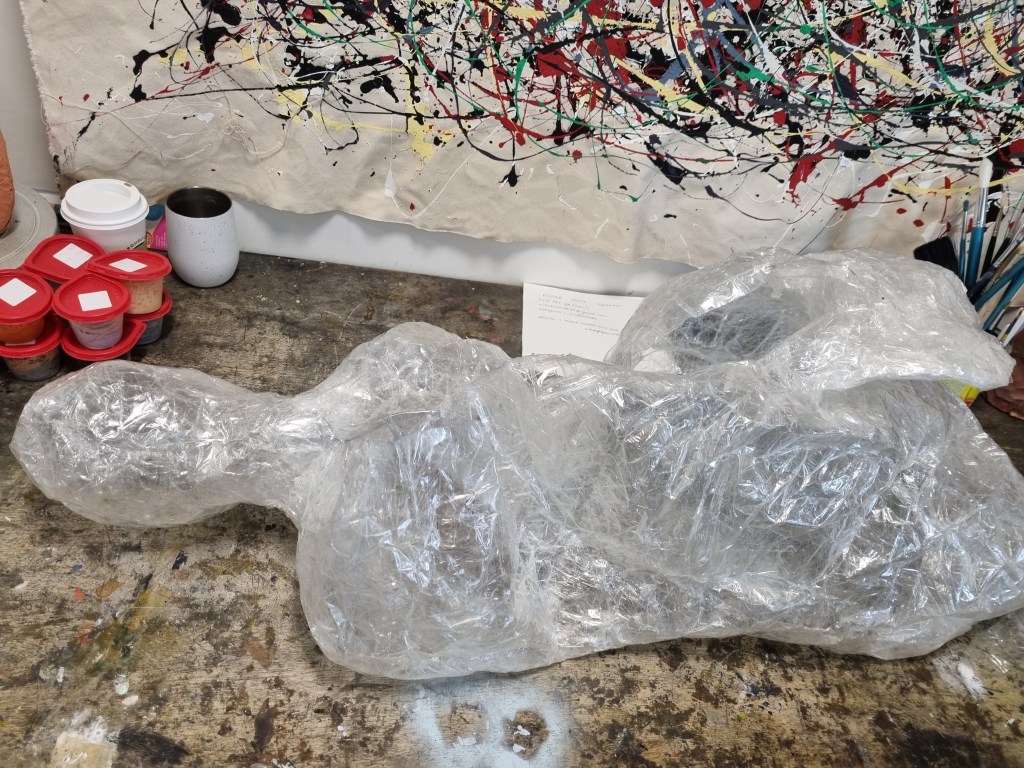
I repeatedly attached the head to the body, and I still could not get it to the proper position.
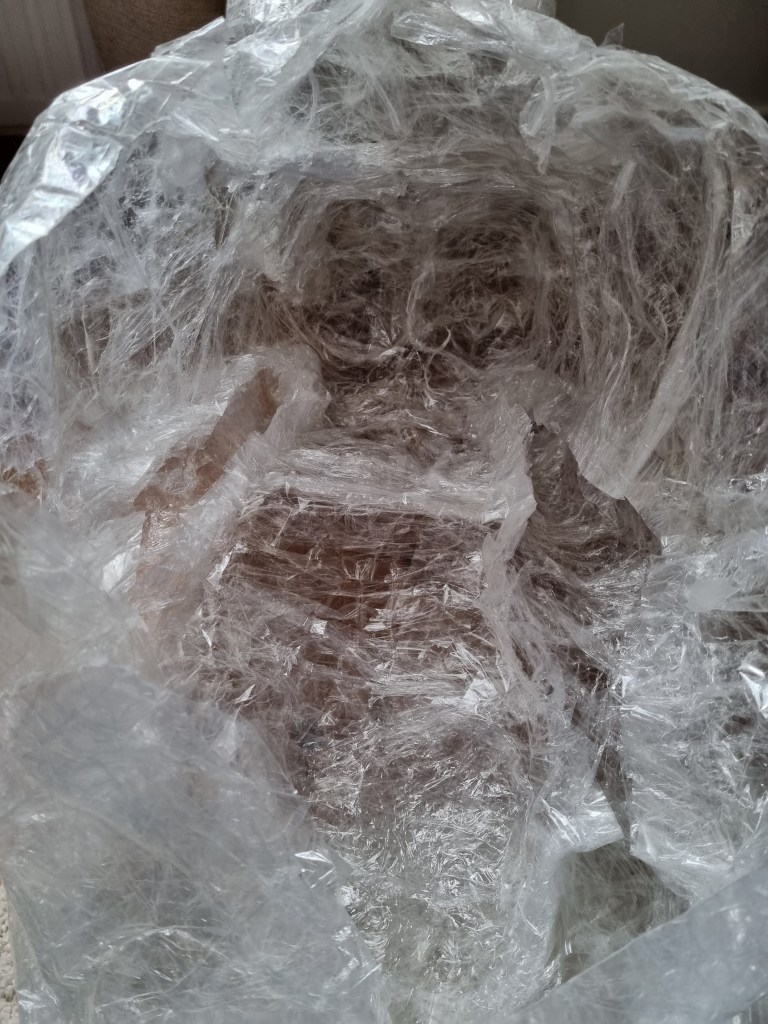
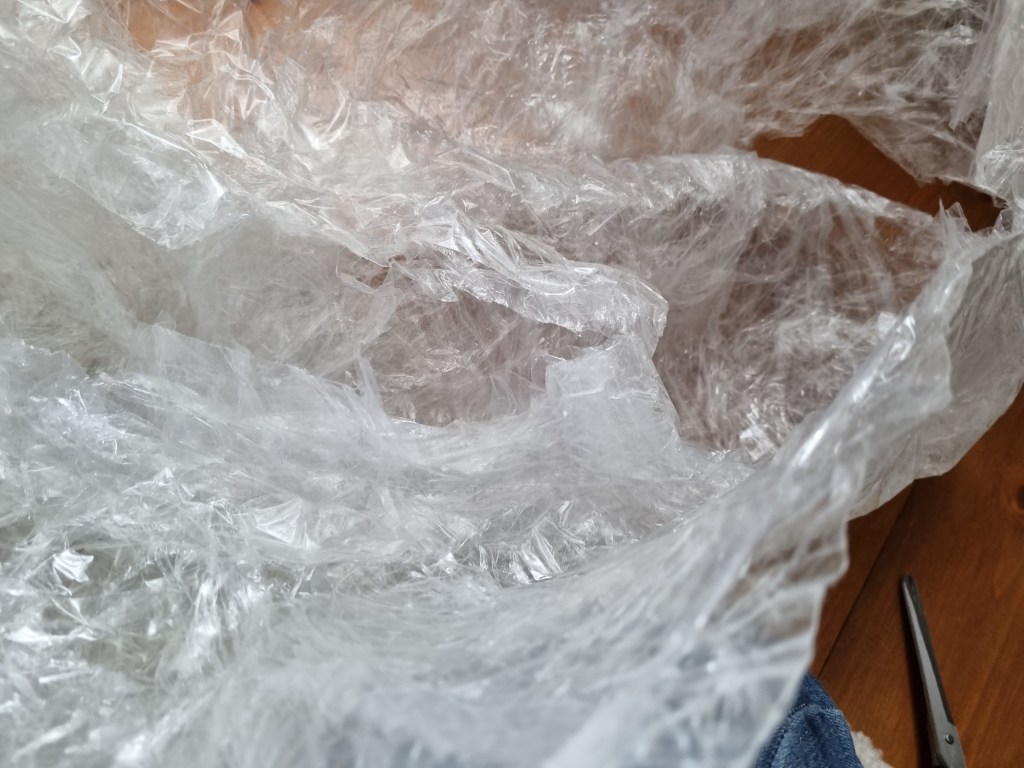
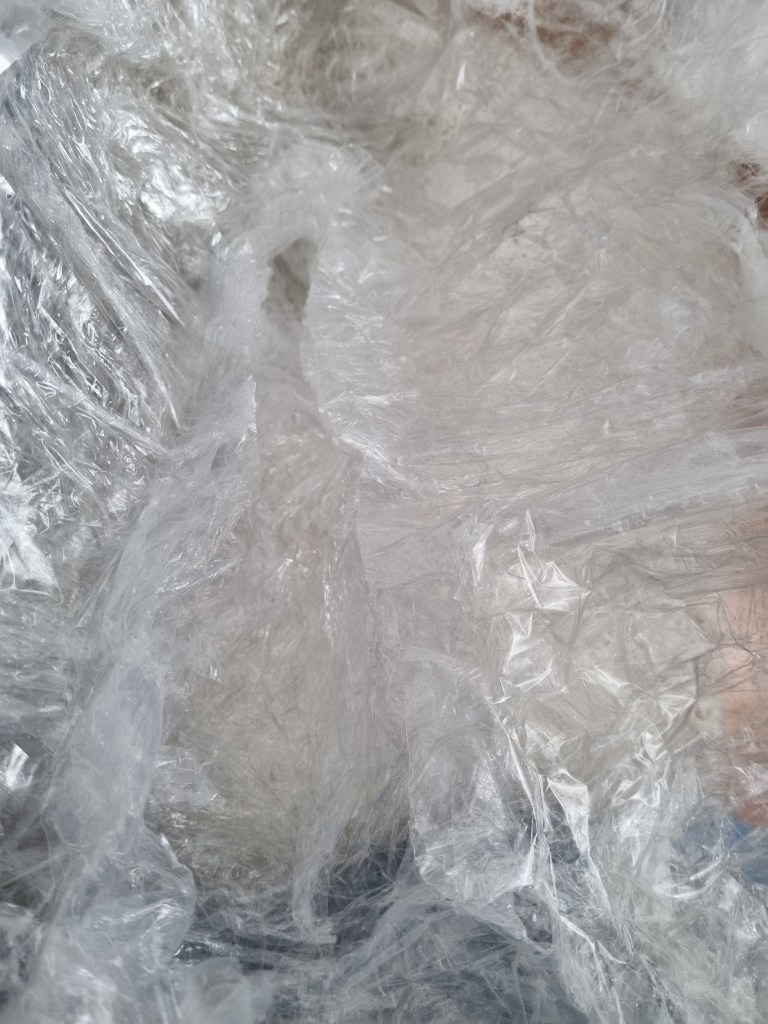
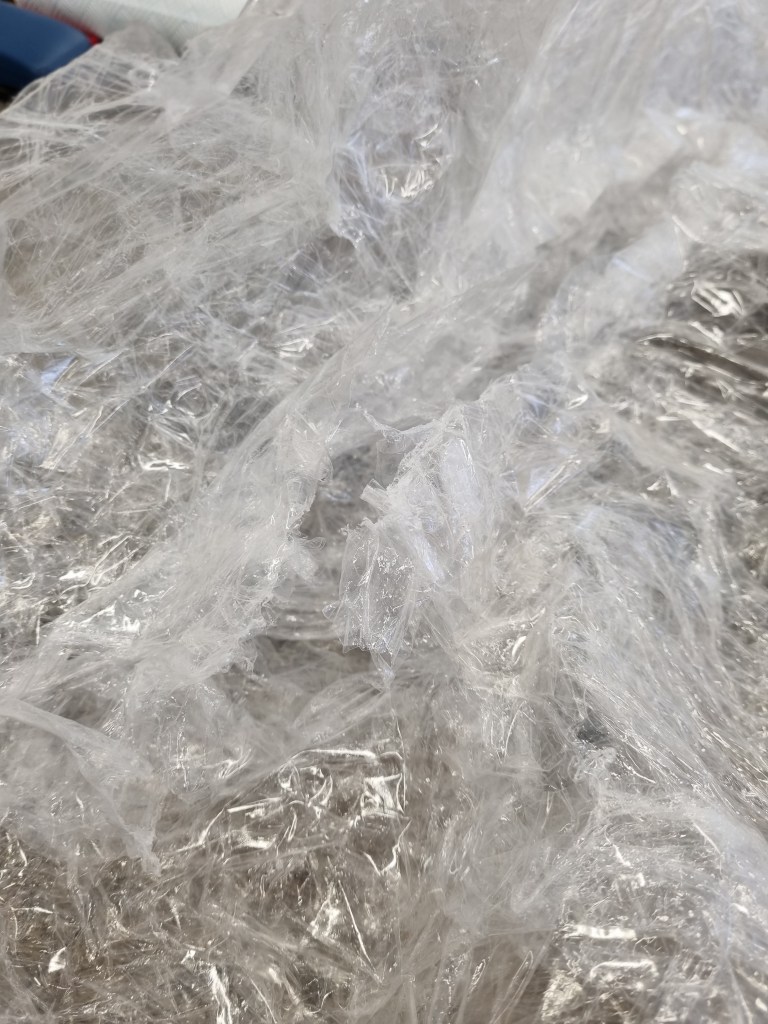
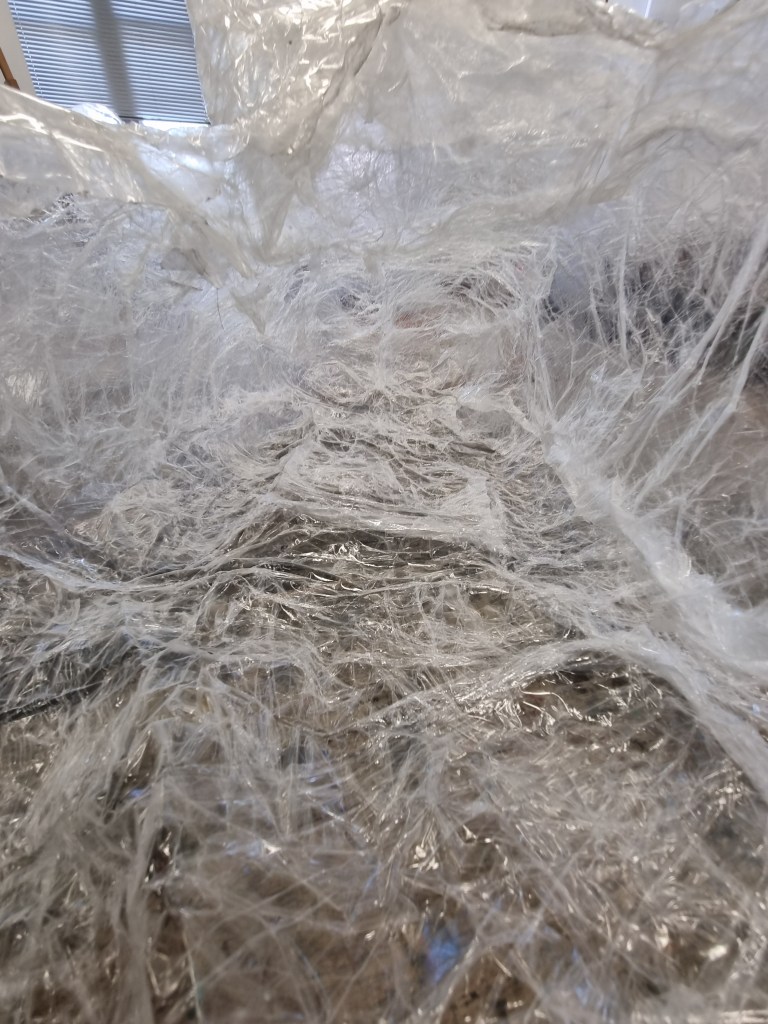
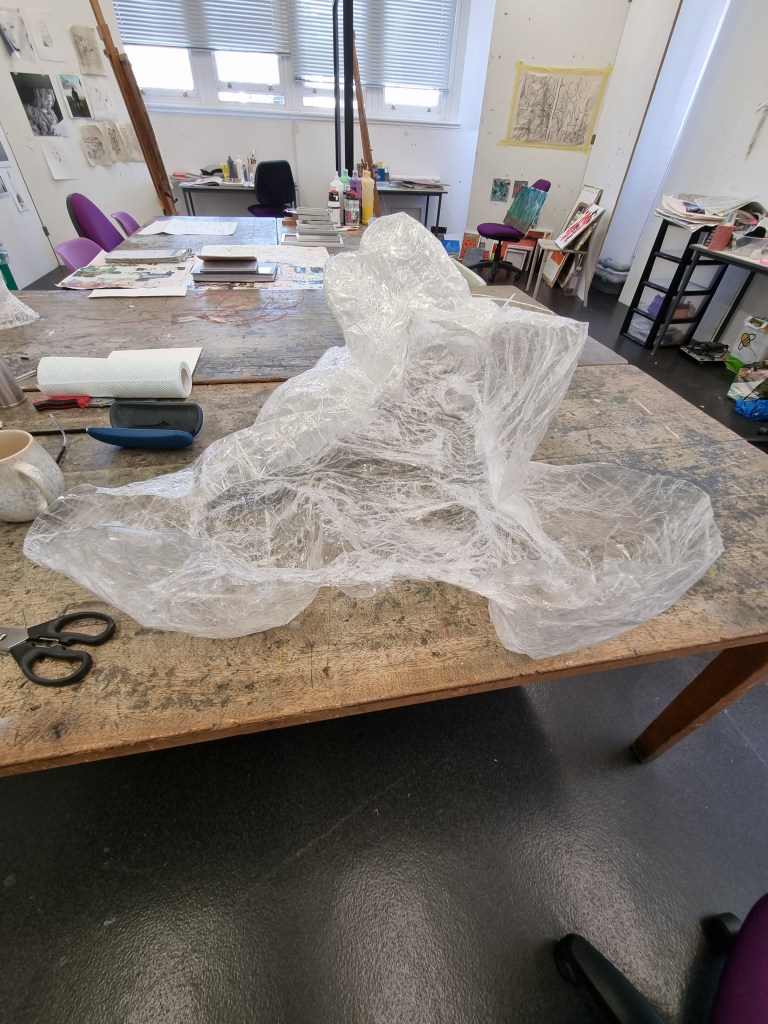
Finally, I decided to leave the last position of the head after countless attempts. At that time, when the head was not attached firmly, the position looked satisfactory. However, as I progressed with the head and body joint firmness, I noticed the head had moved slightly to the side.
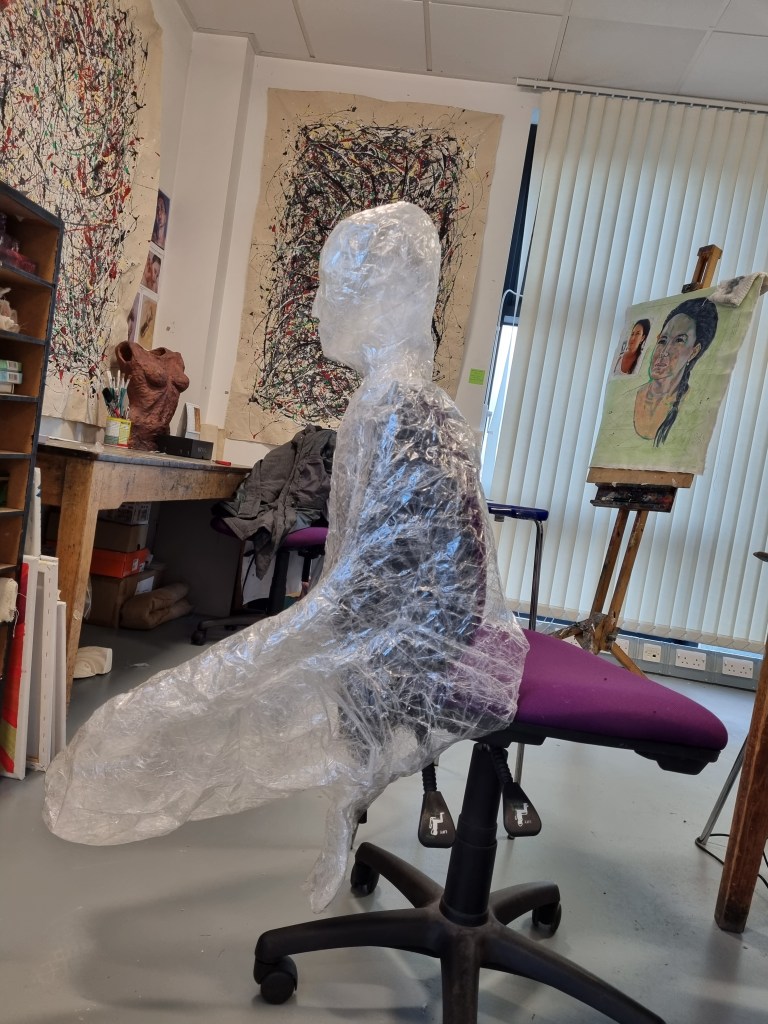
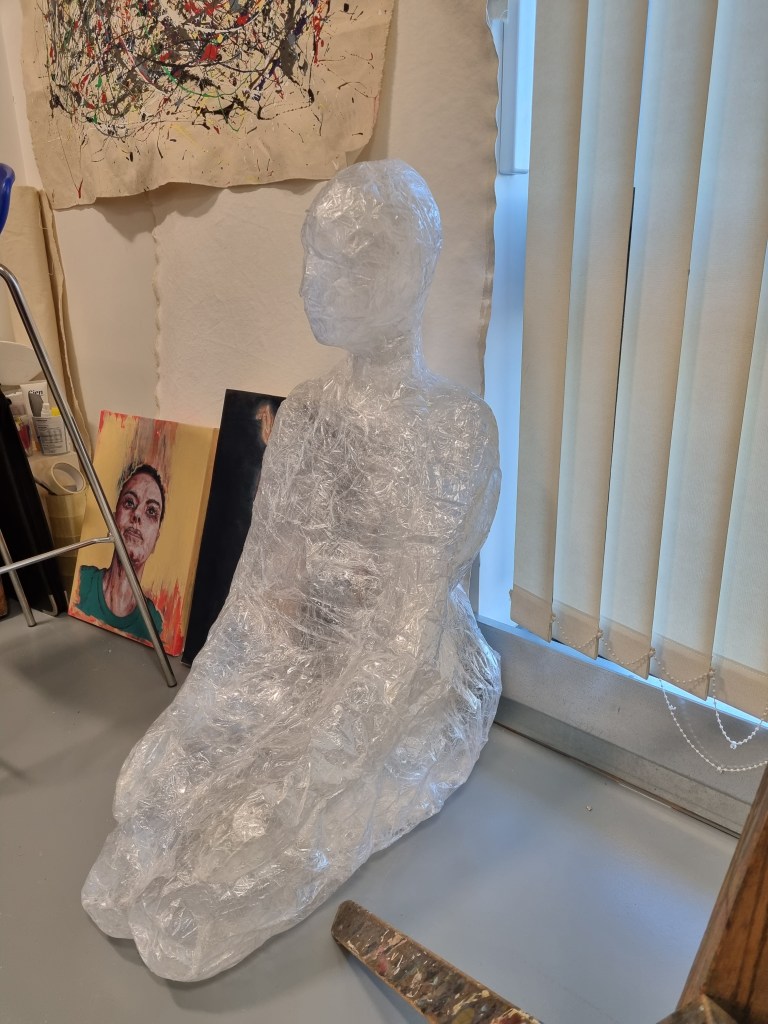
Decision-Making/Solution
I carried on with the articulation of the sculpture’s shape to create a firm and stable structure. As I progressed, I struggled to keep the figure in firm condition. I mentioned earlier that I made a sellotape sculpture named “Anxiety.” That sculpture is solid, stable and still transparent. However, the figure I am working on appears unstable and collapsing in the elbow part. I added layer after layer that the figure started losing the transparency and became heavier than the “Anxiety”. After applying so much sellotape, I thought it would have to be firm enough to finish it by now. Then I thought it might be the sellotape.
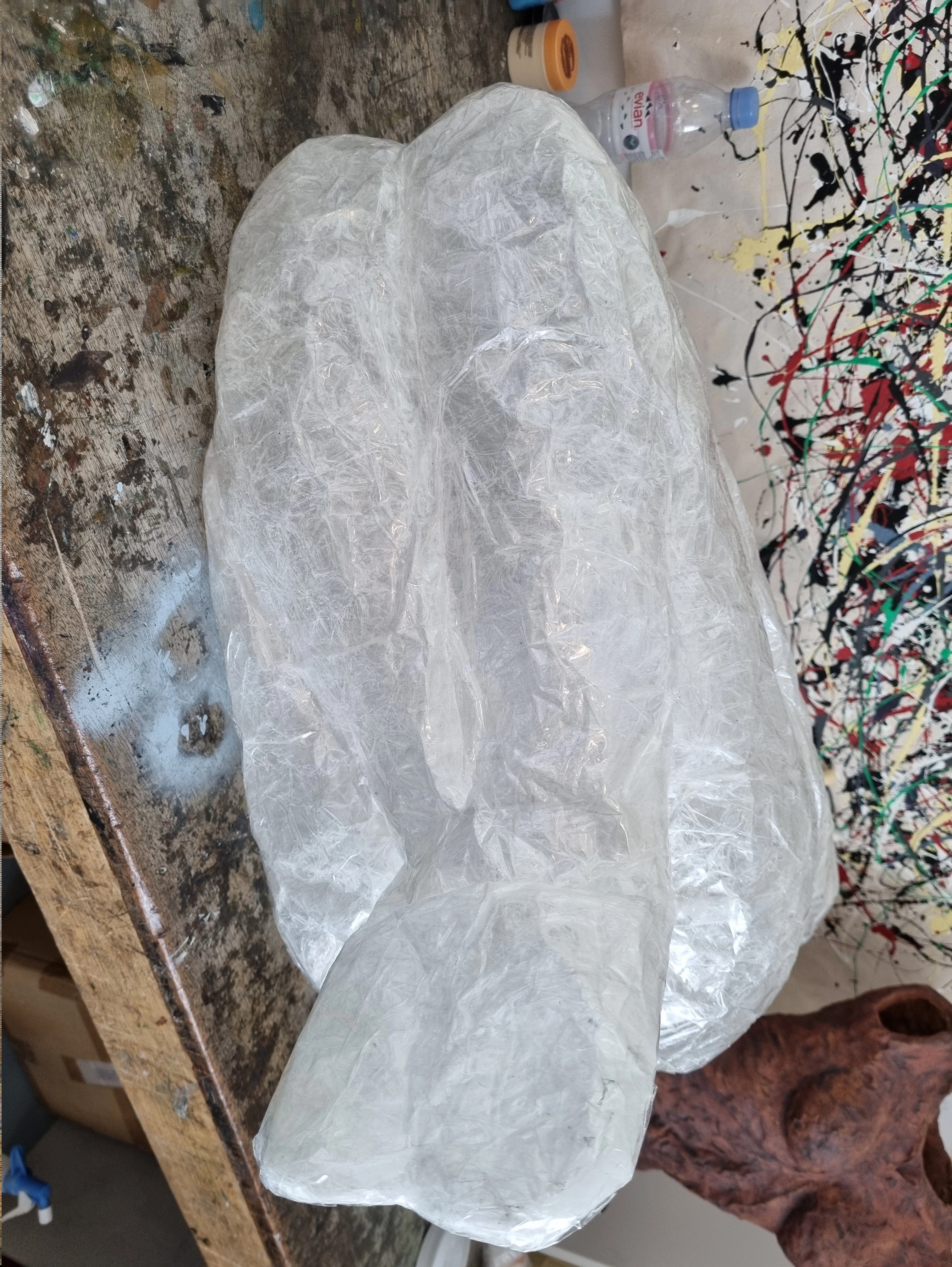
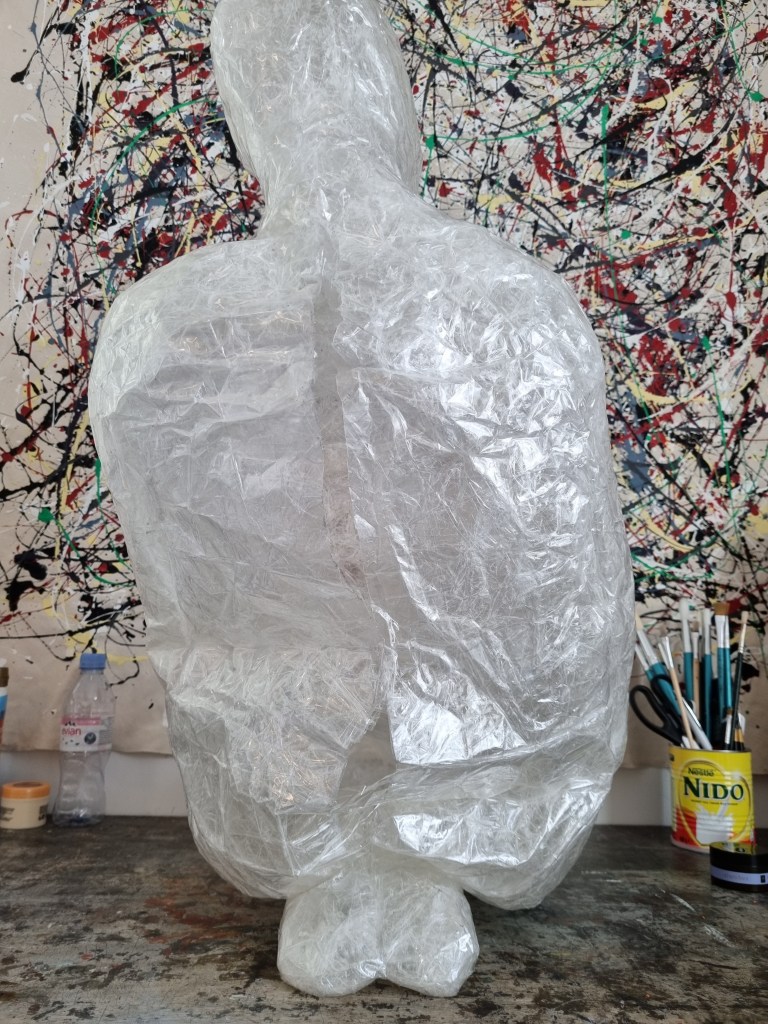
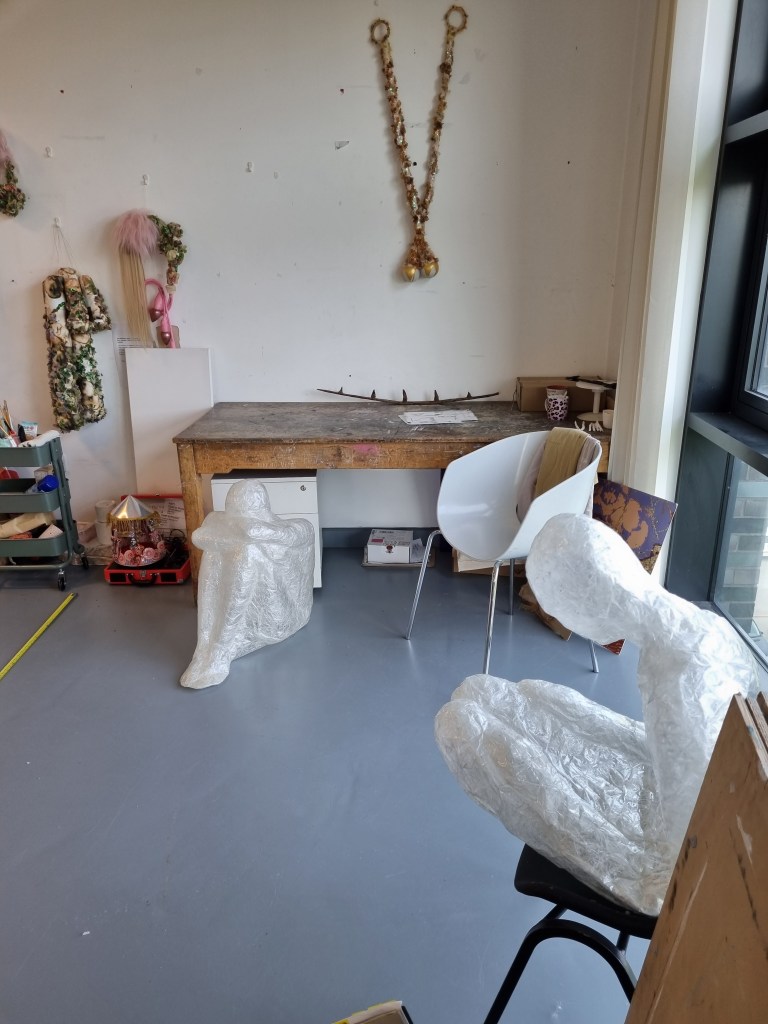
This particular sellotape was donated to me for this project. However, I never thought there might be a big difference in the quality of any sellotape. On that note, I purchased a sellotape from “The Range” in Blackburn and tested the firmness while working on the standing sculpture. If the process and quality is good, I will make another meditative pose sculpture, although I have only got a little time as I work many hours.
I put the meditative pose figure to a side and started to investigate the firmness in the standing pose and the time I had to spend working on. Then, I thought I might start from the beginning and create a new meditative pose.
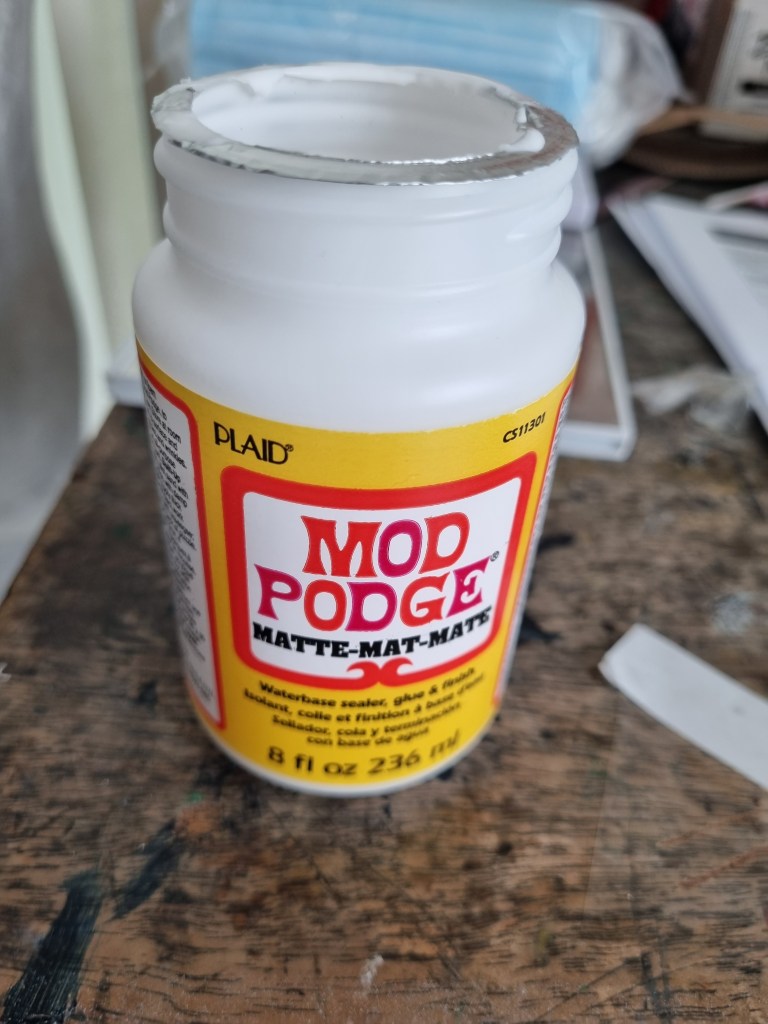
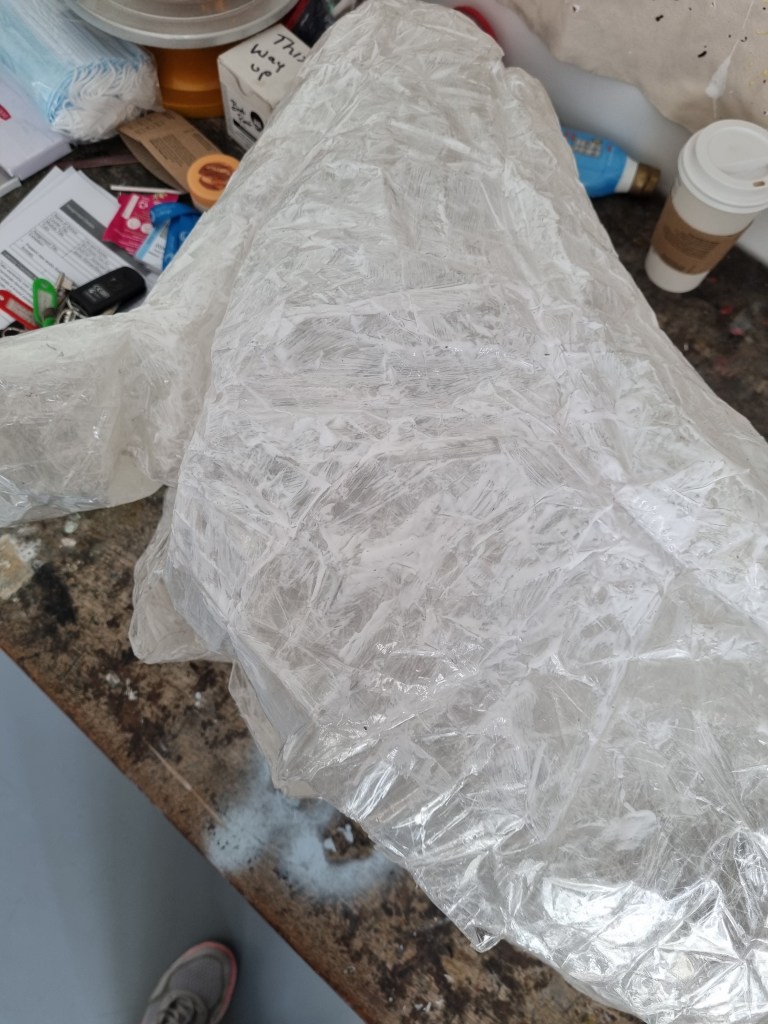
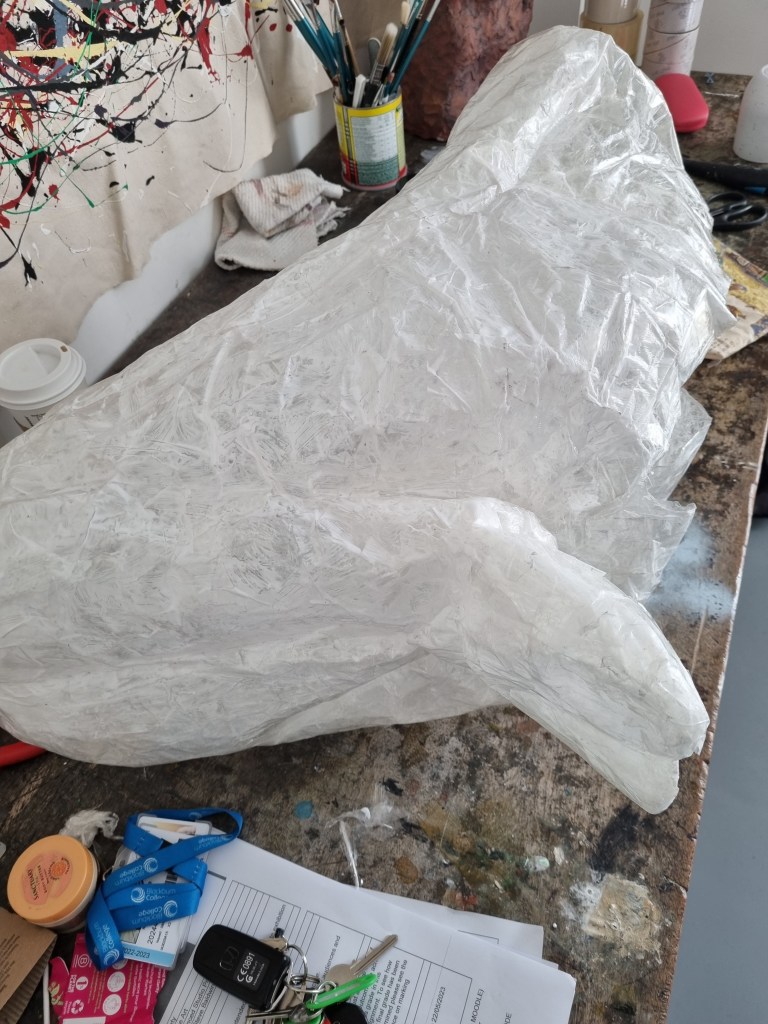
I spoke to my student fellow Bee about the problem, and she recommended “Mod Podge” Matte-Mat-Mate, to firm up the sculpture. However, I wanted to keep the transparency of the statue, so I was unsure if the glue was a suitable medium. Although the adhesive is milky and cloudy in colour, when it dries, it becomes apparent, so I decided to proceed.
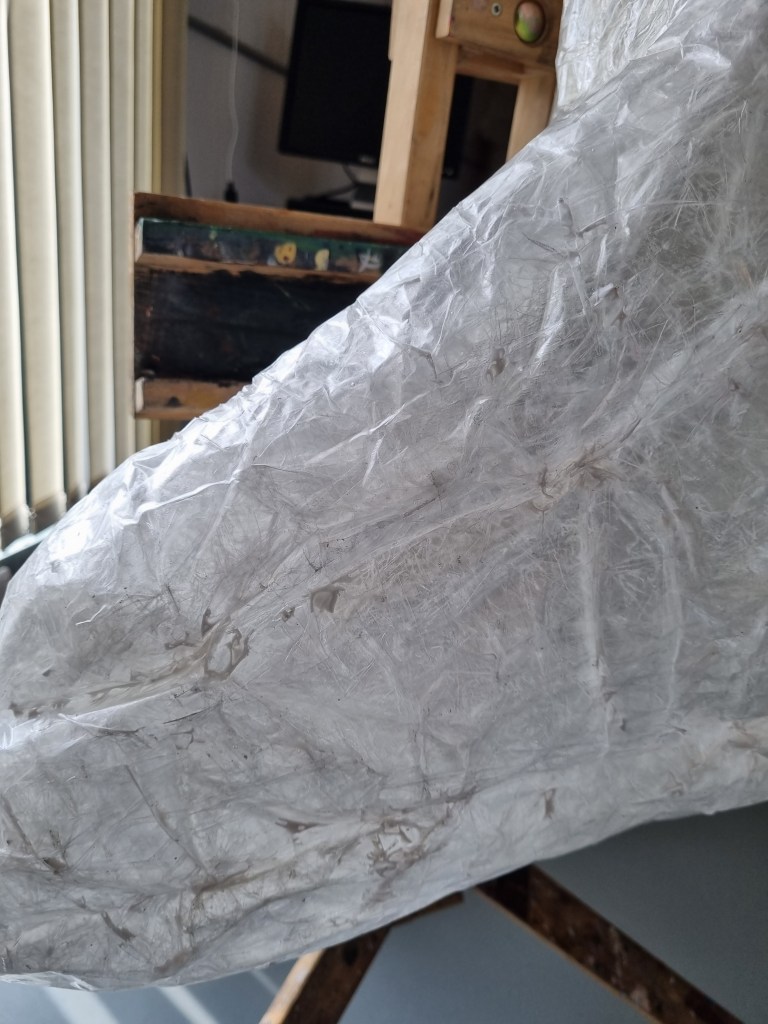
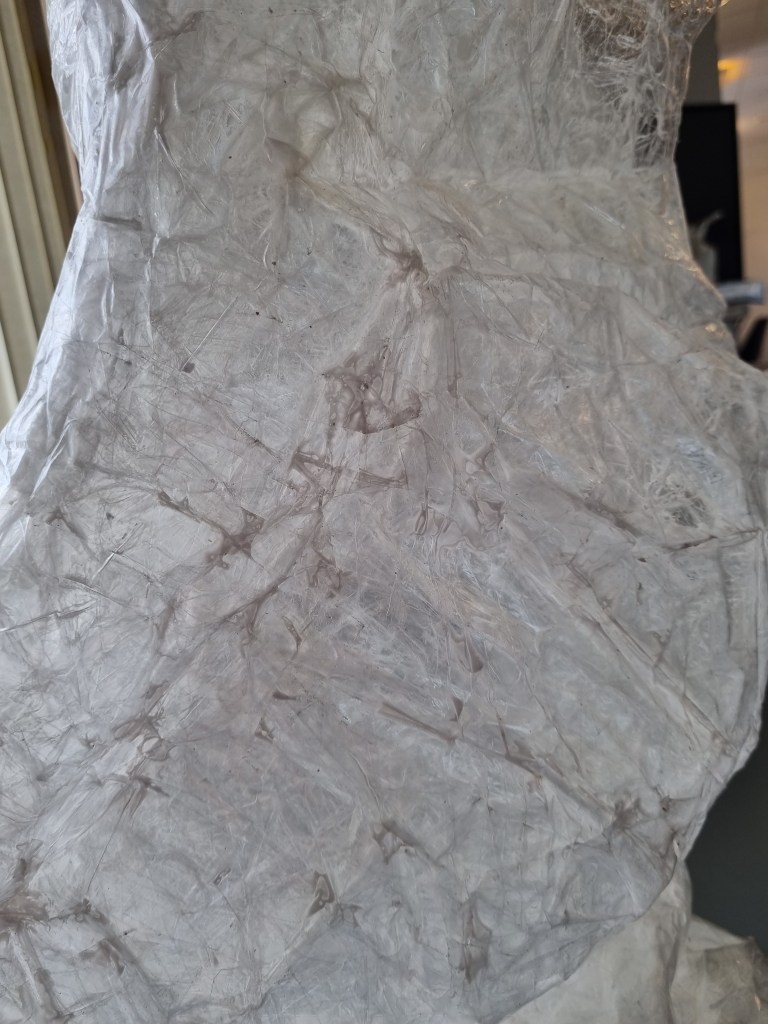
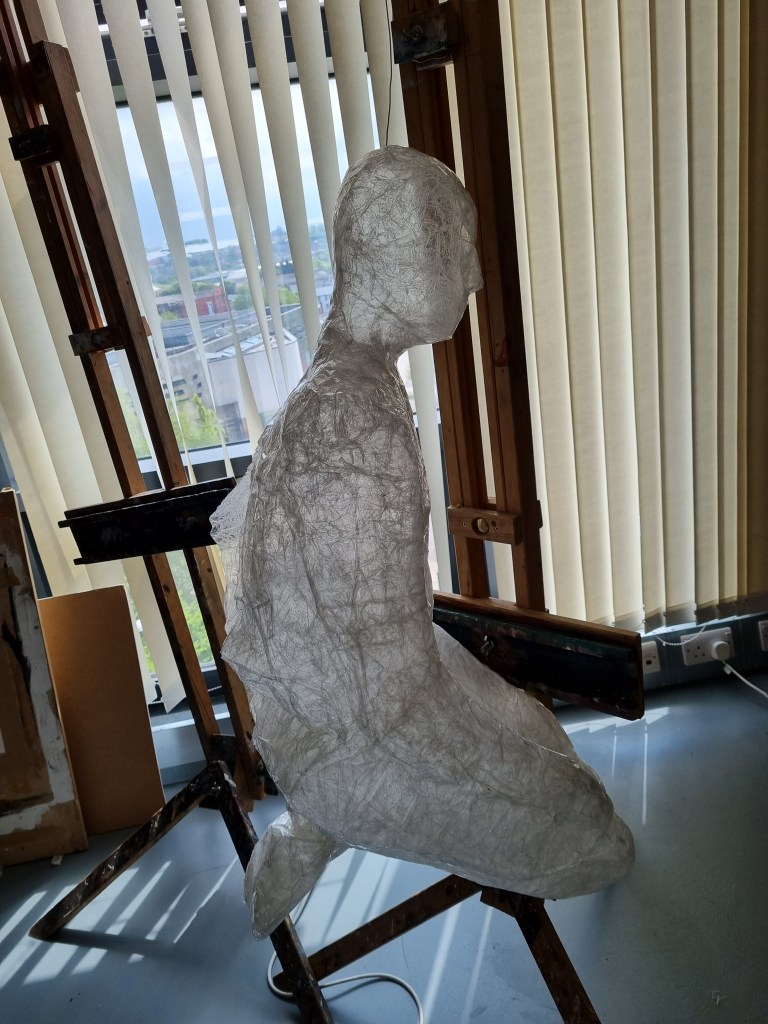
The glue got into the seams of the sellotapes, and it looked cloudy. I was worried then that the clarity of the transparency could be compromised. So I decided not to continue with the Mod Podge for the rest of the sculpture.
Instead, I tried to modify the shape of the figure to make it stable.
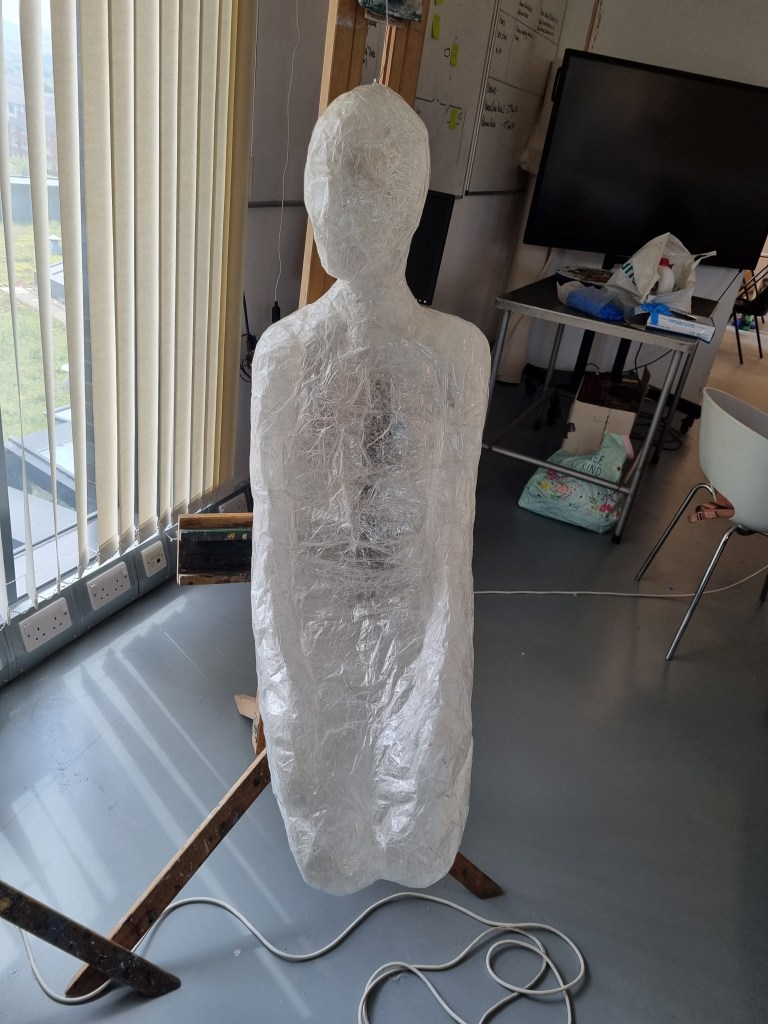
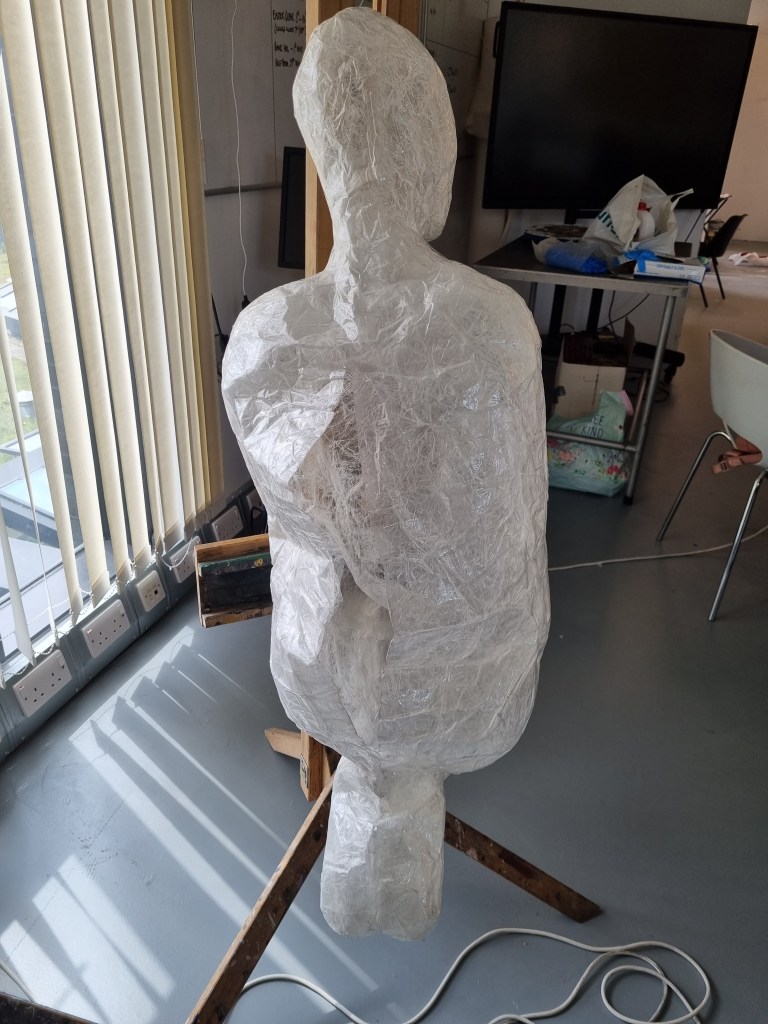
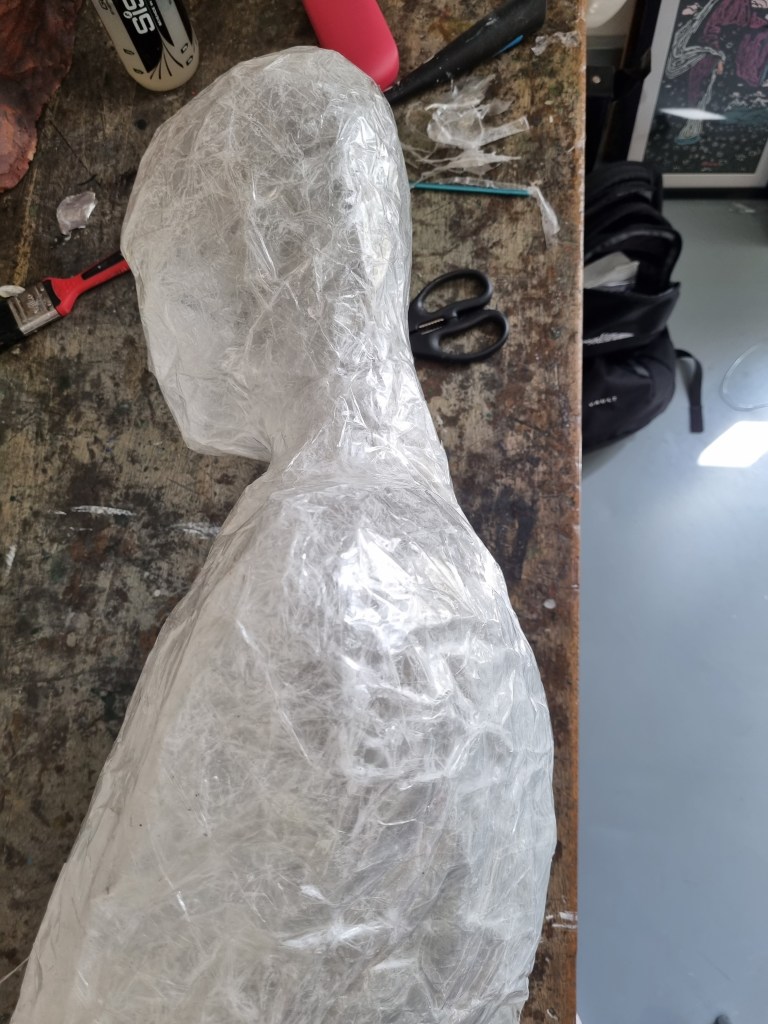
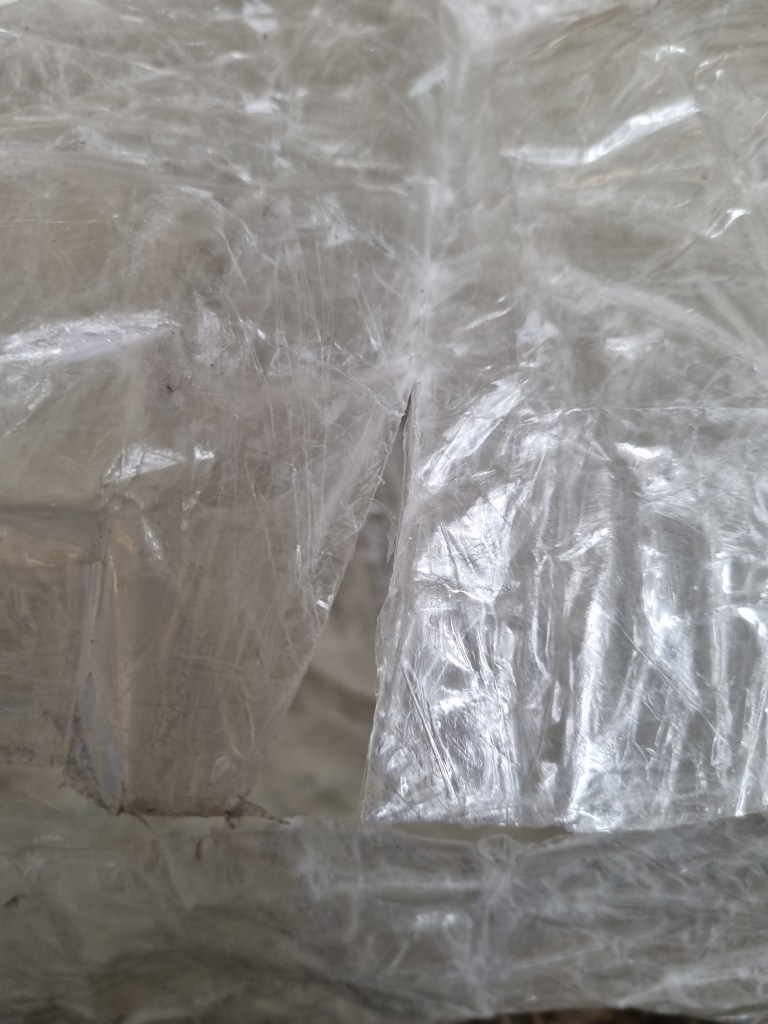
I cut out small and narrow vedge shape pieces to reduce the material from the back cut to make it smaller. Some folded sellotape gathered into creases that I cut through, stretched and resealed again.
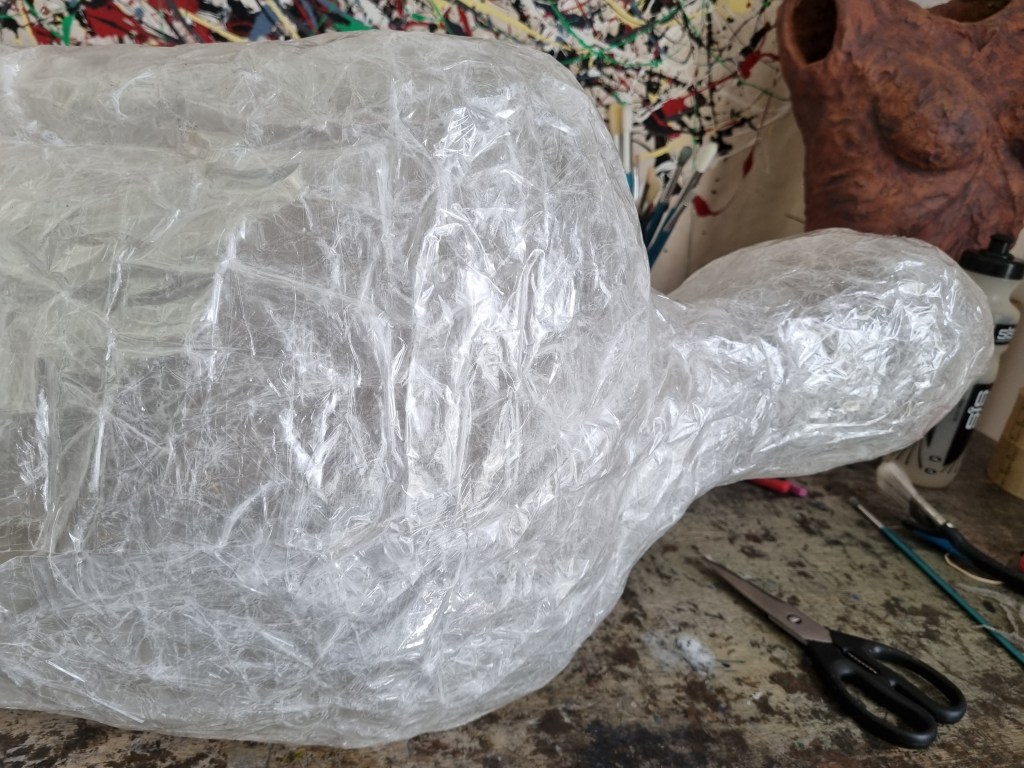
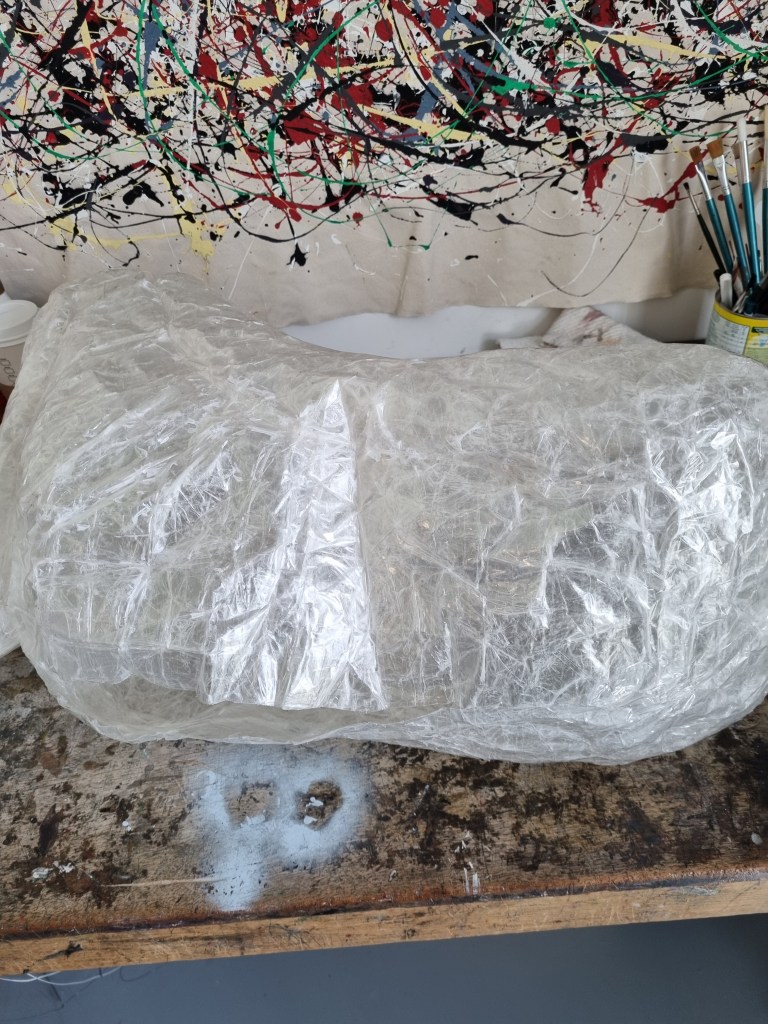
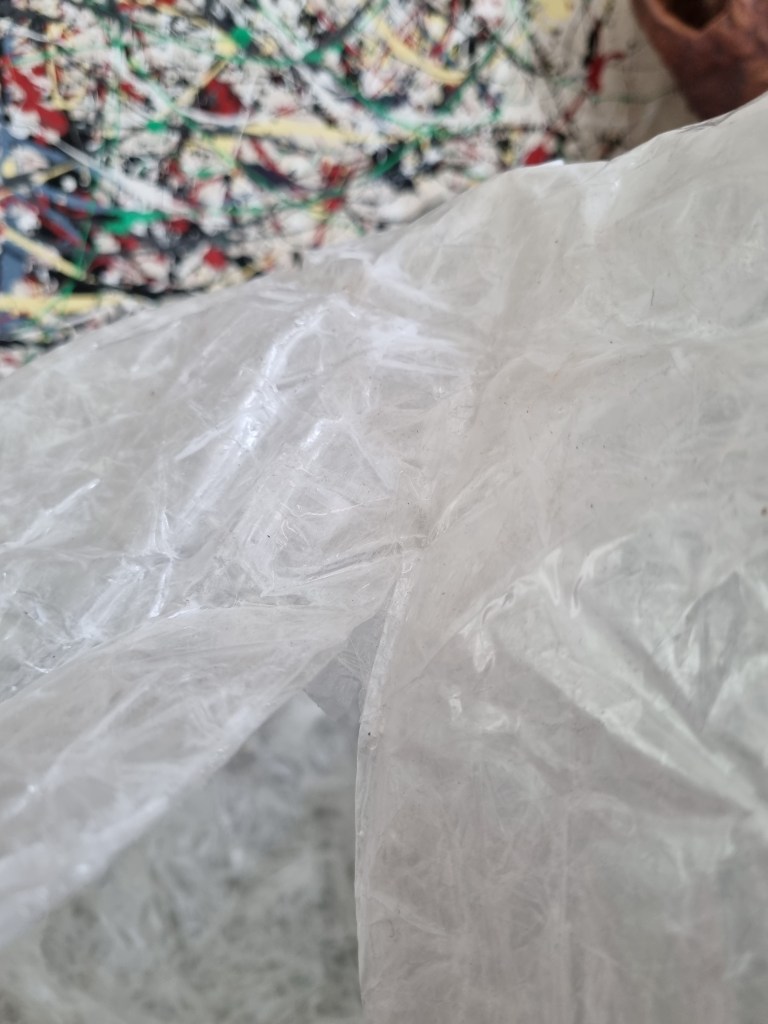
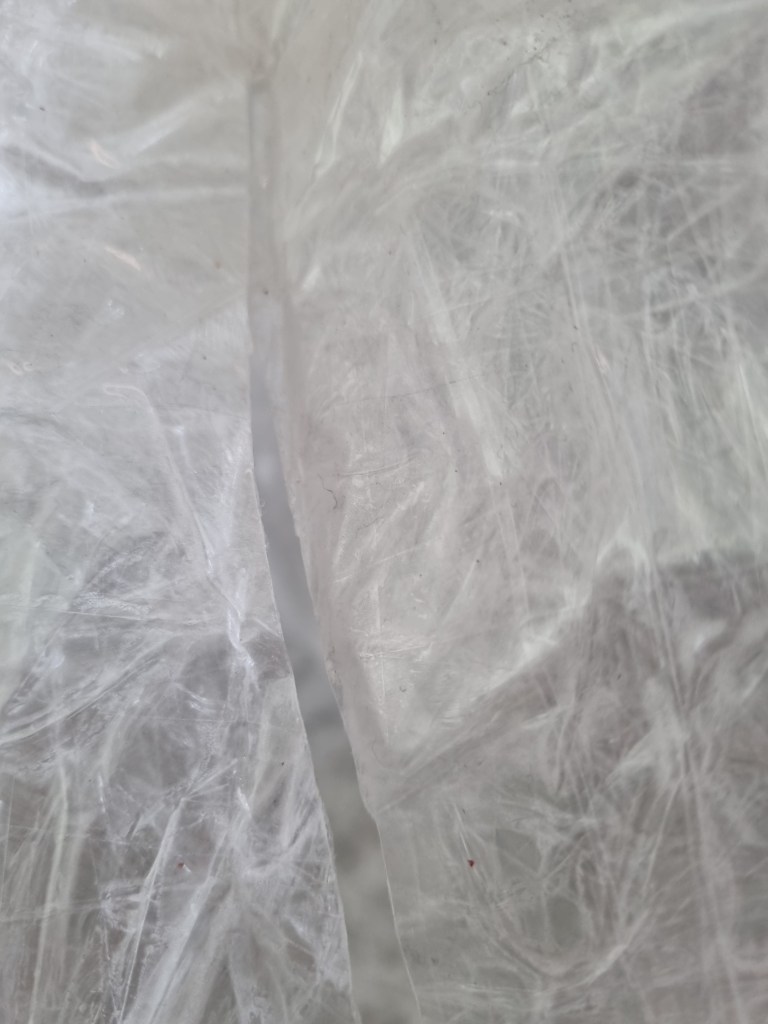
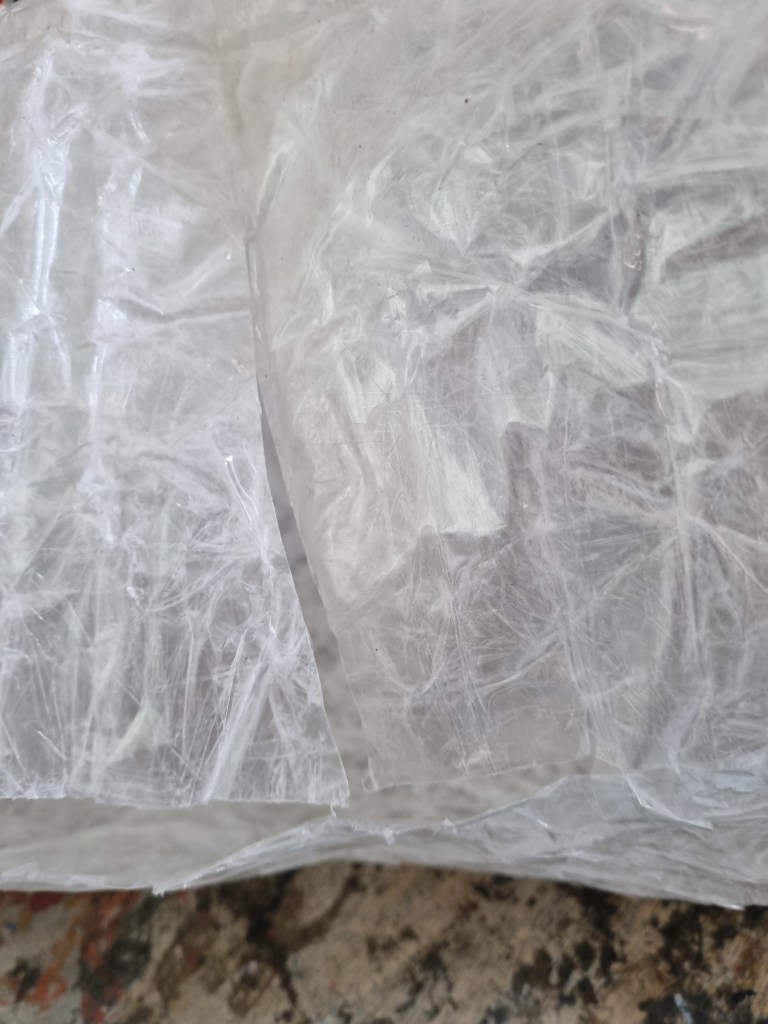
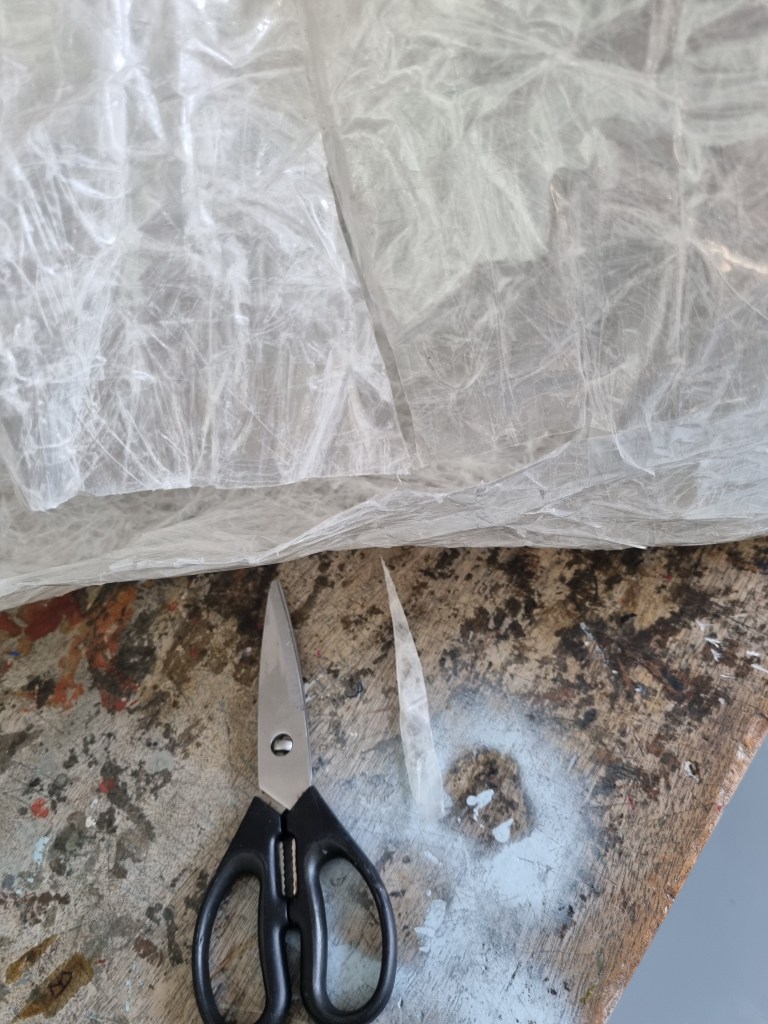
It looked that, although I worried about the proportions, it worked out well in the end. Because I managed to fix the sculpture’s proportions, I did not need to make another meditative pose sculpture. It was a massive relief as I did not have enough time to proceed.


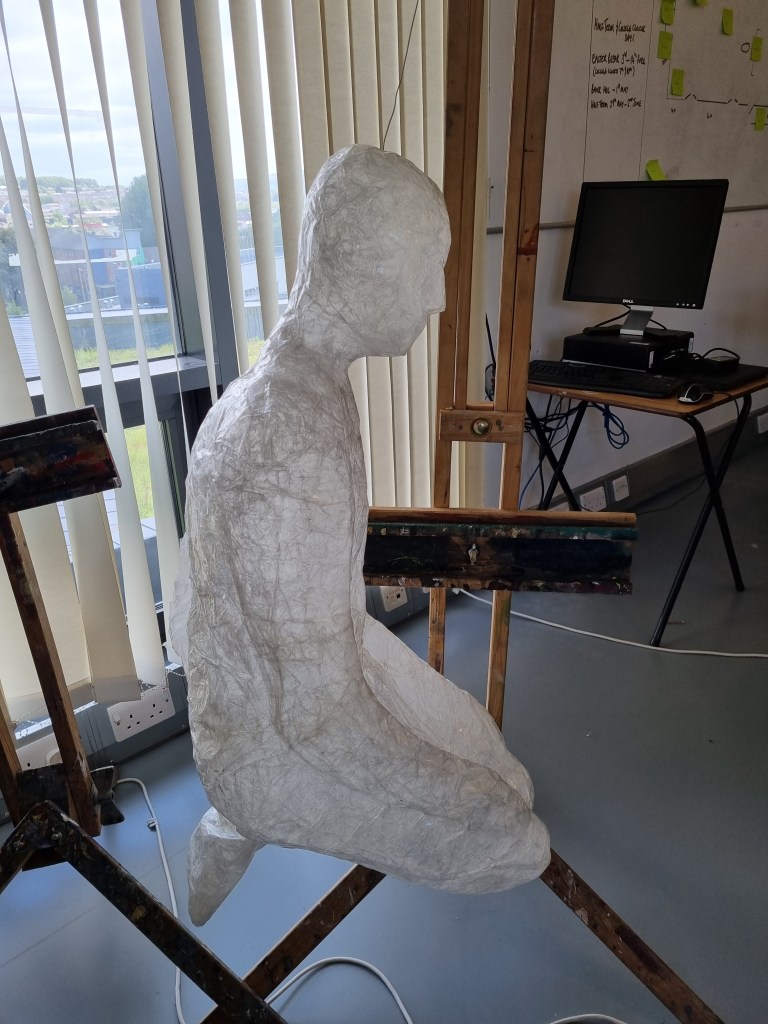
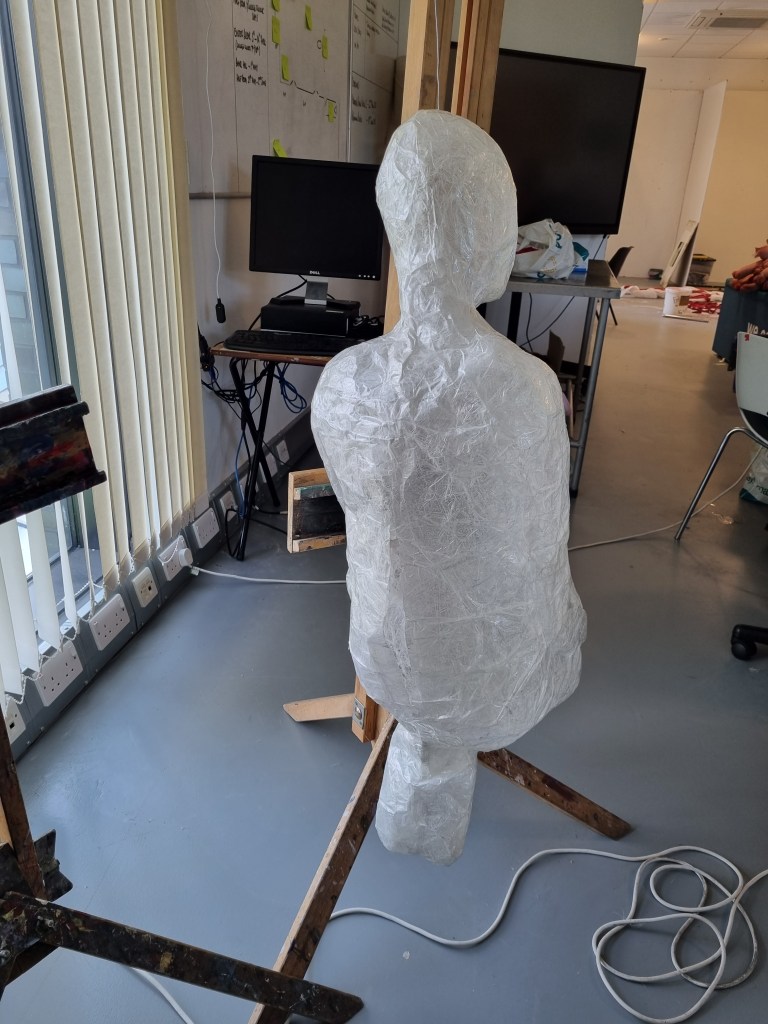
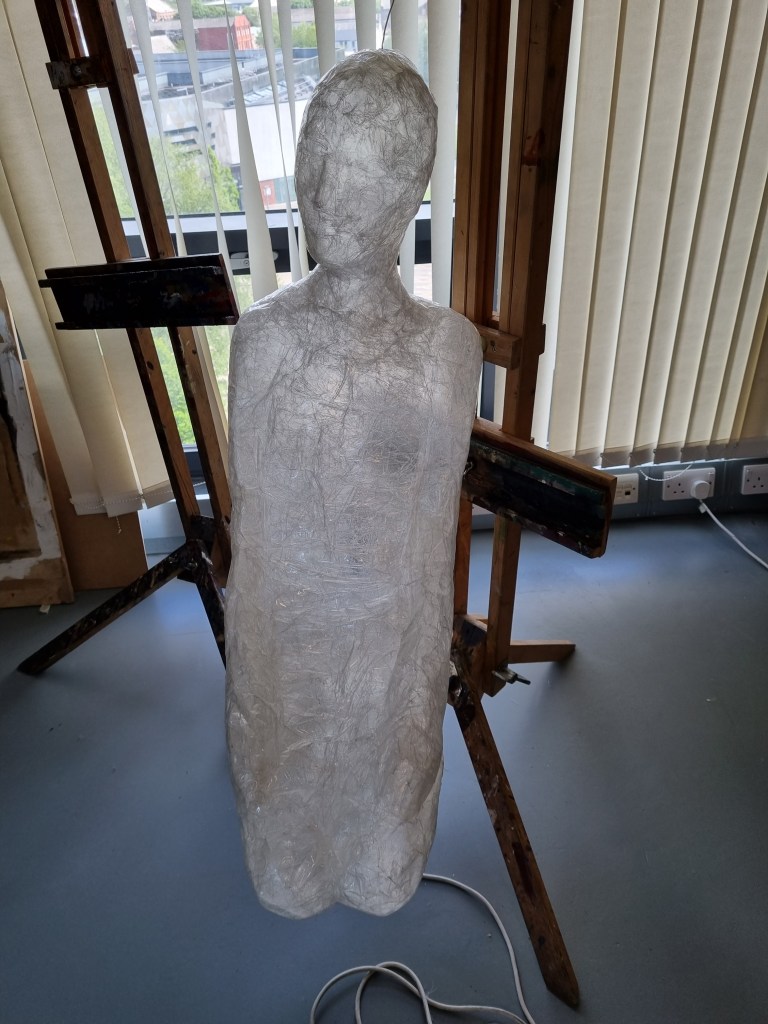
The light needs to be placed into individual figures and sealed in. However, I will have to leave instructions about where to enter the figures to turn on and off the lights after and before viewing.
The anxiety and meditative pose will have the light placed at the bottom of the figures, and the standing posture will have the light placed in the middle of the chest.
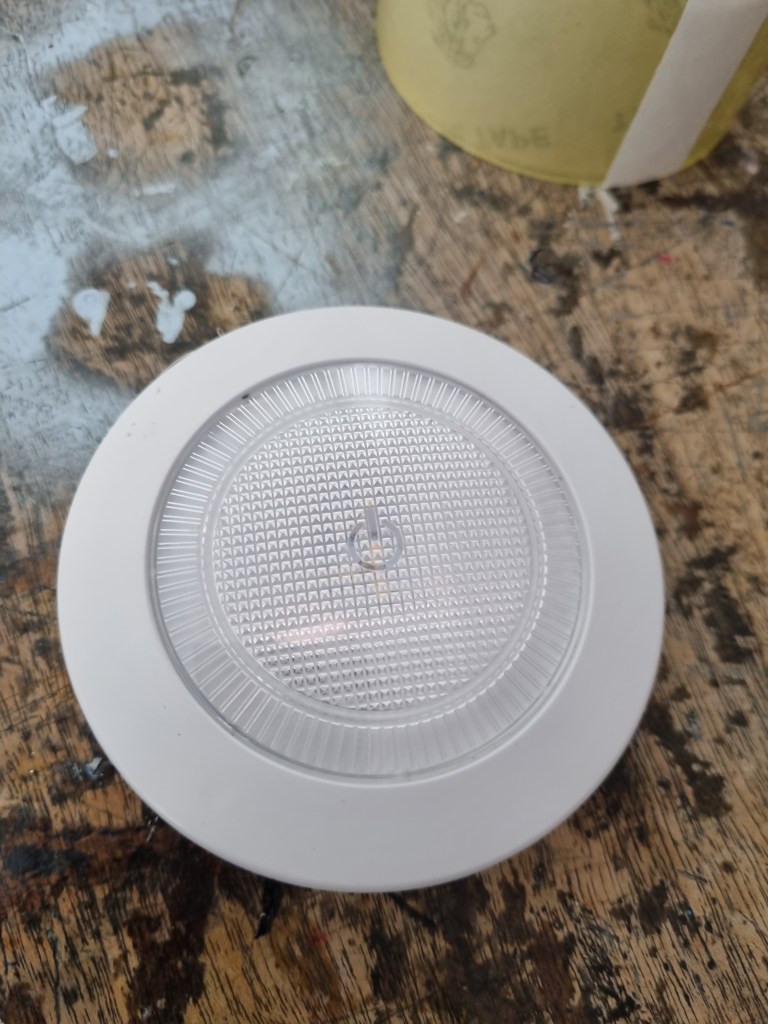
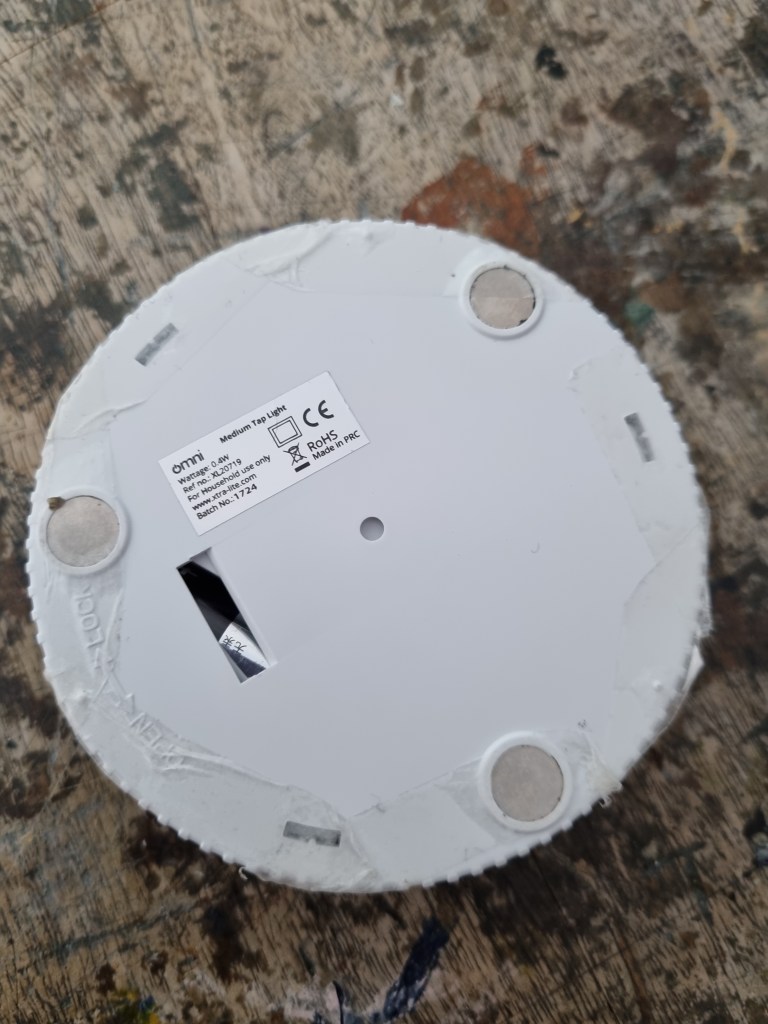
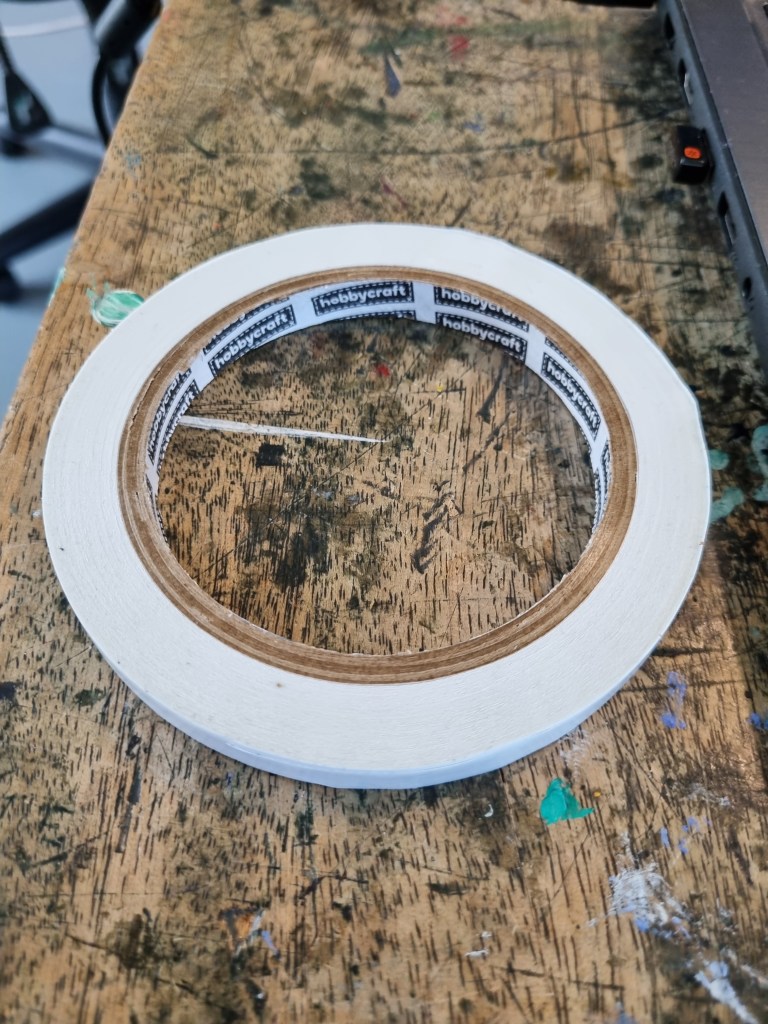
I tested whether double-sided adhesive tape could hold the light. Unfortunately, the double-sided tape did not hold the light for long and dropped off. So I ordered self-adhesive Velcro tape to secure the position and firmness of the lights.
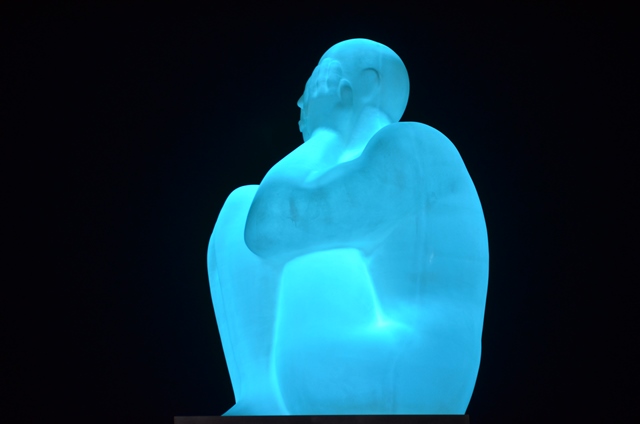
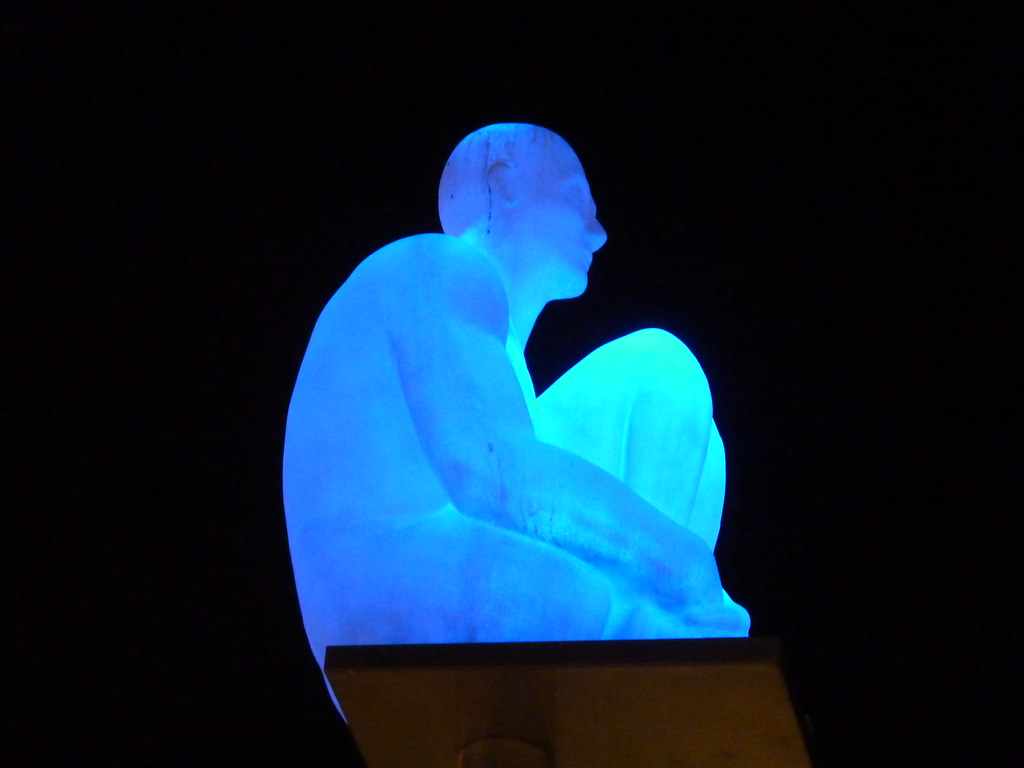
I wanted to use the battery-powered lights because of the practicality and easiness of the instalment—no need to use electric wires. However, there is another hurdle with turning on and off the light, and the difficulties of getting to the lights. The invigilators would have to get inside the suspended sculptures to turn them on and off. So I ordered LED lights manipulated by remote control. The disadvantage is that the options on sizes and slimness of the lights on the market are limited. I wanted to use larger lights to fully illuminate the inside of the figures, as you can see in Plensas sculptures.
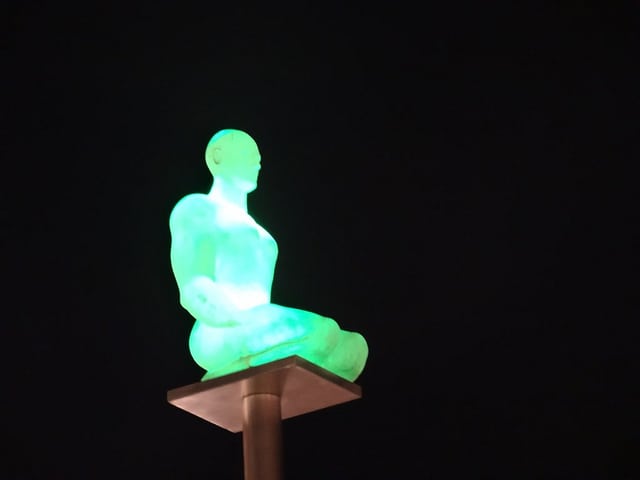
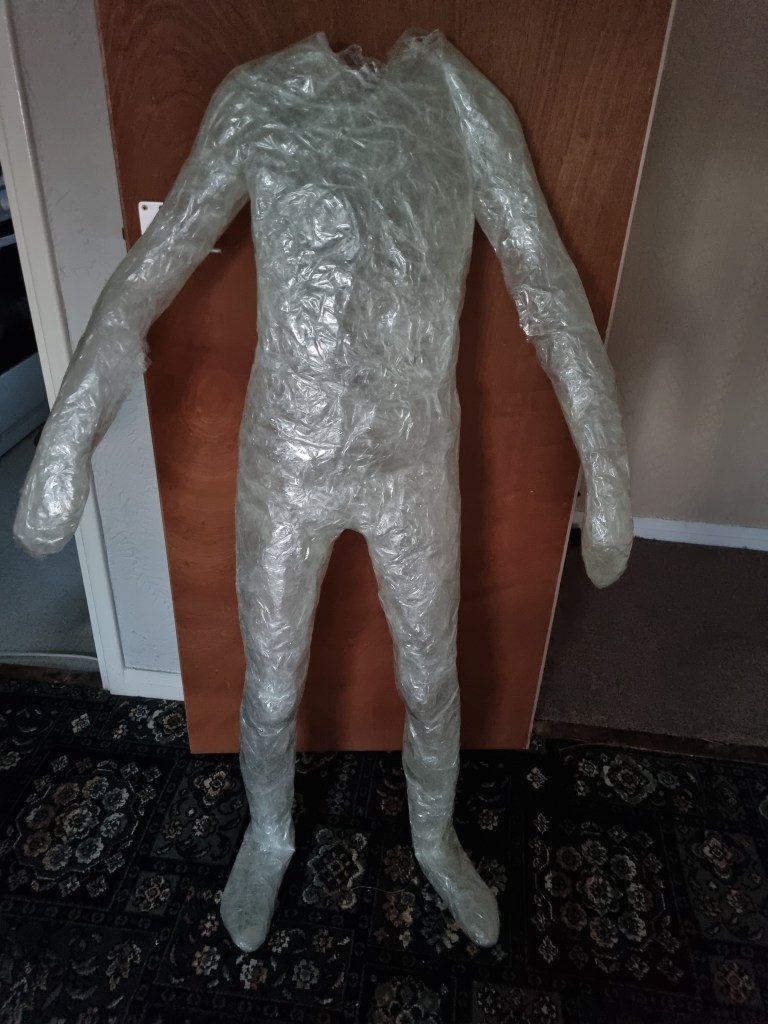
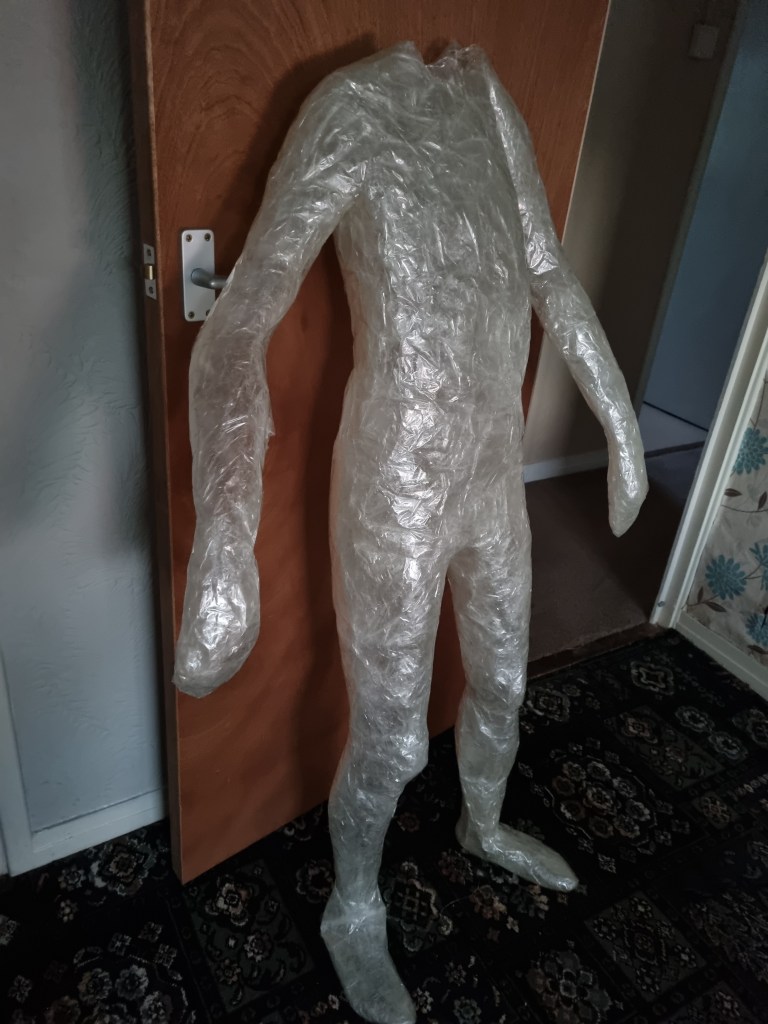
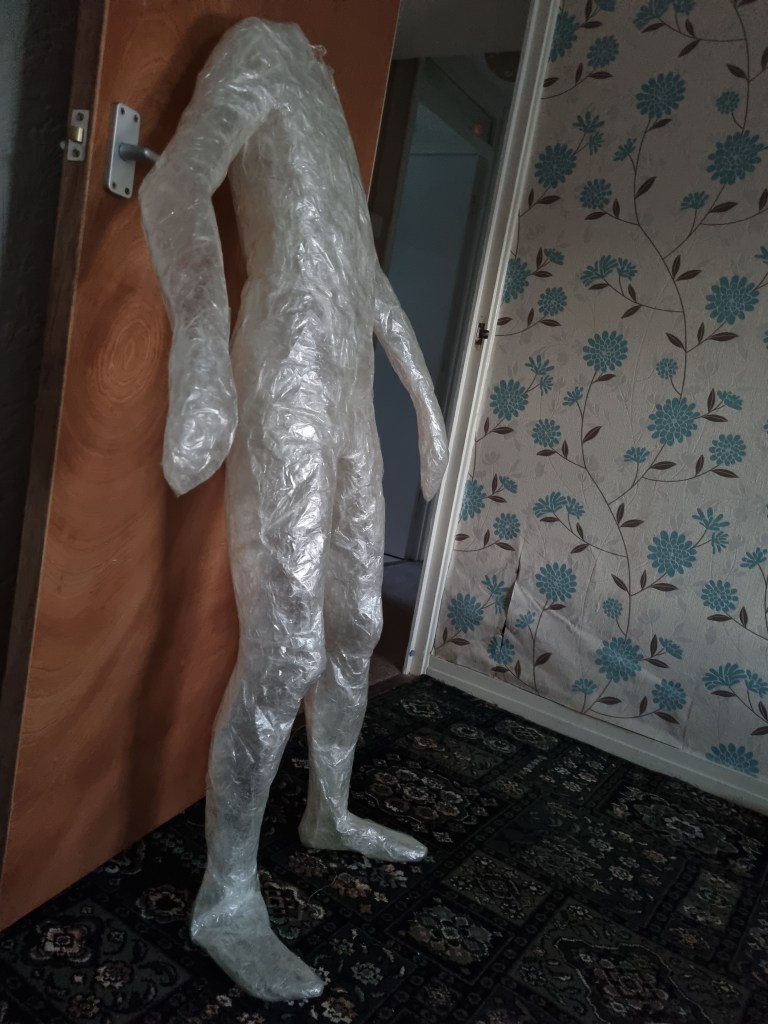
Standing pose – process
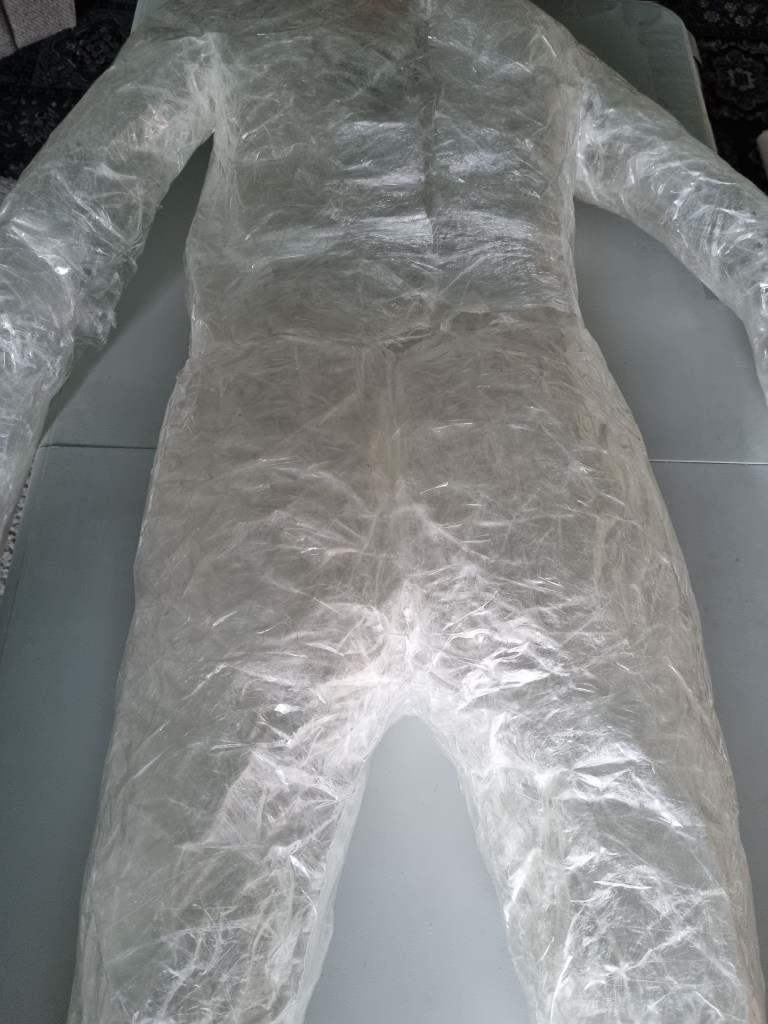
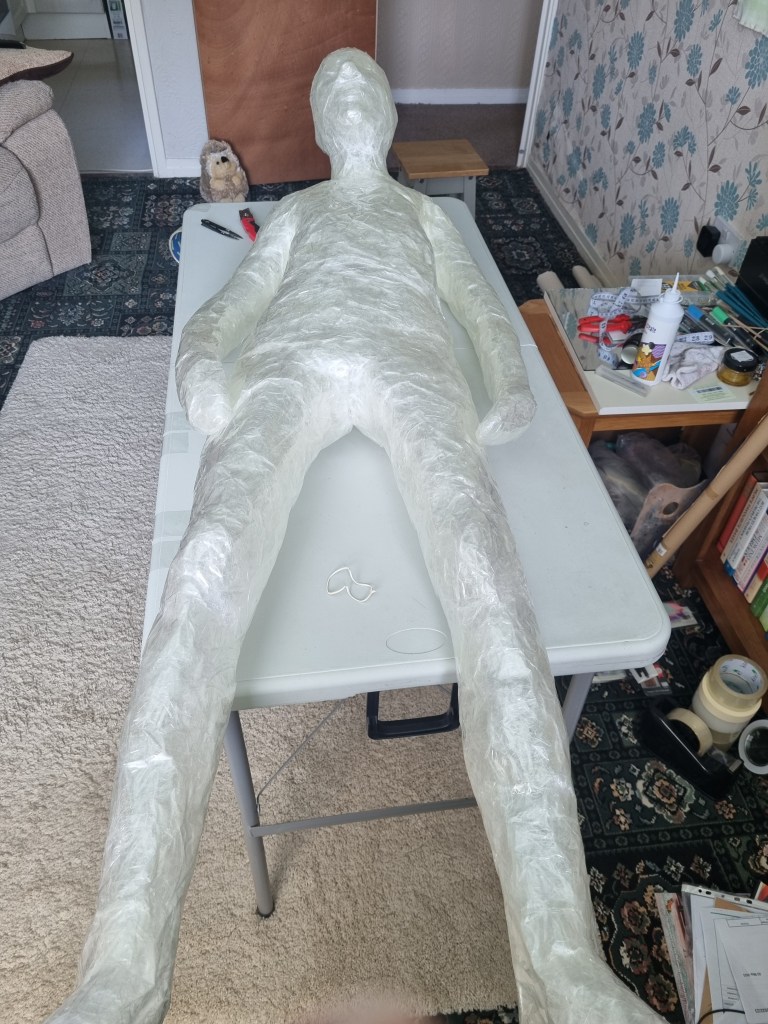
The methodology of the standing pose started the same as the previous work. I used clingfilm, sellotape, scissors or a Stanley knife, and the model.
Because of my previous experiences, I decided to break the pose into three sections.
The first was the part of the legs and hips, the second was the body, and the last third was the head on its own. I had a problem attaching the head to the correct position, but I considered the model’s feelings while in the process. The model should be relaxed while posing as I rely on the energy transferred into the sculpture through the model’s emotions. On top of that, I have learned from the previous methods, so I am counting on the gained experiences.
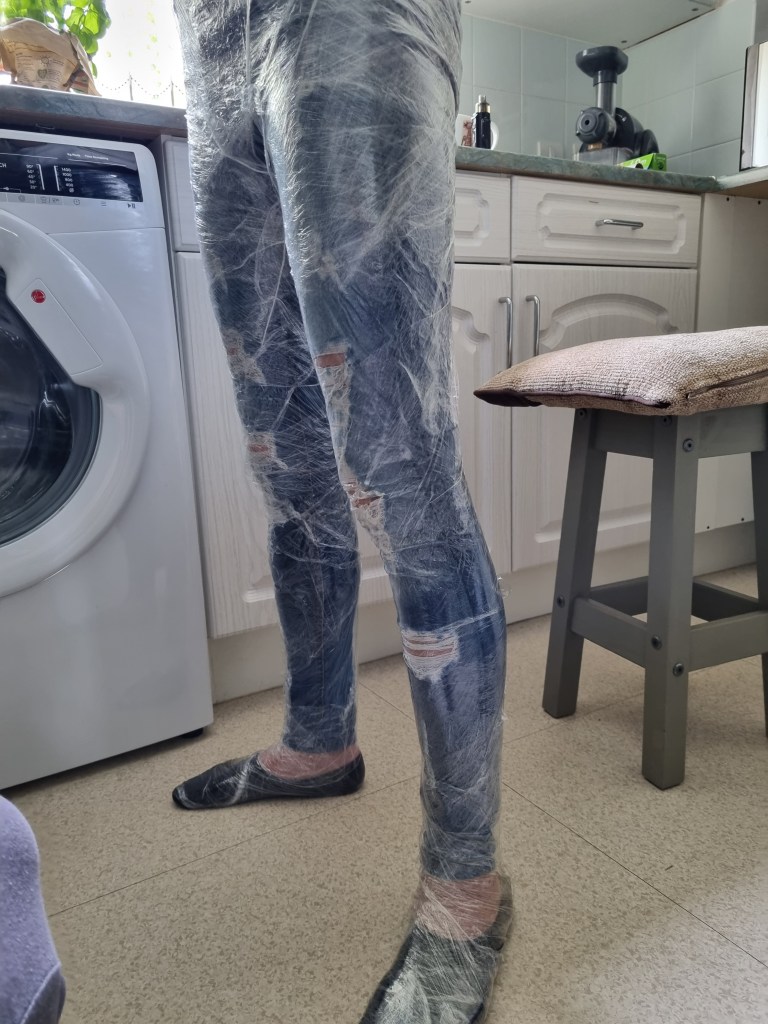
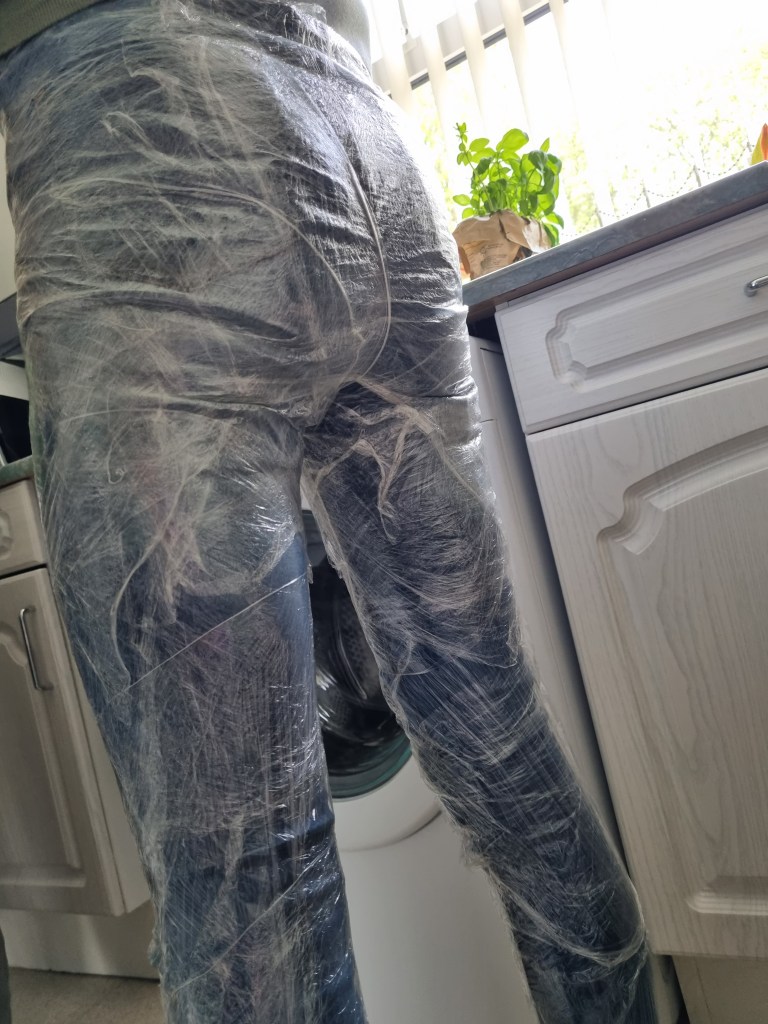
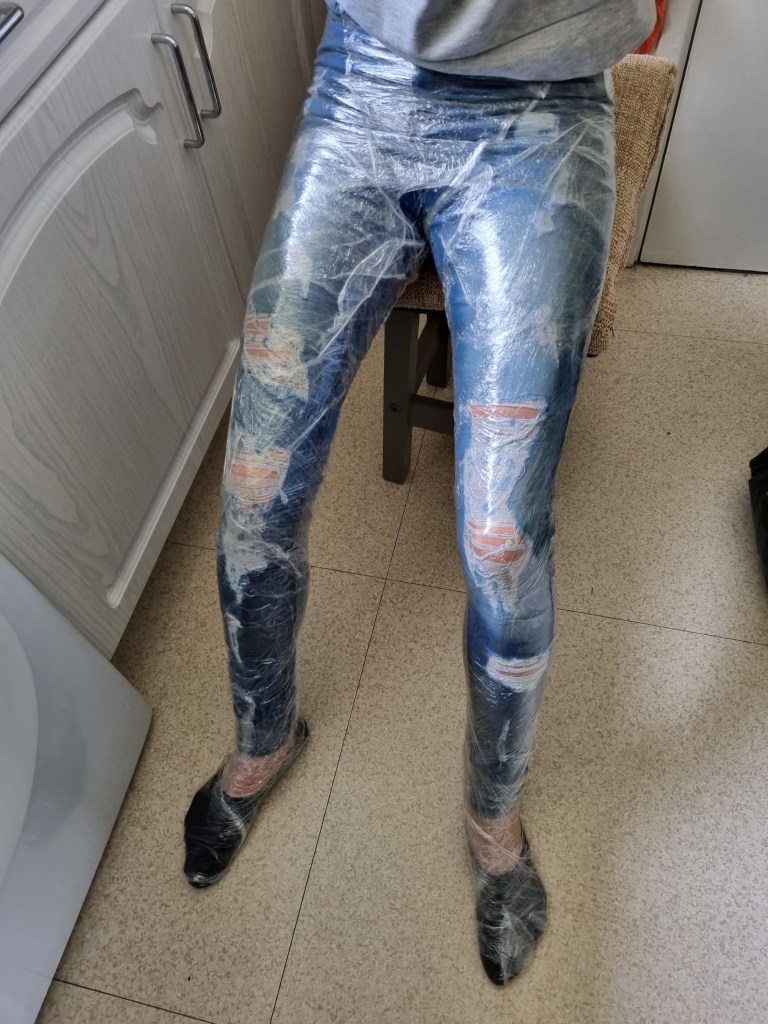
I applied two layers of sellotape before I decided to cut the model out of the cast. Then, I cut the sellotape to release the model. The way I decided to cut the sellotape was to camouflage the joints and make them merge into the form without visible marks.

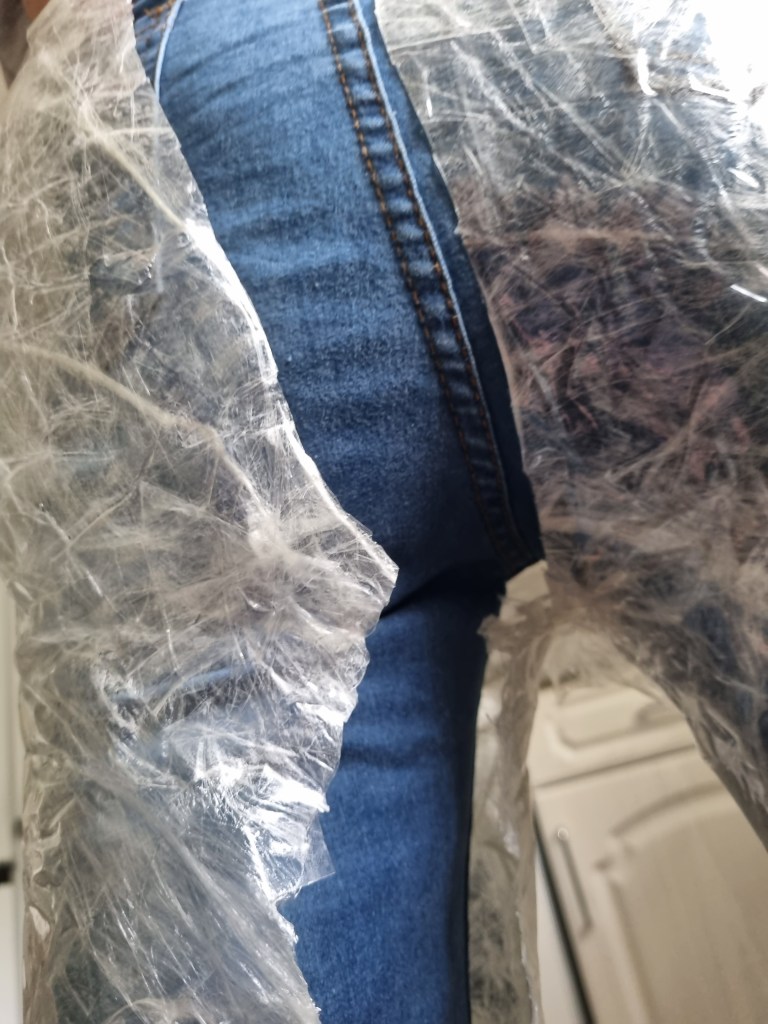
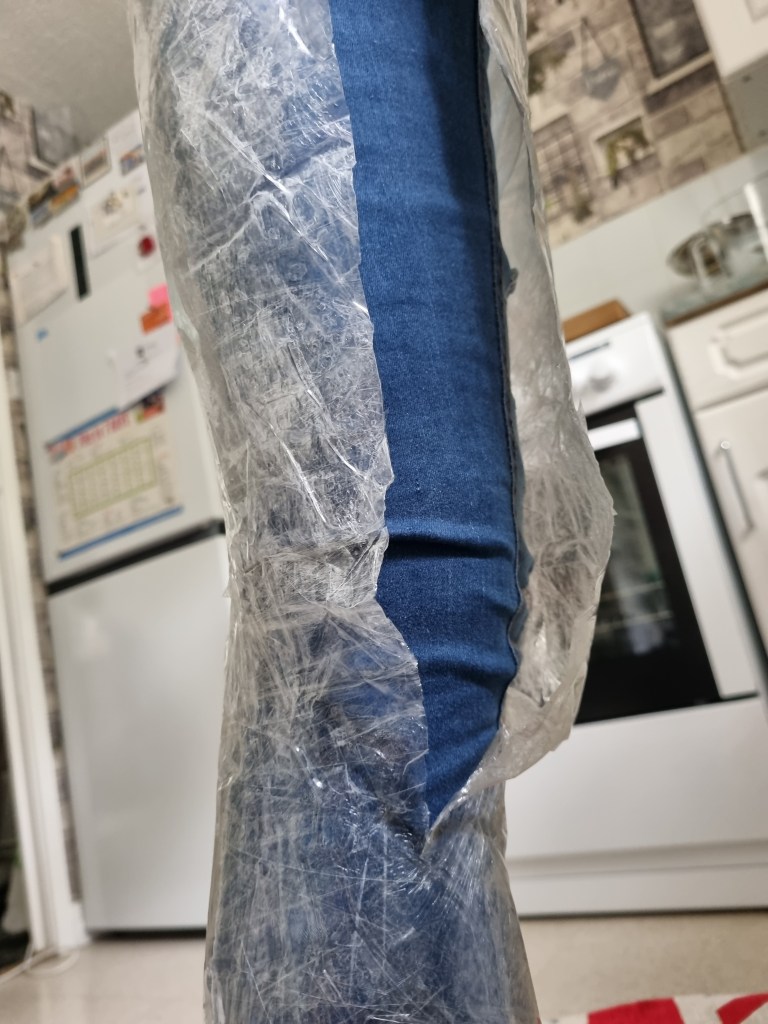
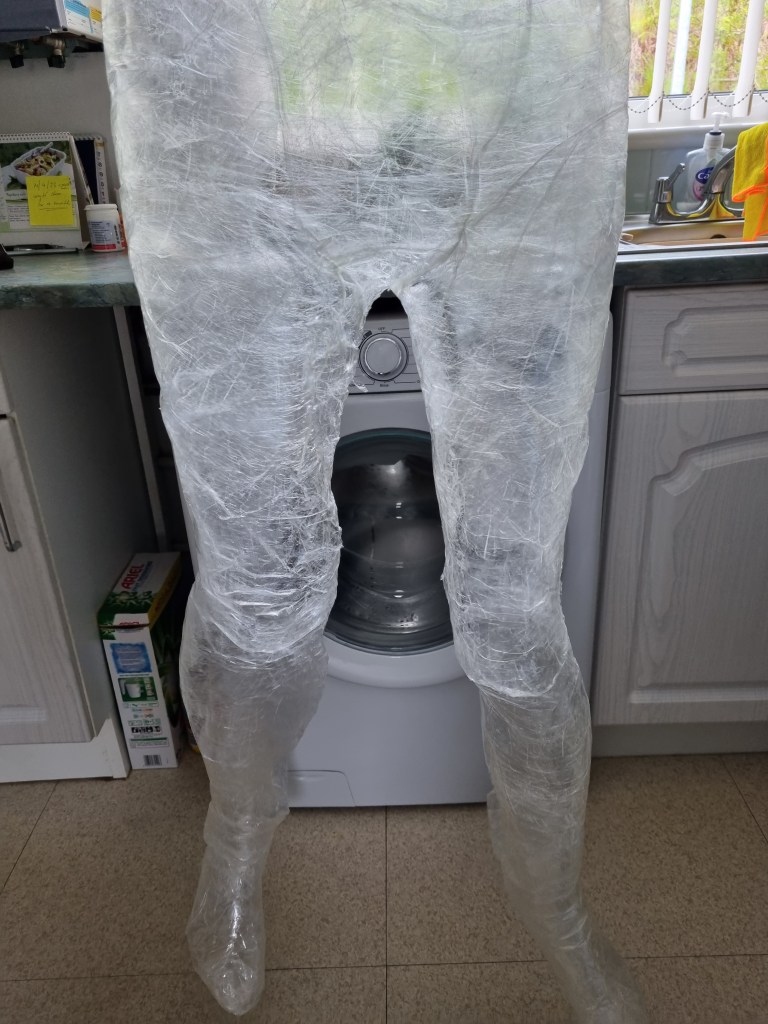
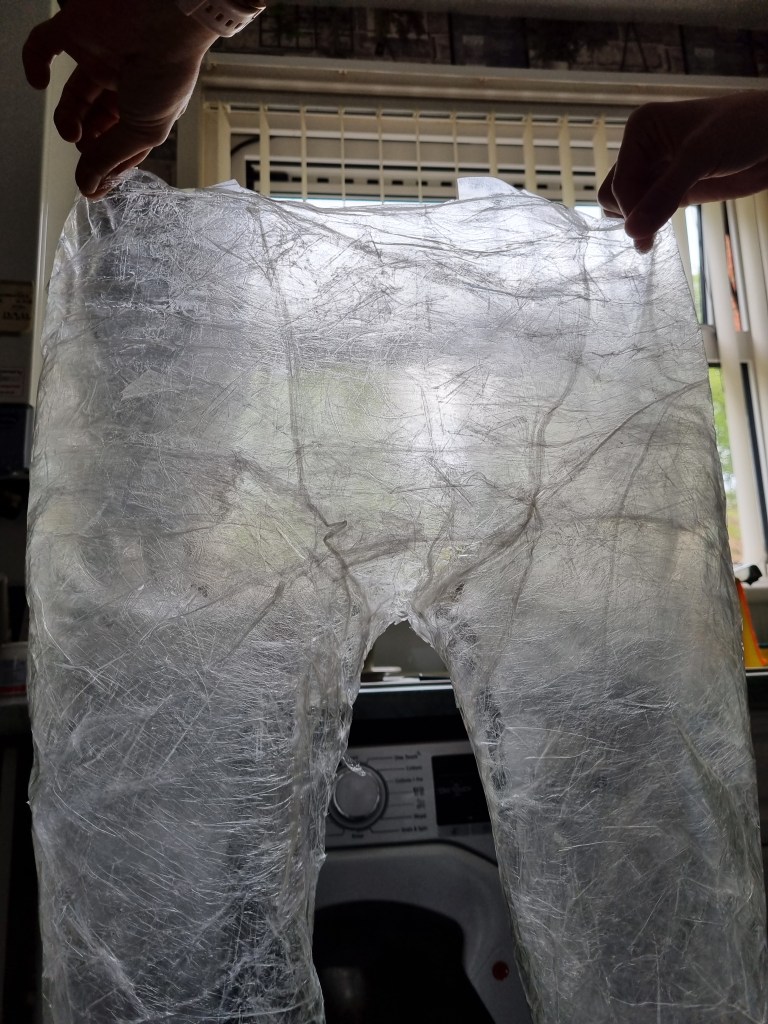
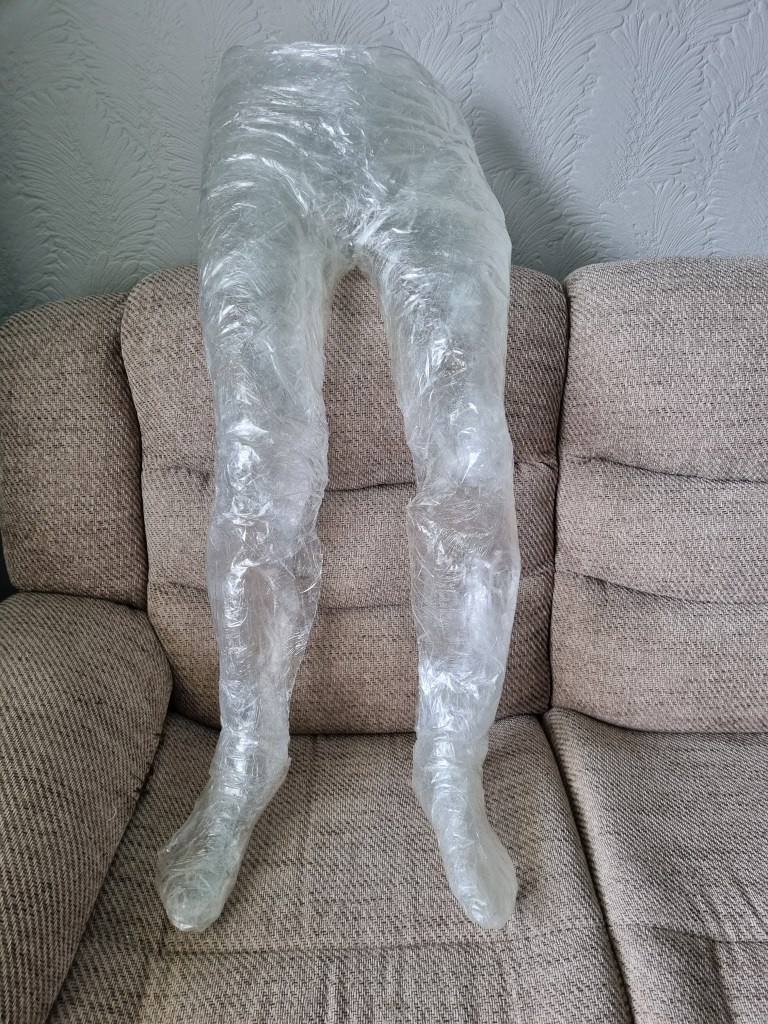
The quality of the sellotape was visible and satisfactory, unlike the sellotape I used for the meditative pose. So I started working on the middle body cast of the sculpture immediately as I was running off time.
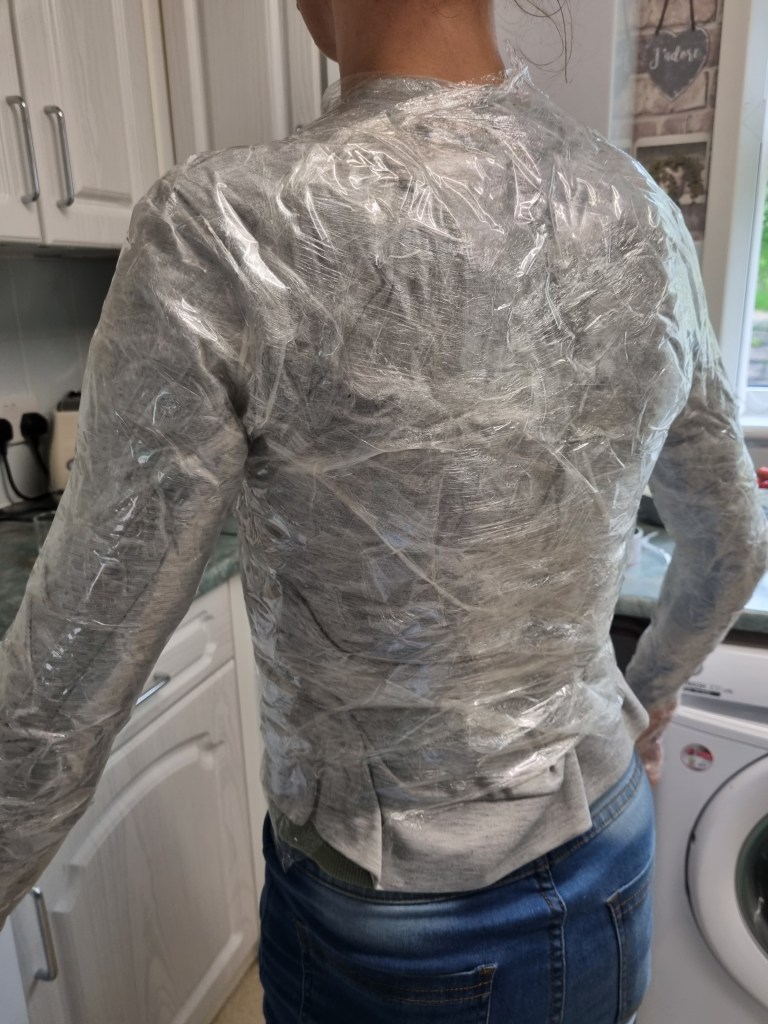
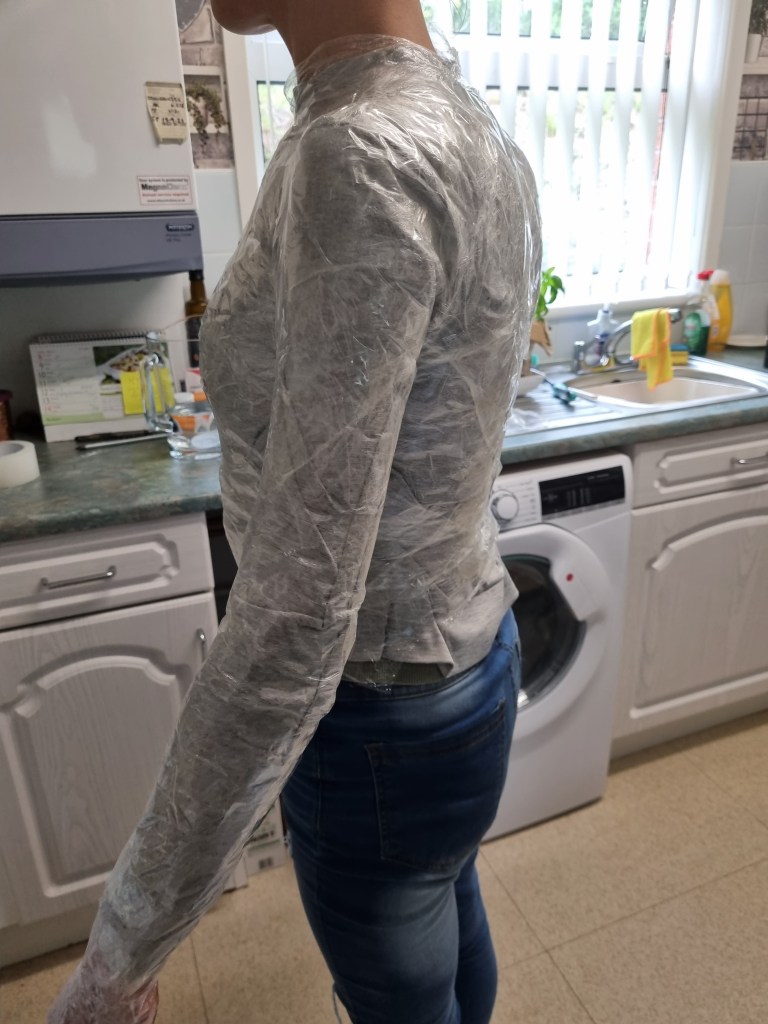
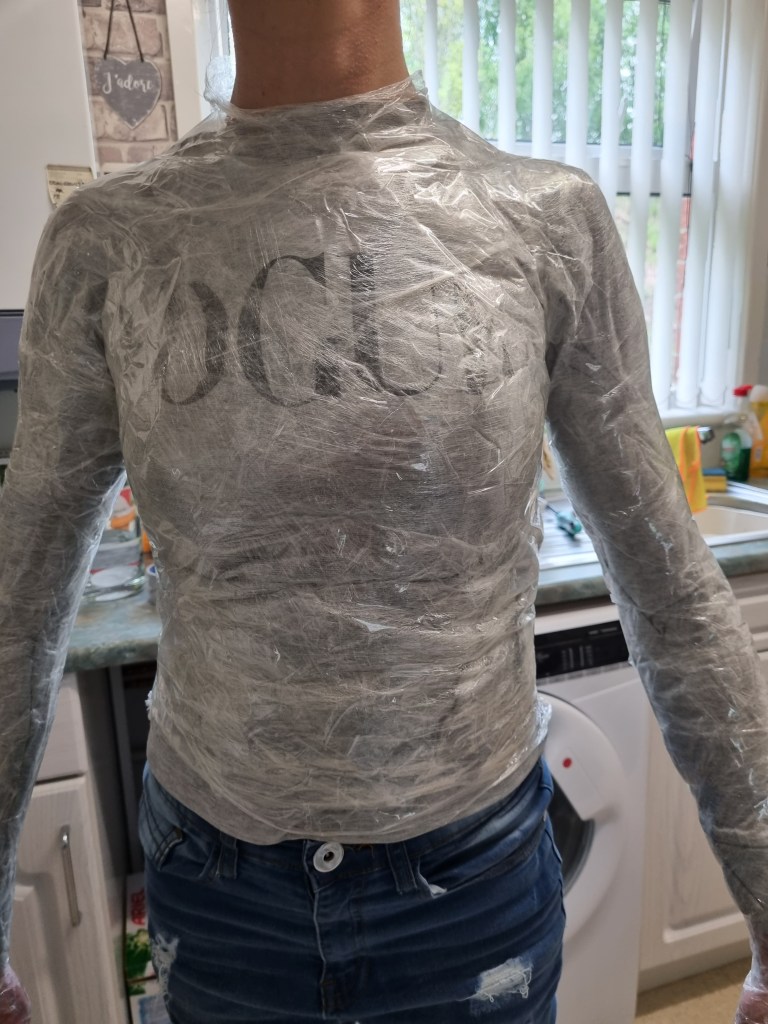
When I finished wrapping the lower half of the body with cling film, I again double-layered the middle part with sellotape. Then I cut the model out of the cast to work on the structure and firmness.
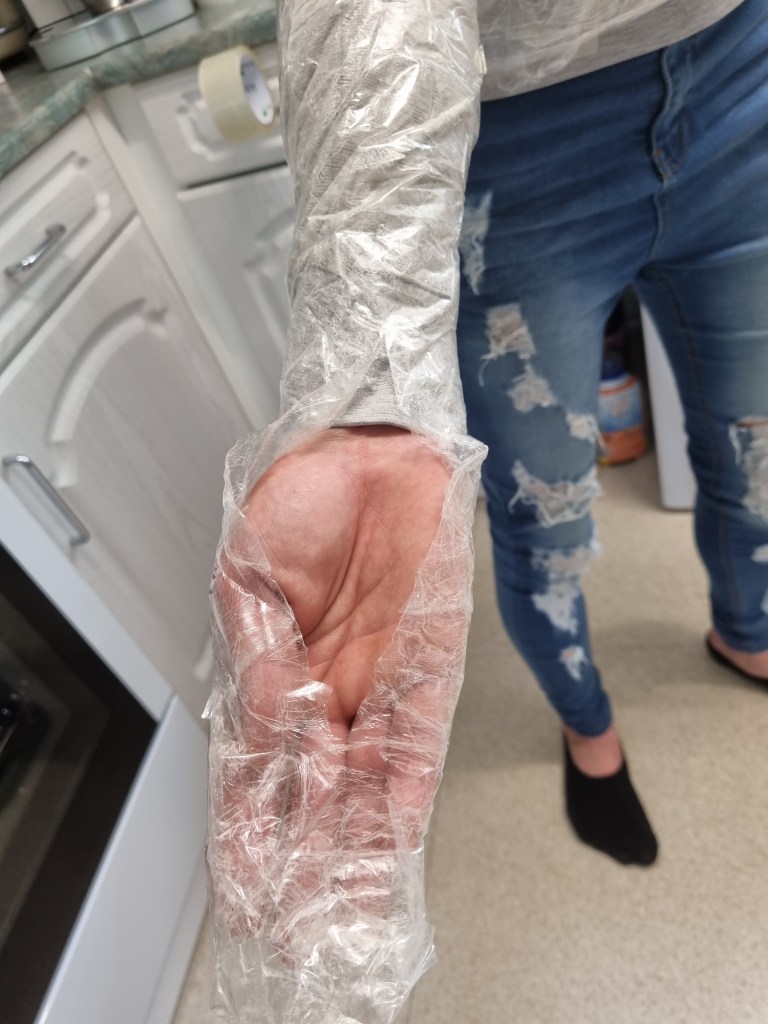
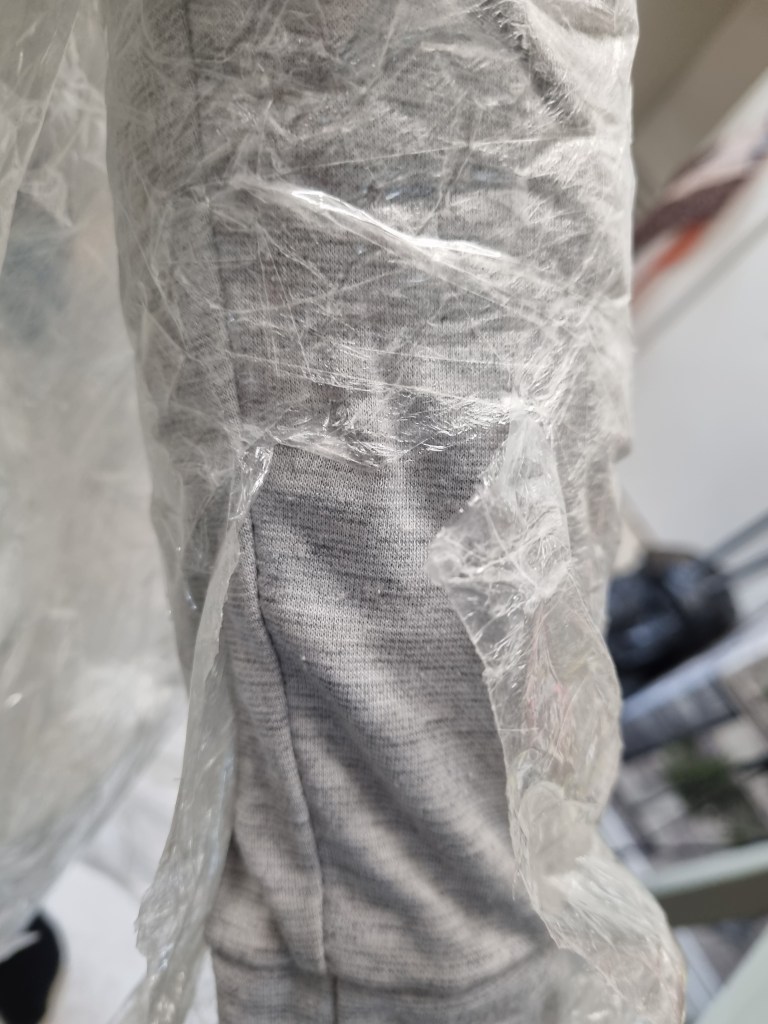
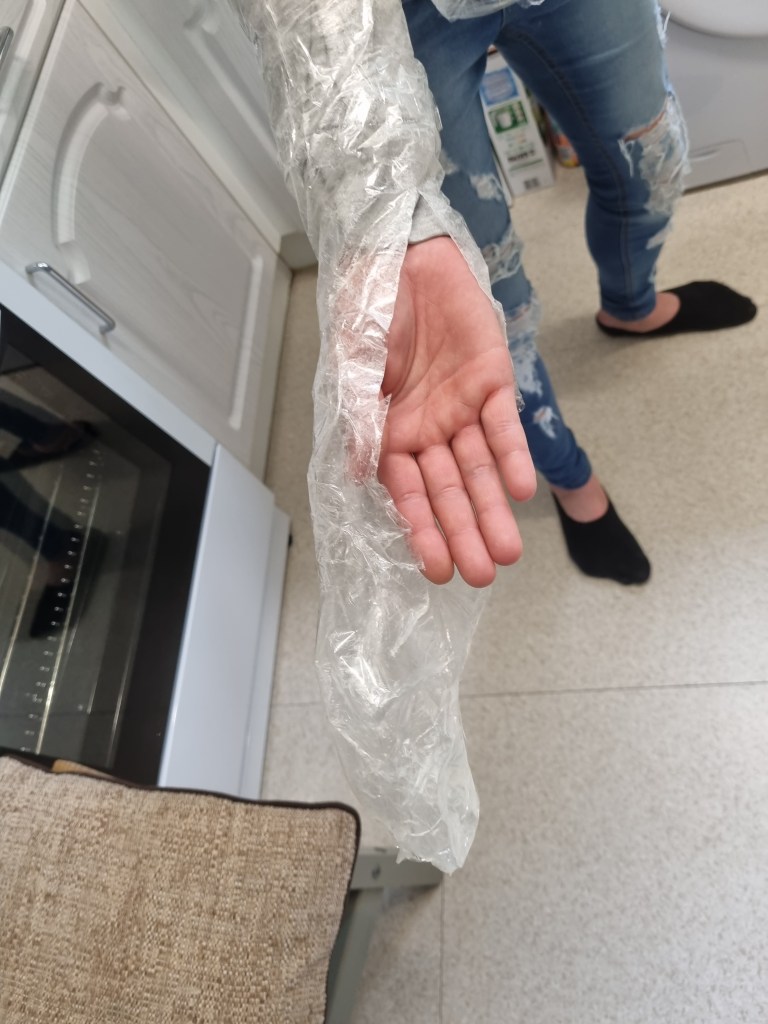
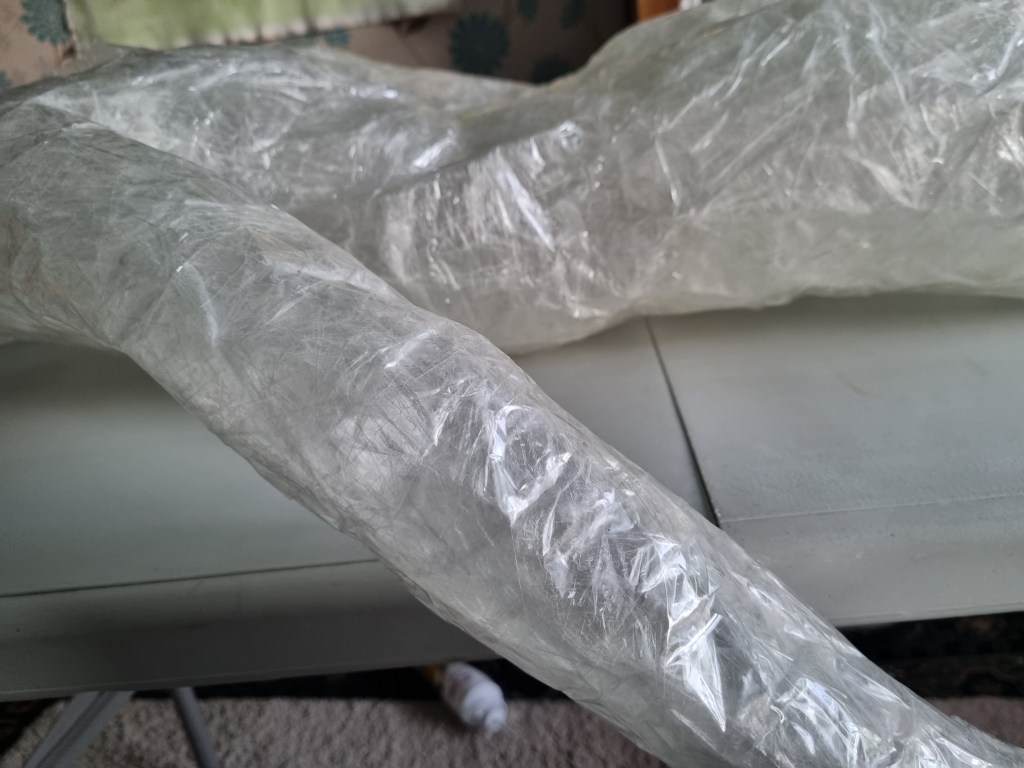
The arms were tricky. I had to cut the components in the wrist parts upwards more than expected because I could not release the model’s limbs. The struggle caused the sellotape to tear away from the cut (creating a seam). However, that is fine, as the material is pliable and offers easy manipulation and flexibility.


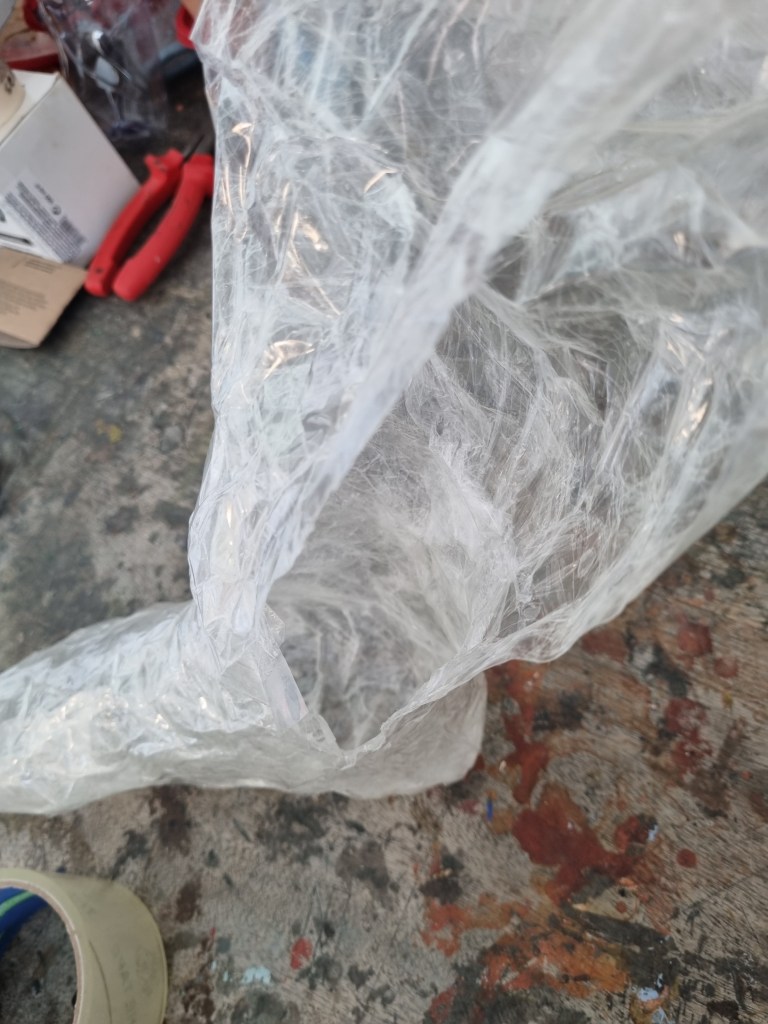
I started to work on layering the feet with the sellotape to make it firmer. Then, I again applied the sellotape on both sides, the inside and outside of the sculpture. The process was time-consuming as I had to cut the sellotape in advance and then find the places I did finish, to carry on with layering the tape.
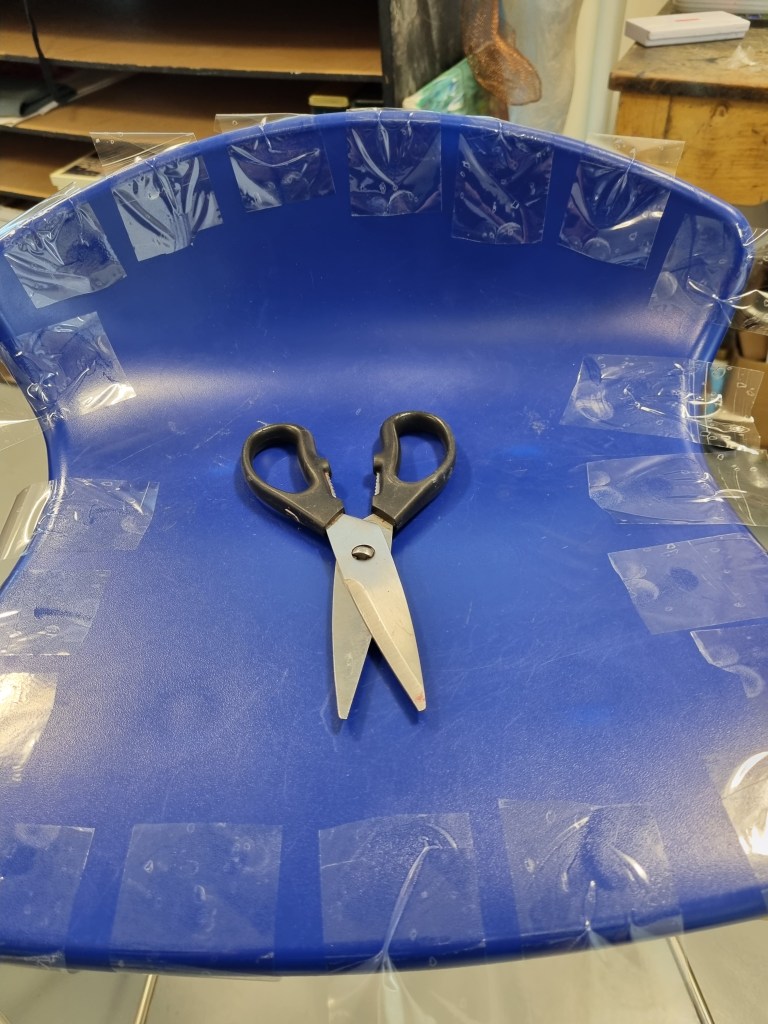
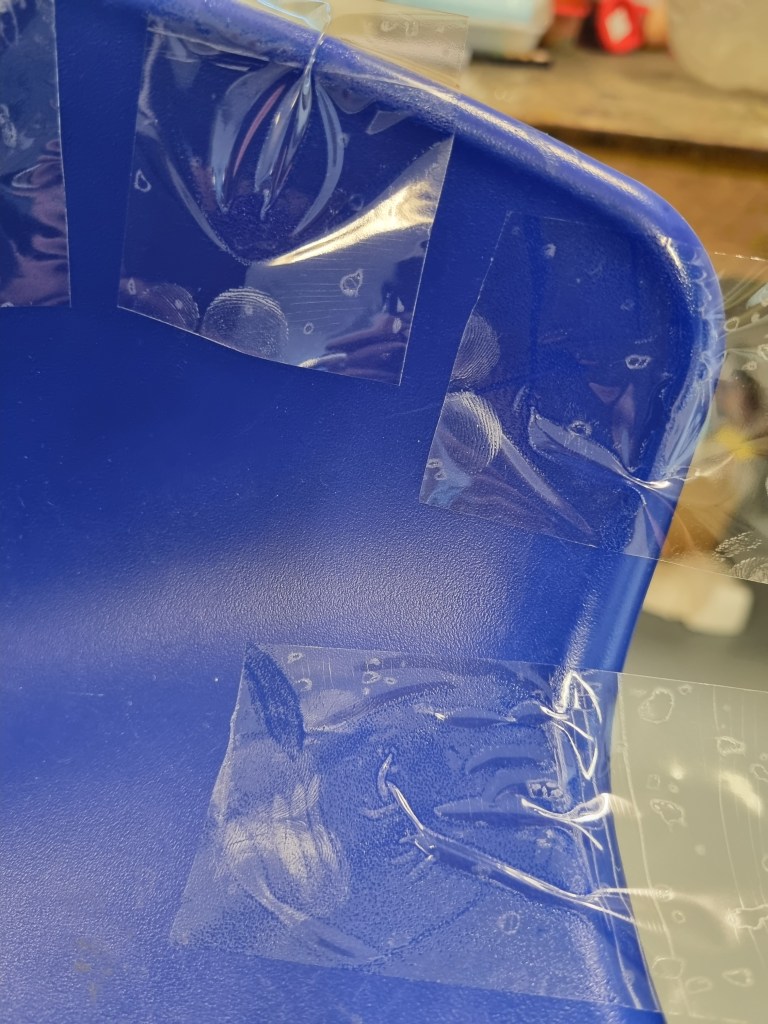
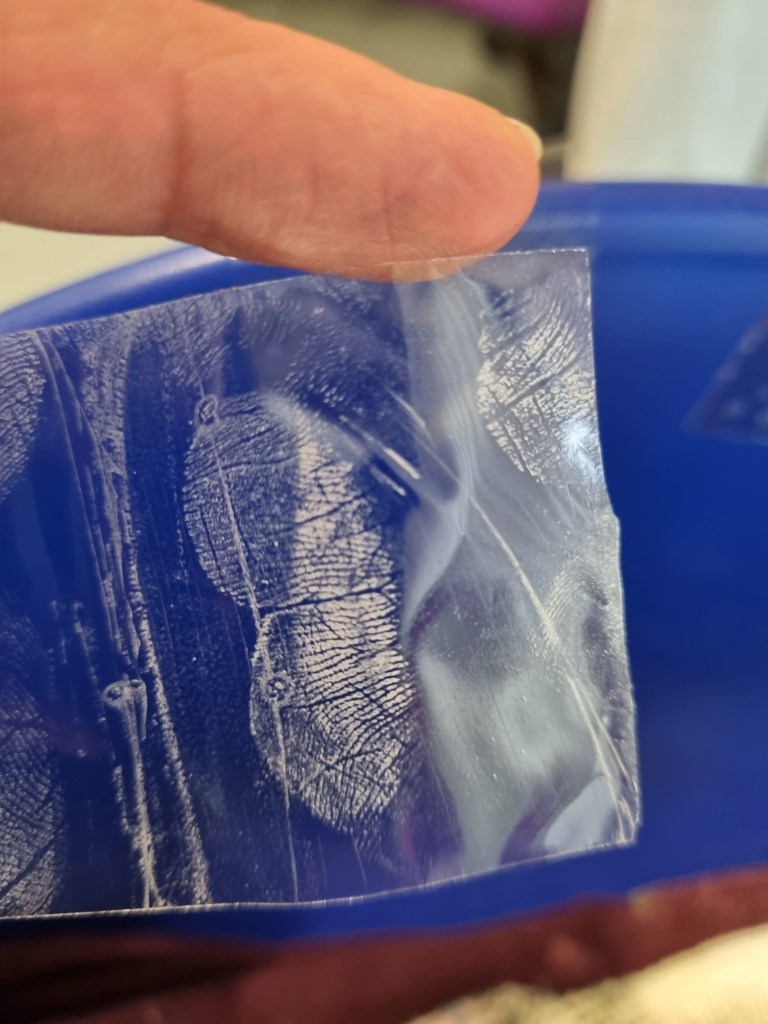
I also like the trace of my fingerprints left on the sellotape. The research found that archived latent prints contained DNA, and using optimised methods, they could recover at least a partial DNA profile 90% of the time. One sample even produced a complete profile.
This element is so valuable for me as the trace of a living human being transferred into an artificial object is an important aspect of the inner being I try to incorporate into my work, the energy.
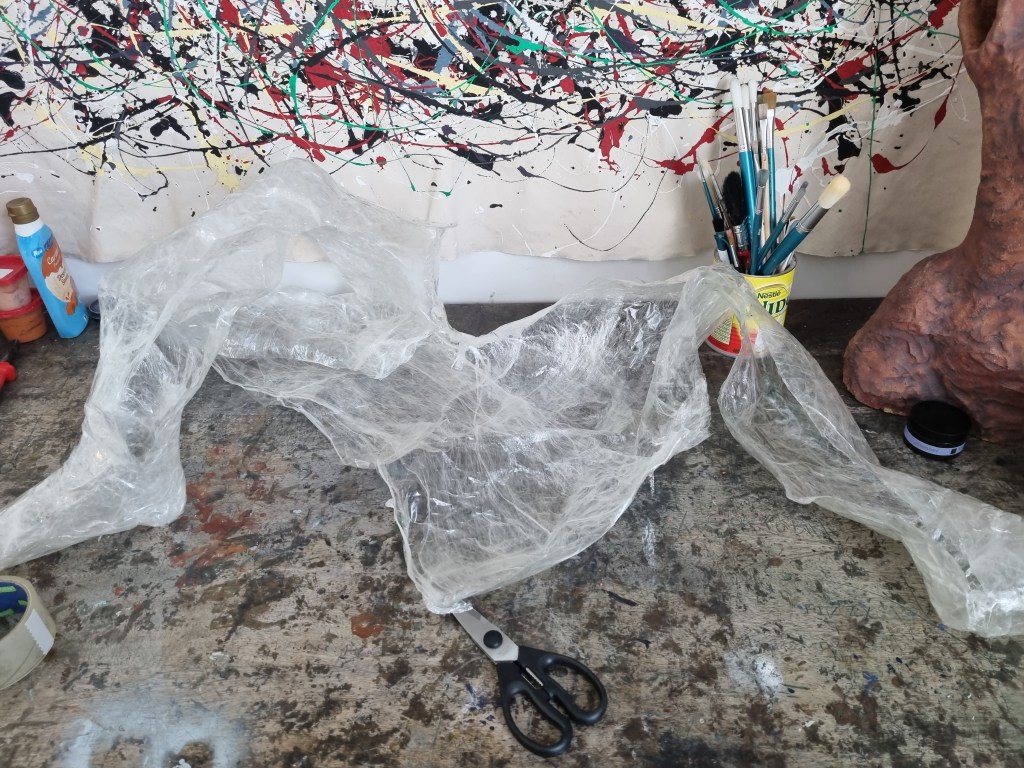
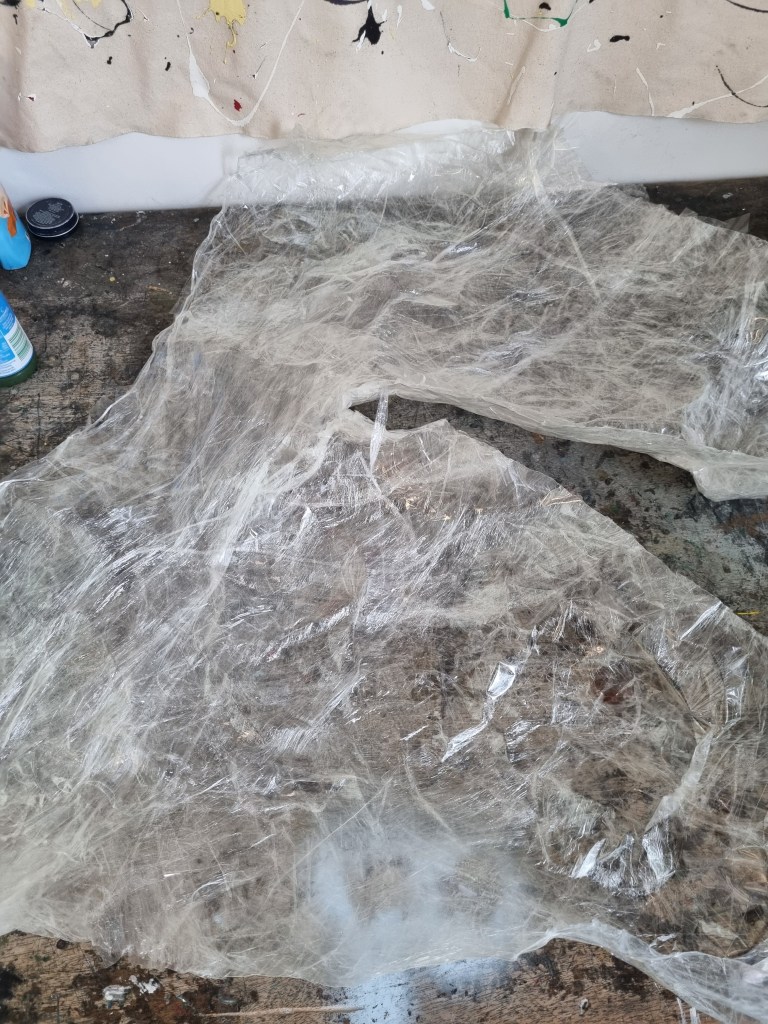
I carried on with the inner part of the sculpture to firm up the structure. I applied the sellotape first from the inside because I wanted to seal up the joints to create an invisible line. I thought I should concentrate on that at the very beginning.
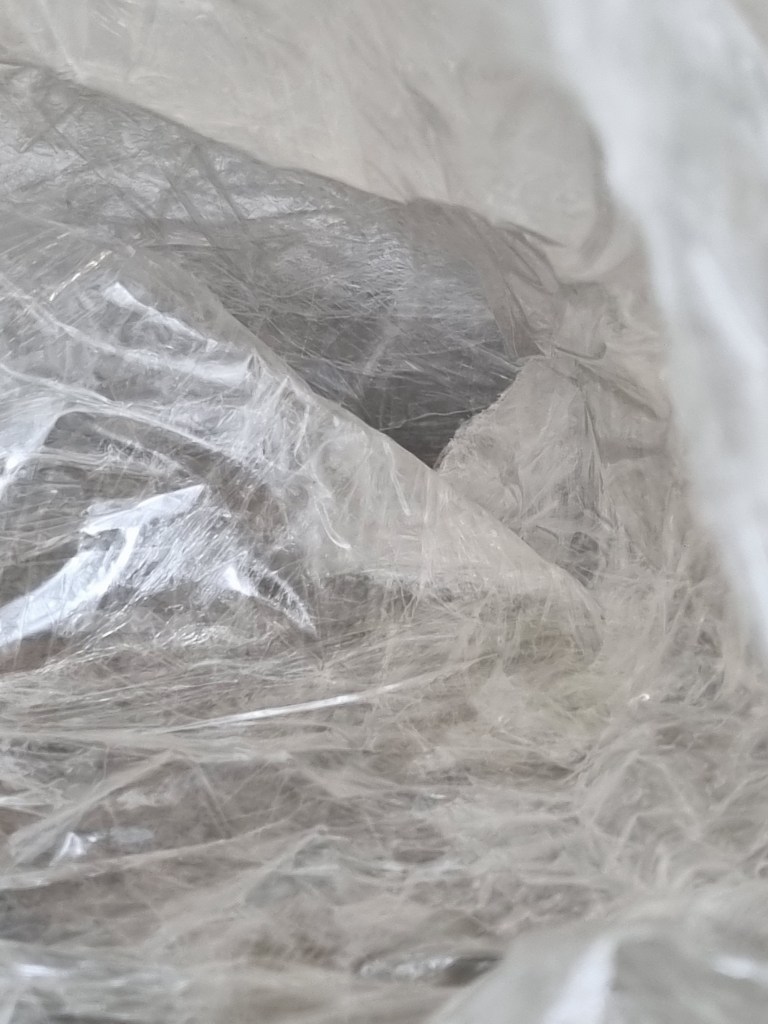
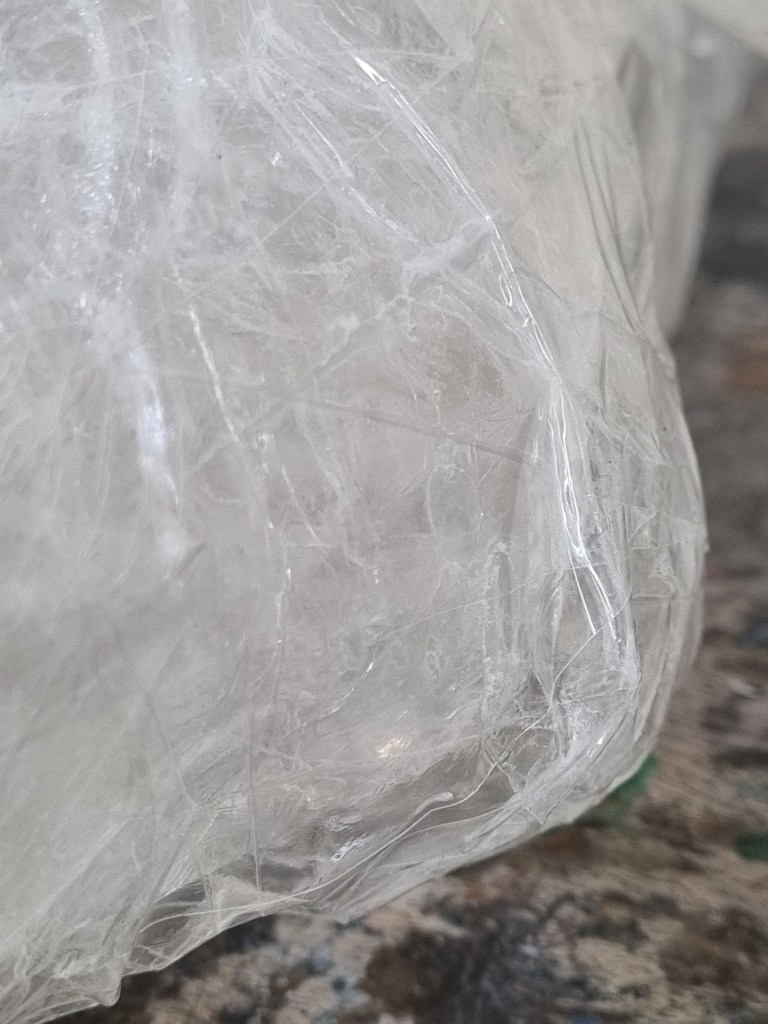
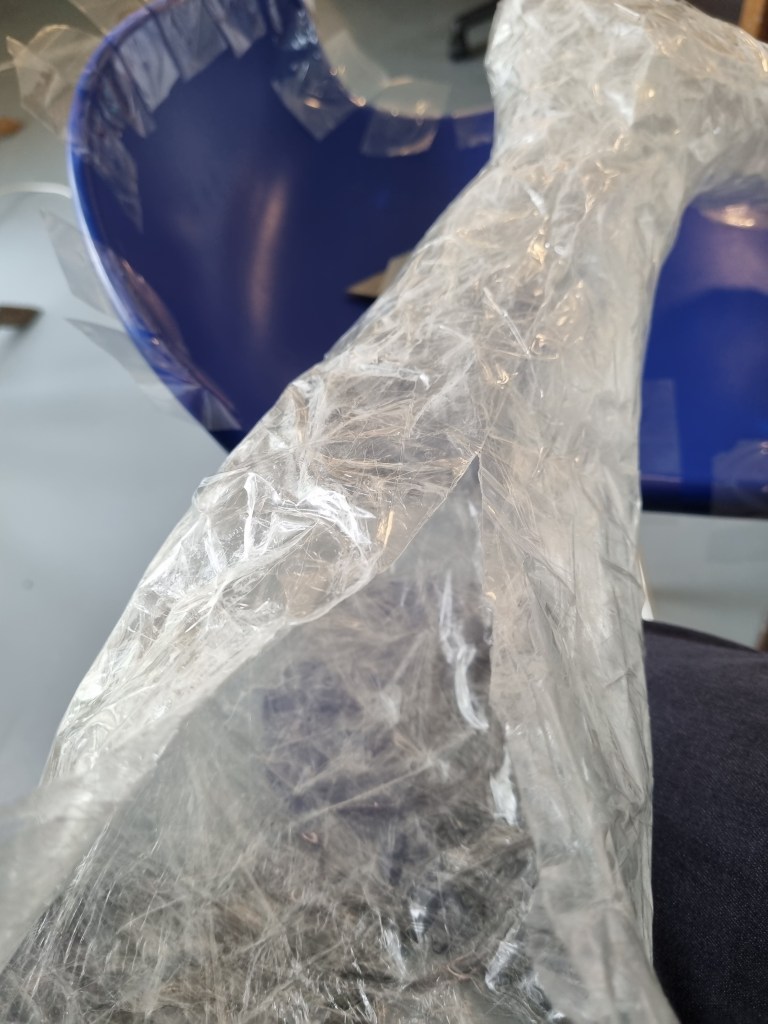
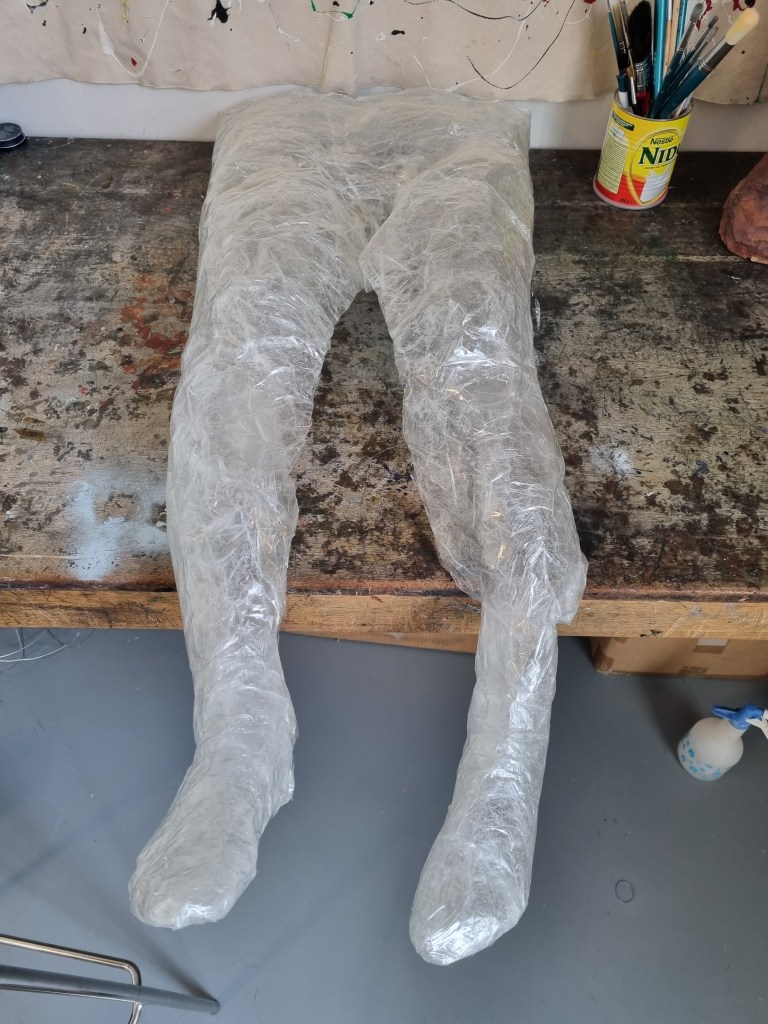

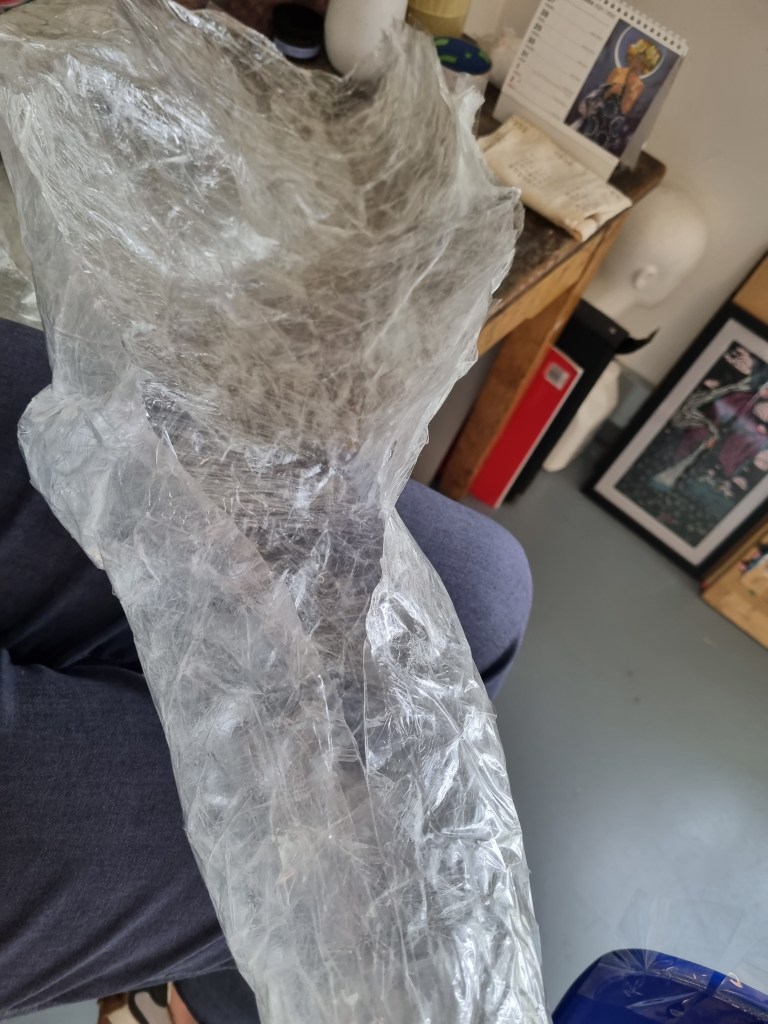
Transparency is a vital element in this project as it connects with the concept. Listening to meditation guidance on YouTube led by meditator Peter Chobot visualising the state of your physical body that appears in your mind as transparent and sparkling. The installation is meant to be set up as being in the moment of a meditative state, where the being would receive the energy to simulate the mystical power of the human being. I hope that the scene and presence of the sculptures with the sound of breath and light can connect the viewer to tap into the moment’s tranquillity and resonate with the energy.
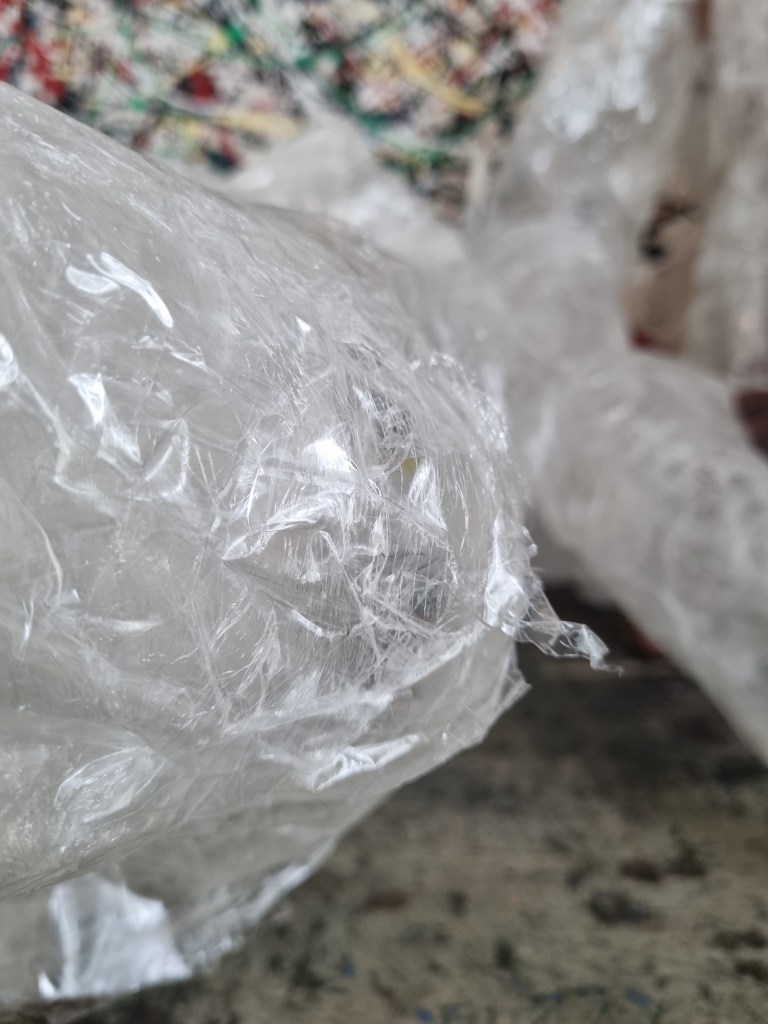
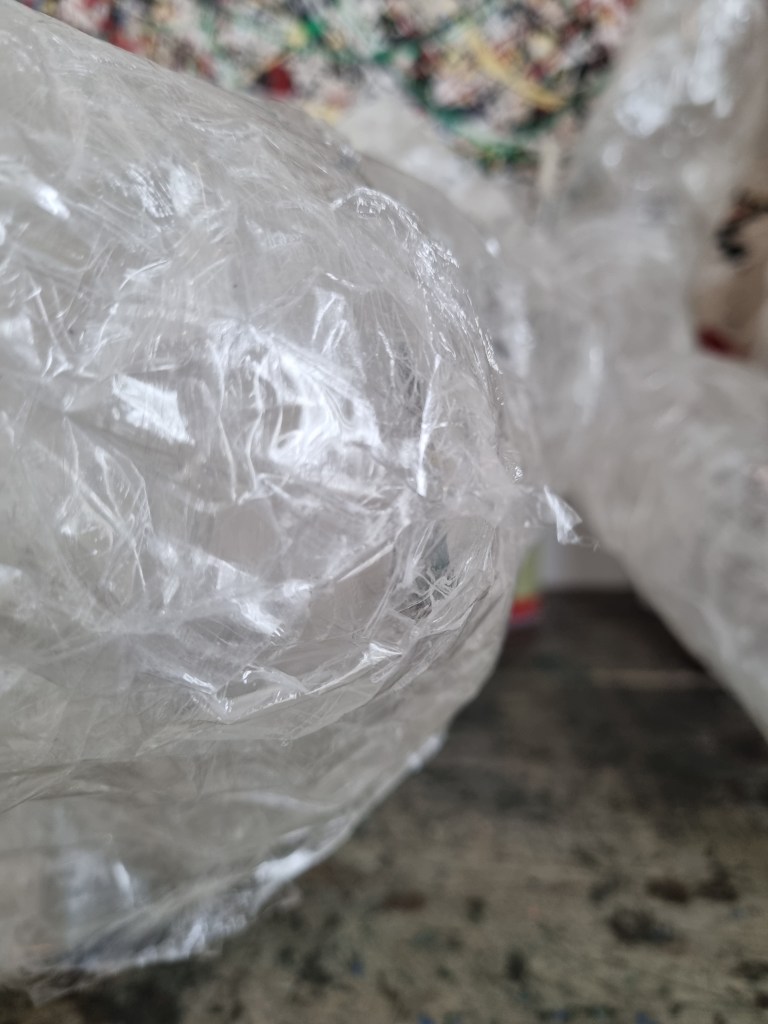
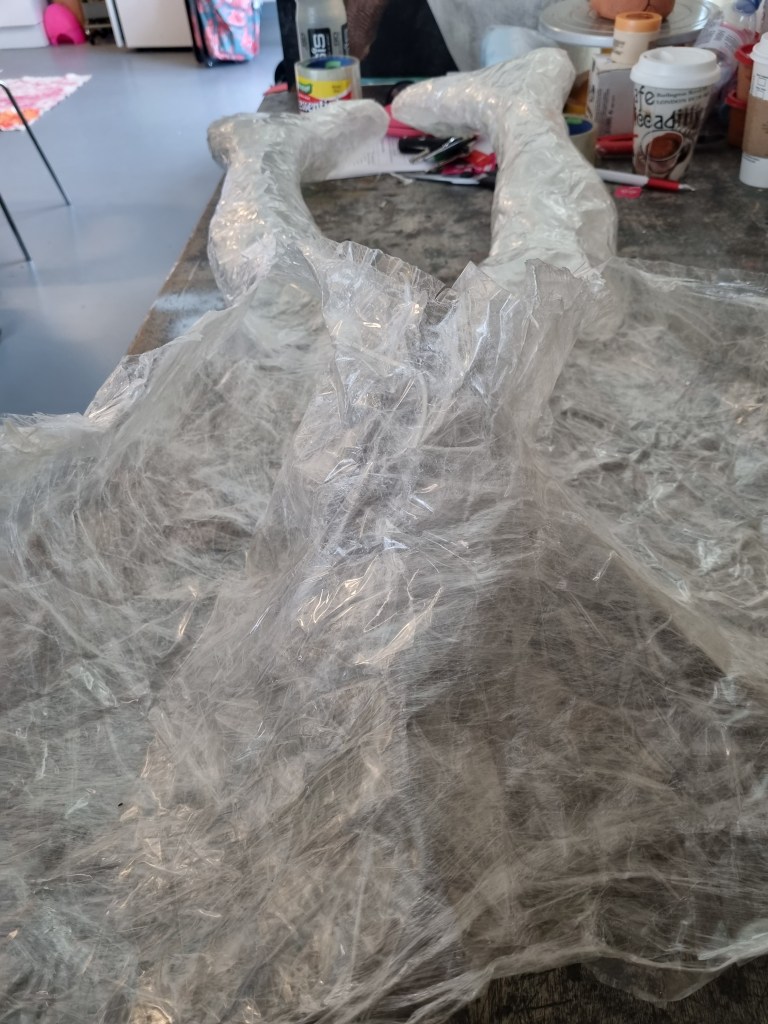
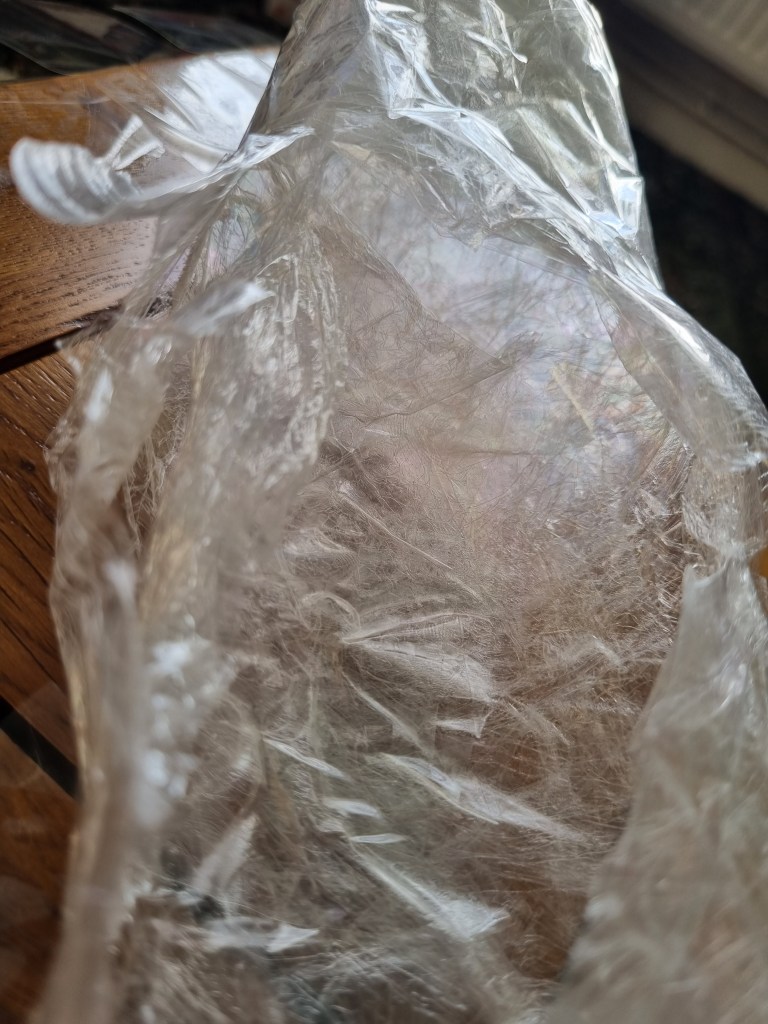
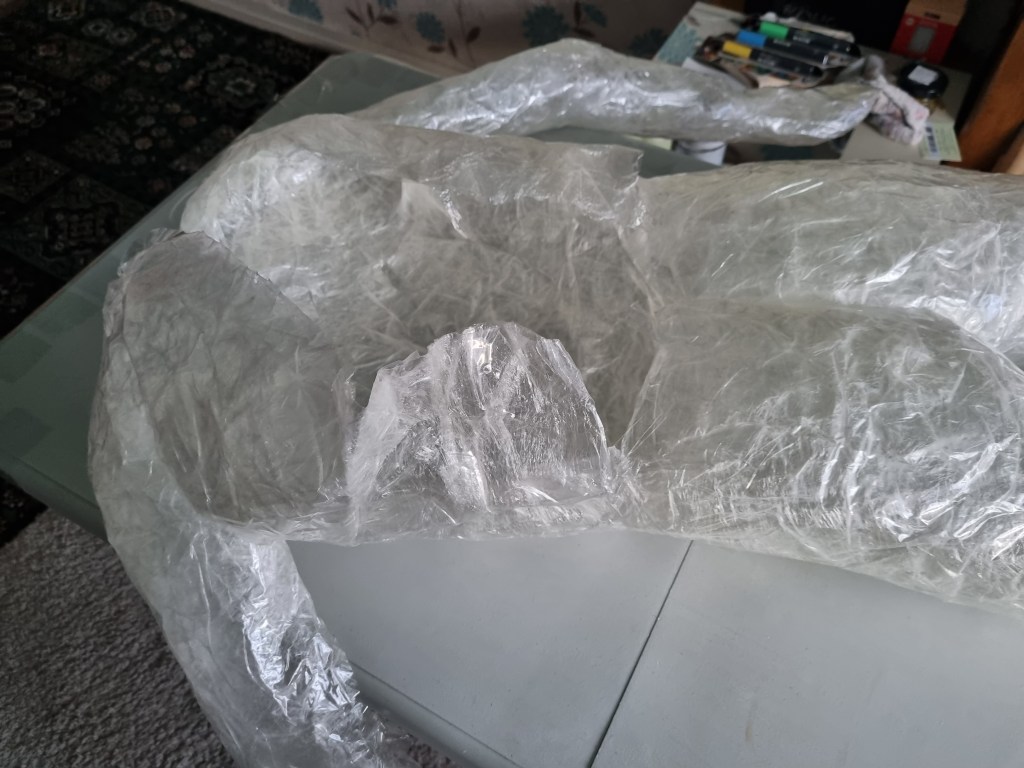
The sellotape on the knees created space between the tape and clingfilm, creating a ghost effect. I turned the knees over and worked on it from the inside. I had to cut the clingfilm, straighten it flat and tape it over to articulate the body’s shape as close as possible to reality. I like the wrinkles and lines the clingfilm makes inside the sculptures. This aspect resonates with the sparkles that the meditator should visualise while meditating.
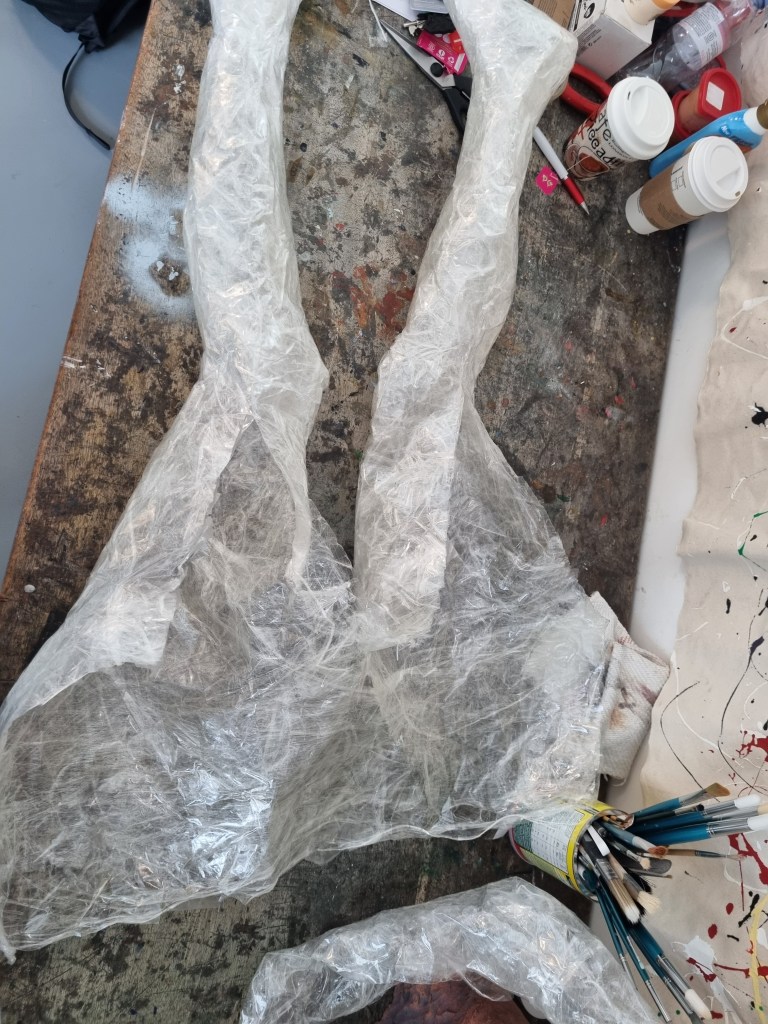
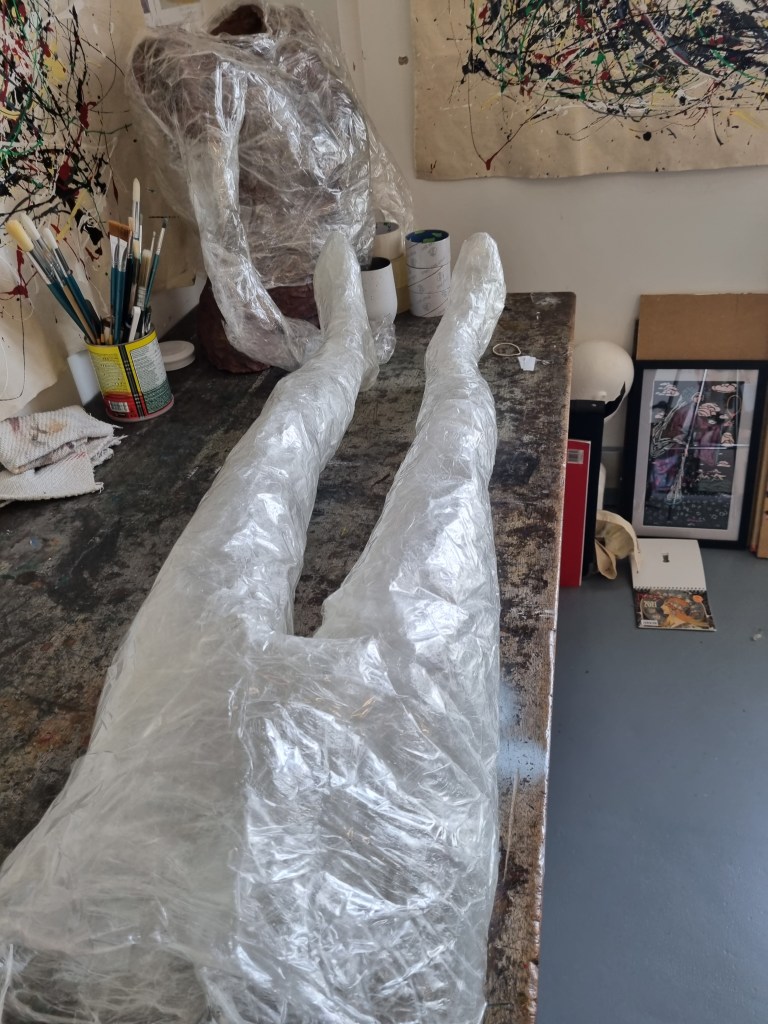

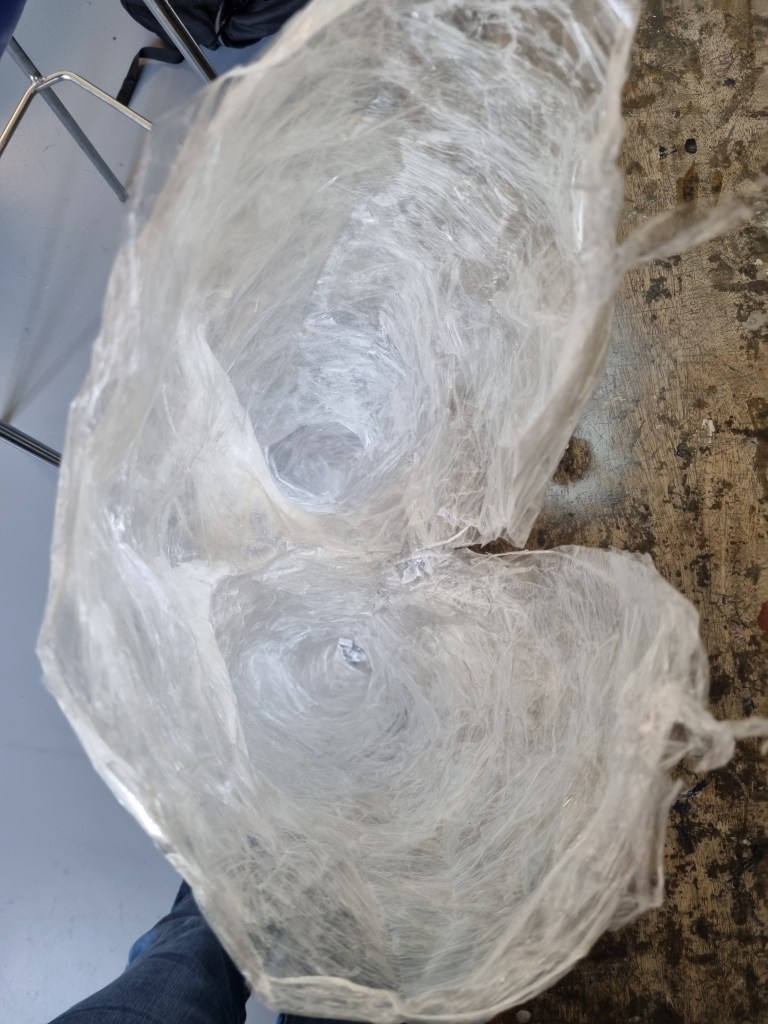
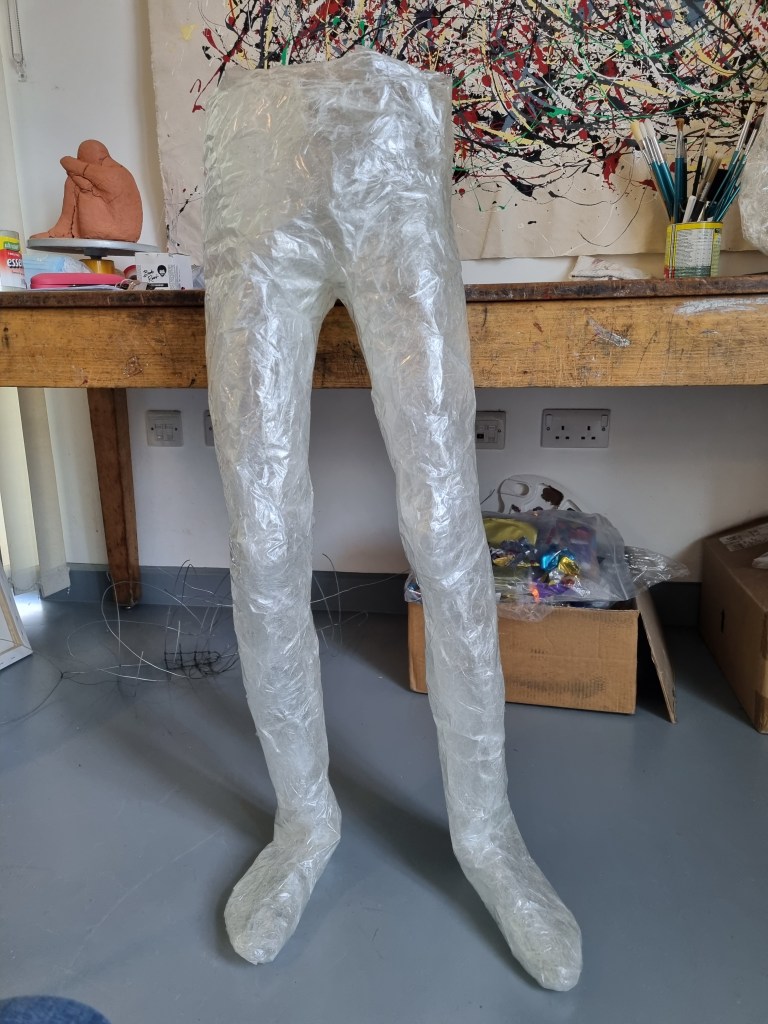
I moved from the feet to the top of the hips, gradually firming the structure with more tape and concentrating on the proportions of the body.
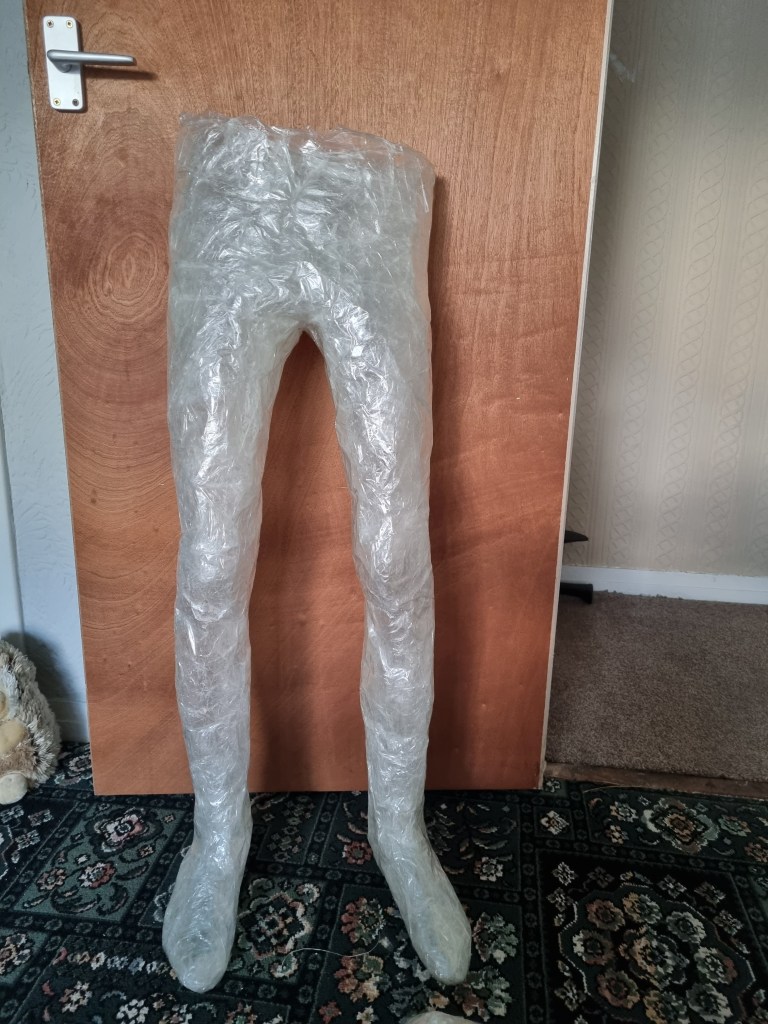
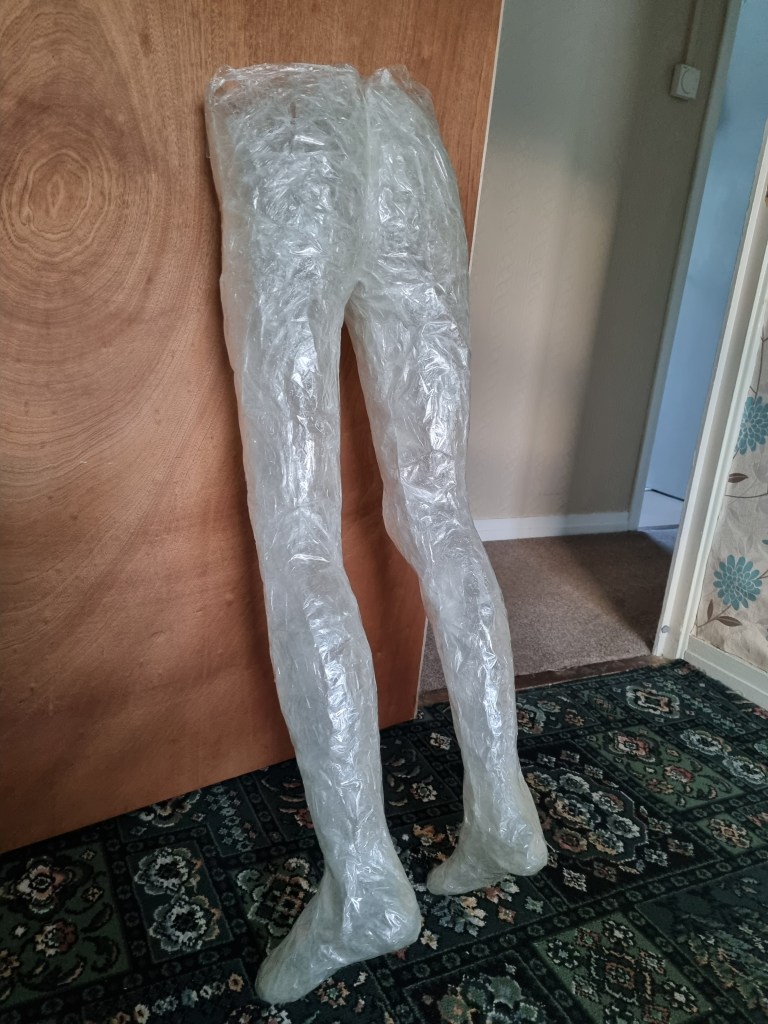
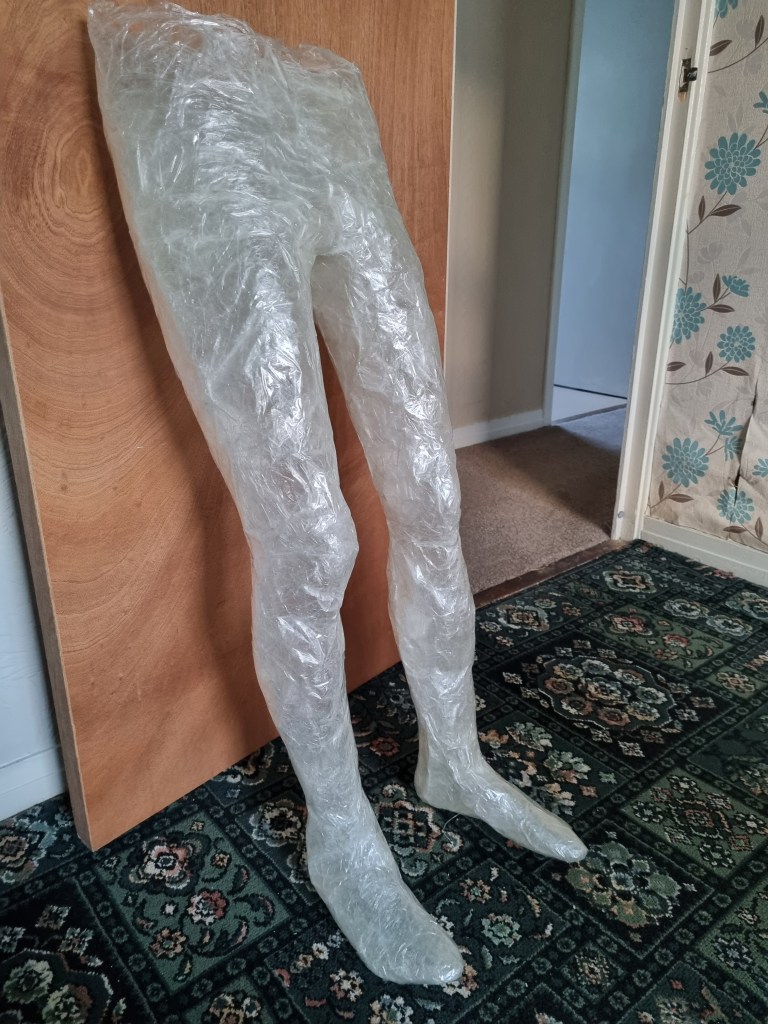


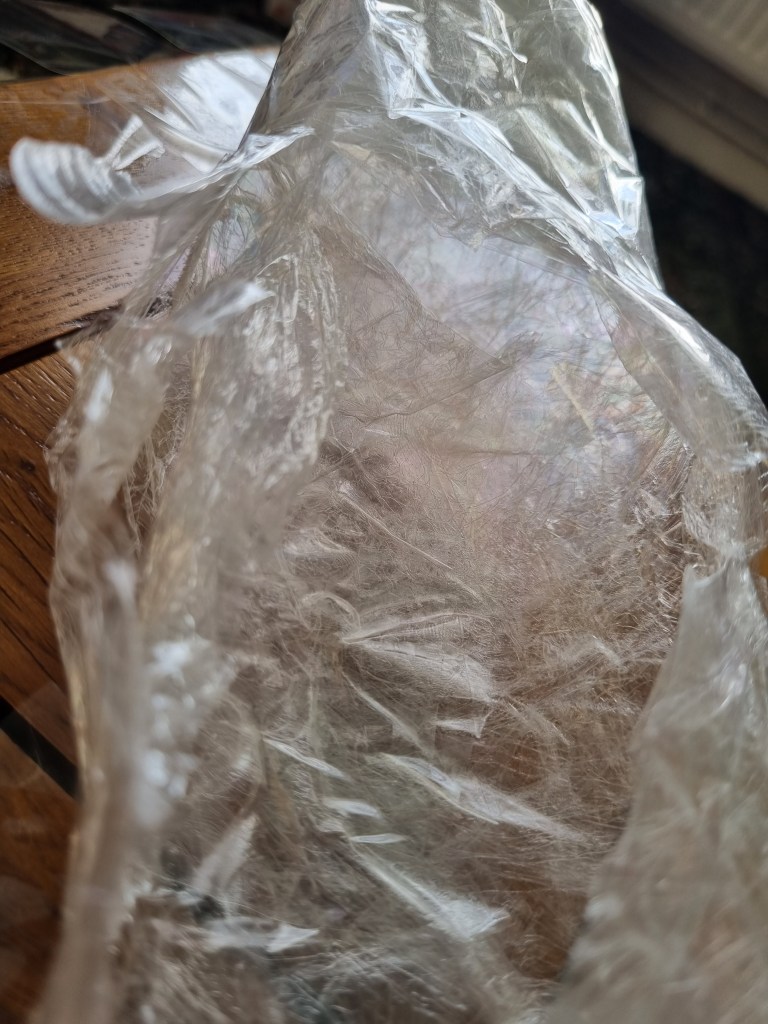
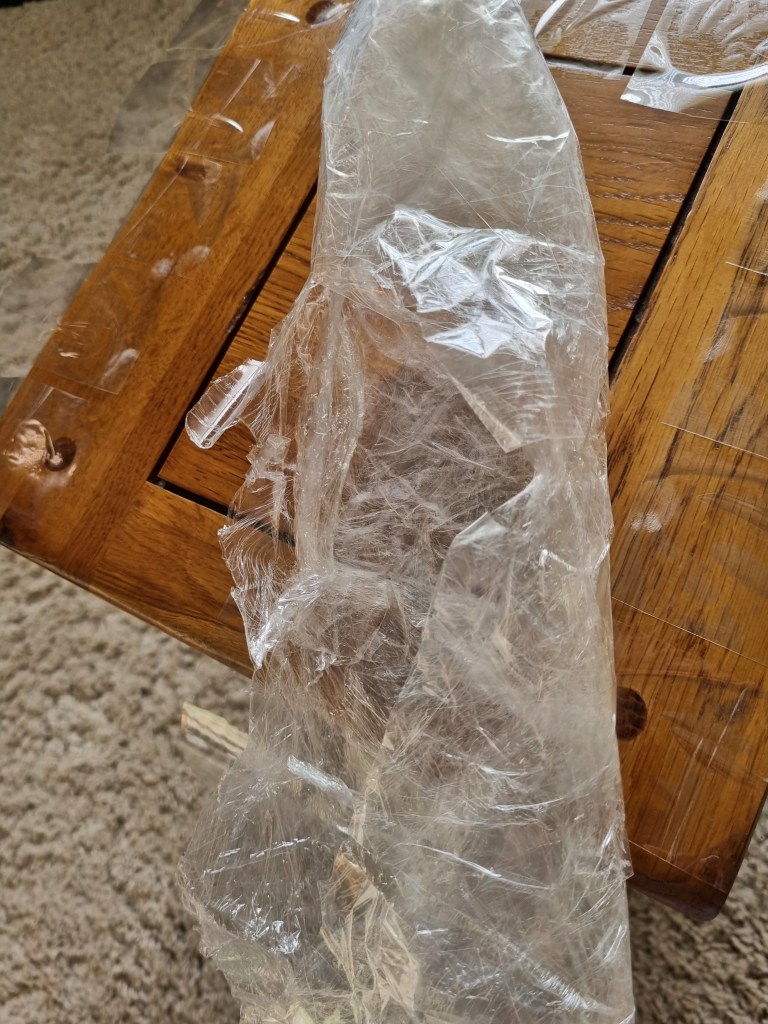

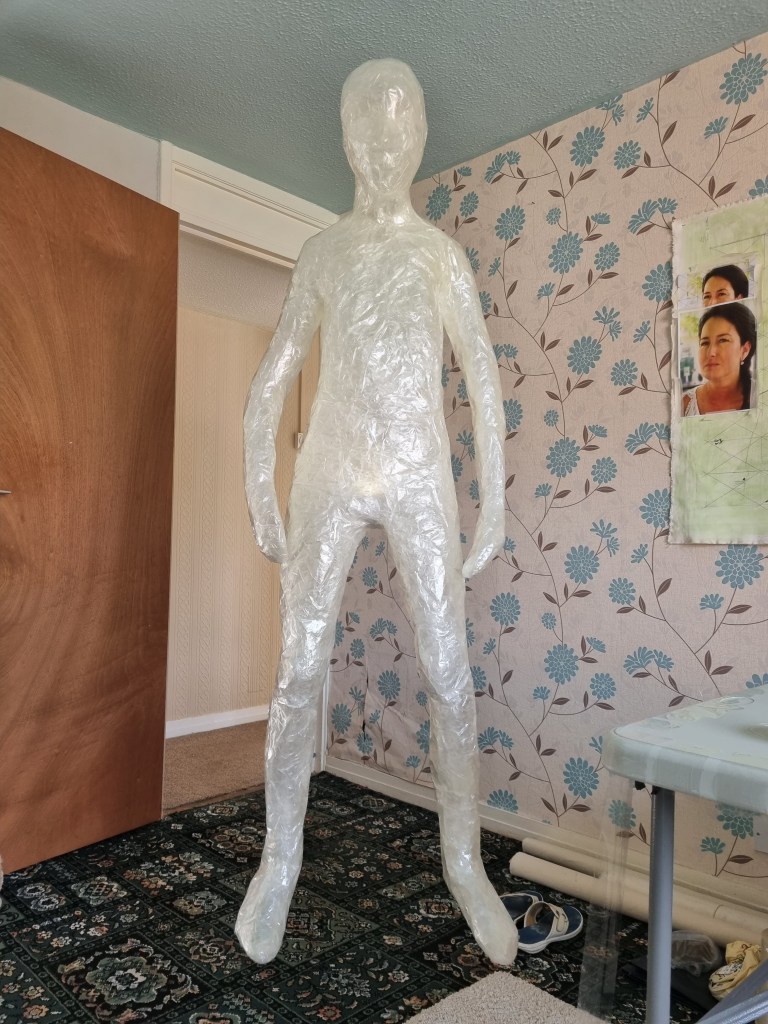
I started to apply more sellotape to the hands and worked my way from there to the top of the arms. I did not want to seal the lower arms at that point as I originally wanted to have the standing pose with palms facing out to expose the energy points to the viewer. I should have paid more attention while working on the cast. However, it is fixable because of the sellotape flexibility. I can still turn the lower arms around and modify the pose by moving the arms closer to the body. The head is stiff, and I can tell this happened because the model (me) concentrated on the cast instead of the emotions. The head cast misses softness, so I will tilt the head of the pose slightly down to give the impression of being in deep thought.
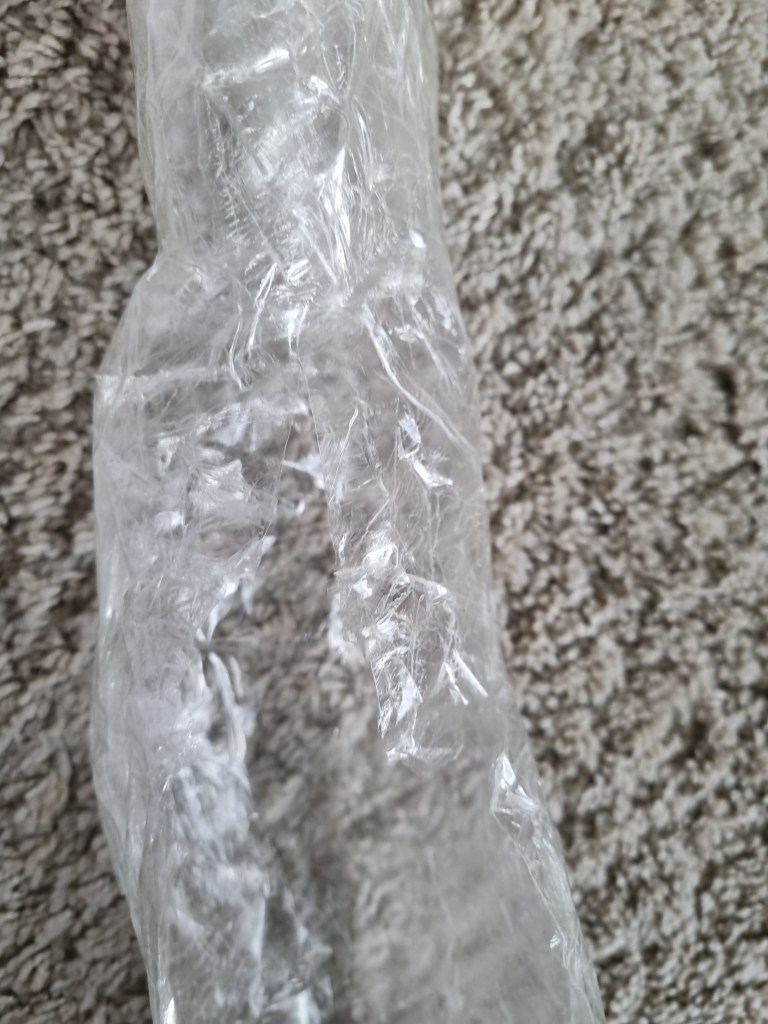

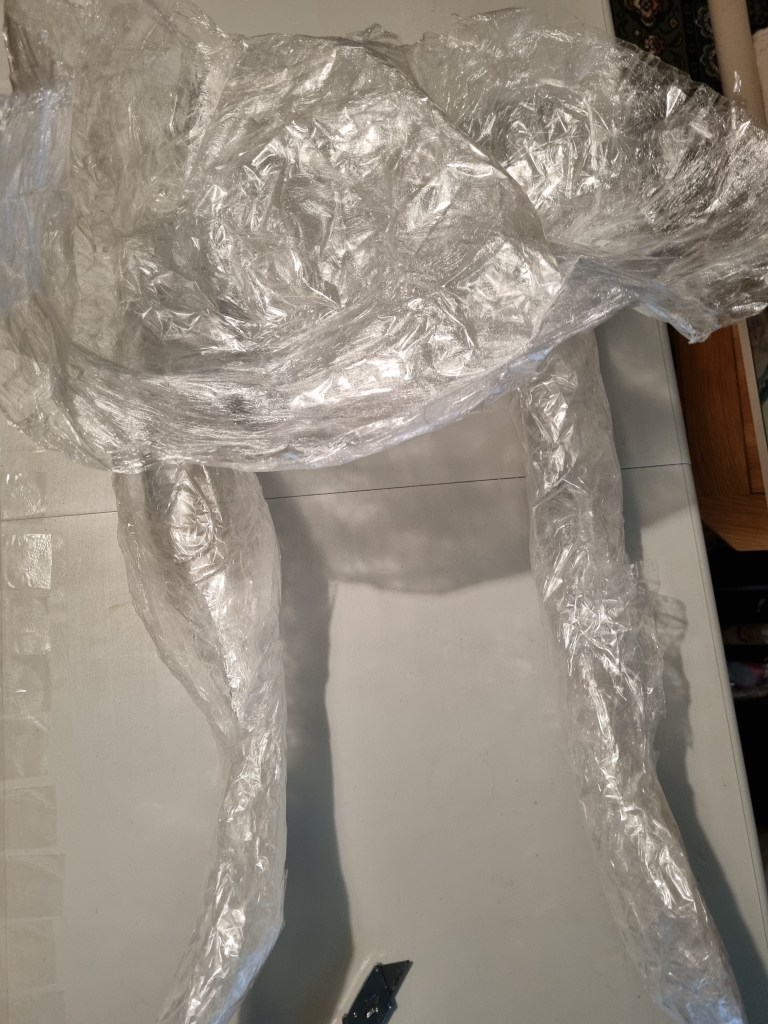
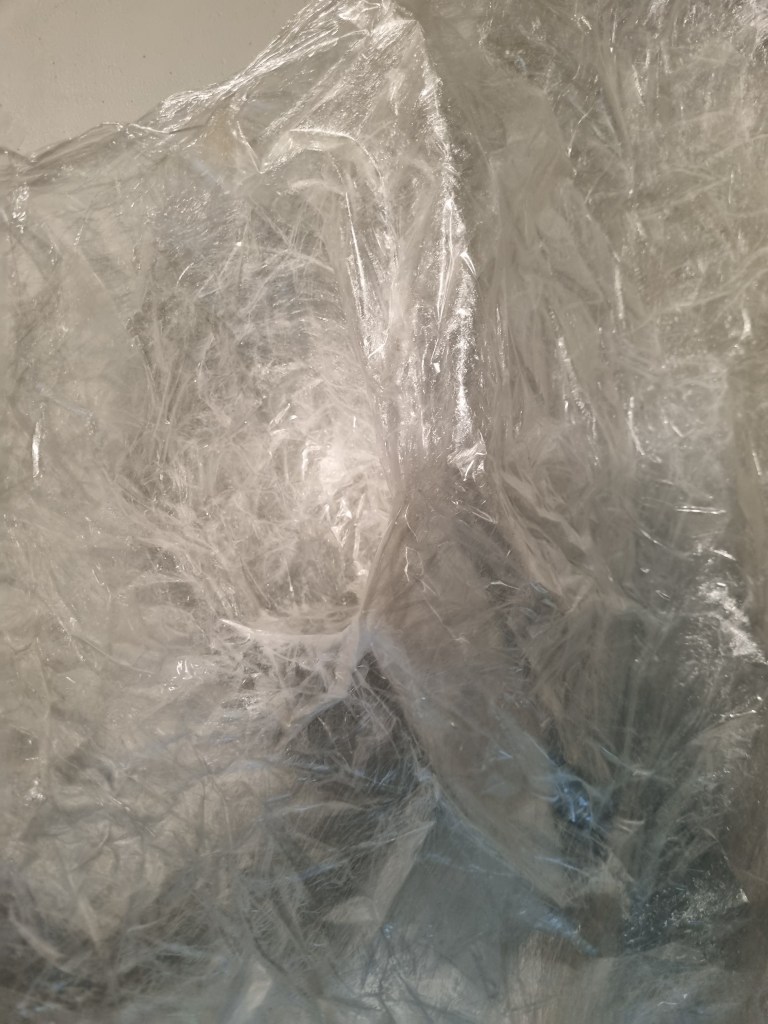
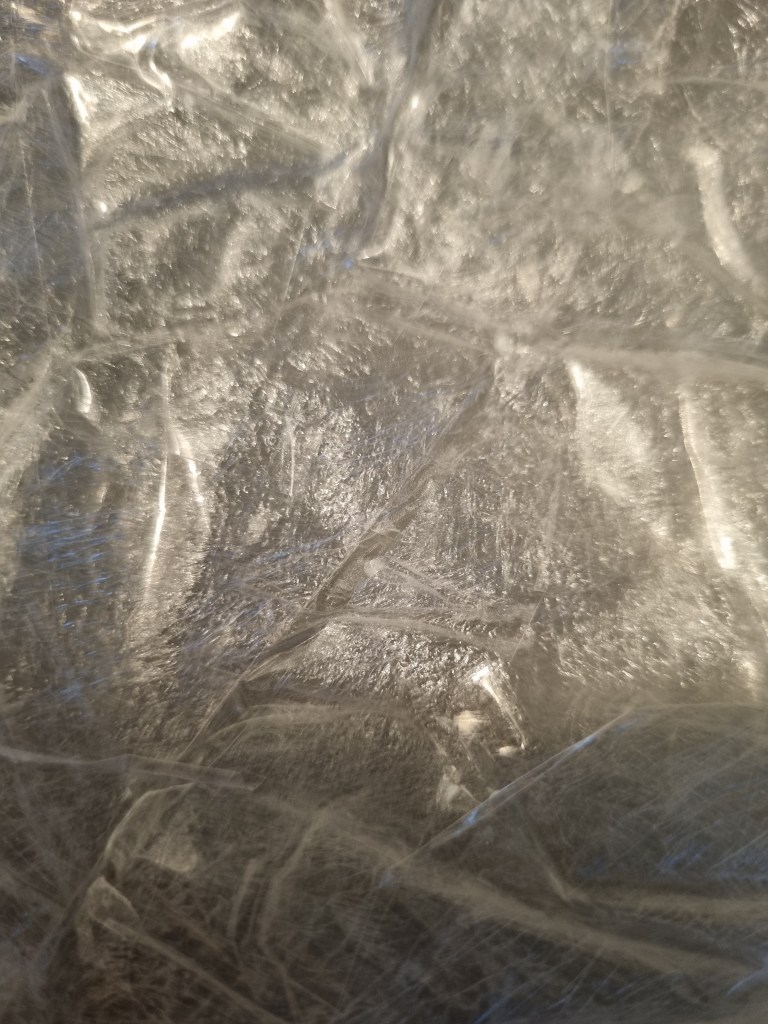
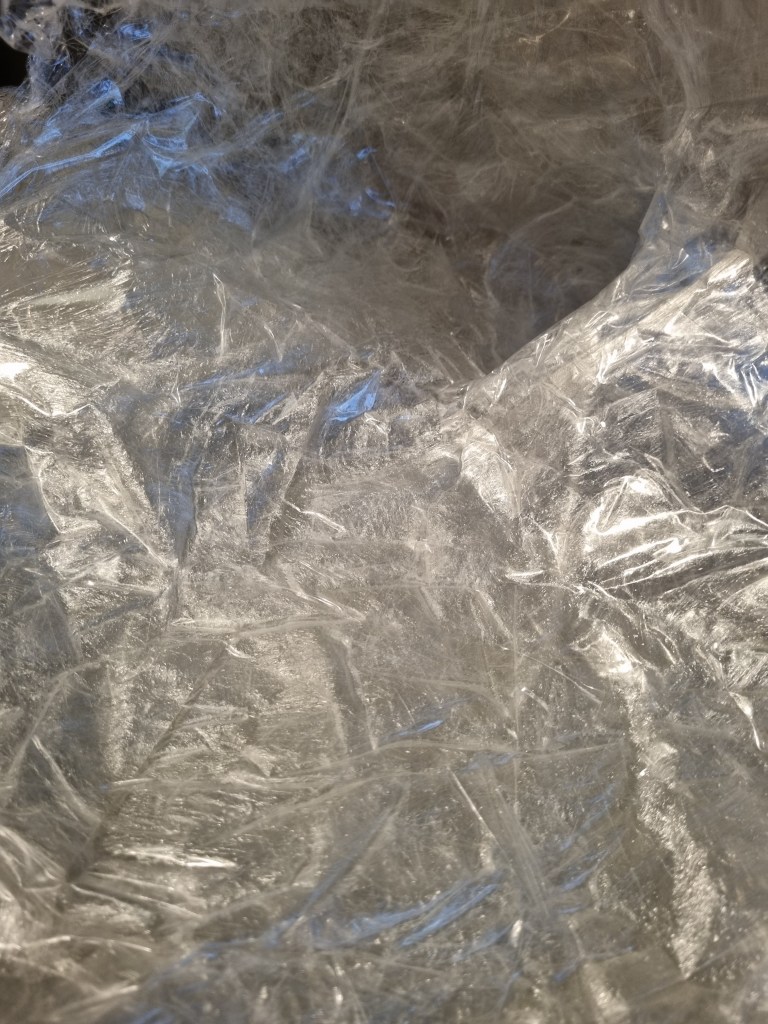
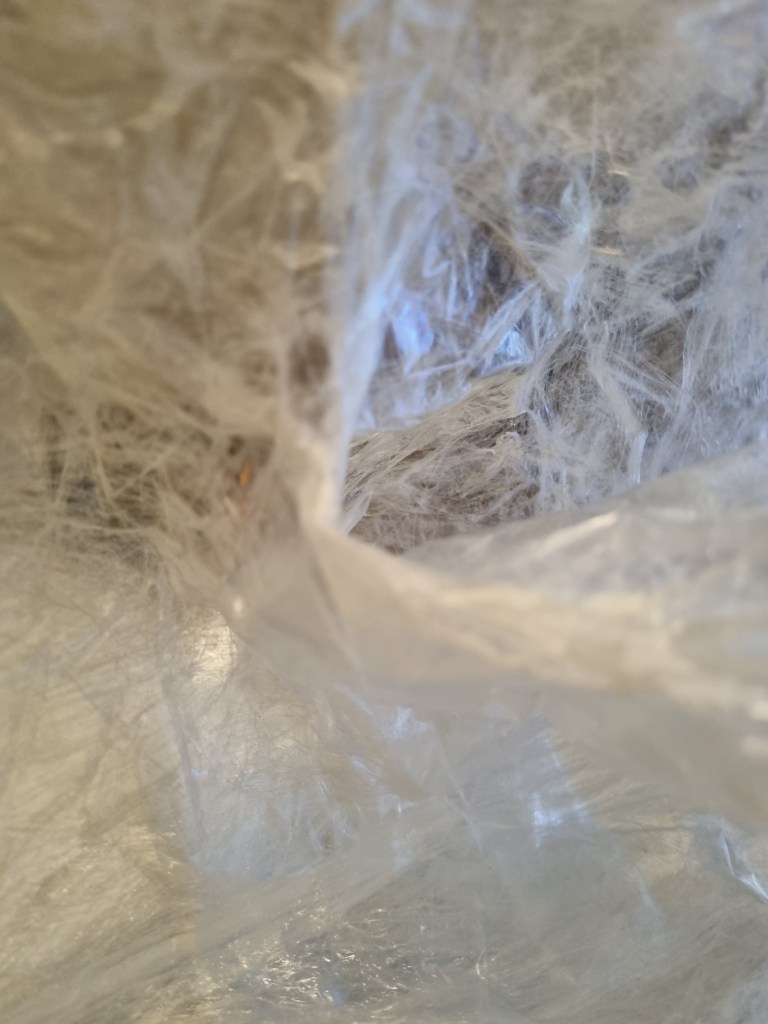
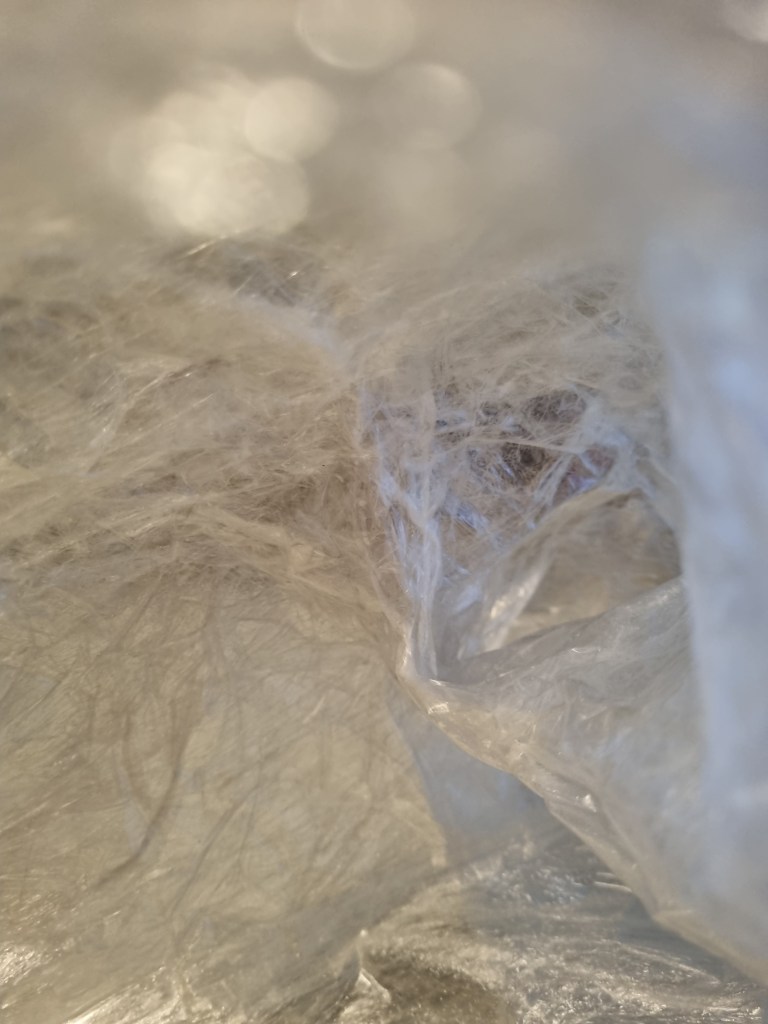
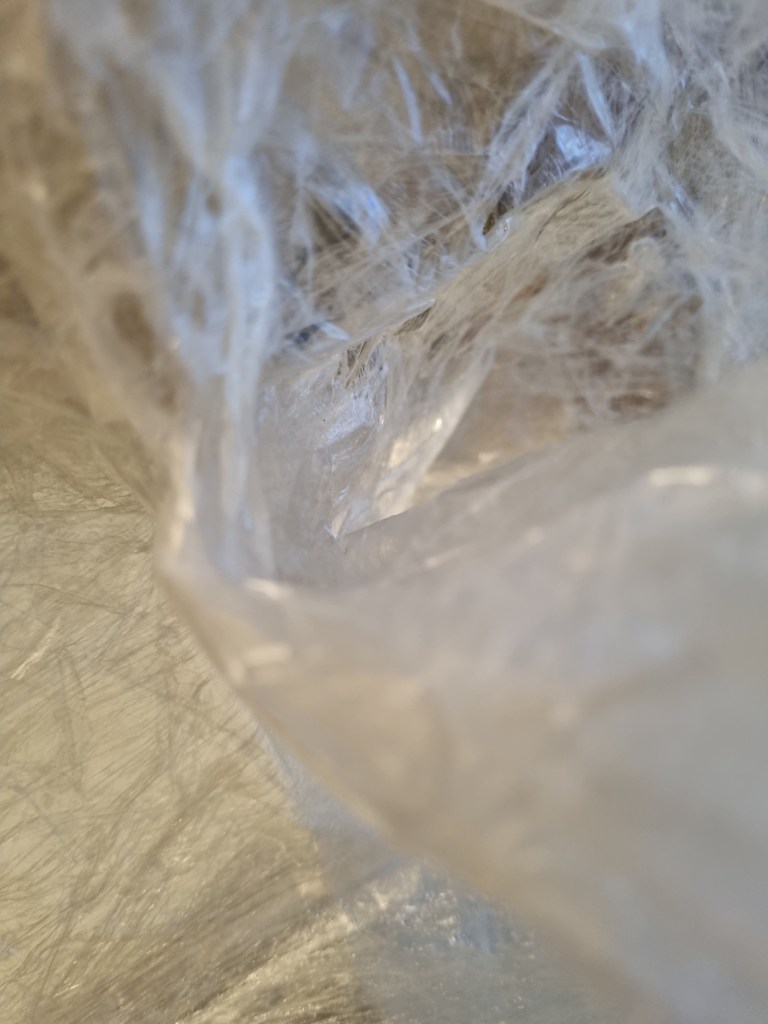
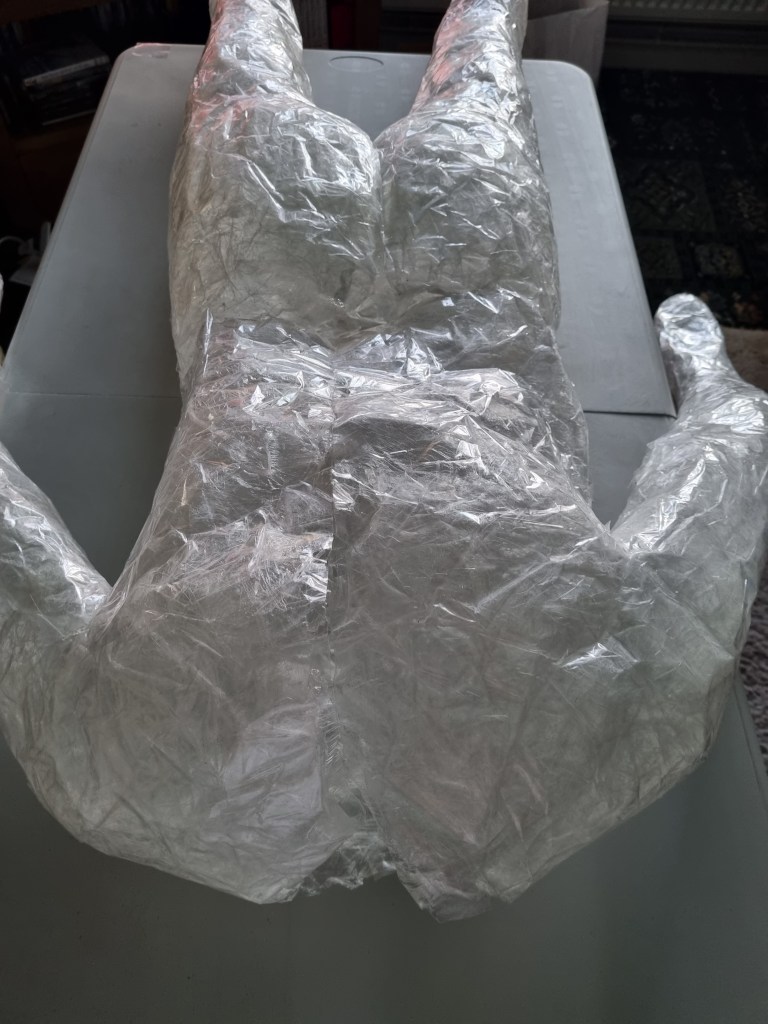
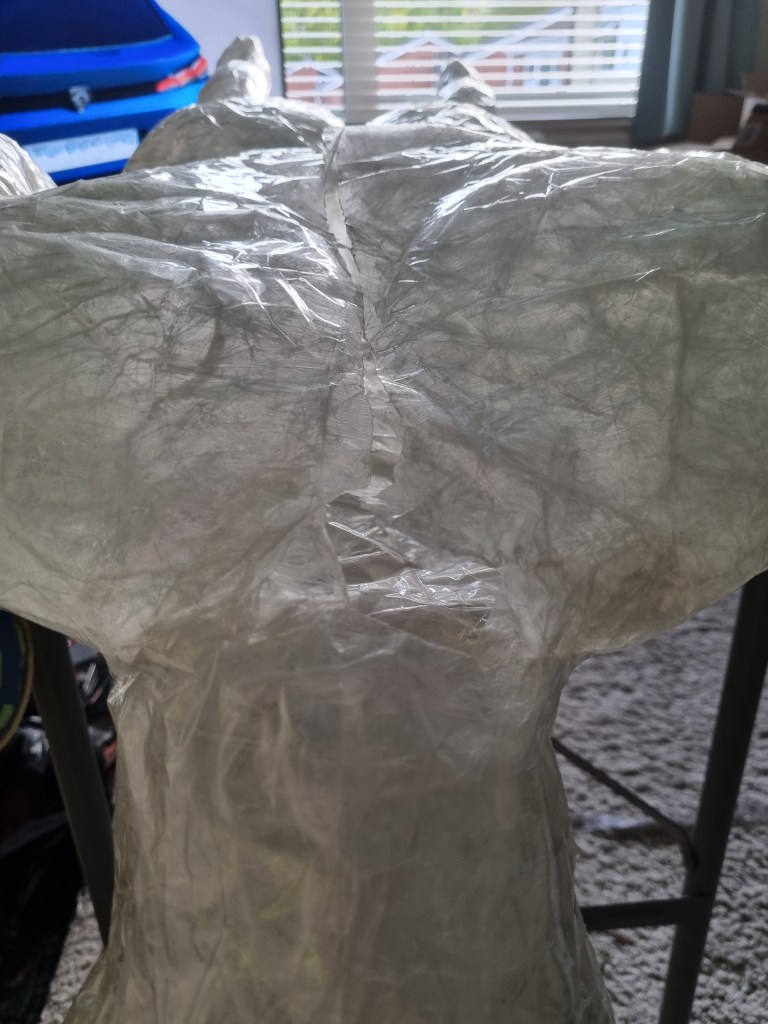
Joining the lower and torso was tricky. I, unfortunately, managed to twist the upper body. As a result, I had to alter the right proportions of the body. The back seam for closing the cast moved, which is not an issue because of the material’s ability.
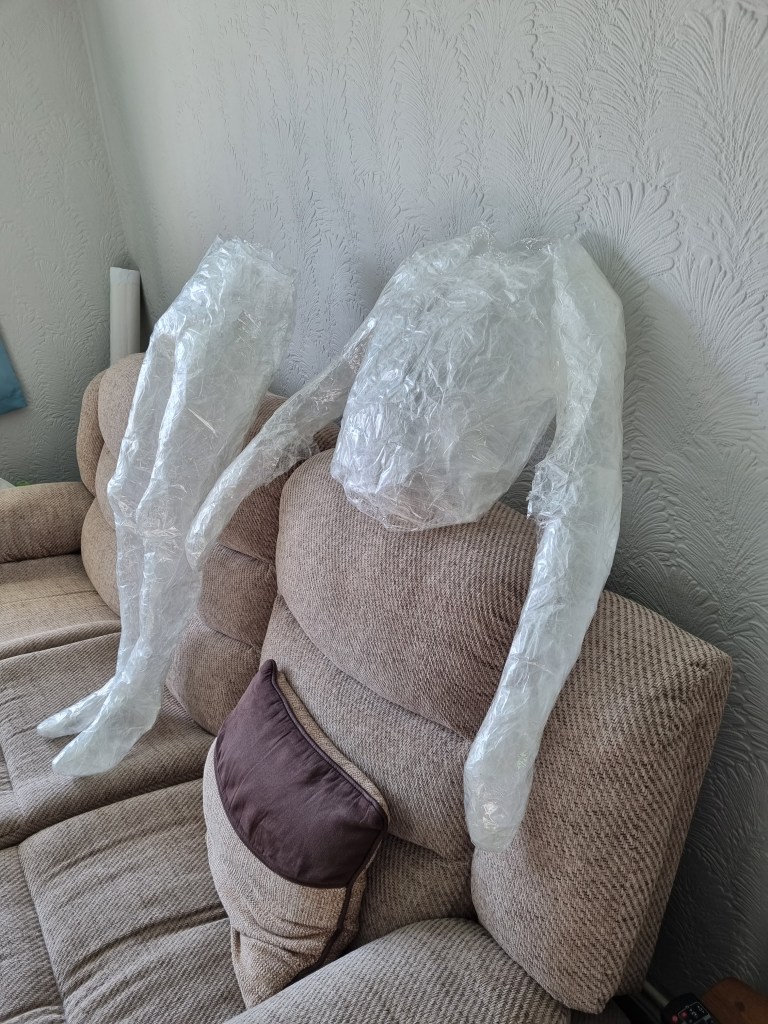
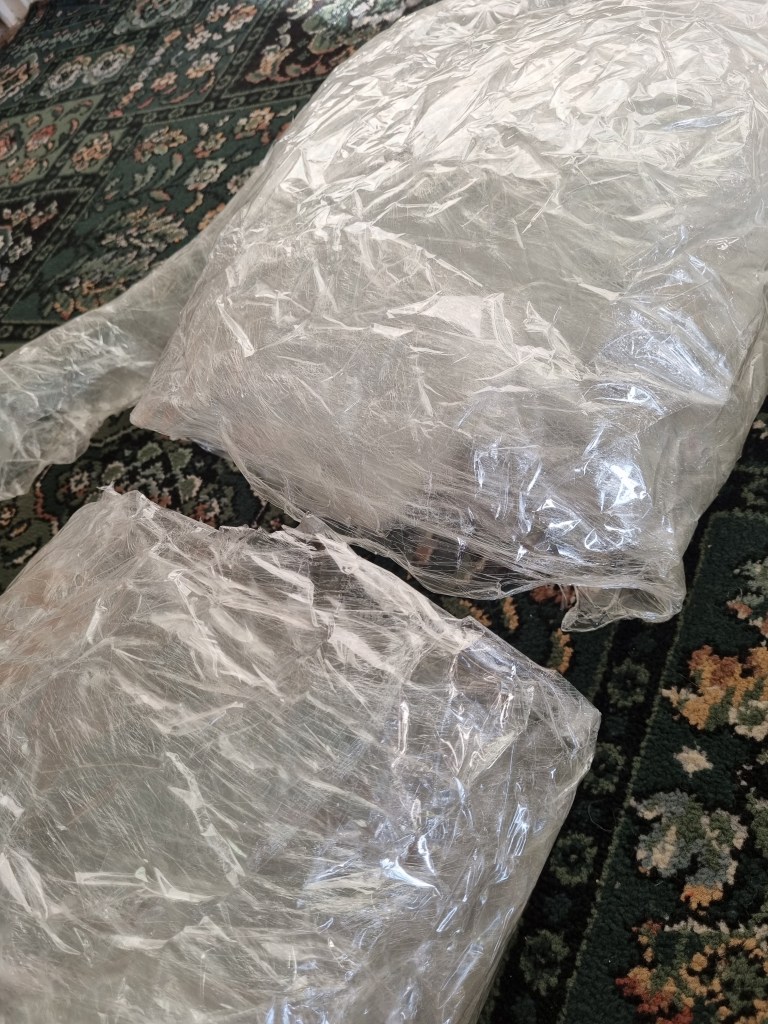
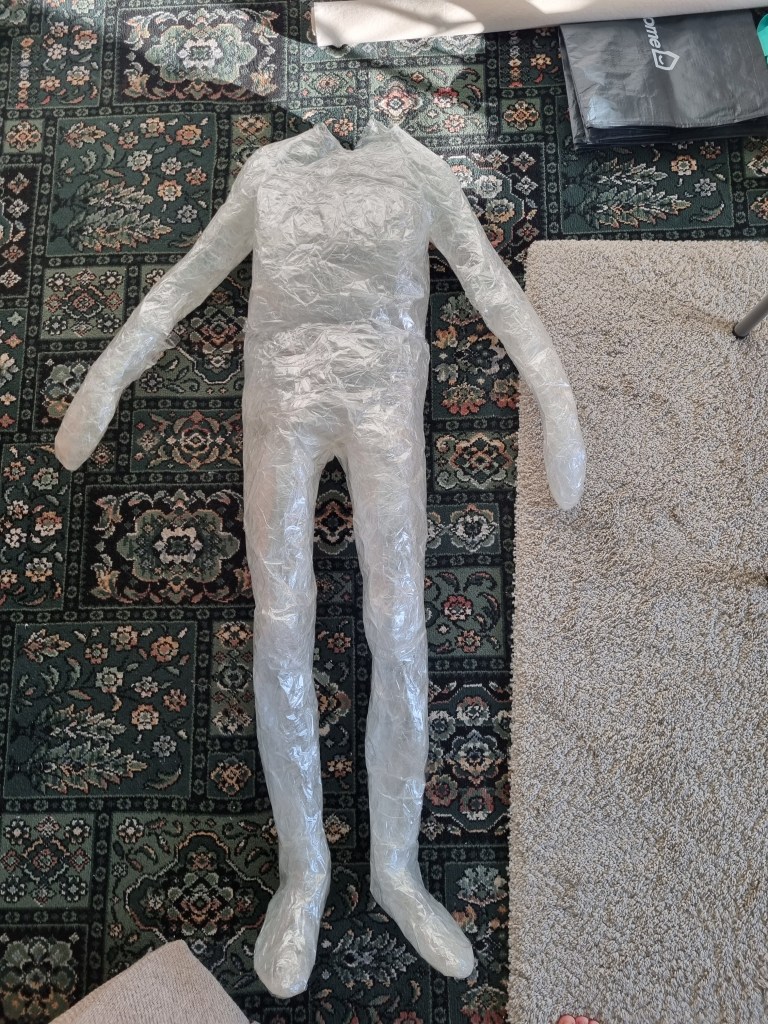
I cut places where the shape has compromised the form by creating air space between the thickness of the layers. Then, I sellotaped them together and tightened the seal.
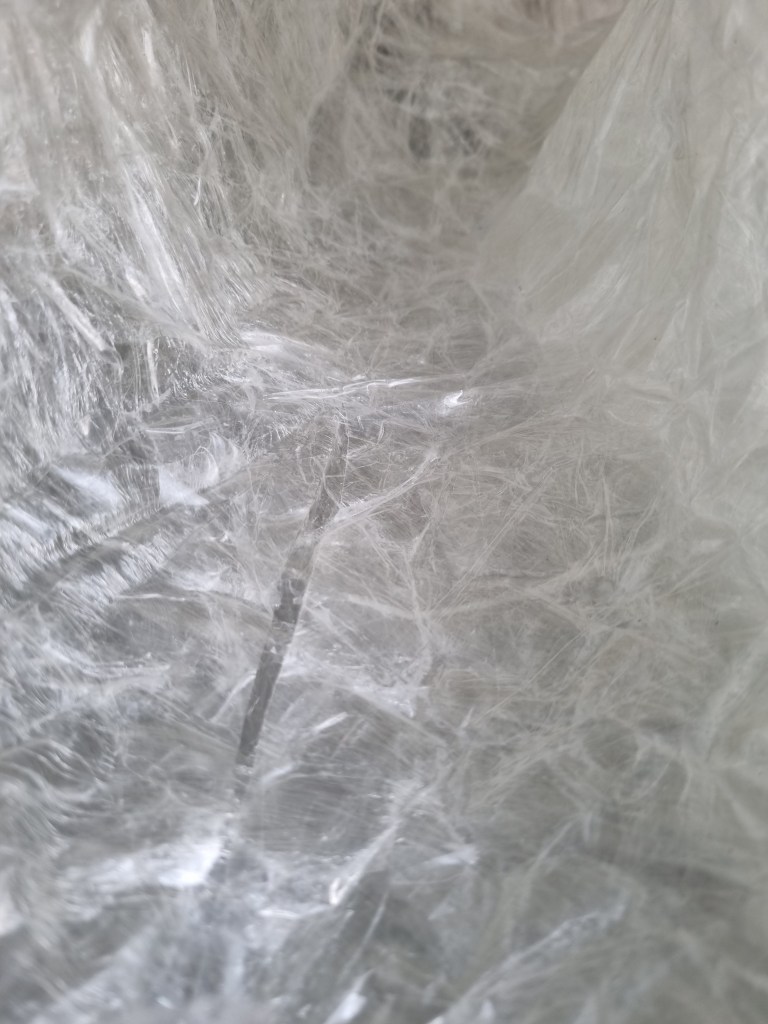
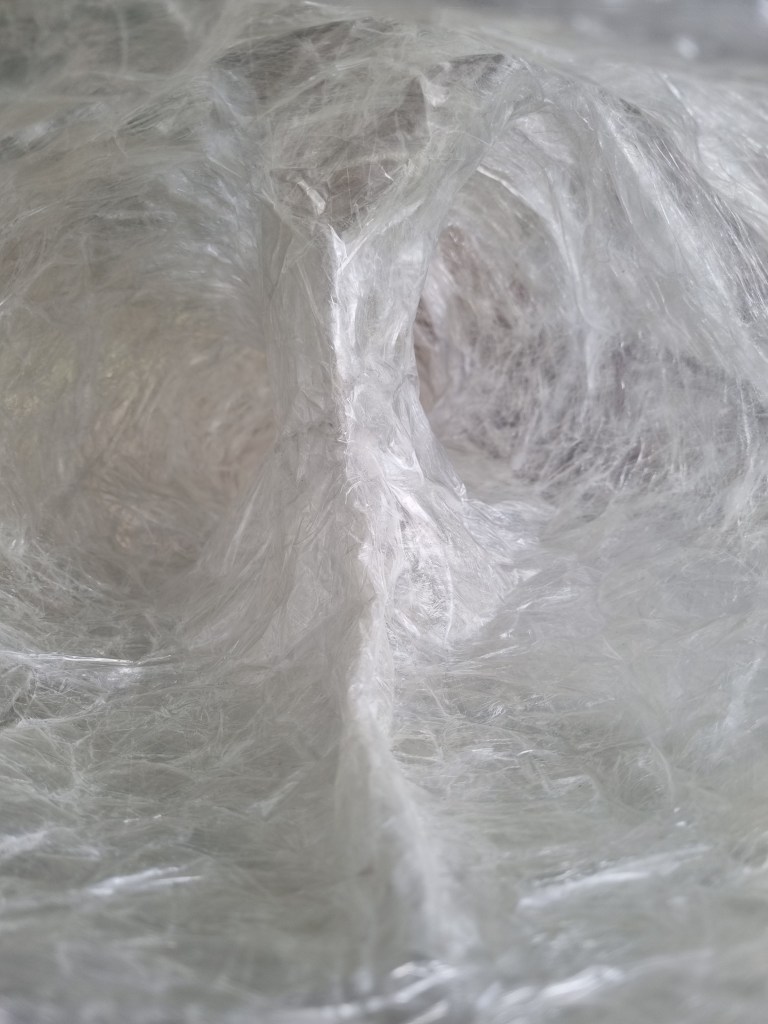
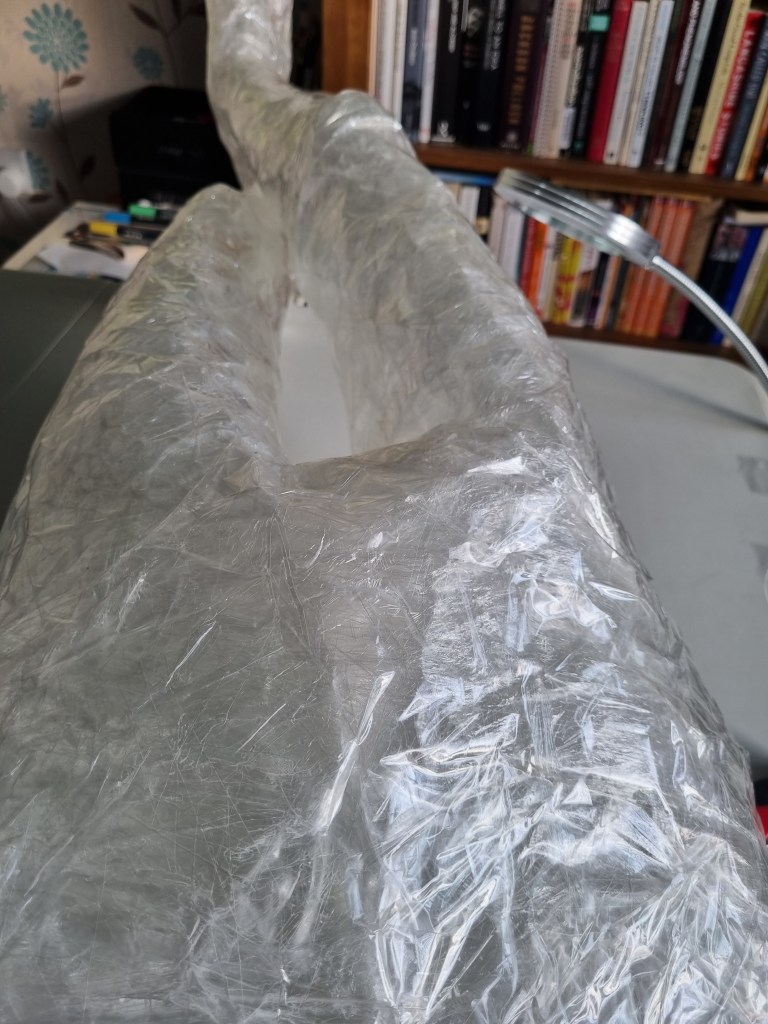
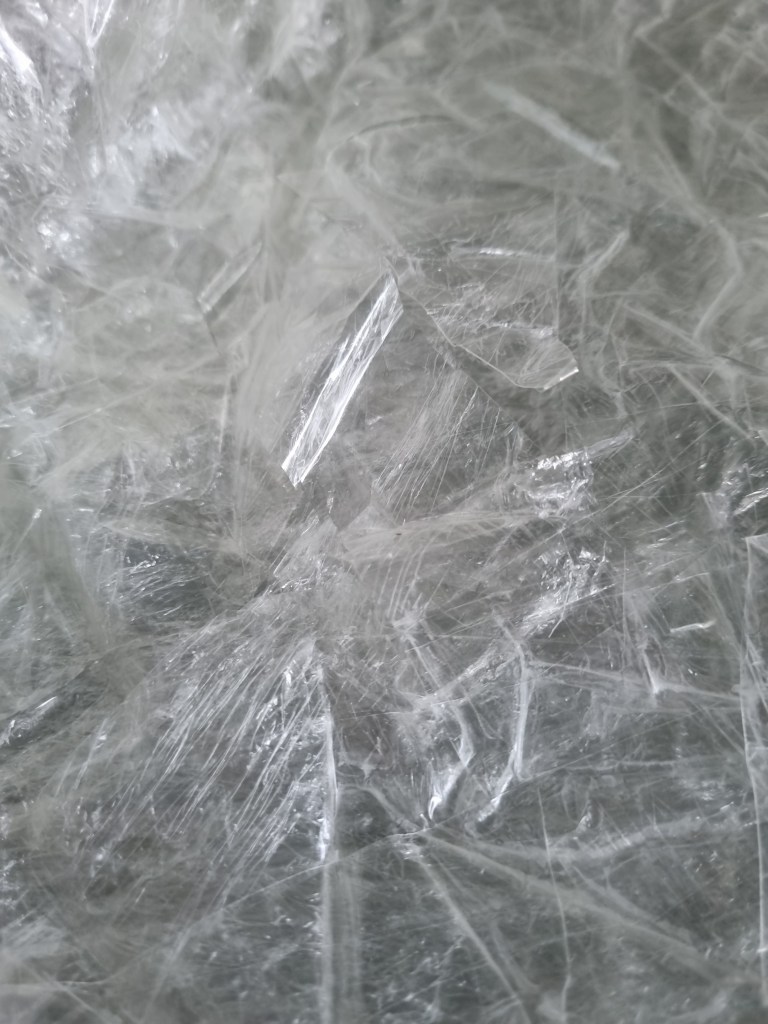
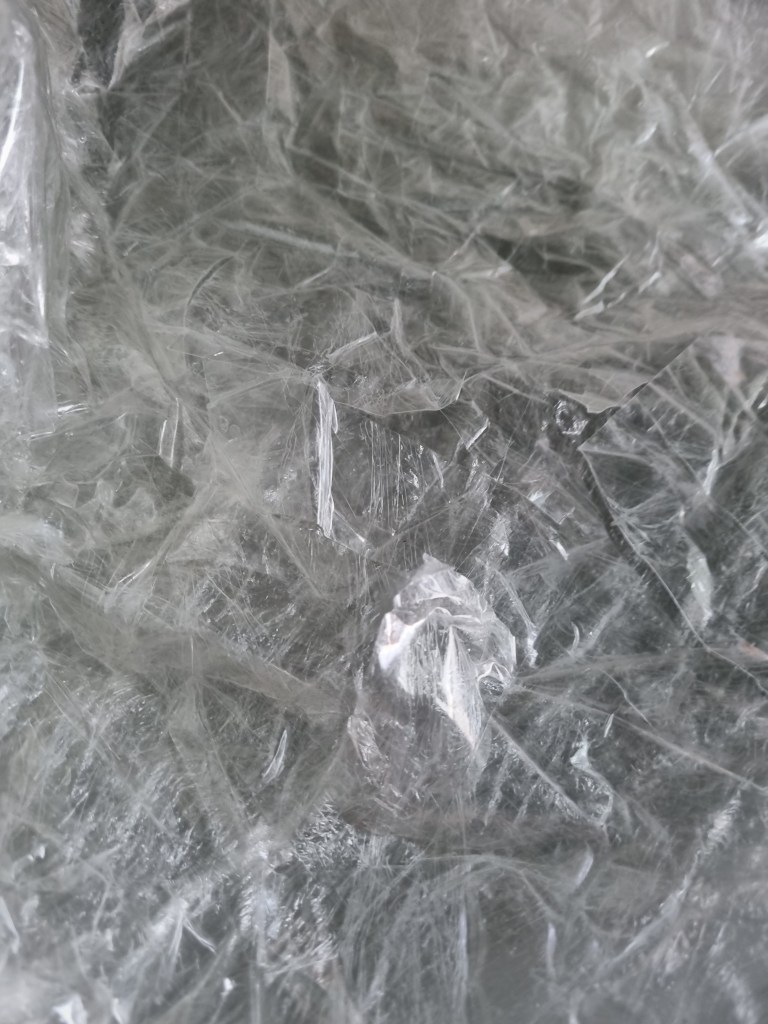
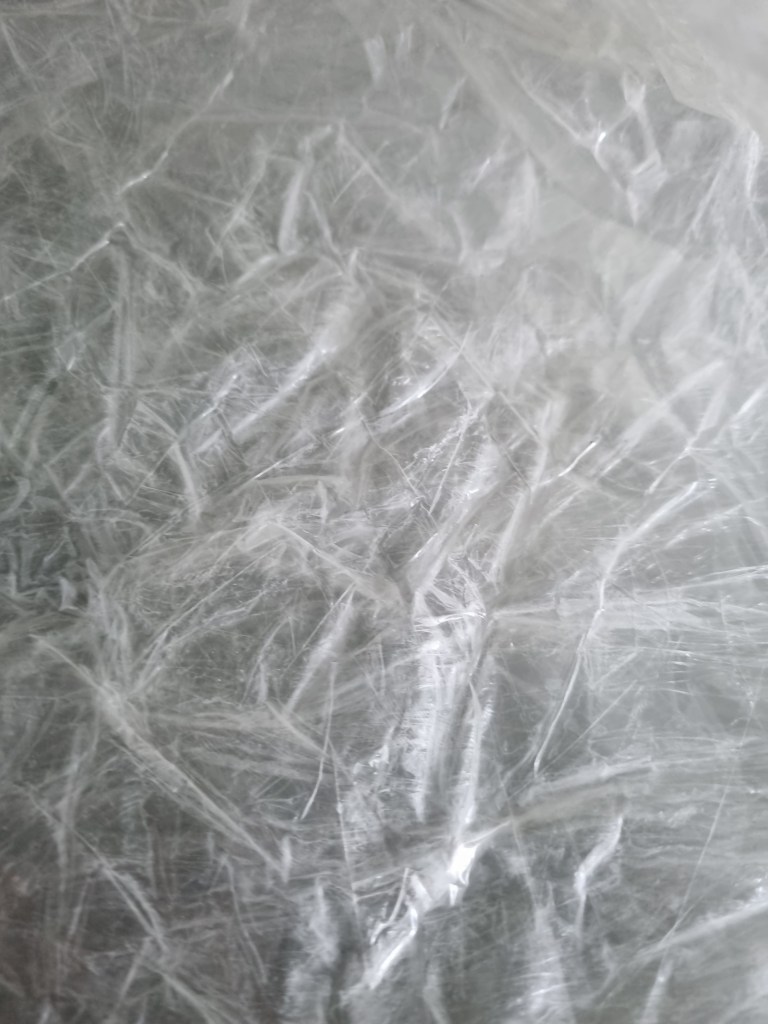
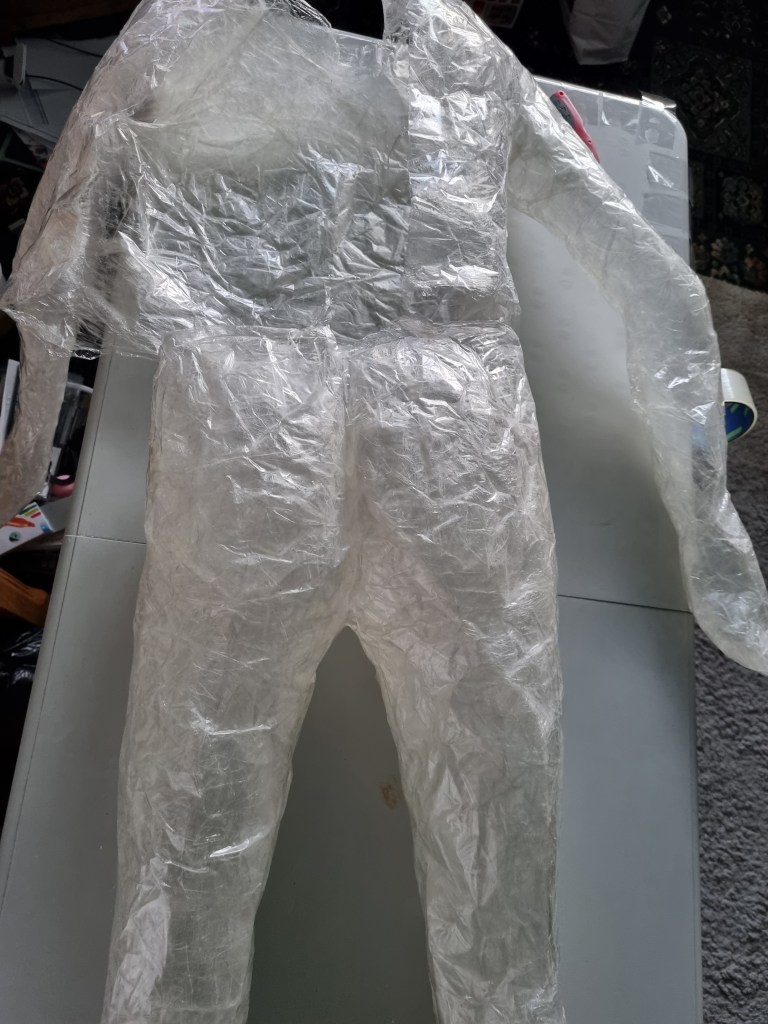
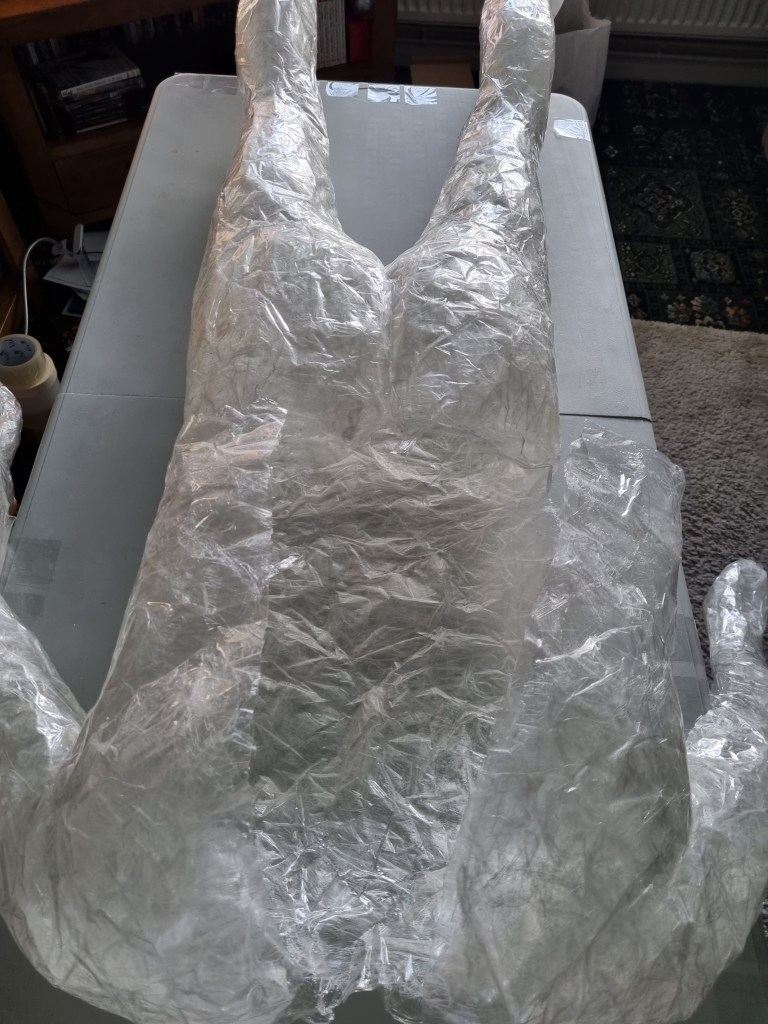
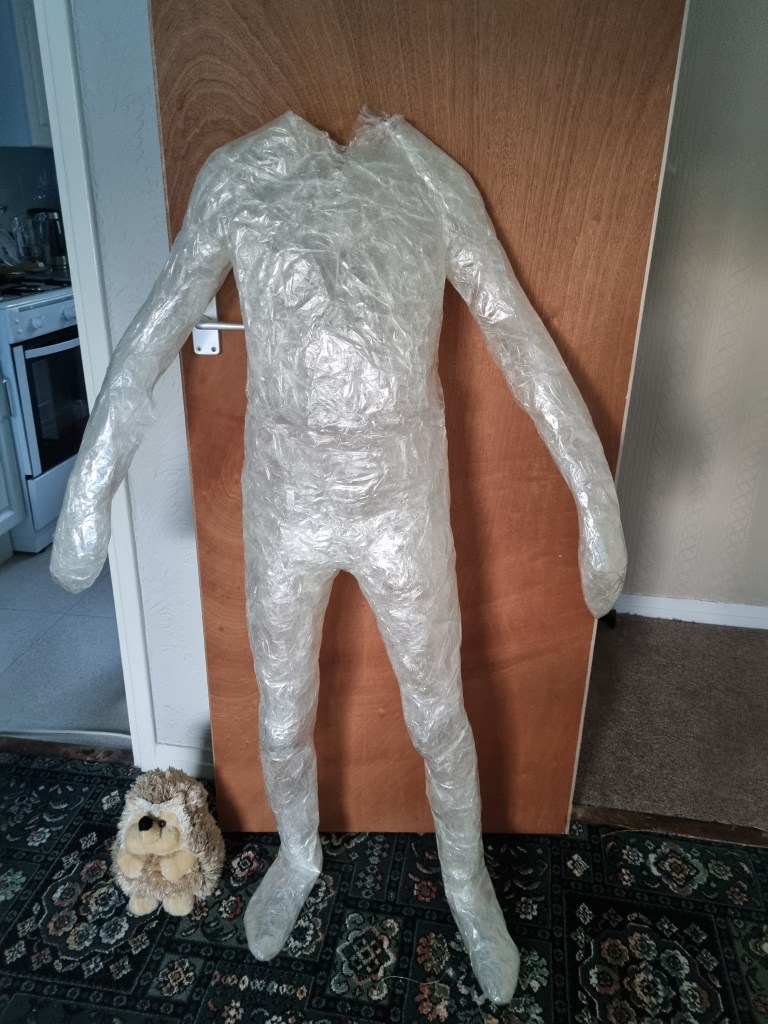
I carried on with the sculpturing until I was happy with the results. However, much more work must be done because I need to turn the lower arms and put the limbs closer to the body.
Head Cast
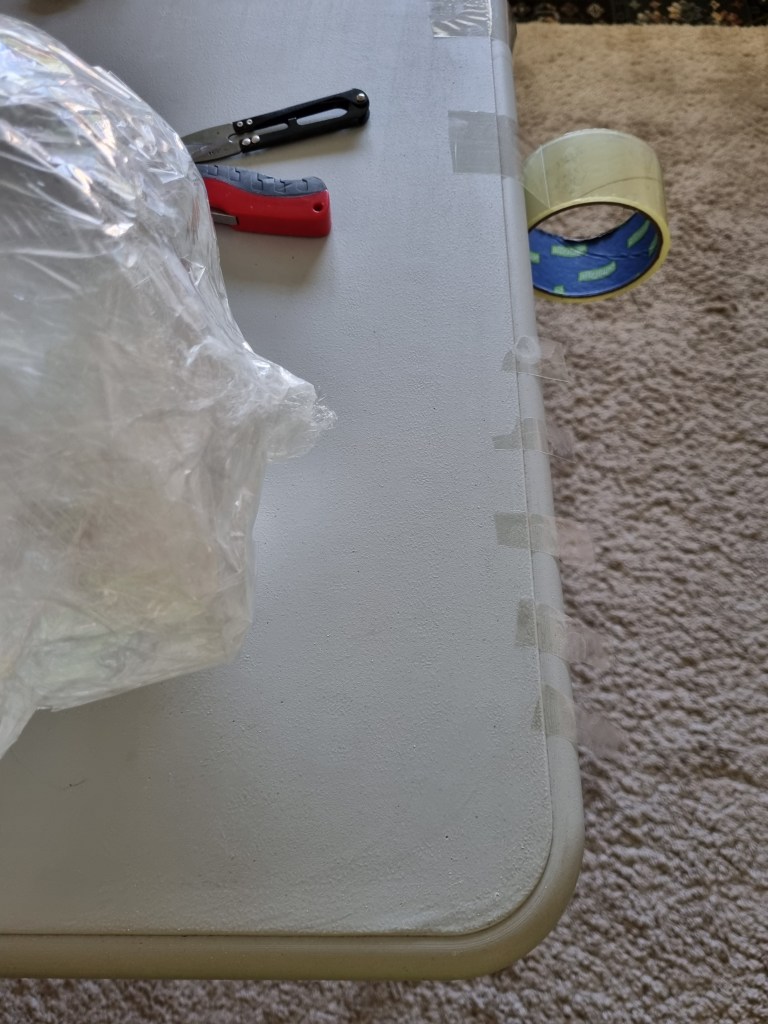
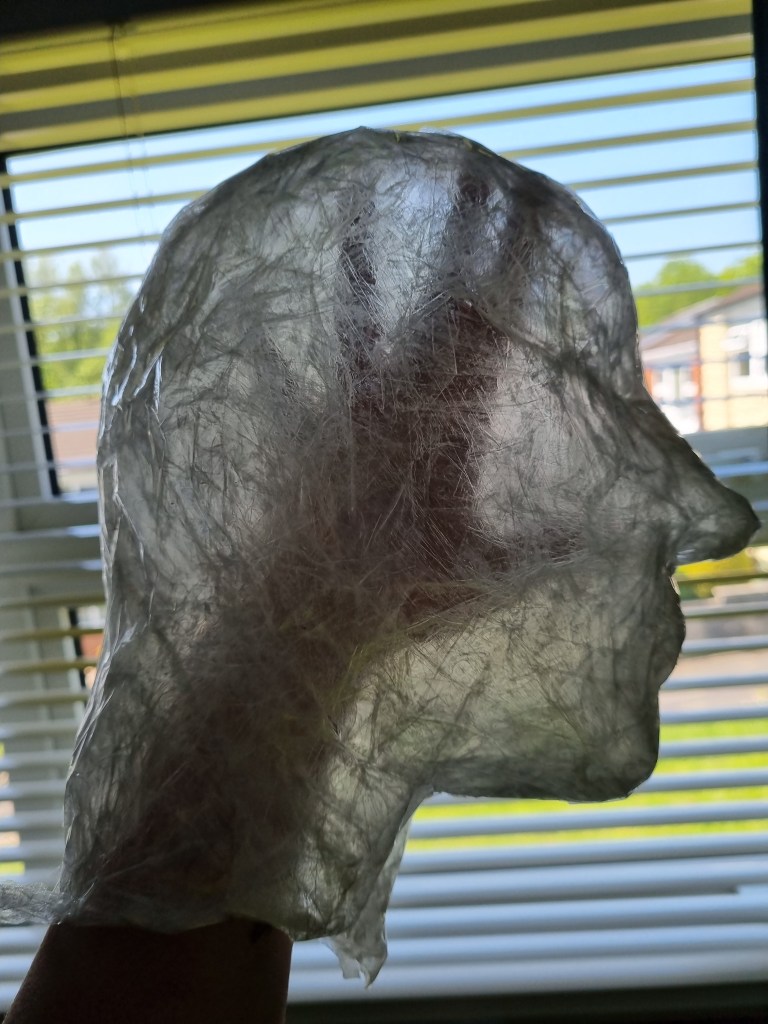
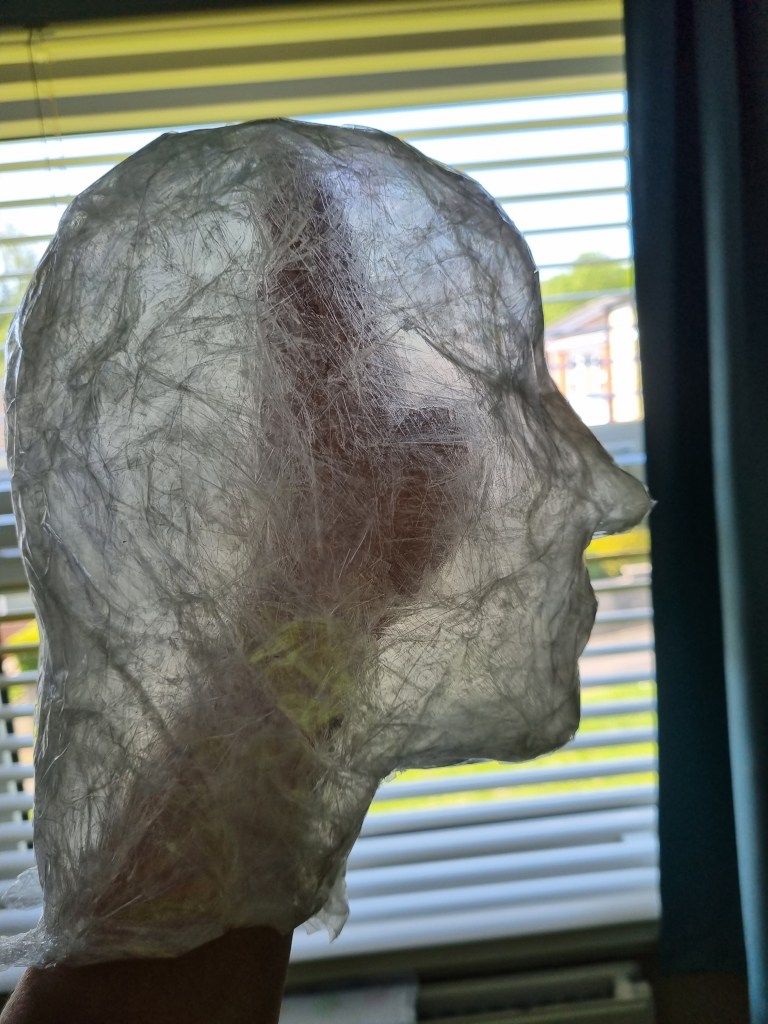
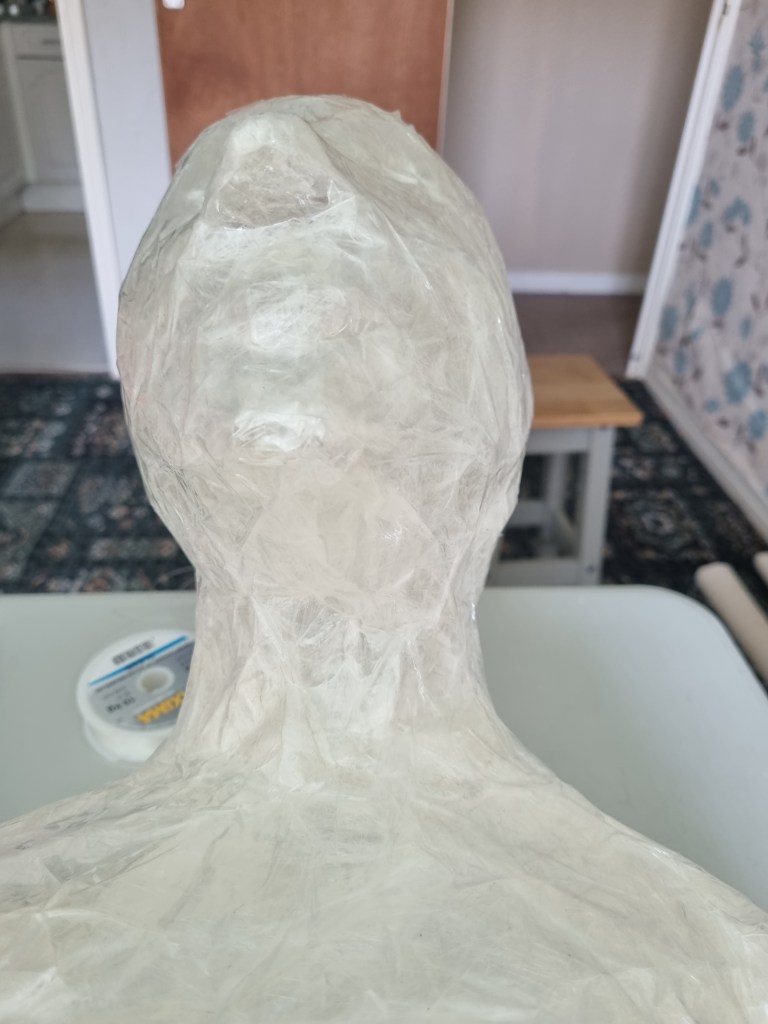
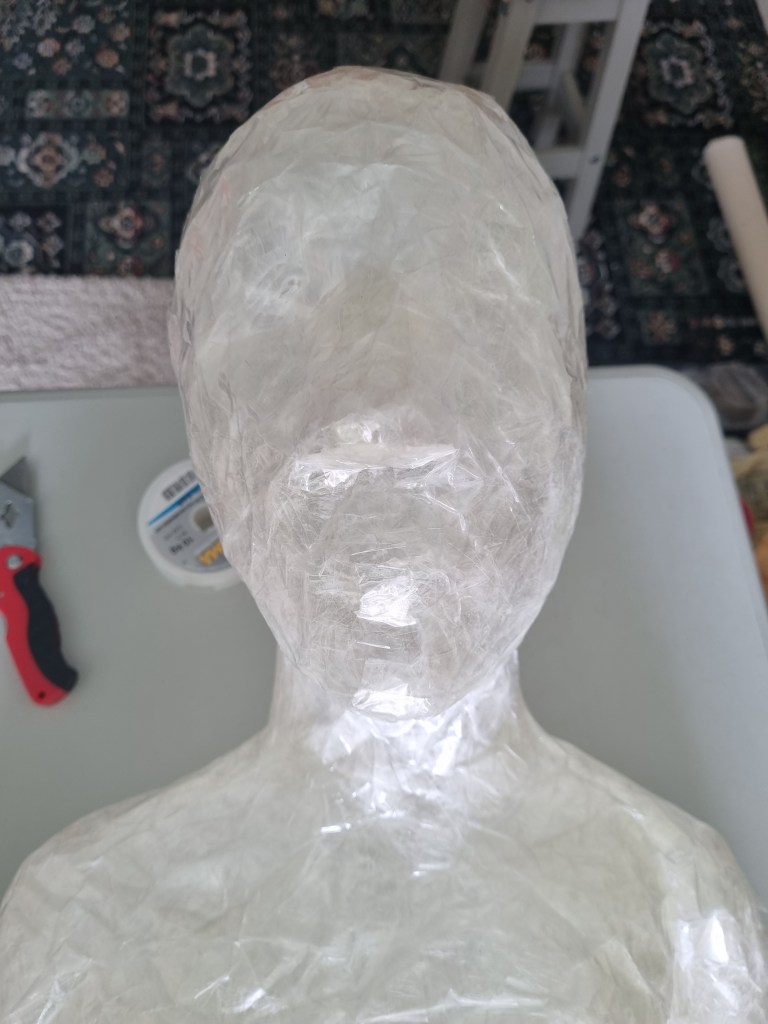
I did not have an available model, so I had to make a cast from my own. First, I applied the clingfilm to my head, leaving my nostrils uncovered for access to oxygen. Then I used the sellotape to cover the clingfilmed area. When I covered the surface with at least two layers of sellotape, I cut the cast to release me on the side, behind my ear. Then, I sealed the seam and started working on the cast’s proportions and firmness.
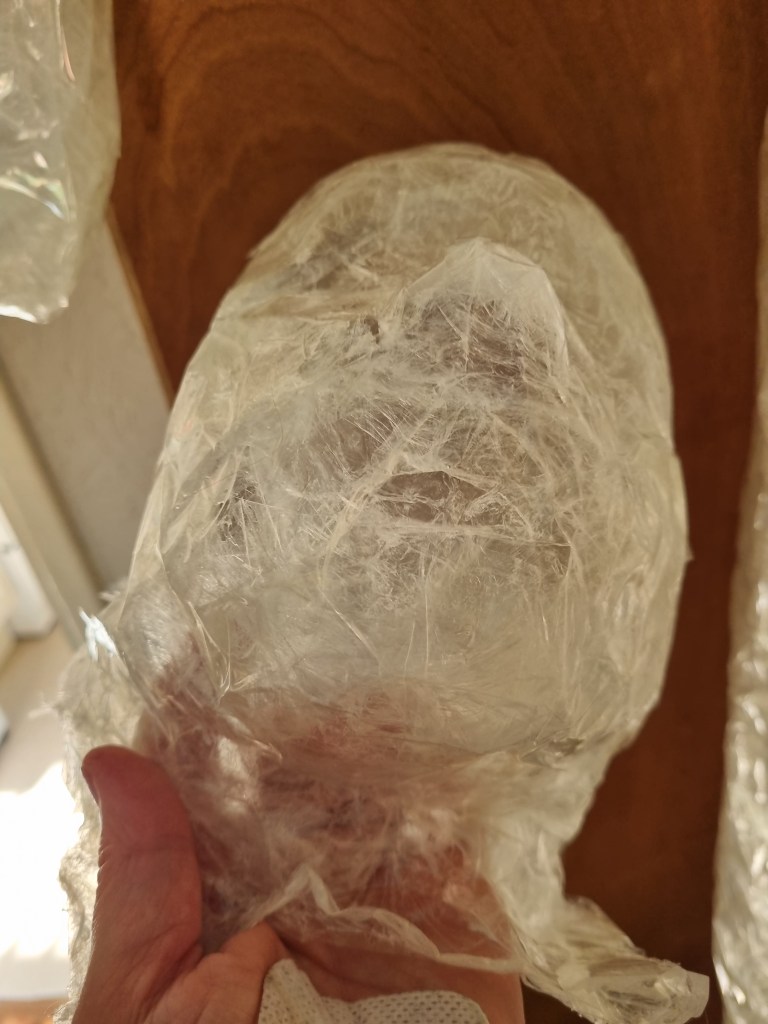
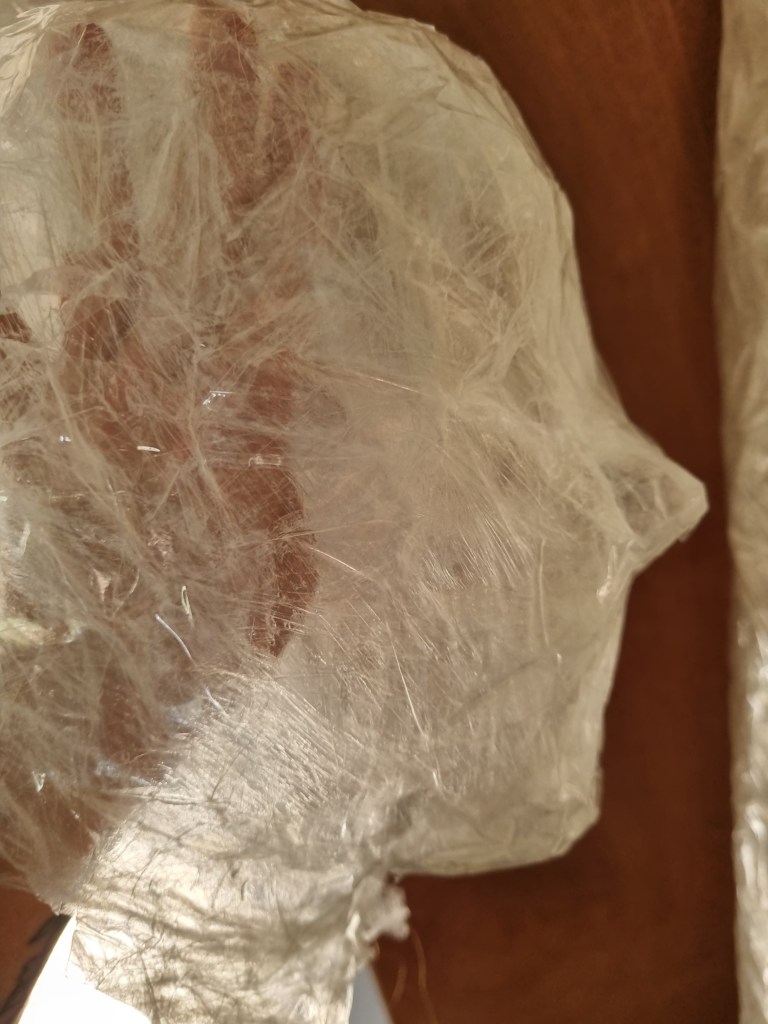
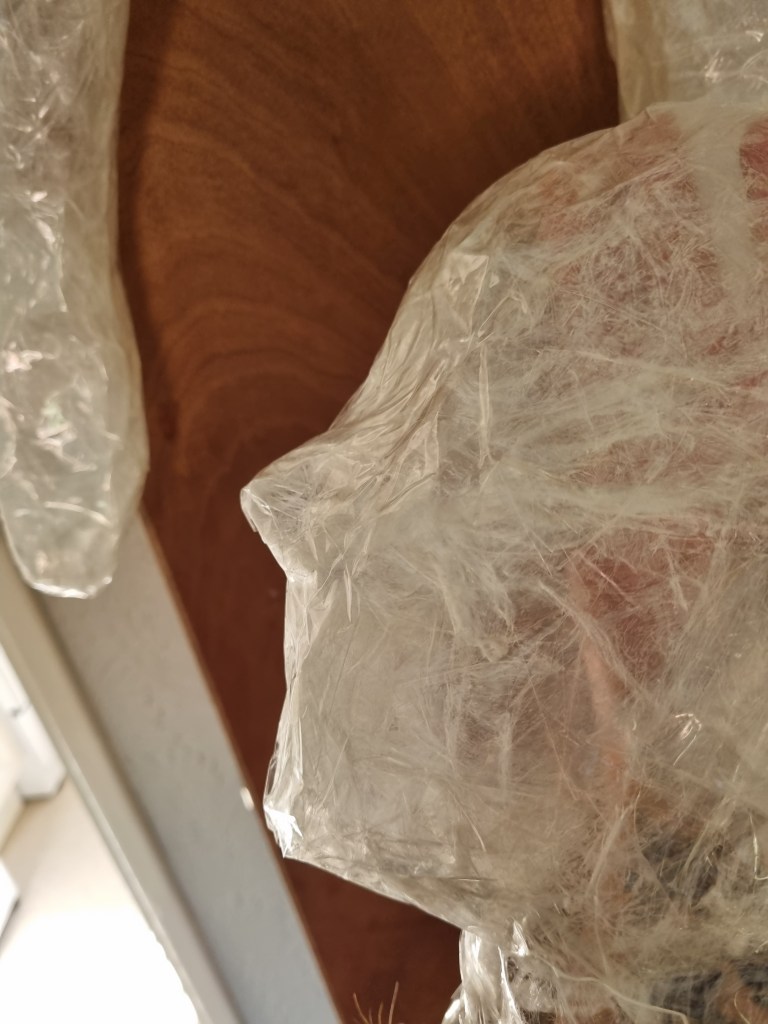
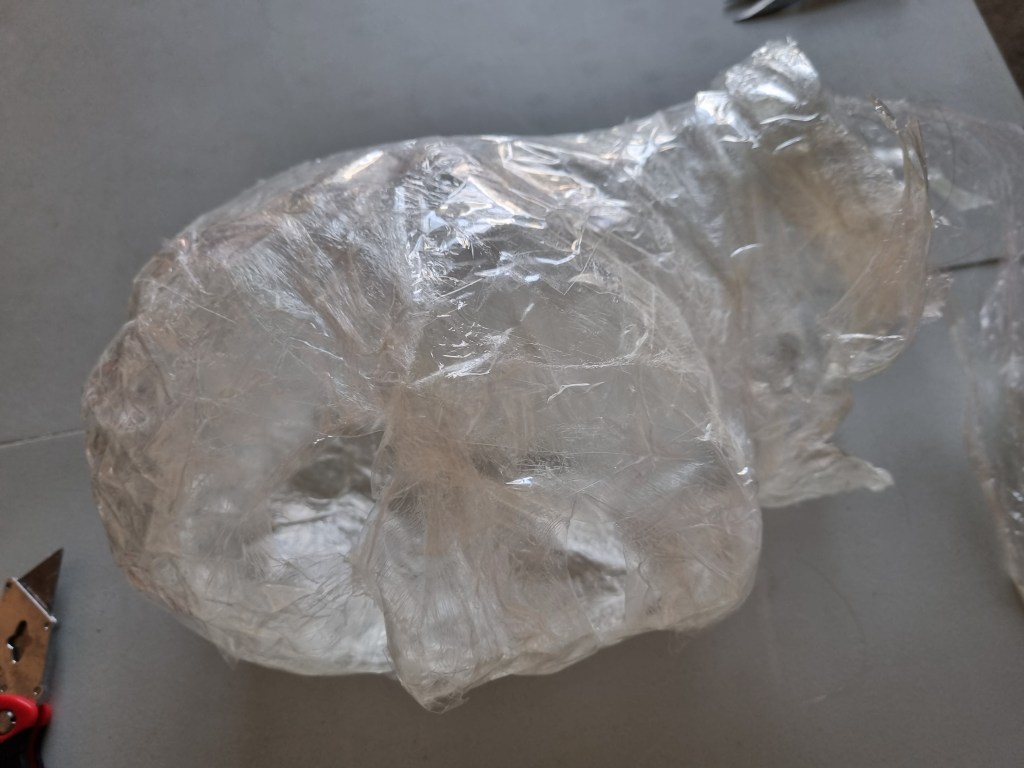
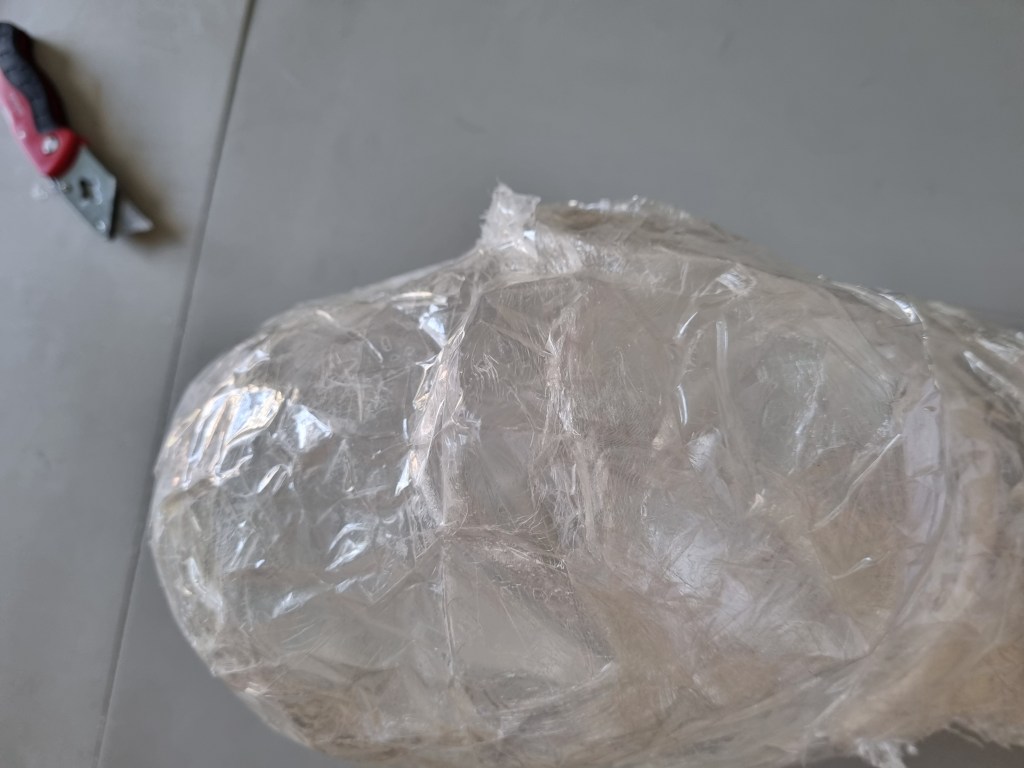

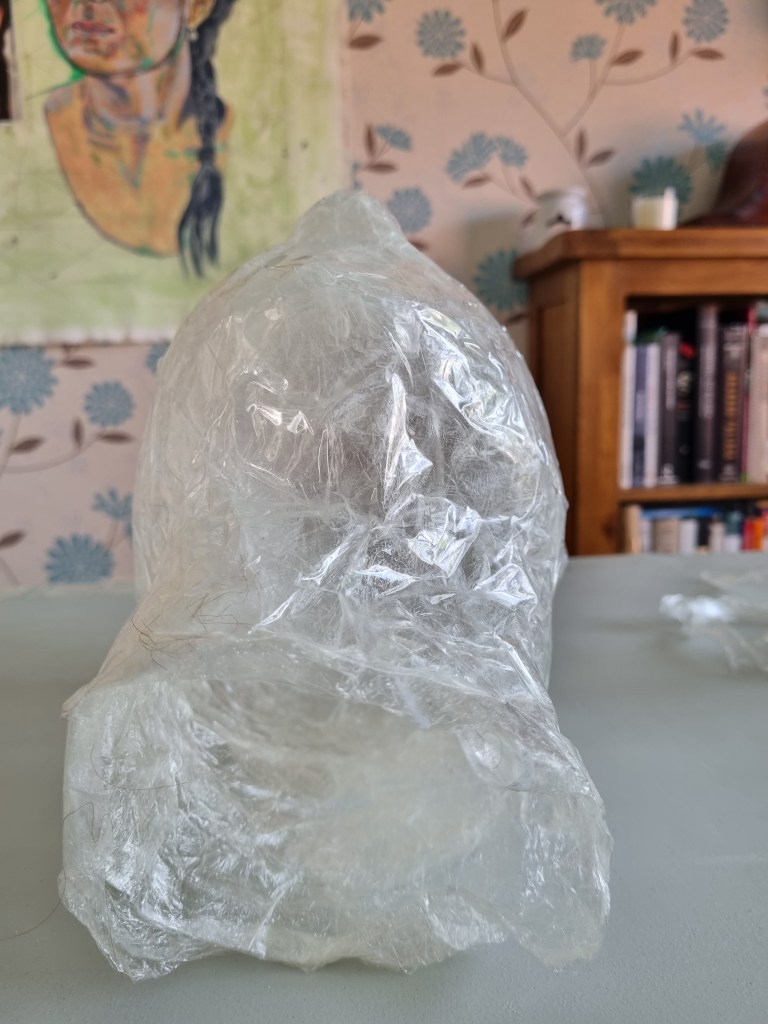
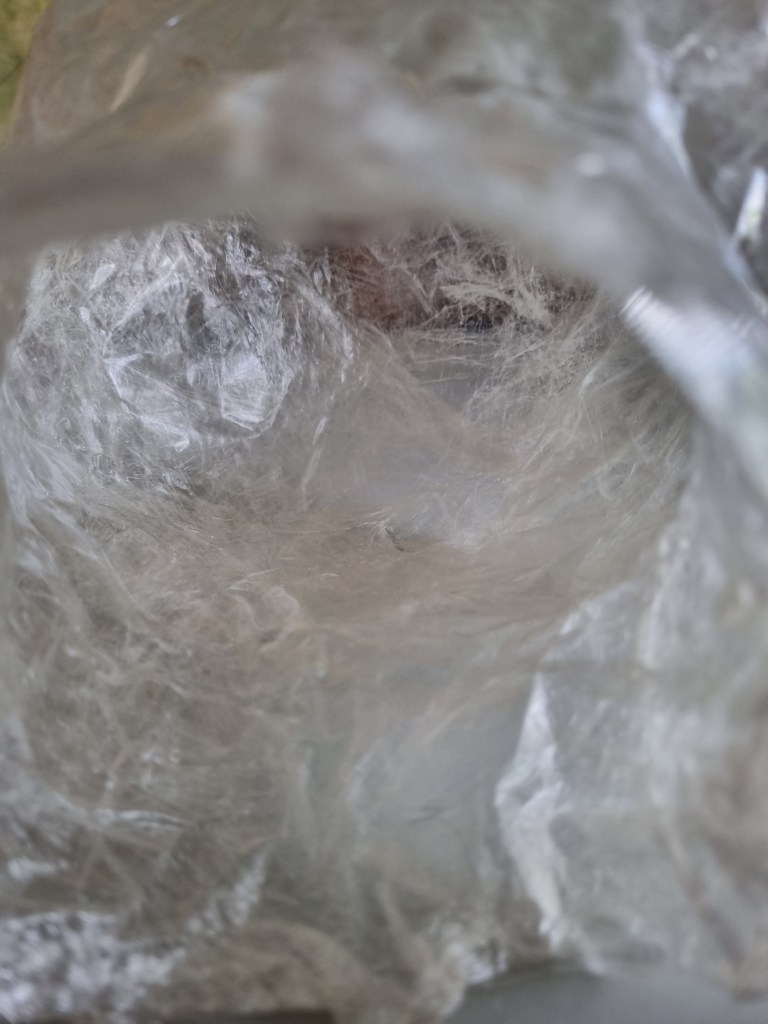
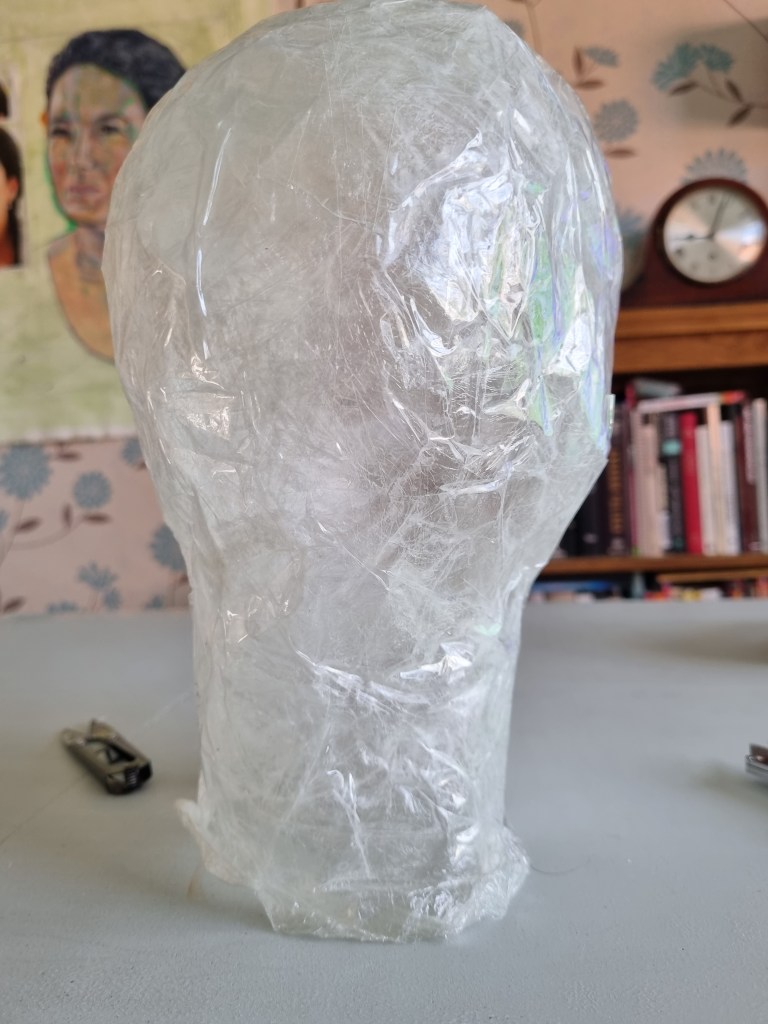
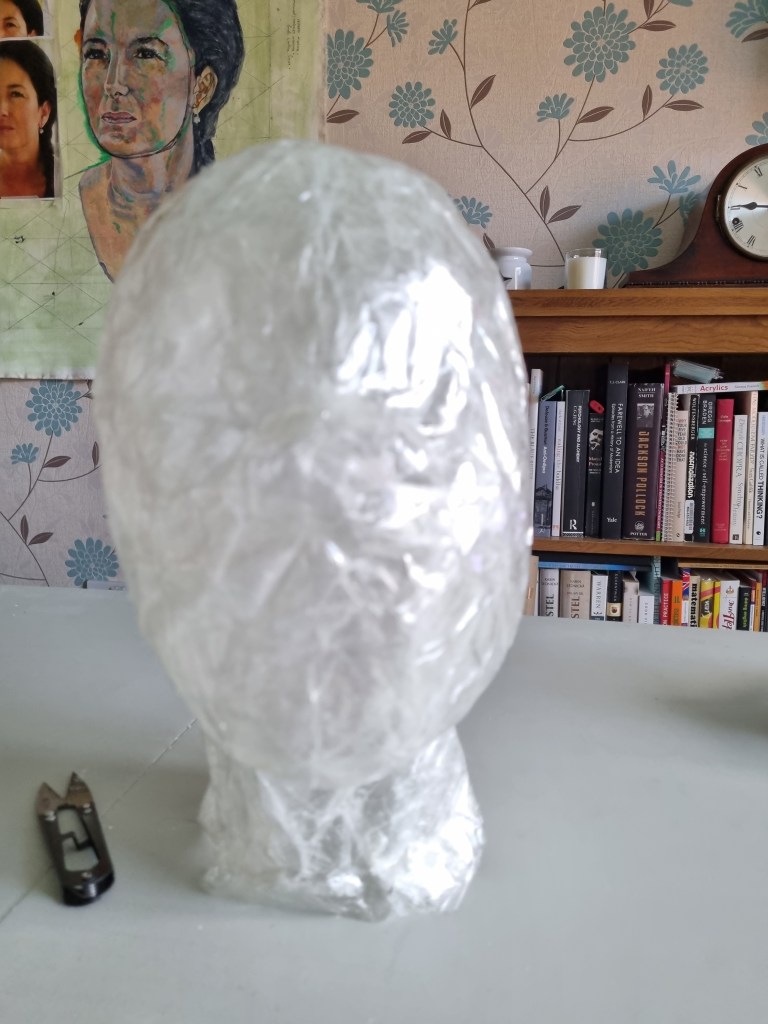
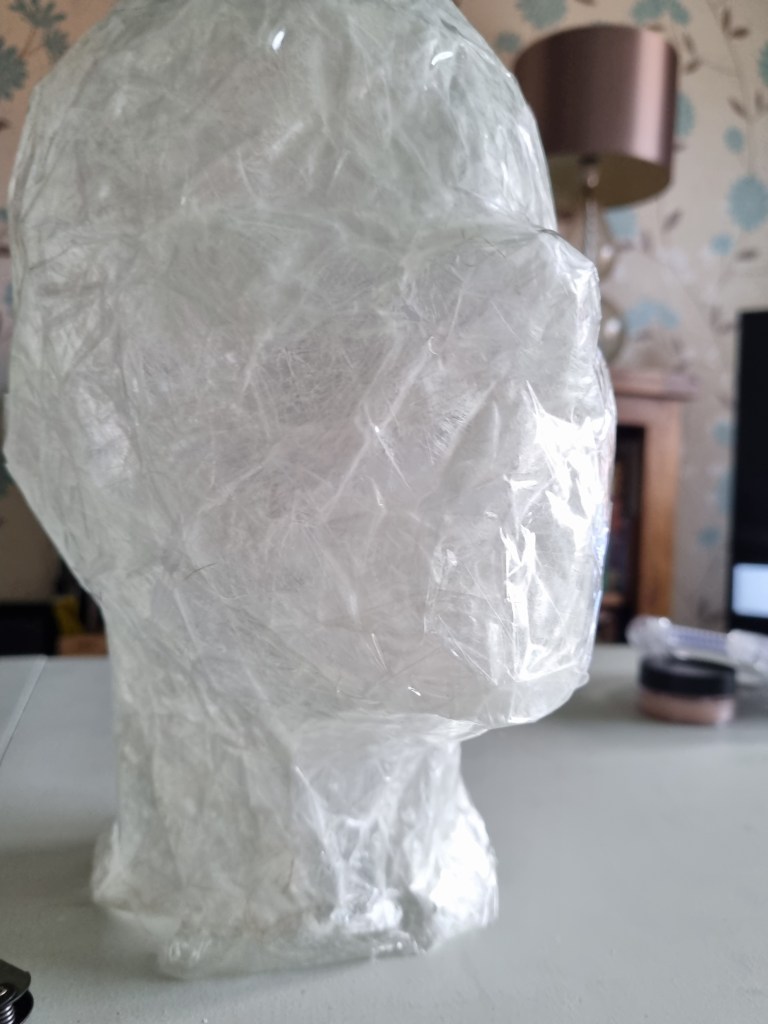
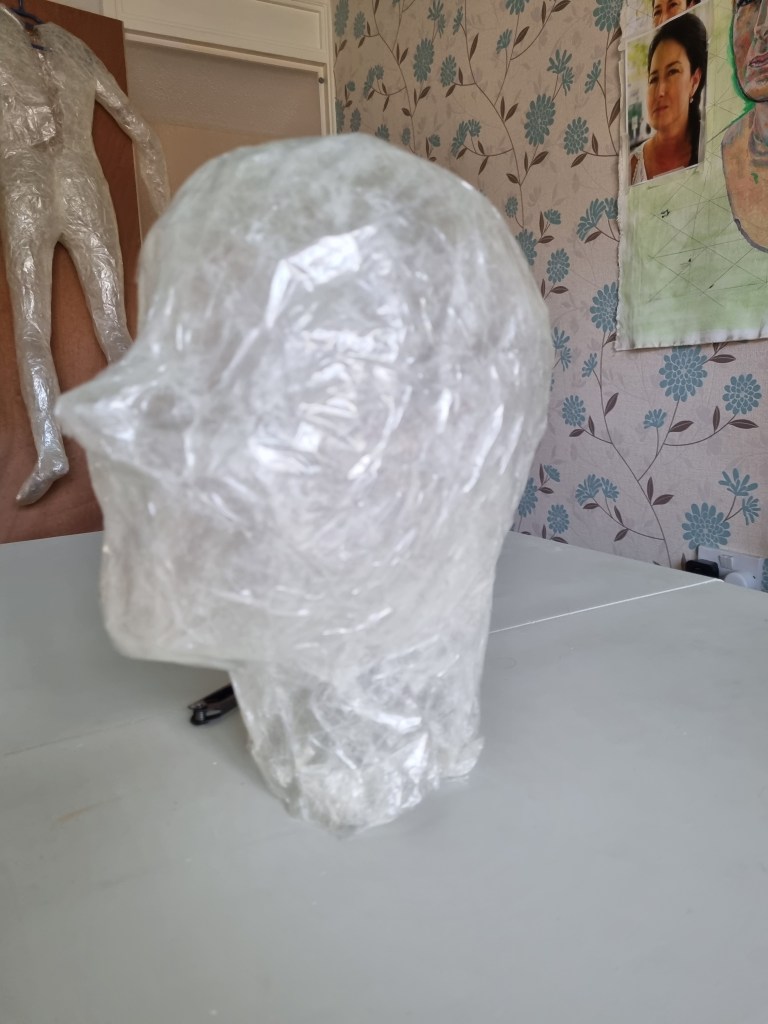
I worked through the head feature to enhance the characteristics of the human face. The head attachment went well. I pulled it back to reattach the head only once. Then I tilted the head slightly down. Then, I layered the connection with the neck to see where to cut to reduce or add to articulate the shape more.
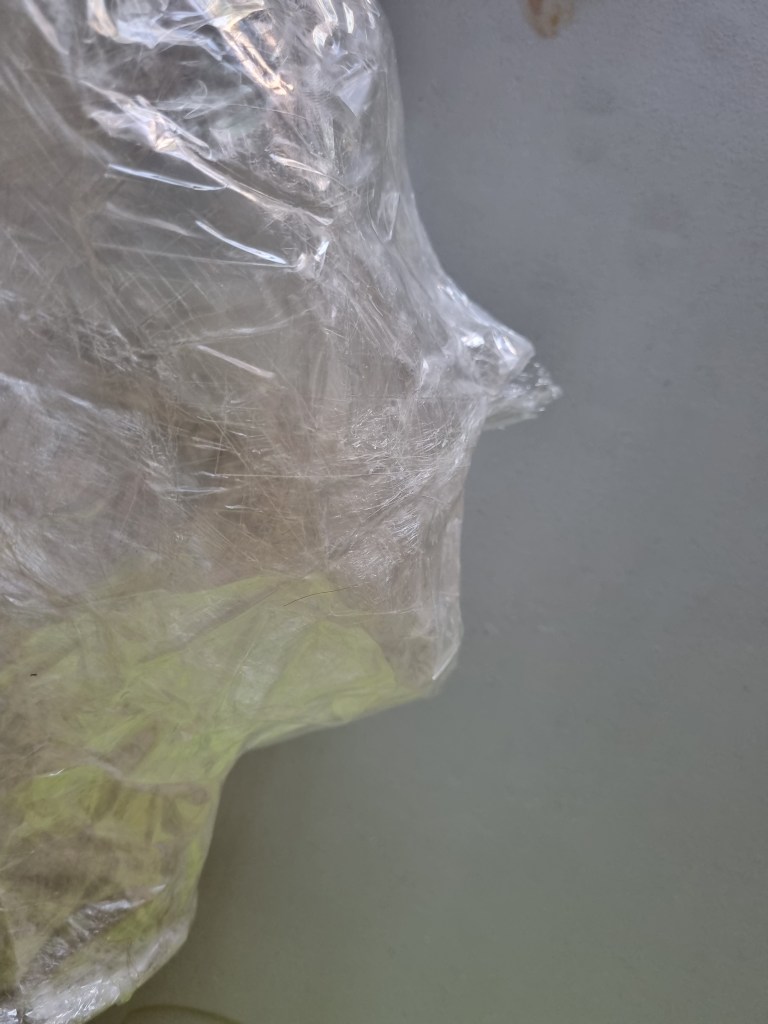
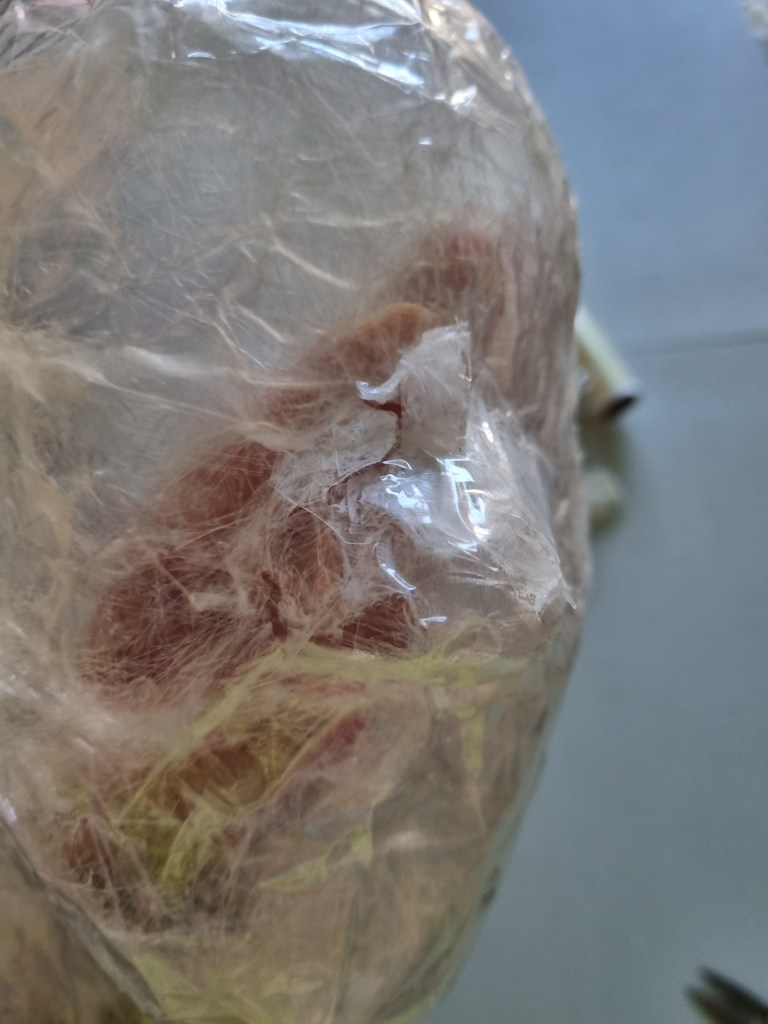
The nose was small and did not resemble the proportion of the nose. So I cut the sides and the top of the nose to expand the size. To manipulate the nose a bit down, I had to fill the point of the nose from the bottom. Then, I taped it over with sellotape and formed the nose into the proportions. The only disadvantage of extending, cutting and retaping again is that the part where it was fixed appeared darker and lost the clear transparency. Transparency is essential in this project because of the concept. Transparency represents no discrimination and equality among human beings where the eyes can’t distinguish the face image and judge the standard of beauty.
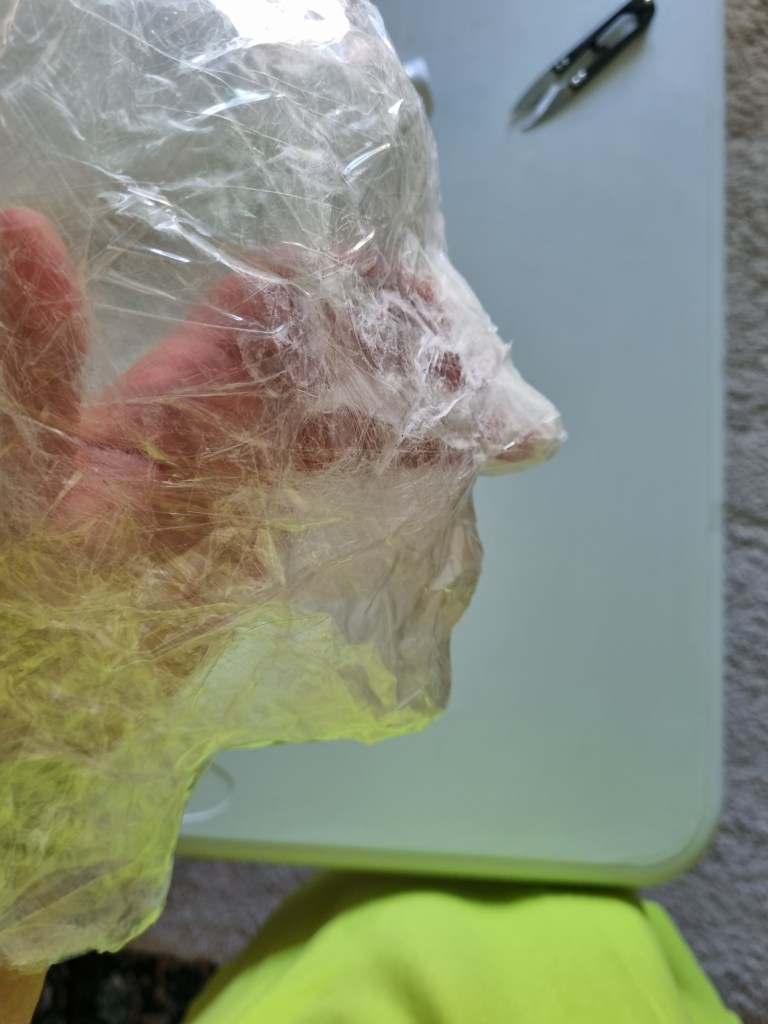
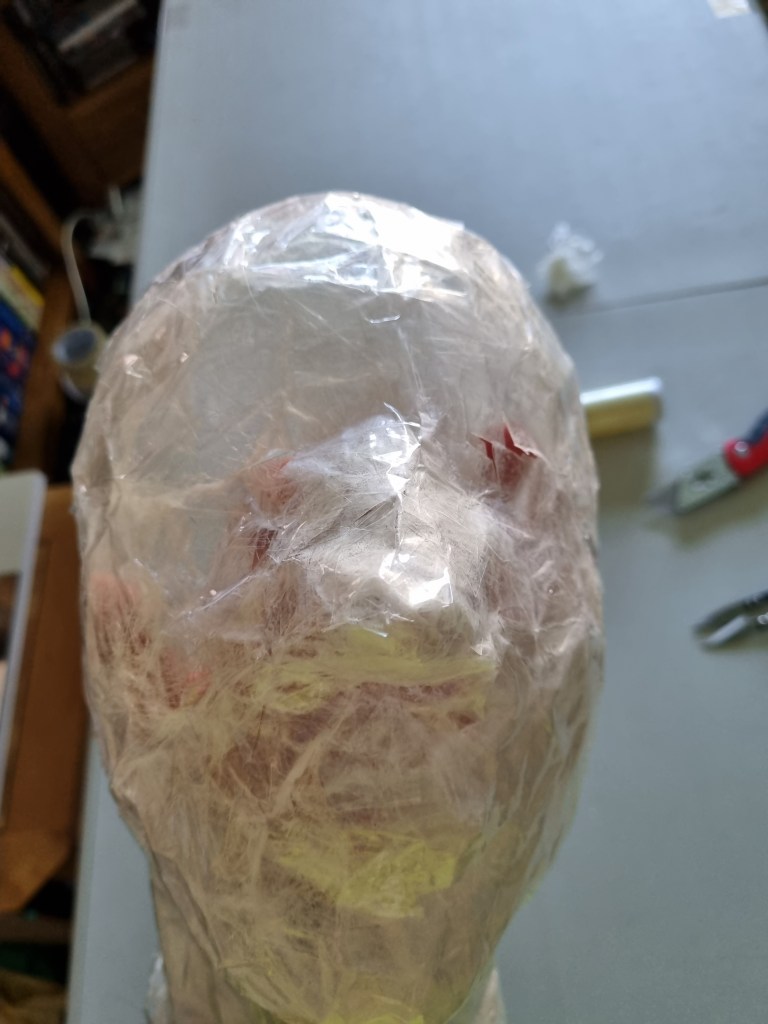
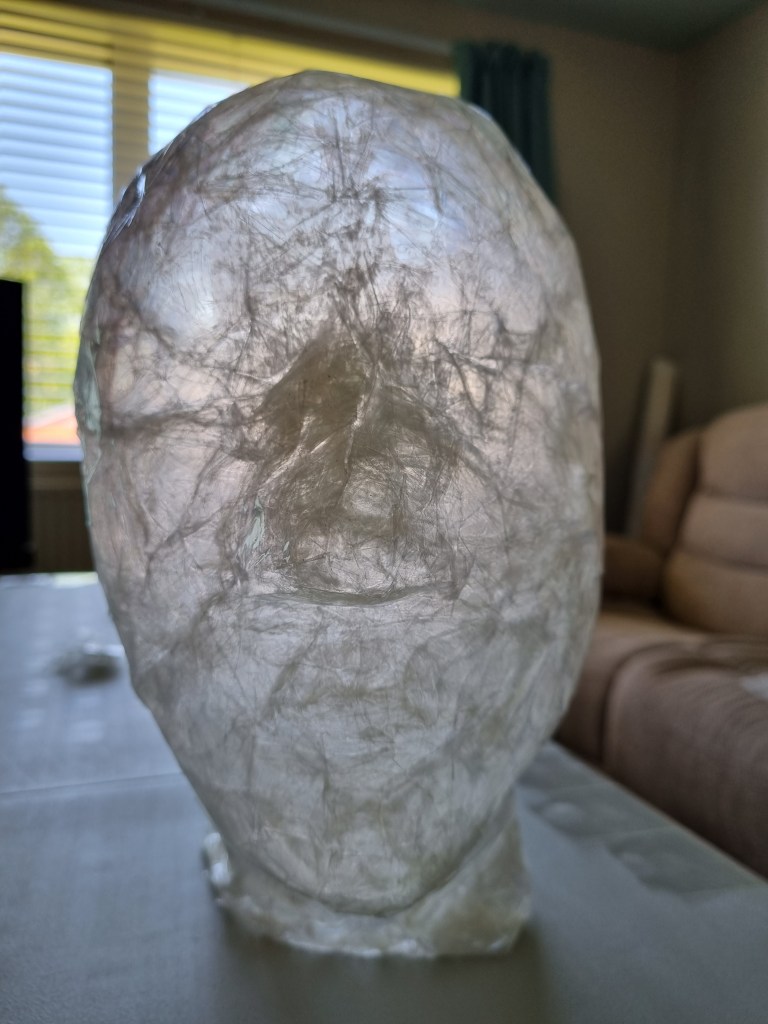
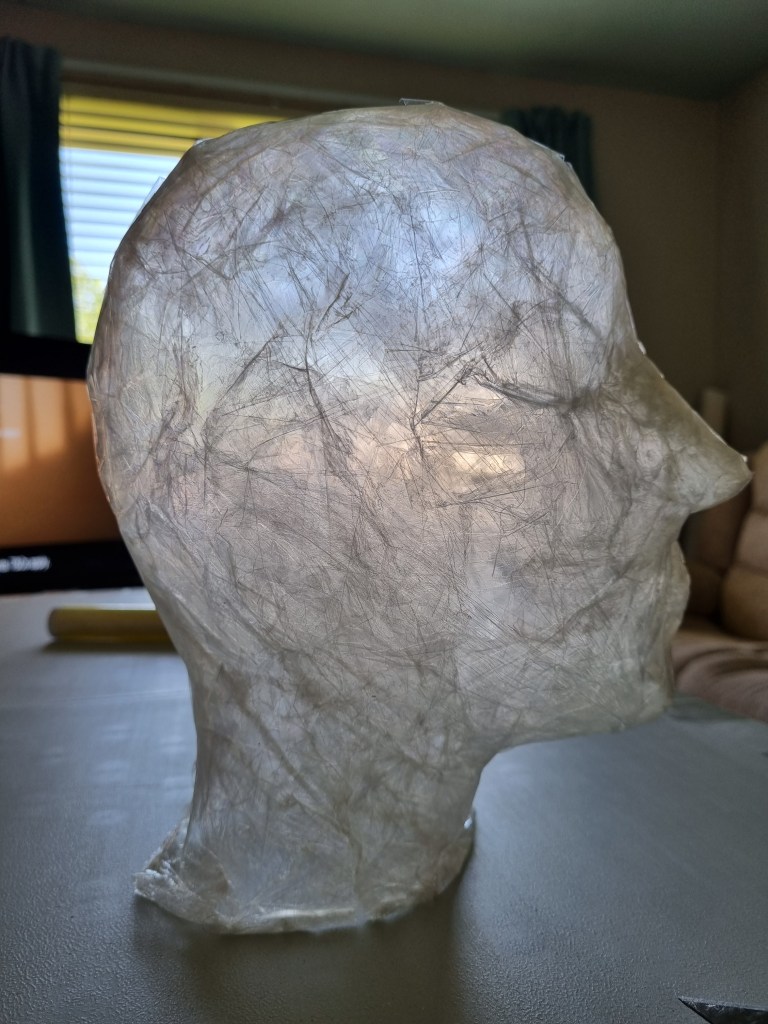
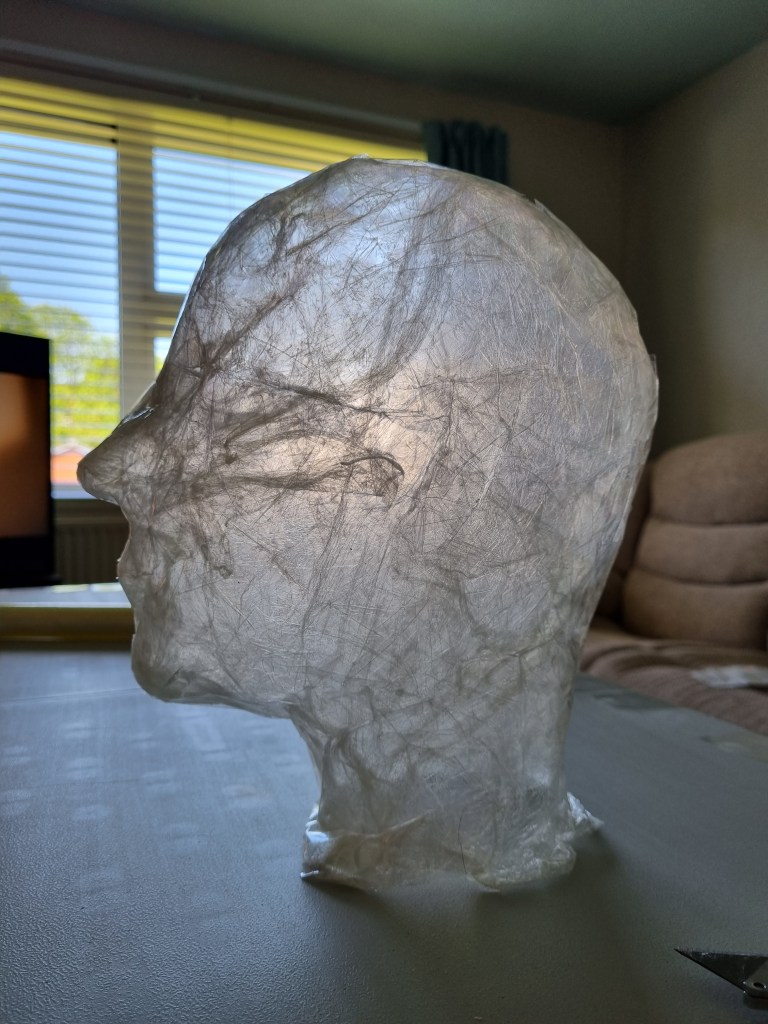
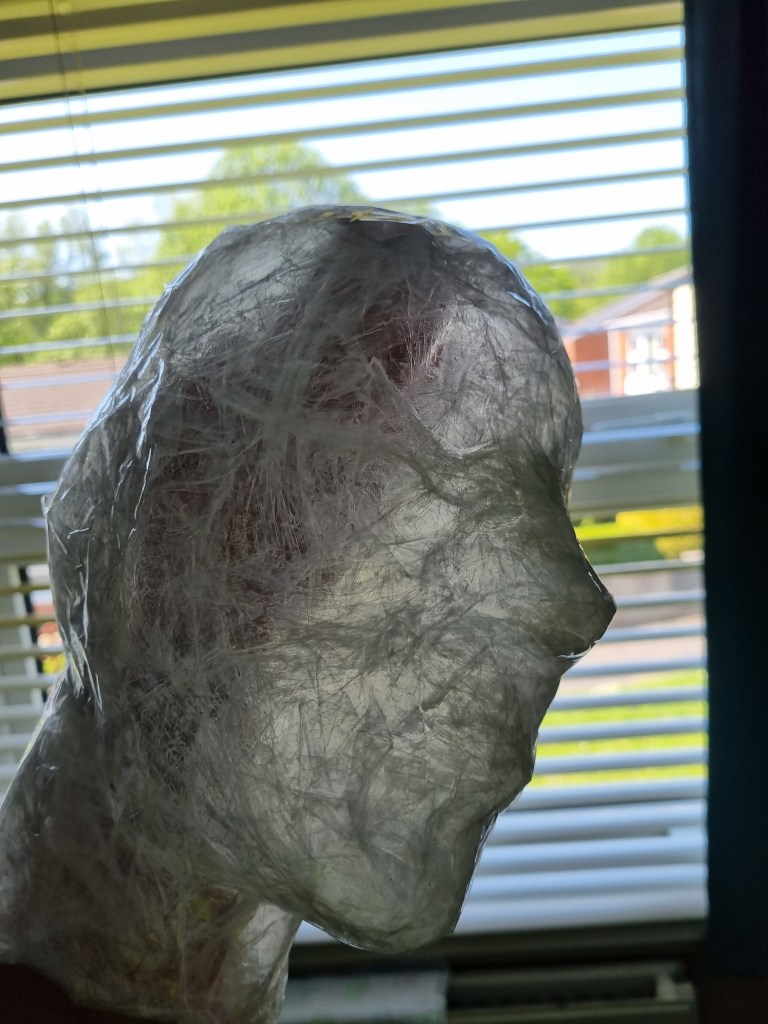
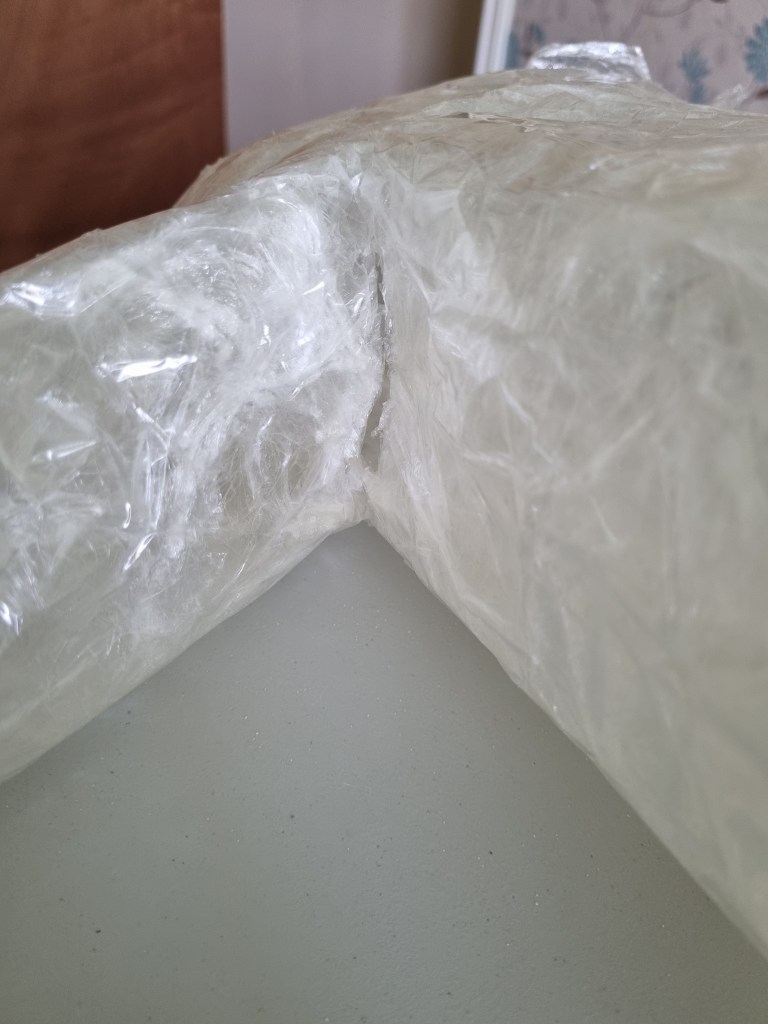
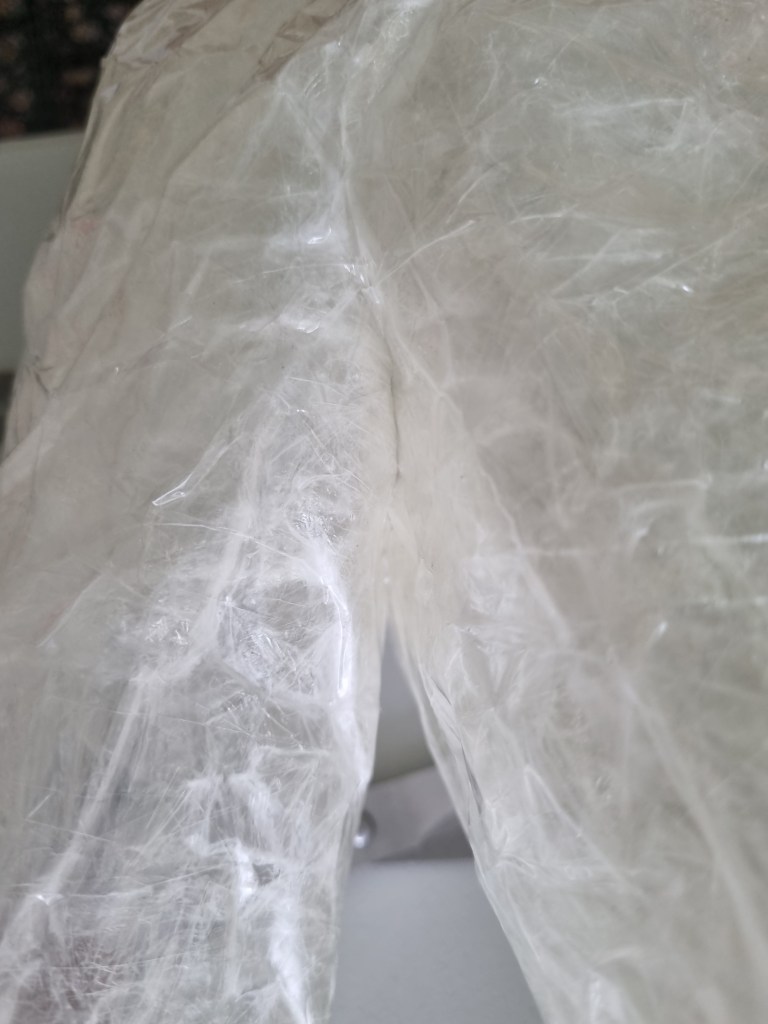
I decided to move the arms closer to the body. So I cut out a piece in the shape of a crescent and then taped it together, creating a smaller gap between the arm and body.
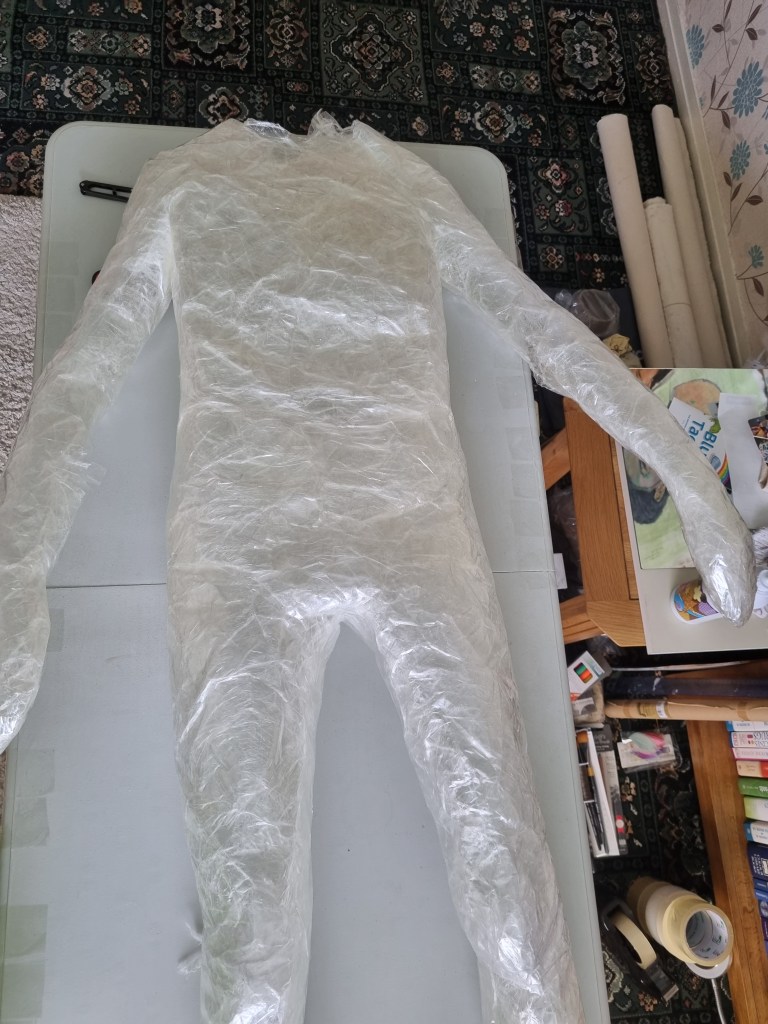
I compared the head to the body to see if I needed to extend or cut down the neck to a good size.
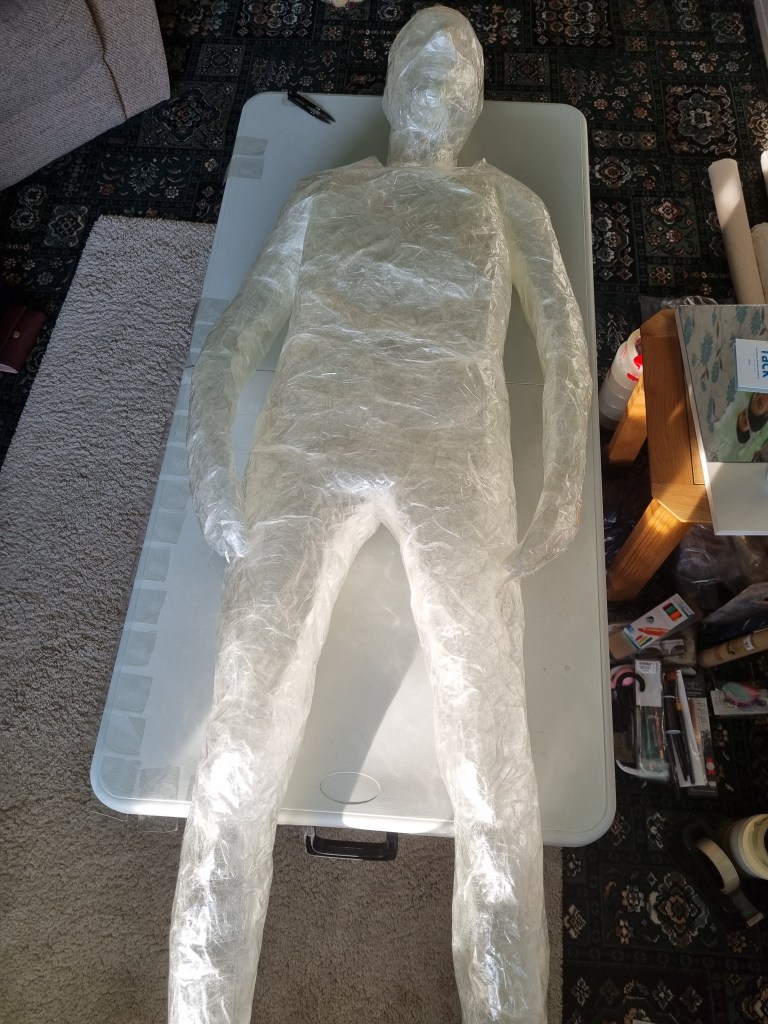
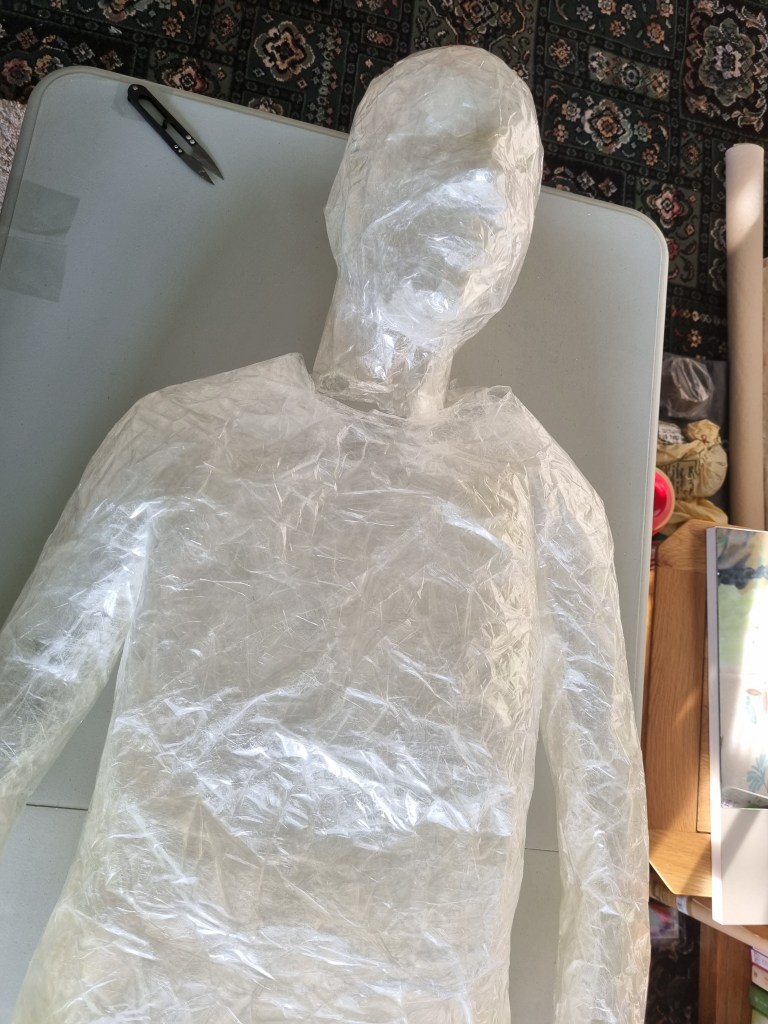
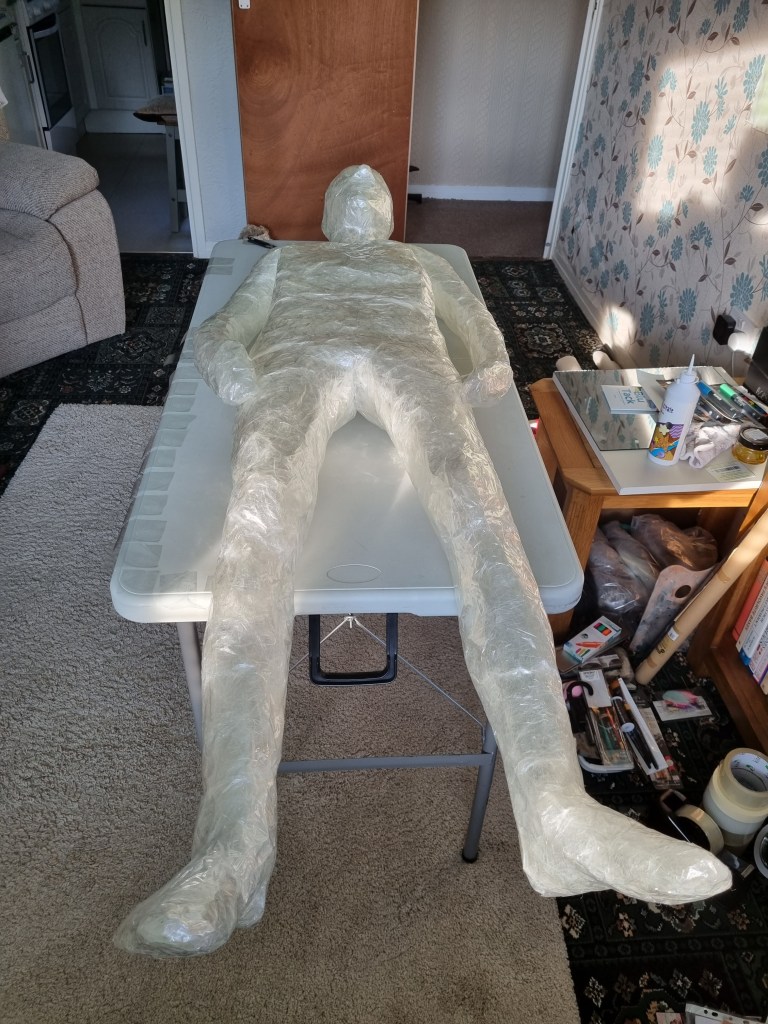
I extended the neckline with clingfilm to create a similar transparency effect. Then I roughly taped it and checked for the proportions. When the position of the neck seemed aline, I started to add more tape to firm the neckline.
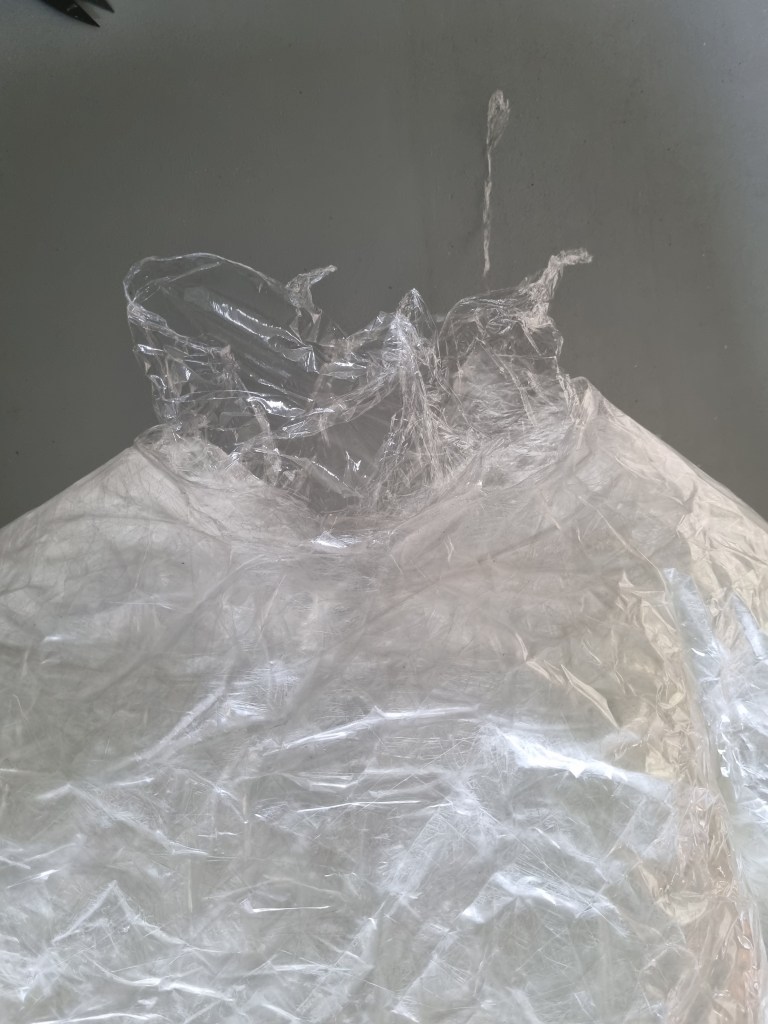
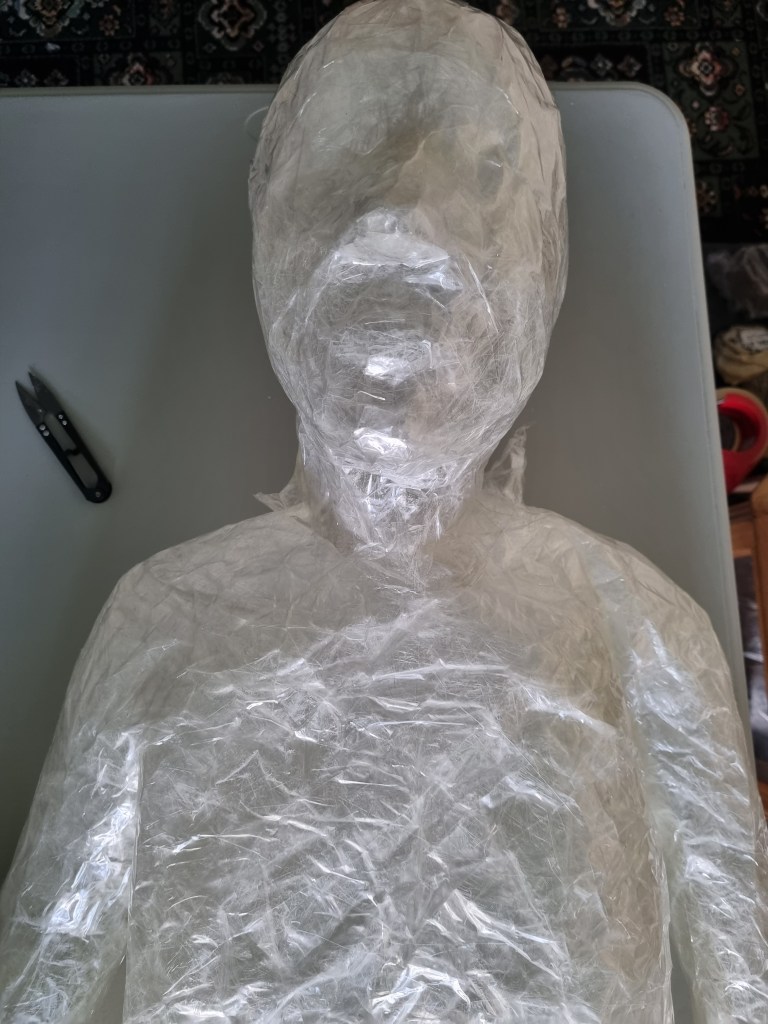
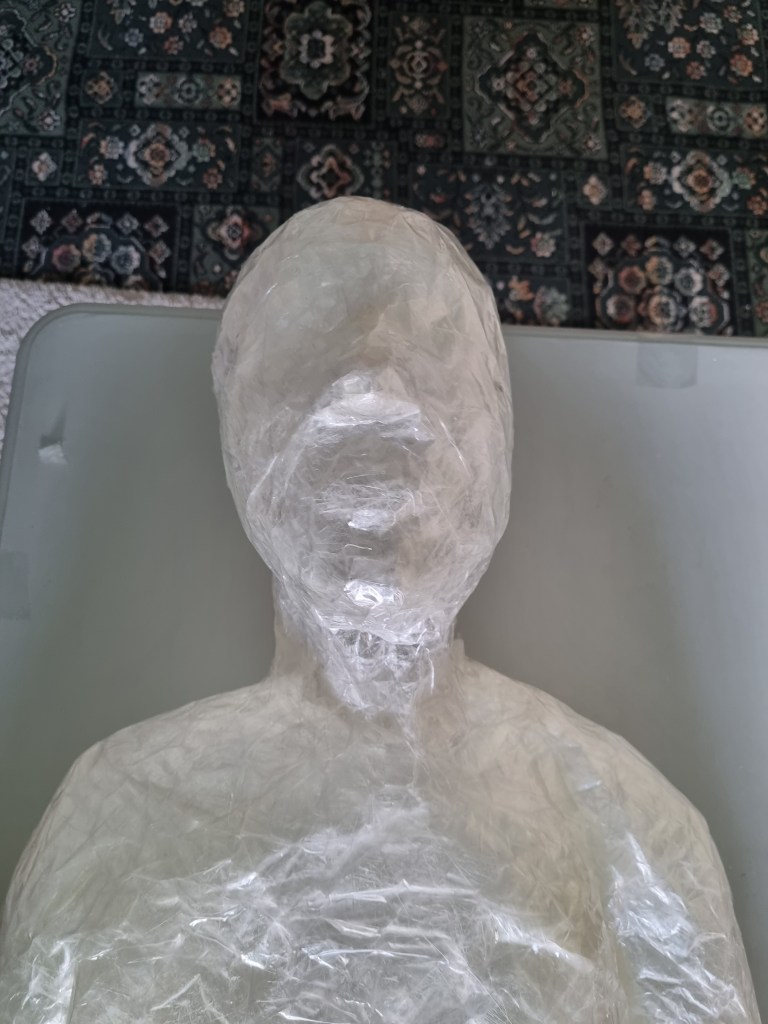
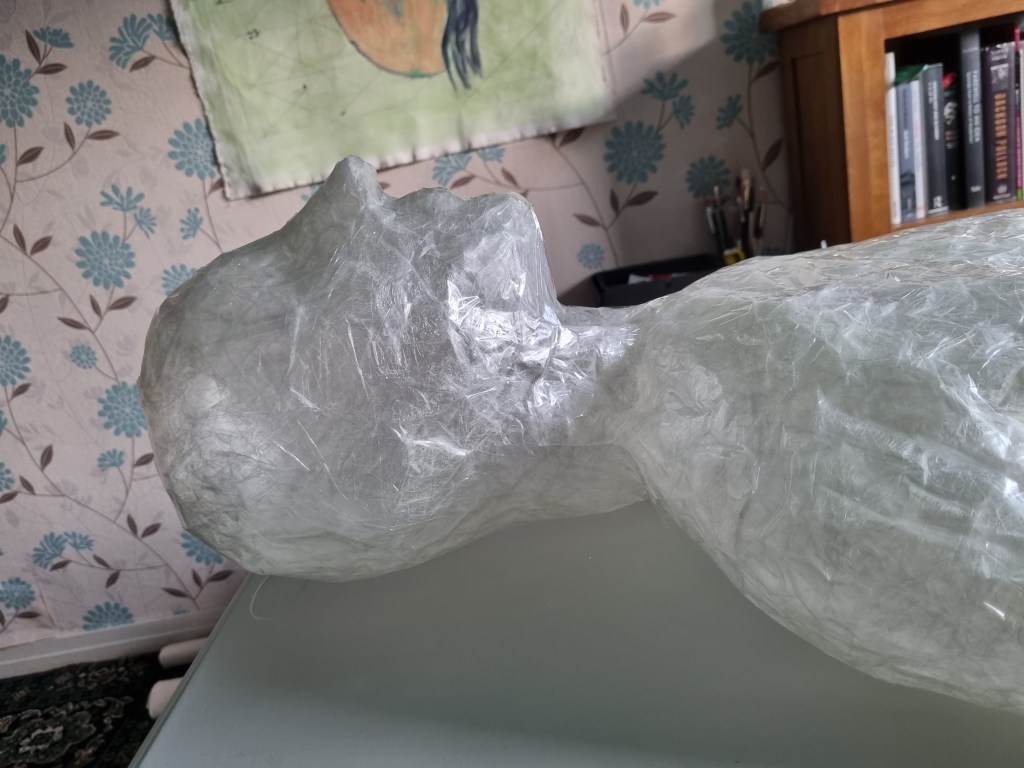
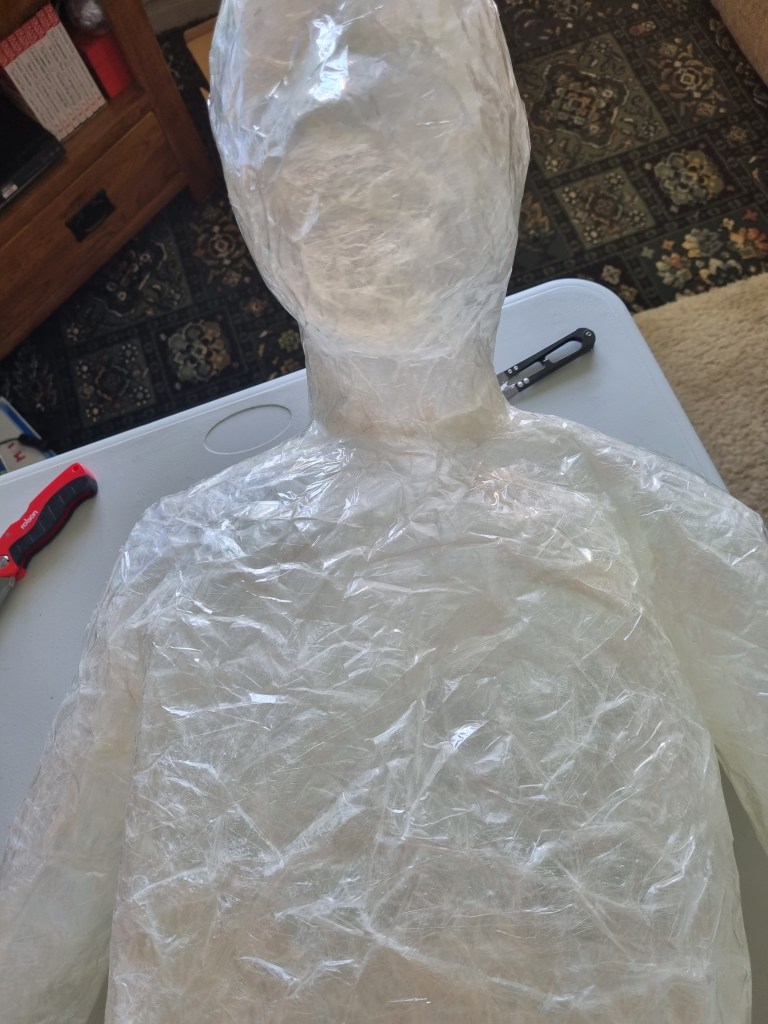
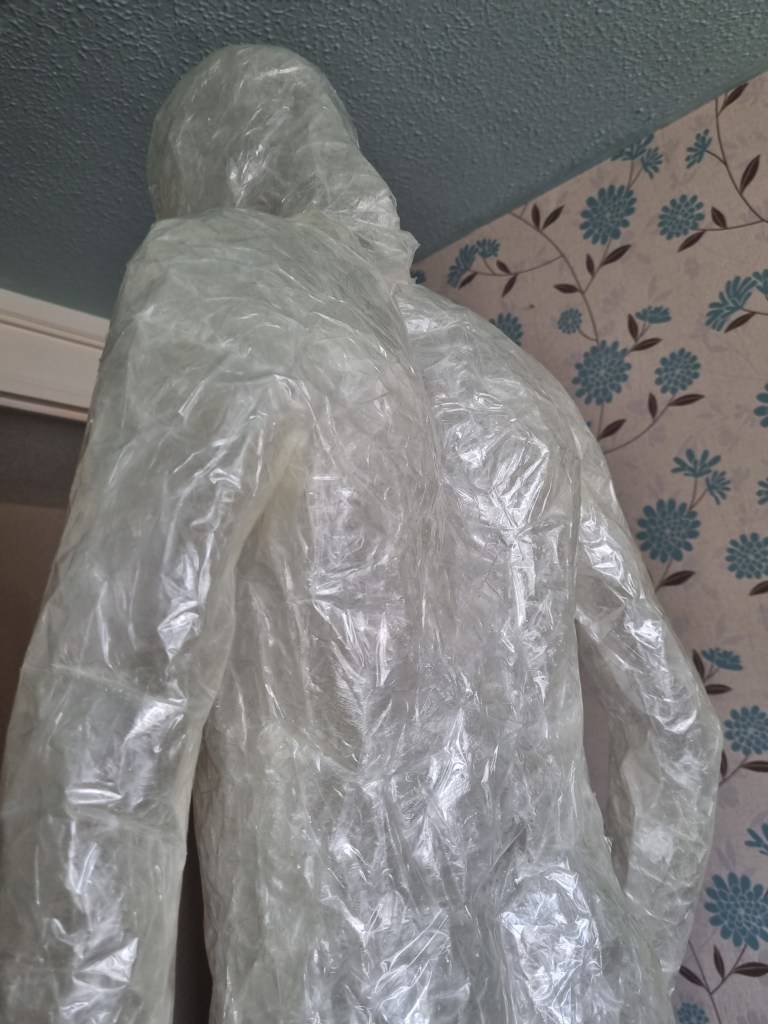
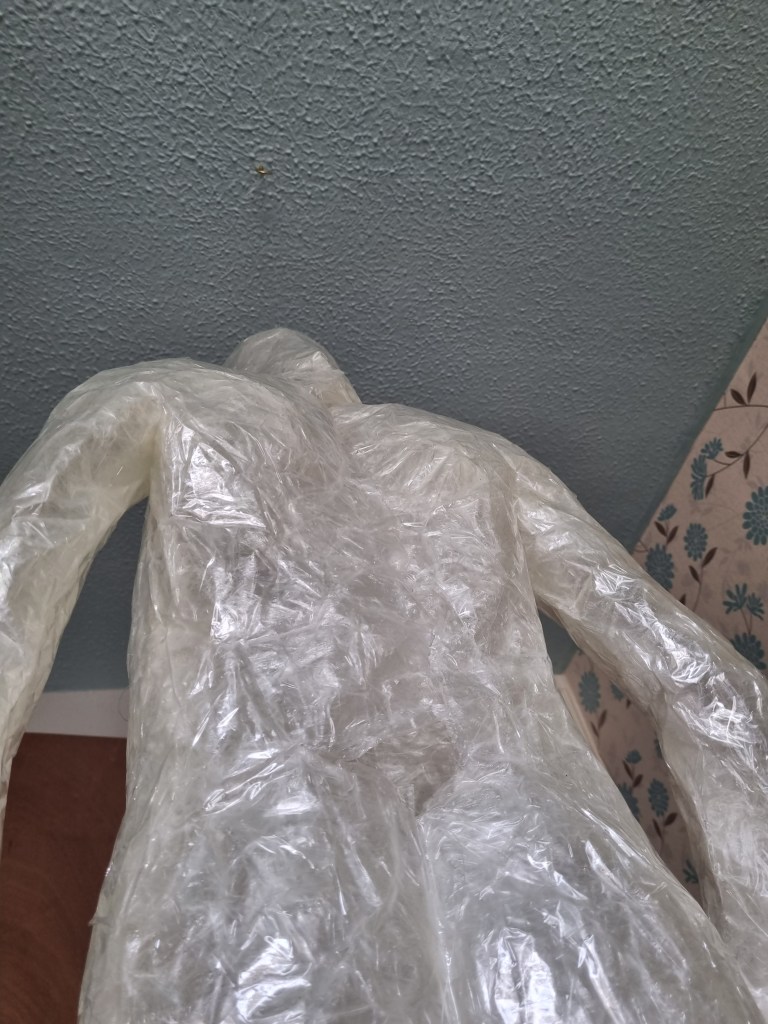
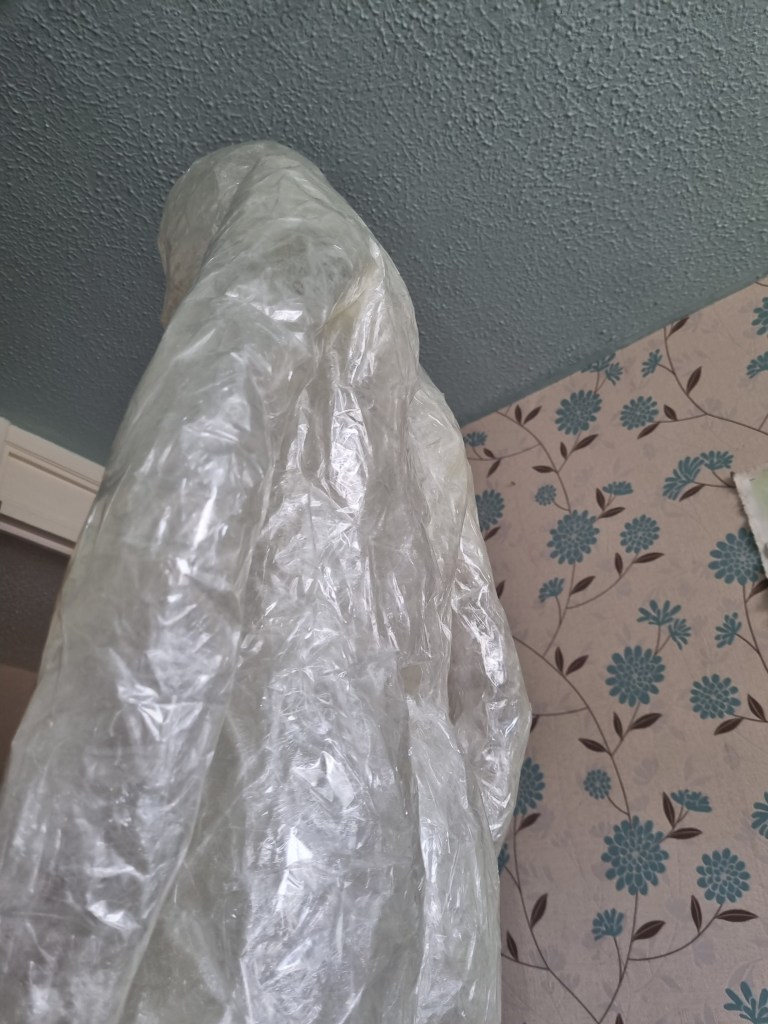
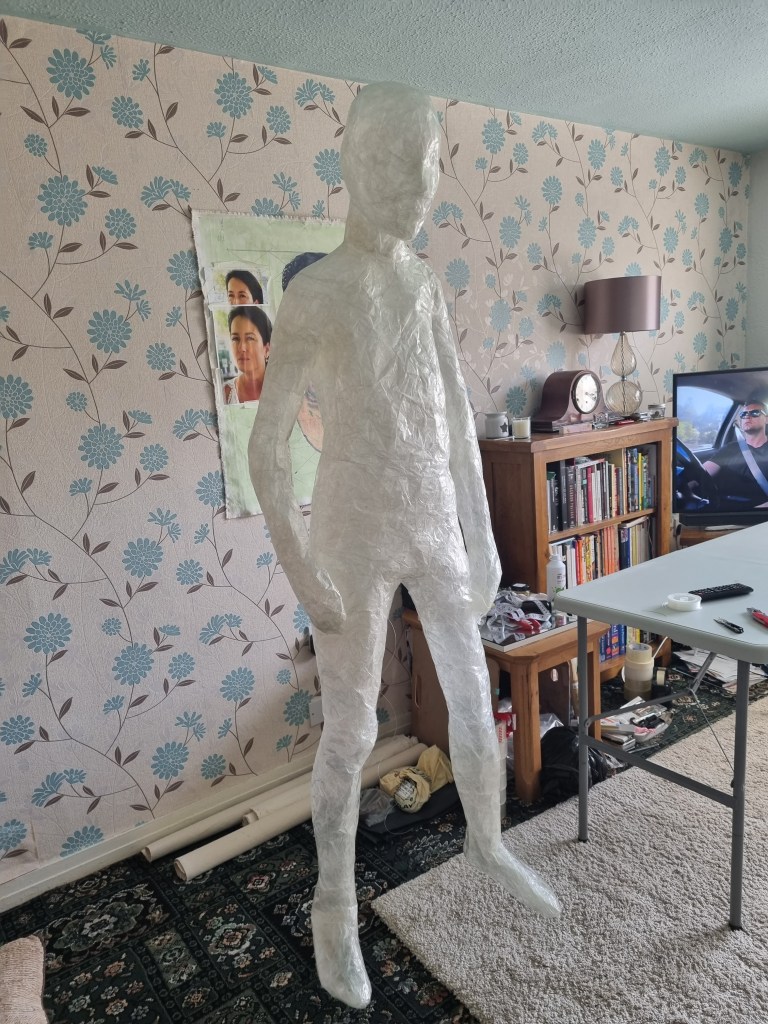
The head was attached and looked too big for the body. That could happen because I made the cast of my head instead of my daughter’s, and I have a lot more hair, which could affect the size. I did not think about it too much and moved on to the body’s shape. The figure’s chest was flat, which was intentional because the sculptures represent sexlessness.
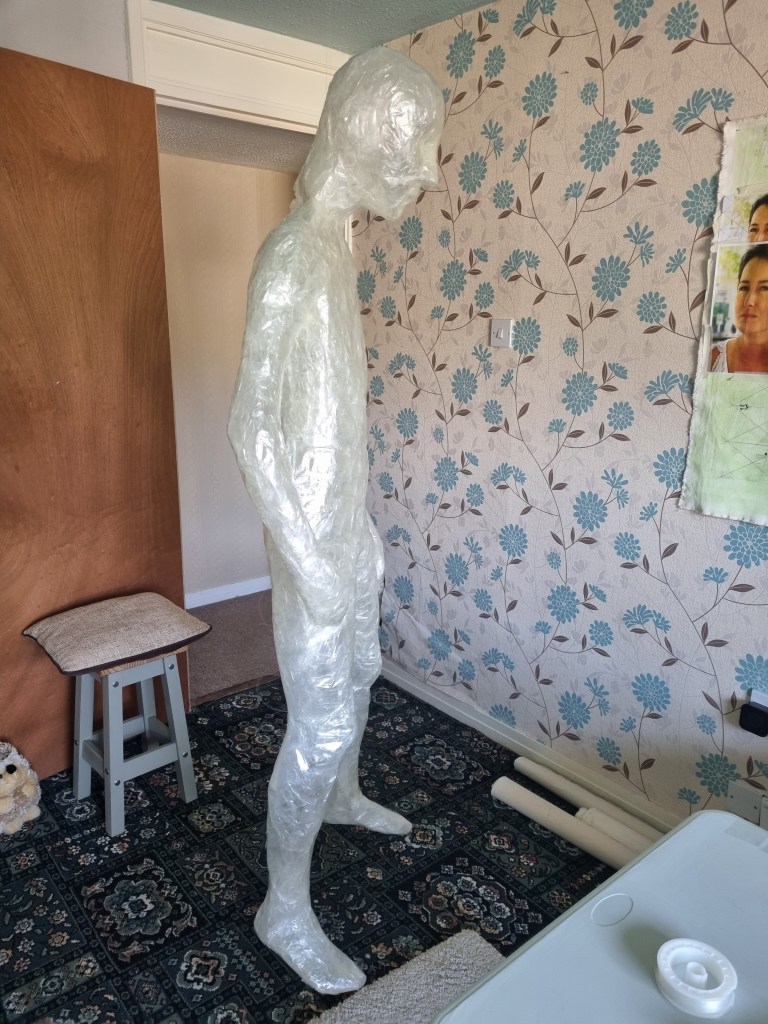
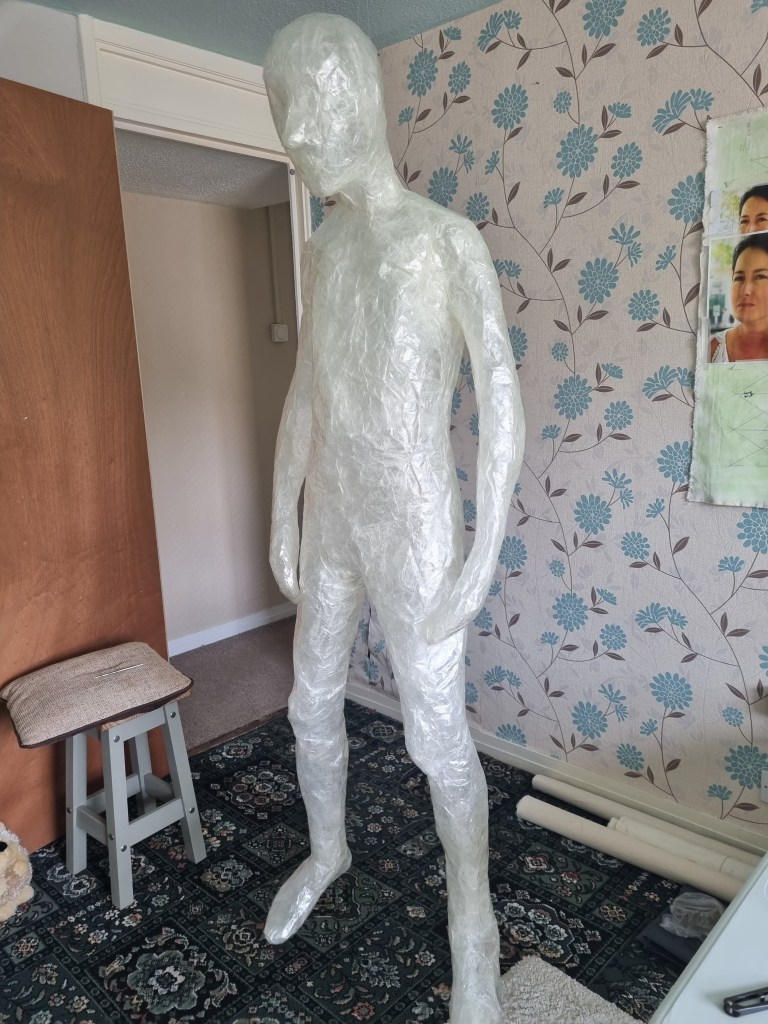
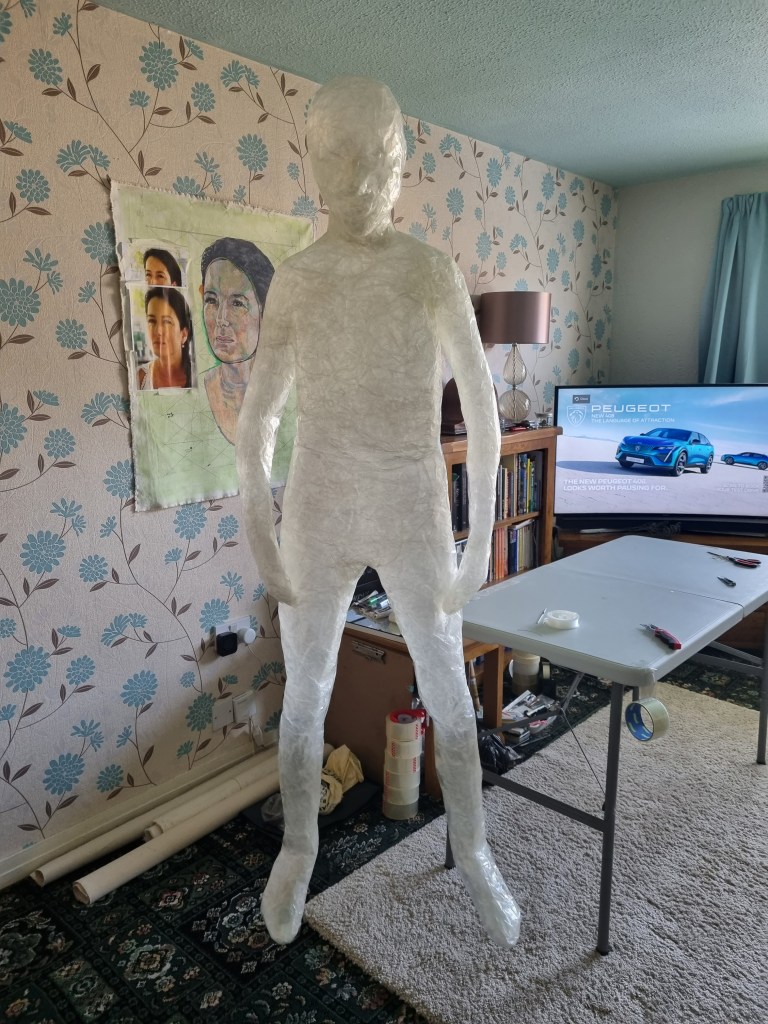
When I attached the head to the torso, it looked too big for the body. That might happen because I made the cast of my head instead of my daughter’s, and I have a lot more hair, which could affect the size. However, I did not think about it too much and moved on to the body’s shape. The figure’s chest was flat, which was intentional because the sculptures represent being equal and not divided by particular sex. I wanted to articulate more the body shape, so I modified the shoulder blades by cutting and expanding the form.
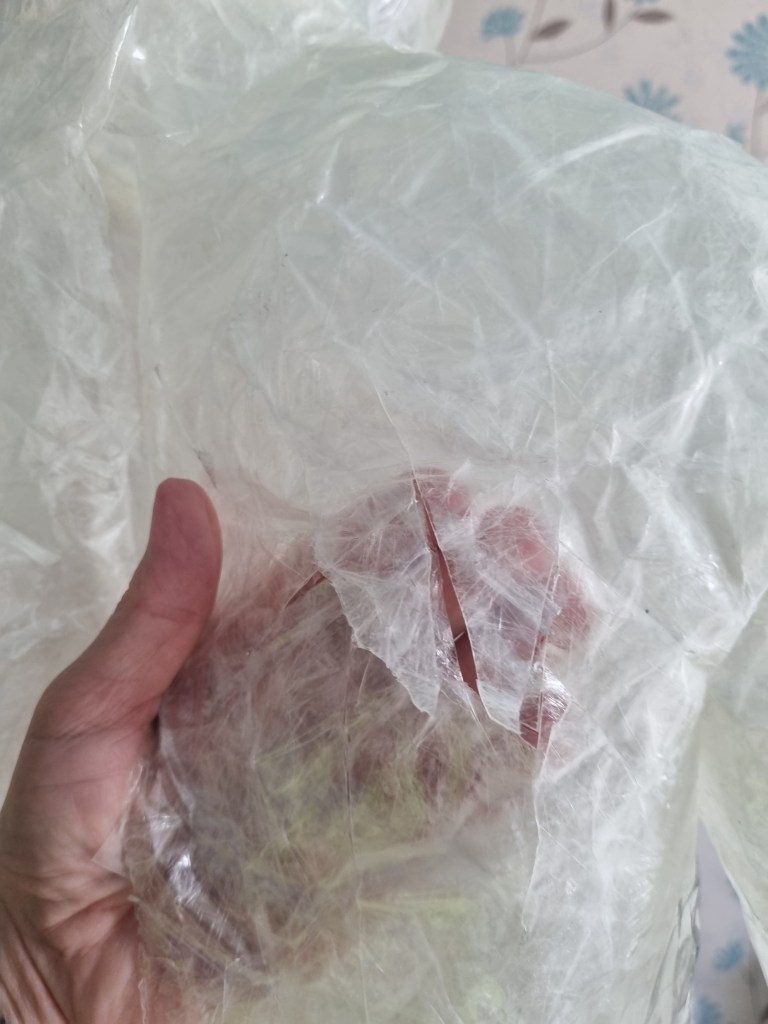
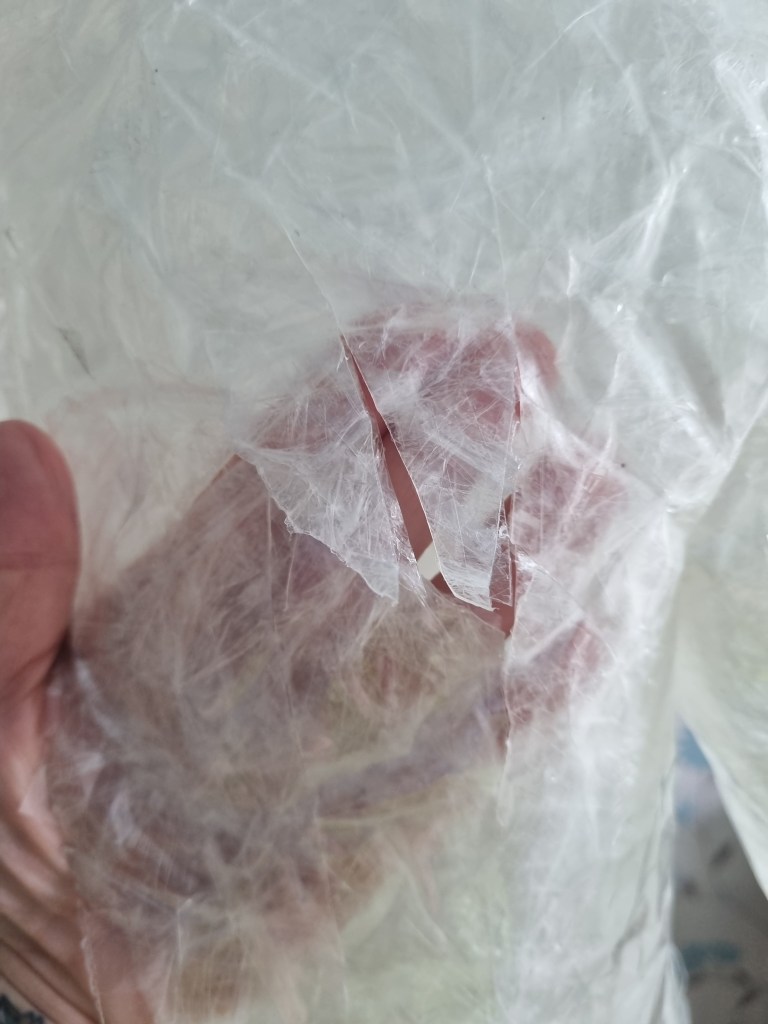
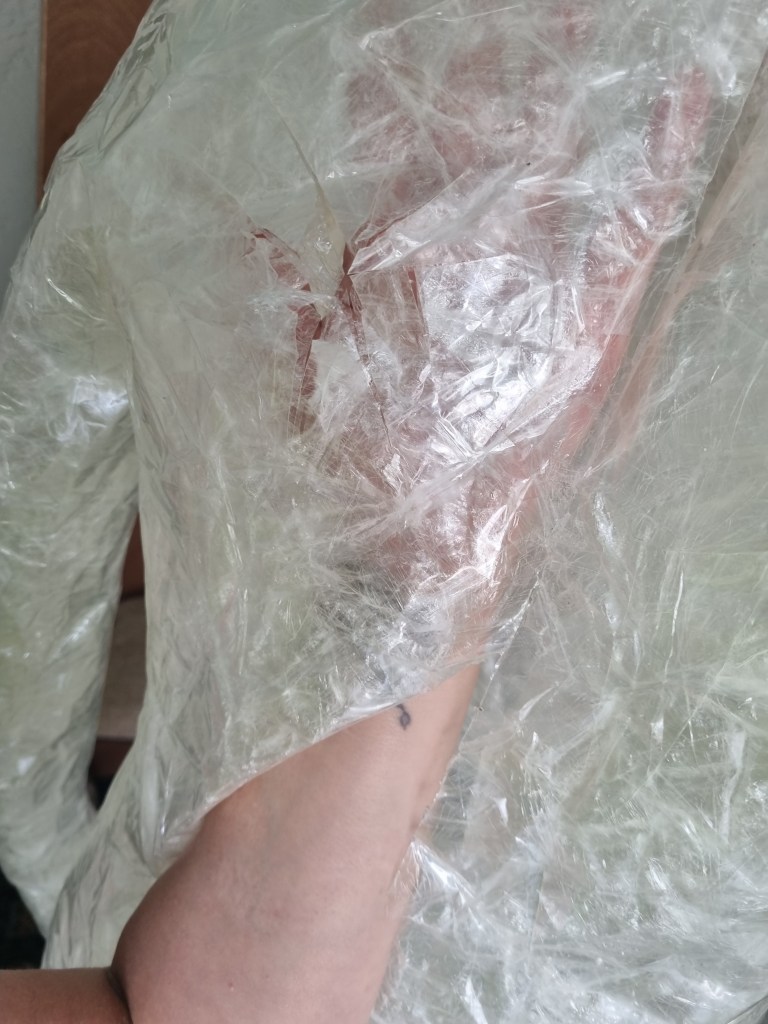

Decision making
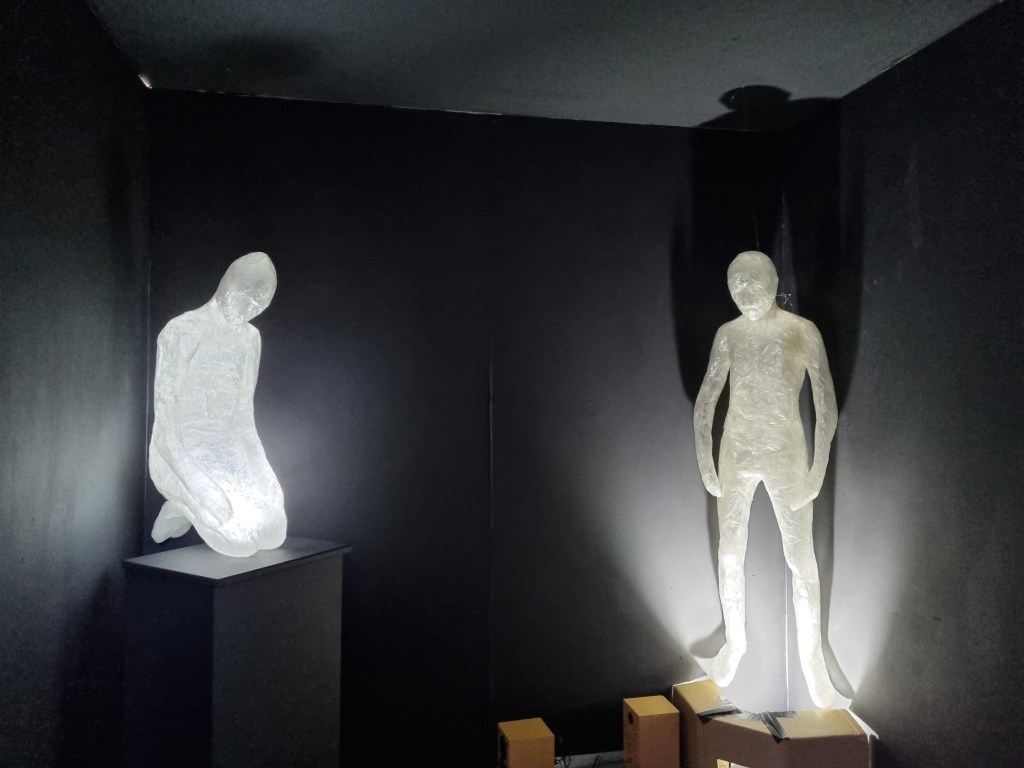
Two exhibited figures must be adjusted and finished in the space. Then, because they must be suspended, a line must be attached to secure the figures. I am using a clear fishing line for up to 10kg weight. Finally, the lights have to be placed and attached to the figures. The lights are manipulated by remote control because they will be placed inside two sculptures.
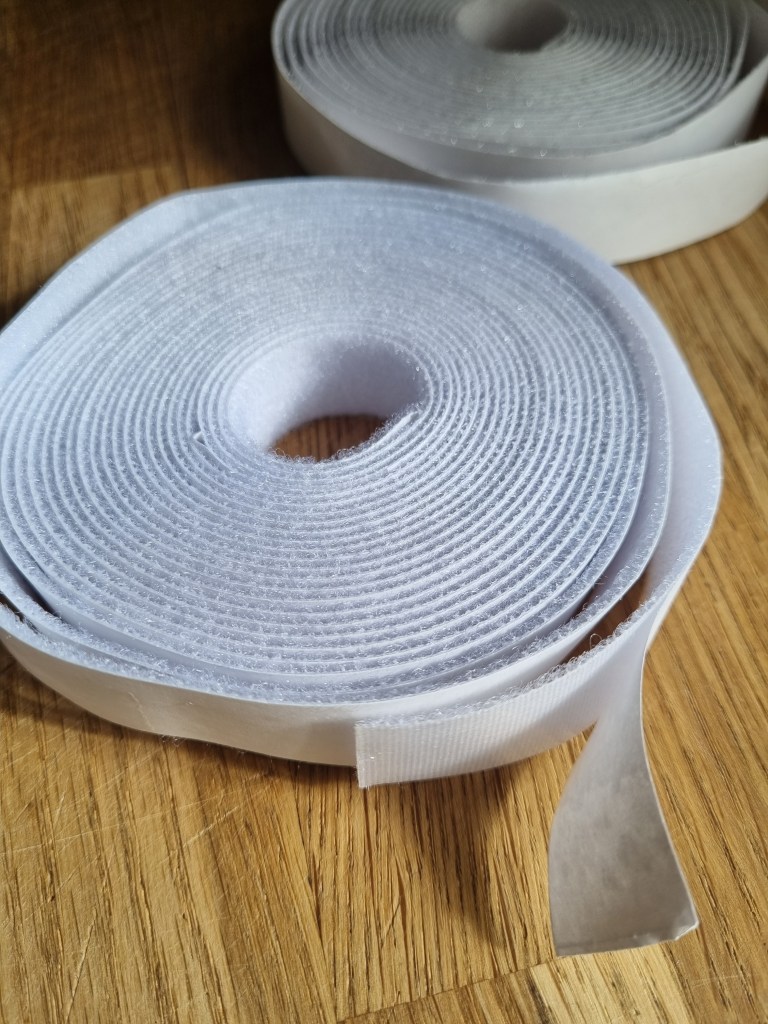
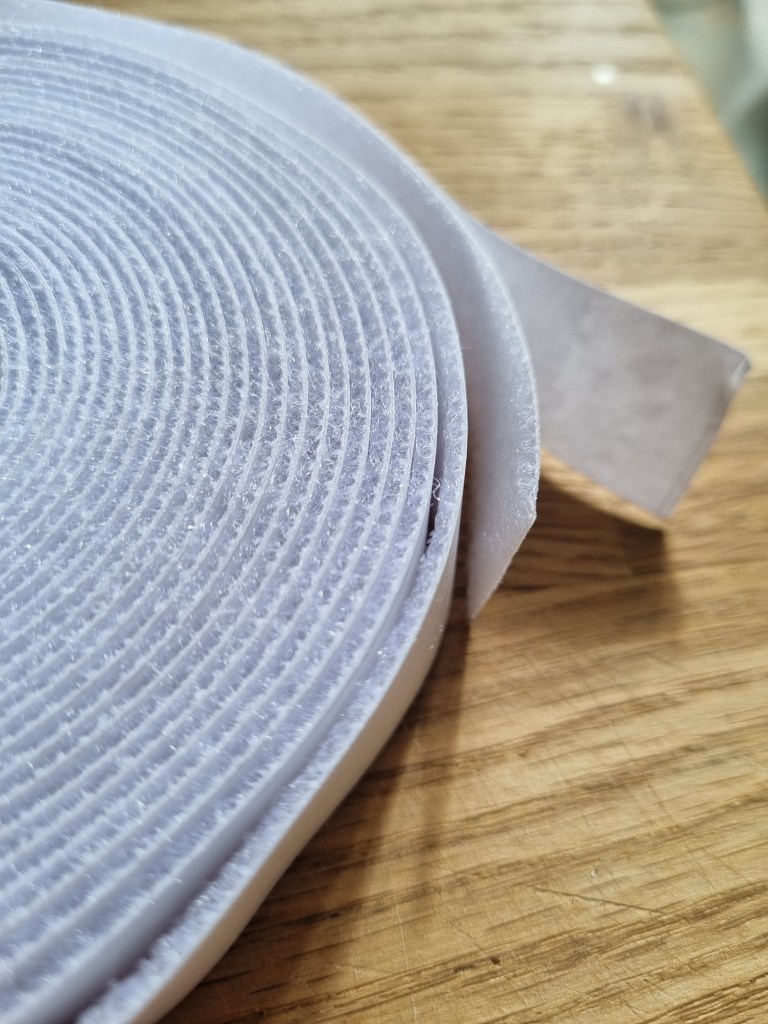
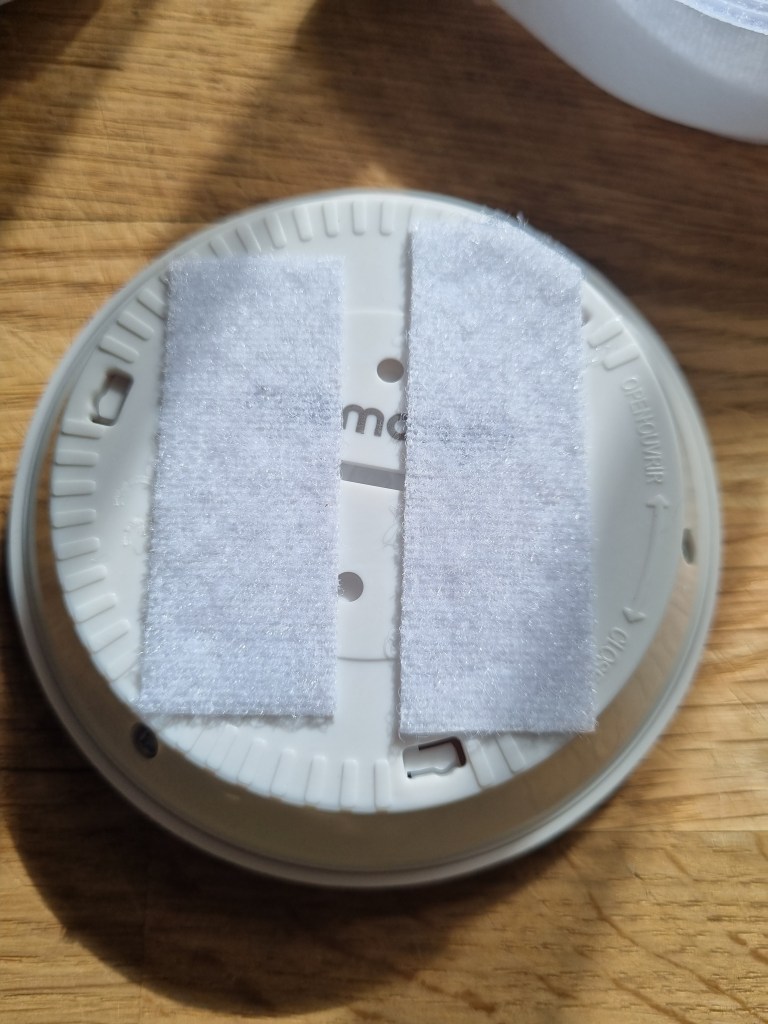
Next, the lights must be placed and attached to the figures. Therefore I used to secure the lights’ attachment with more resilient material than double-sided adhesive tape. Finally, I attached the adhesive Velcrol straps to the lights and the standing figure. Initially, I wanted to put the light inside the figure to the chest, pointing forward. Then I realised that the “Anxiety” and “Meditative state” sculptures would illuminate from inside, creating a subtle light source. So I tried to put the light from inside to illuminate the whole figure. It was an impossible task. I could not make the lights I purchased for the installation look to the standards I had in mind.
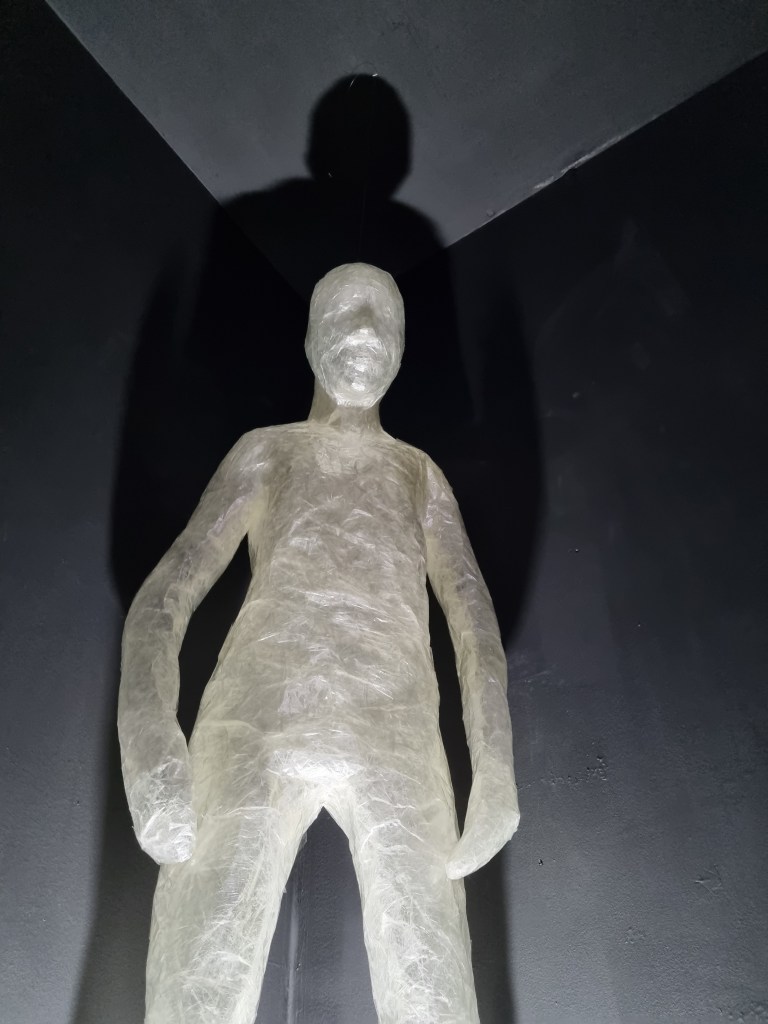
The figure had dark parts that did not look right and did not create a profound and subtle impression. So I placed the lights outside the body directed from the floor at the standing figure. That wasn’t what I wanted at the beginning. However, it gave the installation different perspectives. The light created shadows that gave the standing pose volume. I like the variety of lights as it would add an extra dramatic aspect to the sculpture’s elevation.
Bibliography
Danilo Kim. (2018). The Secret Power of Sound, Vibrations, and Frequencies. Available: https://universe-inside-you.com/sound-vibration-frequency/. Last accessed 05th May 2022.
Acoustical Society of America. (2015). Vibrating bees tell the state of the hive. Available: https://phys.org/news/2015-11-vibrating-bees-state-hive.html. Last accessed 08th May 2022.
Luis Villazon. (2021). How do bees make honey? Available: https://www.sciencefocus.com/nature/how-do-bees-make-honey/. Last accessed 08th May 2022.
Gloria Lotha. (2006). John Cage. Available: https://www.britannica.com/biography/John-Cage. Last accessed 08th May 2022.
Blommaert J.P.. (2018). Human Vibration Frequency Explained. Available: https://jean-paulblommaert.com/human-vibration-frequency-explained/. Last accessed 22nd May 2022
Moyo Clinic Staff. (2017). Meditation: A simple, fast way to reduce stress. [Online]. Mayo Clinic. Last Updated: 2017. Available at: https://www.mayoclinic.org/tests-procedures/meditation/in-depth/meditation/art-20045858 [Accessed 2 May 2023].
References
http://www.thiaoouba.com/seeau.htm
http://www.reiki-for-holistic-health.com/auracolormeanings.html
http://www.reiki-for-holistic-health.com/auracolormeanings.html
http://psychiclibrary.com/beyondBooks/aura-cleansing
http://psychiclibrary.com/beyondBooks/aura-sensing
http://www.thiaoouba.com/aura_eye_exercise.htm
http://www.worldtrans.org/spir/aura.html
http://astateofmind.eu/2010/12/08/how-to-see-your-own-aura/
http://www.thiaoouba.com/seeau.htm
http://psychiclibrary.com/beyondBooks/aura-room
http://www.reiki-for-holistic-health.com/auracolormeanings.html
 Milena (Filipova) Smith BA (Hons) Fine Art 2022/2023
Leave a comment