Advanced Studio Practice – Proposal
The inspiration for this module came from my dissertation, “Experiencing spiritual energy and manifesting this through Artworks”. I am experimenting and drawing inspiration for this module from Jackson Pollock’s works, particularly the Drip Painting. The experimental element in this project is the experience while working on the drip painting. Then, there is also the investigation of the abstract painting process. The research should reveal the expertise and experience in making Drip Painting. This experimental work should focus on the energy while making with listening to rhythmical music.
In my dissertation, I described the performative element and how I perceive the physicality that affected Pollock’s work. I observed the artist’s body language while working. I watched the film “Pollock” and the YouTube video “Jackson Pollock, Action Painting” (NCGSArt, 2009), and more. The body movement creates a rhythm, which incorporates into the artwork by pattern. Then Pollock’s hand and arm movements began to draw the canvas pattern, giving the painting dynamicity and directional marks. I want to investigate if I could zoom into the energy of action painting to allow me to sense the energy that Pollock might have experienced. Of course, I would never know what Pollock felt or experienced while working on the dripping paintings; however, I can compare my experiences with his descriptions and analysis.
My expectation from this experimental work is that it will allow me to investigate different energy levels. As a result, I can experience or sense similar sensations as the artist or perhaps understand more about the artwork where movement, action and music could influence the outcome. In addition, it could support and inform my further study and Studio Practice. I am interested in what image I can produce, if it could be as impressive as Pollock’s, and if I can follow the pattern. However, this is the first time I will try this method, which feels daunting but also exciting.
Methodology
I will use my observation (visual research) of Pollock’s working process. First, monitor the colour palette and pattern created in Pollock’s drip paintings. Jackson’s videos on YouTube and film “Pollock”. Web research and observation and record of the energy or feelings whilst listening to different music. Literature.
Research
In Jamie’s lecture, we talked about Walter Benjamin’s Aura. We discussed image changing and losing the magic if the artwork is not viewed authentically. It came to me that the experiences while making artwork could affect and absorb the moment of the production to create the “Aura” containing the moment’s energy.
Performative gestures are essential in Jackson’s drip paintings. There is movement, physicality, and action, unlike in Abramovich’s performance “The Artist is Present” of the present moment (I researched and mentioned in my dissertation). However, there is still Pollock’s presence at the moment, which is essential to create the energy perceived in his work. Pollock’s working process is performative, which is entirely new to me, but fascinating because of the mystic perception one could experience.
Preparation for the drip painting
I visually researched the colours Pollock used in painting that could help me with the colour palette. I need to be more confident about colours. I constantly struggle with colours and deciding what shade to use in my work.
Jackson Pollock started working on a new painting method in 1947. The drip painting method broke through his difficult time, and he became famous. His way consisted of flicking and dripping thinned enamel paint onto an unstretched canvas. However, I will use ordinary wall paint in this experiment because it is cheaper. The physical and performative improvisation connects with the materials embracing gravity and velocity into the process. In a performative way, his work allows lines and colours to stand alone, functioning independently of form. As a result, his “drip paintings” work presents less a picture than a record of the fluidity of the paint itself.
‘Describing his action-based process, Pollock says, “When I am in my painting, I’m not aware of what I’m doing… I have no fears about making changes, destroying the image, etc., because the painting has a life of its own.’ (Ochmanek A. 2016)
This statement refers to the non-ordinary states of consciousness. While working on my dissertation and searching for spirituality in art, I came across a fascinating book, “Holotropic Breathwork”, written by Stanislav and Christina Crof. The book is about the holotropic state of consciousness and breathing connected to healing. The breathwork is another link to my other installation work named “Being”.
‘The remarkable healing power of non-ordinary states of consciousness, which was known and used in ancient civilisations and native cultures since immemorial, was confirmed by modern consciousness research and therapeutic experimentation conducted in the second half of the twentieth century.’ (Crof, S. Crof, C. 2010, pp, 7-8)
This element is what I want to investigate in this module. The power of the non-ordinary state could be how Pollock transferred himself to create outstanding work through his inner being or was driven by this element. Pollock’s statement also indicates that the artist used the energy of knowing and not knowing in practice. Pollock stated that he sometimes knew what he was doing, and sometimes he didn’t know but was driven from within.
Project “Drip Painting” in progress
I usually prime the canvas with white paint. However, I know that Pollock sometimes used unprimed canvas for his work. So I will use unprimed canvas to try and add another shade to the painting. I have red paint, Chelsie matt, soft Yellow matt, blue Alberta matt, brilliant white and black matt wall paint.


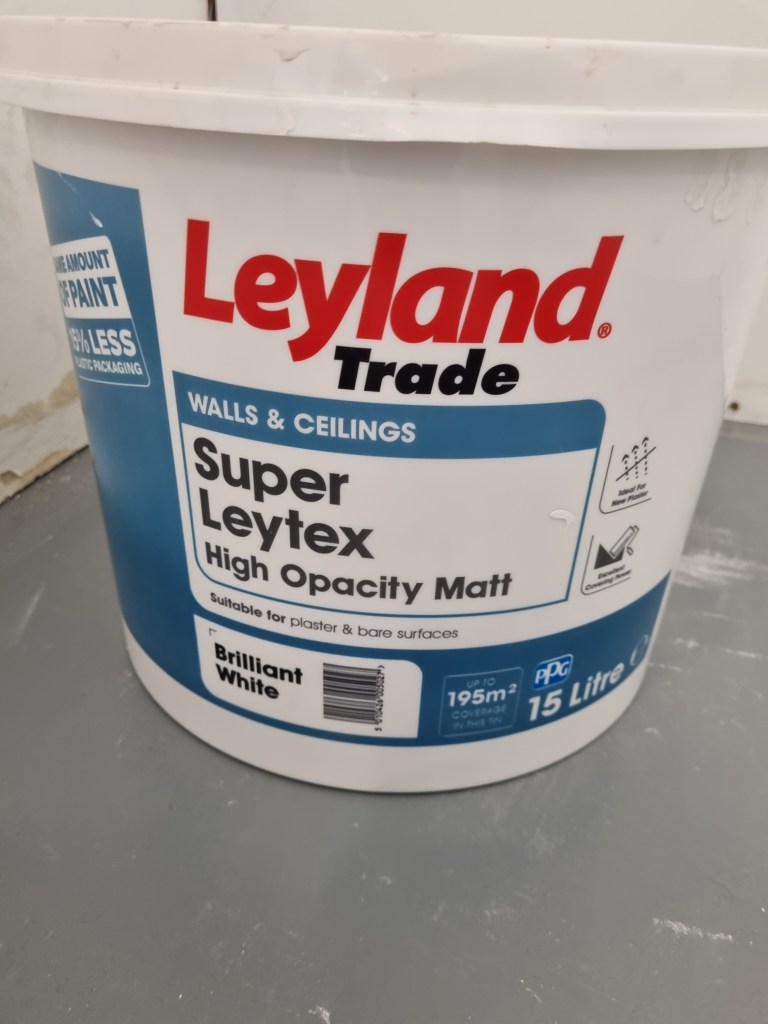
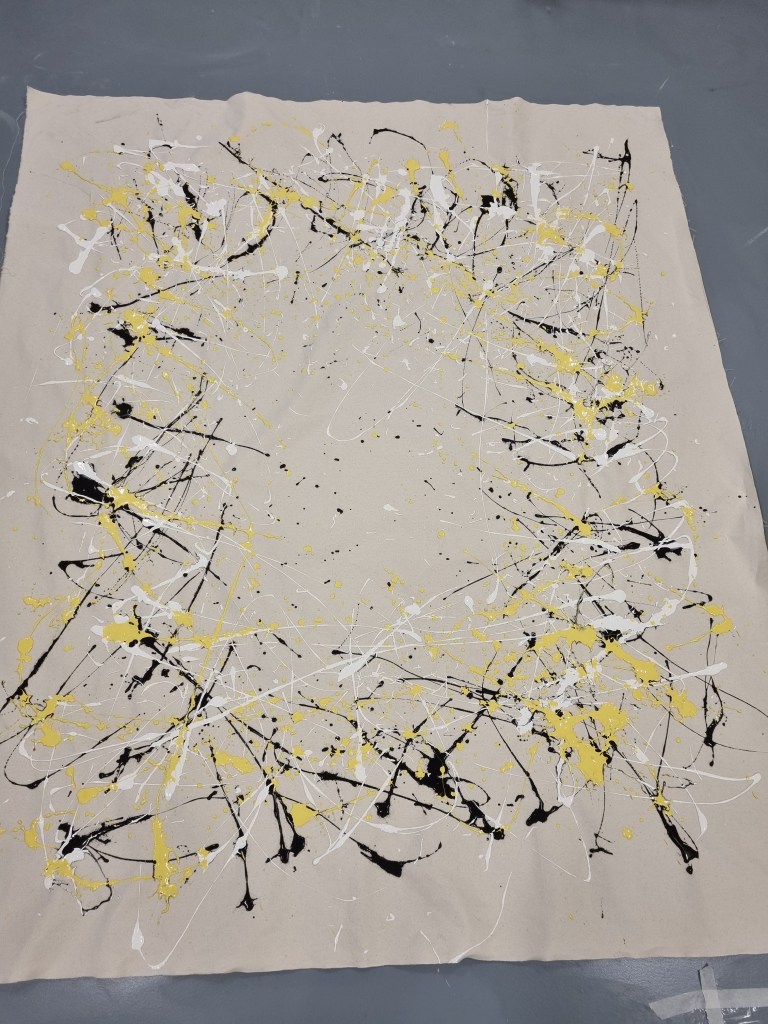
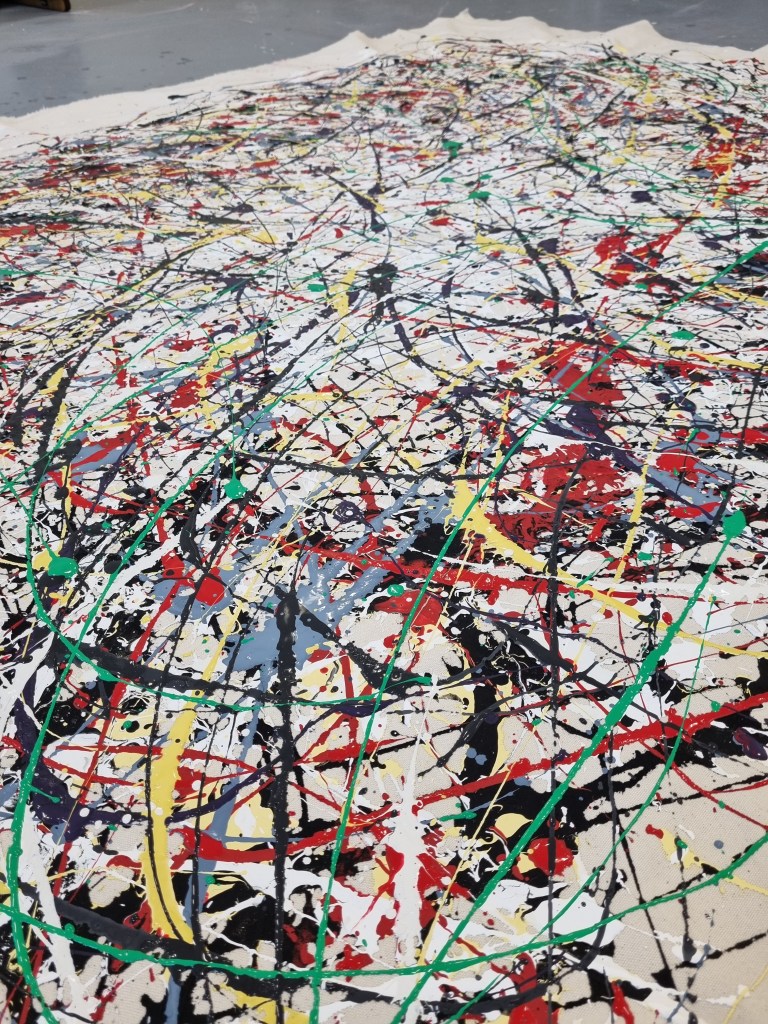
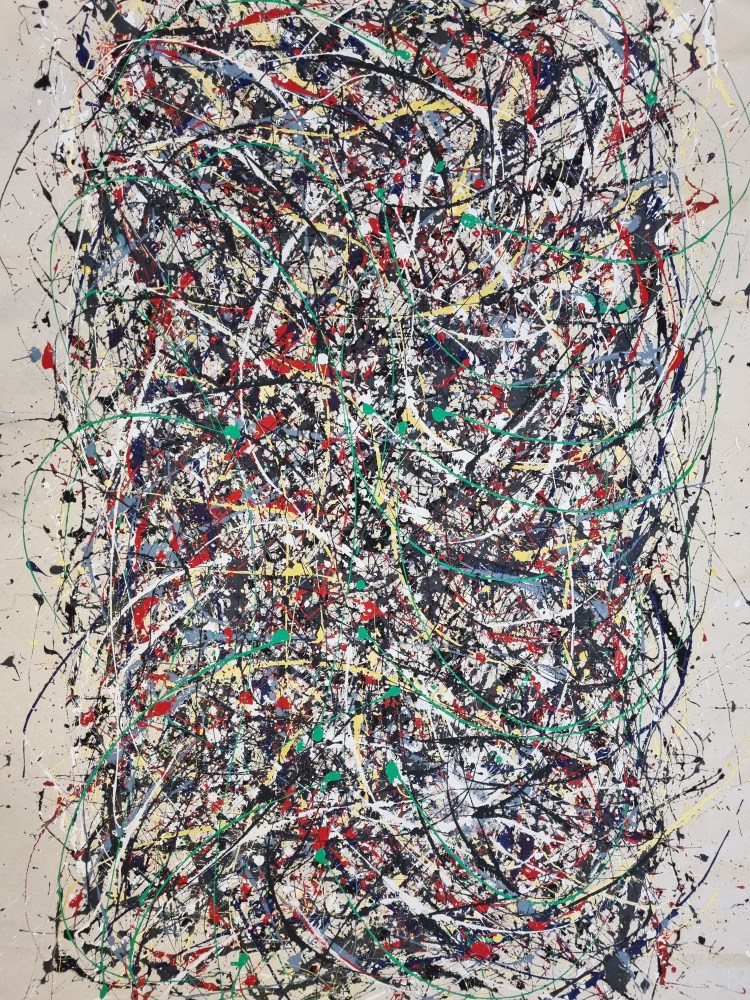
I spread the untreated canvas on the floor with enough space to walk around. I had to dilute the paint with water because it needed a smoother effect to add fluidity to drips and create liquid consistency like the enamel paint Pollock used. The wall paint was a cheaper alternative, but I struggled to make the experience of the process enjoyable. I tried to dive into the excitement of making. However, during the process, I could not relax and monitor my feelings because of the constant thought about the thick drips making thick marks.
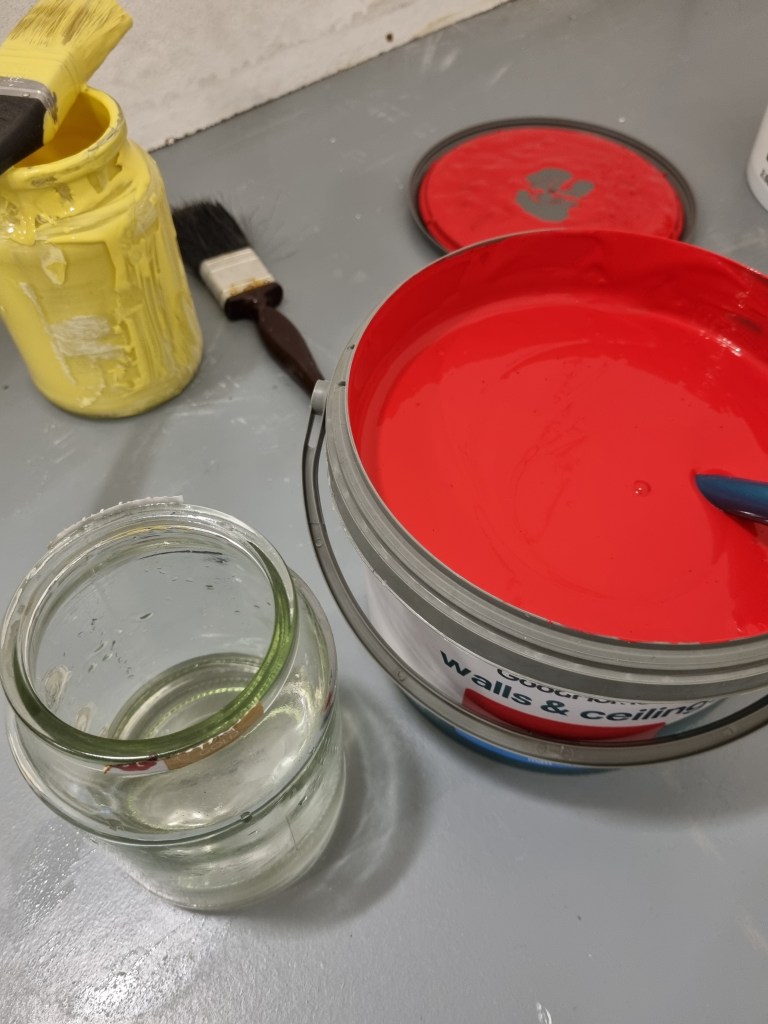
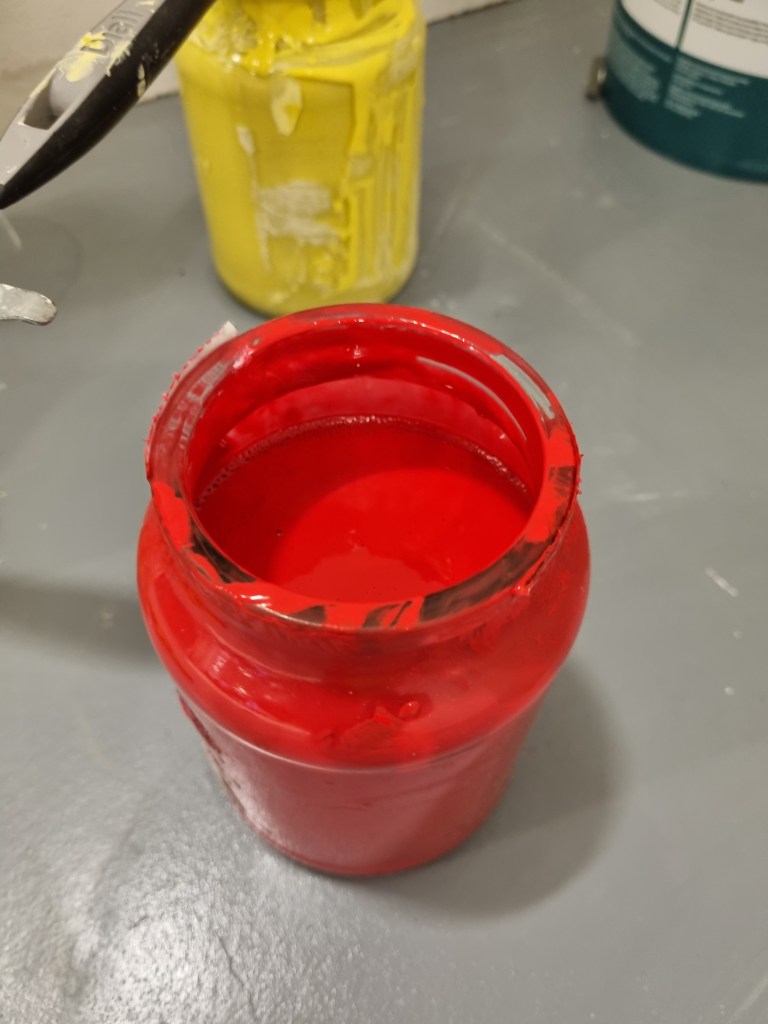
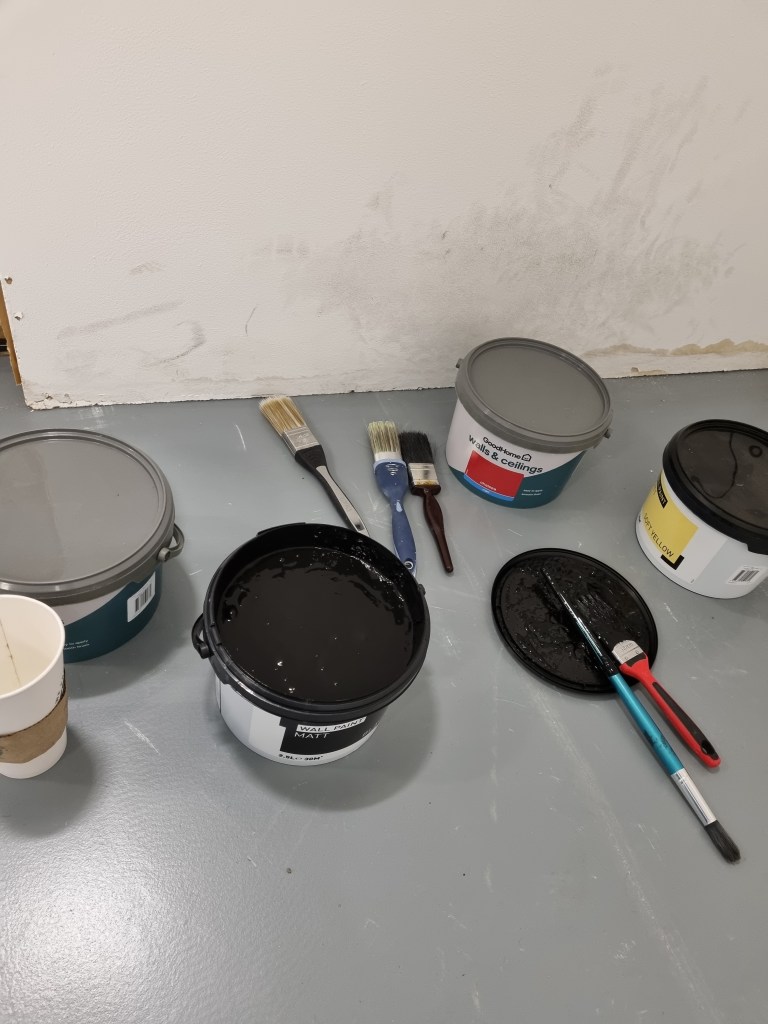
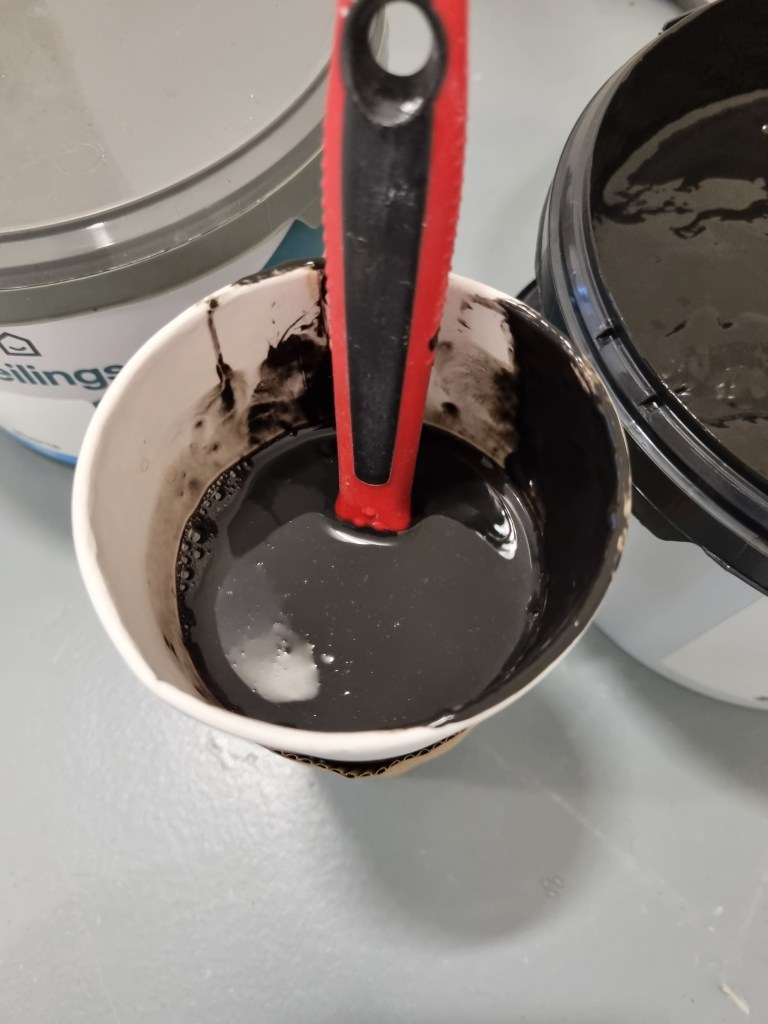

I diluted the paint with water to achieve drip consistency and started again with the experiment. I became more relaxed about the outcome as the process progressed further. So I put this not quite successful results to the experience with possible improvement.
First drip painting (experiment)
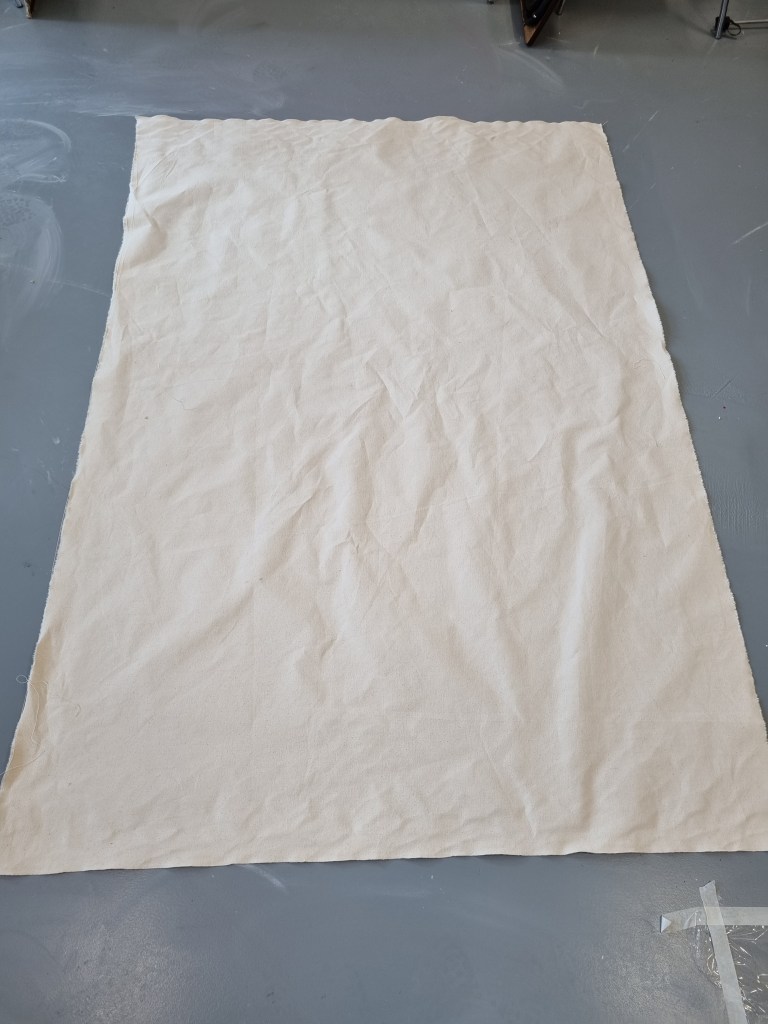
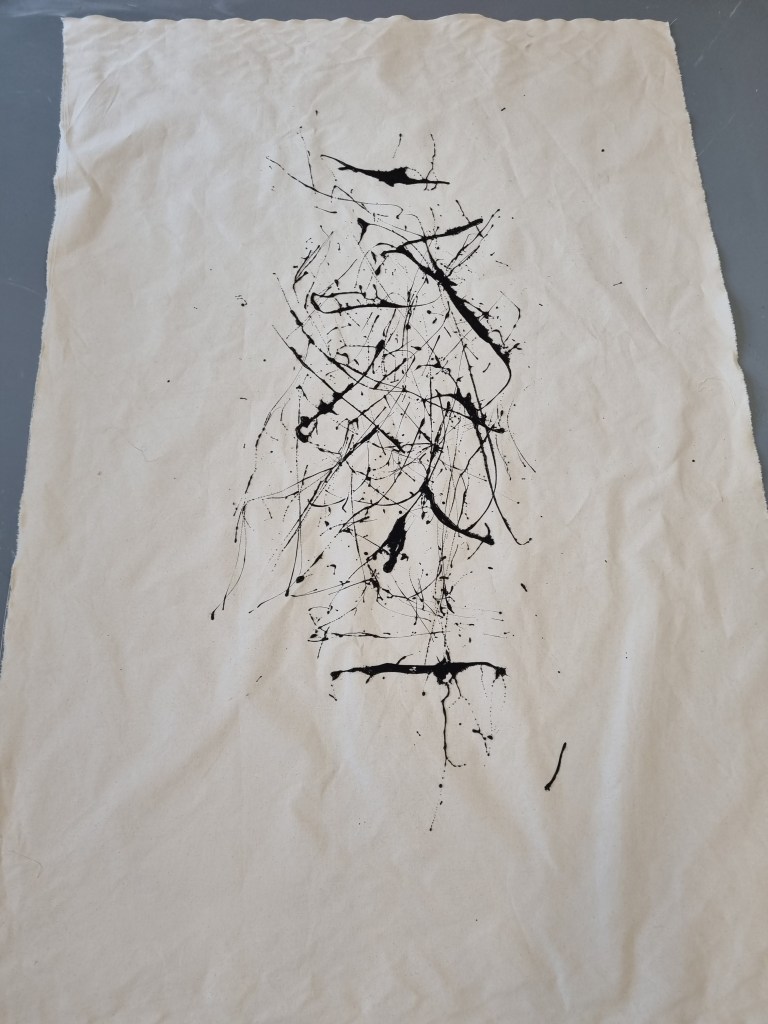
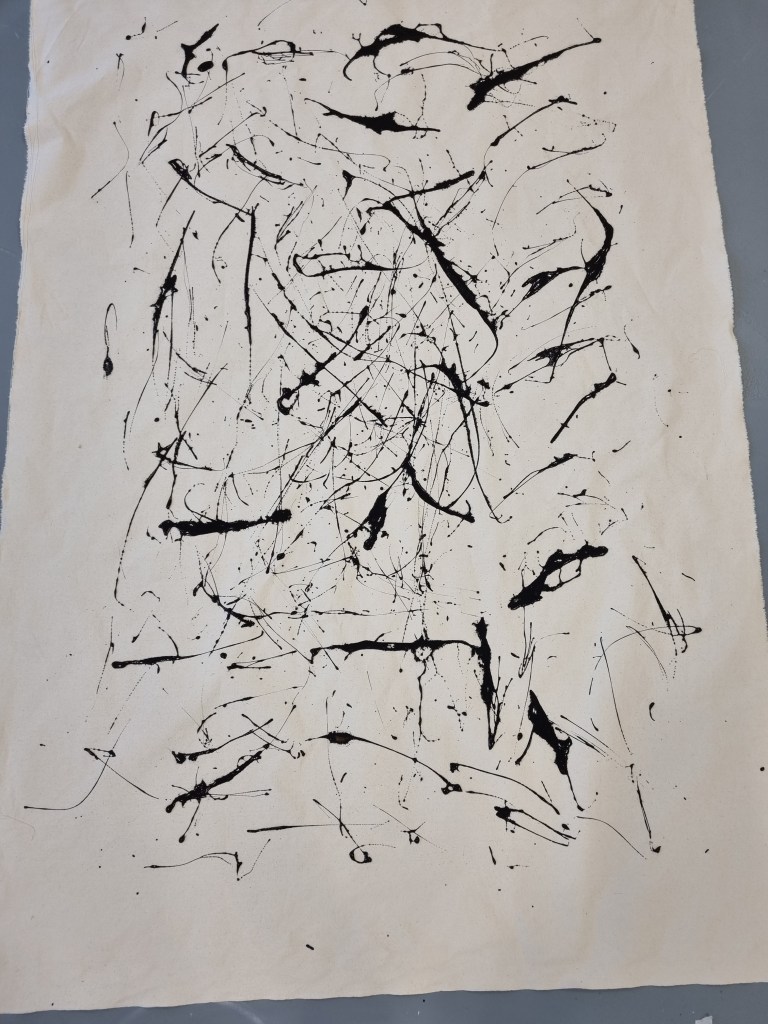
Even if I diluted the paint with water to achieve drip consistency, the paint still did not have the proper fluidity for the best results.

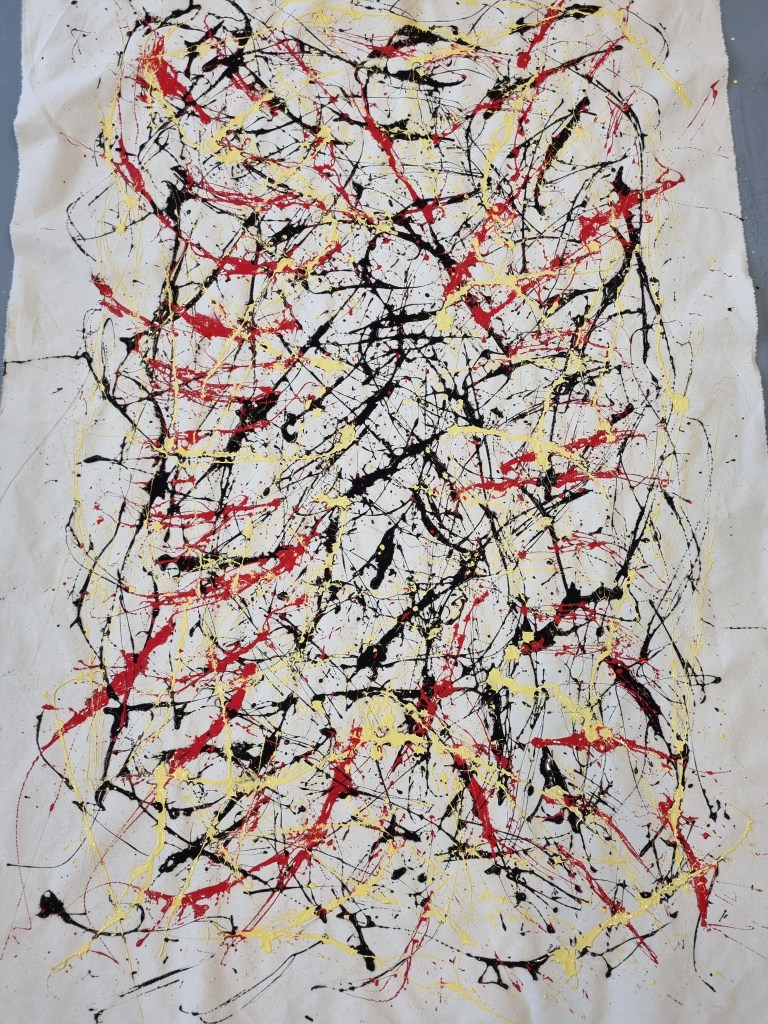
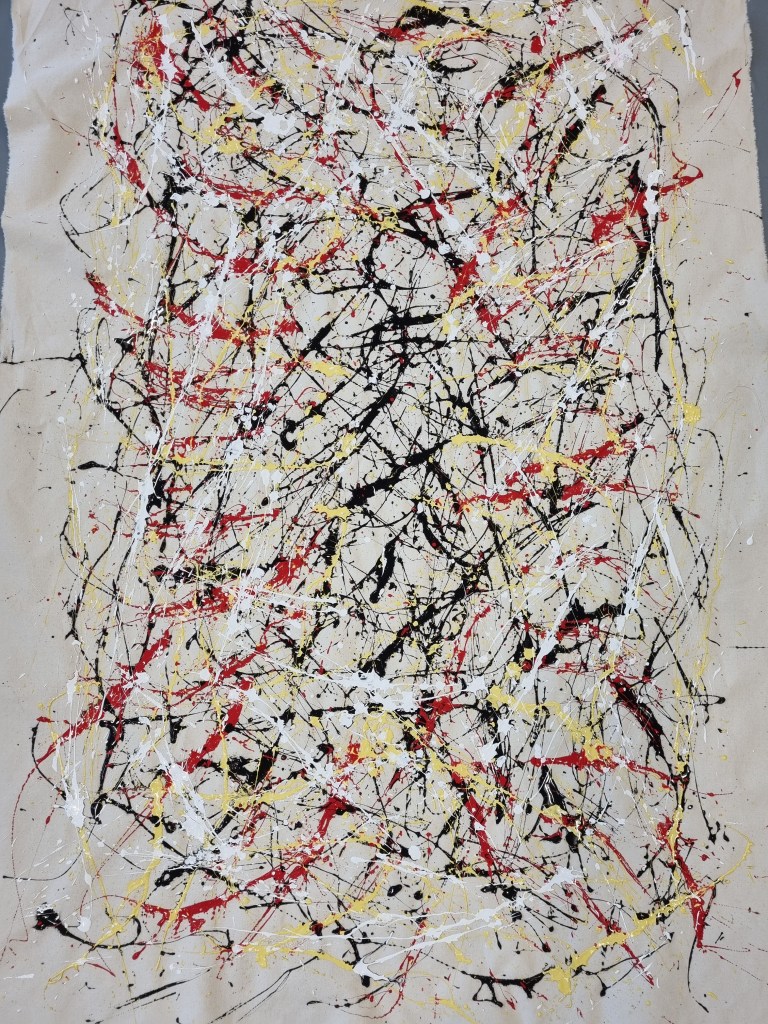
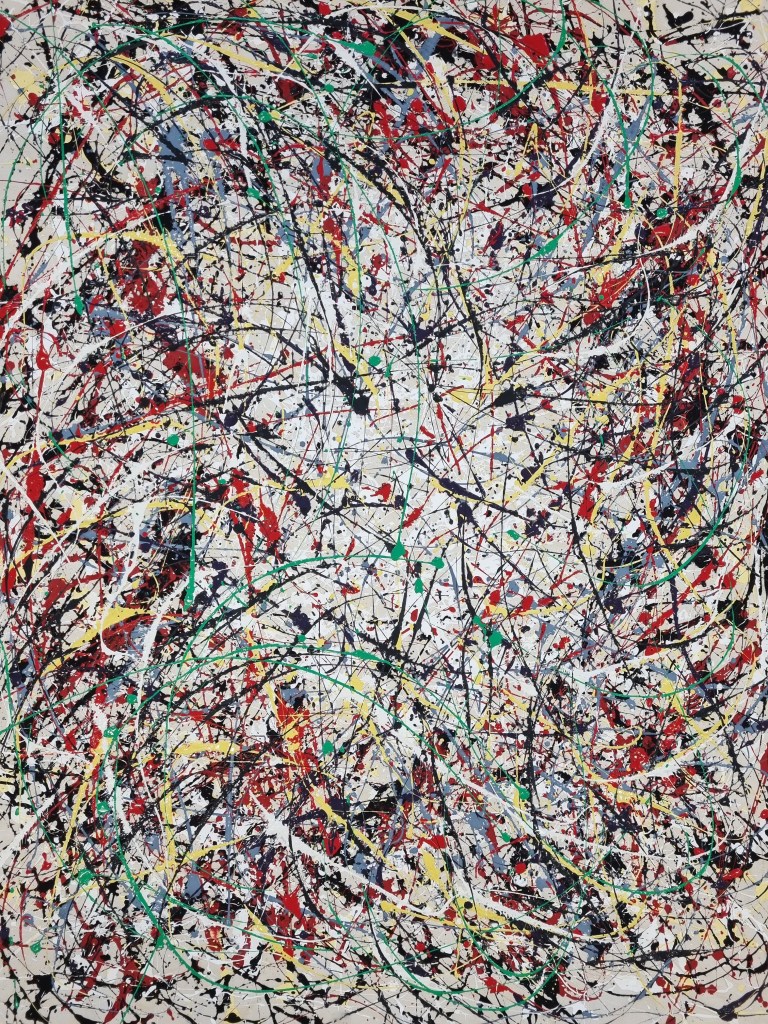
The marks were dynamic but too rigid without fluidity, and perhaps the control is expressed more vividly by the directional marks. I tried to think about the aesthetics while splashing the paint, so I tried to manipulate the colours to specific orders to create rhythmic patterns and harmony in the colour palette.
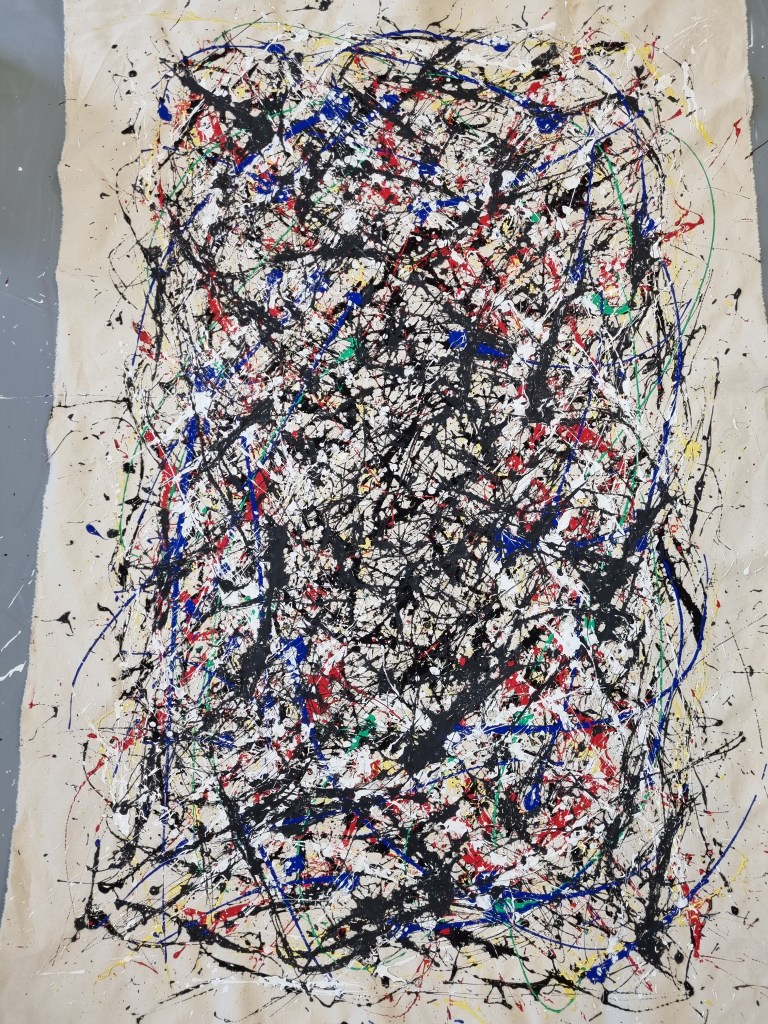


The chosen colours were working well. I needed to look at it from a distance, but it was challenging because of the size of the painting. The traditional way to view it properly and make a decision from there would be to put it on the wall and step aside. I did not have the wall space to do it; however, I made pictures and reviewed them on my phone.
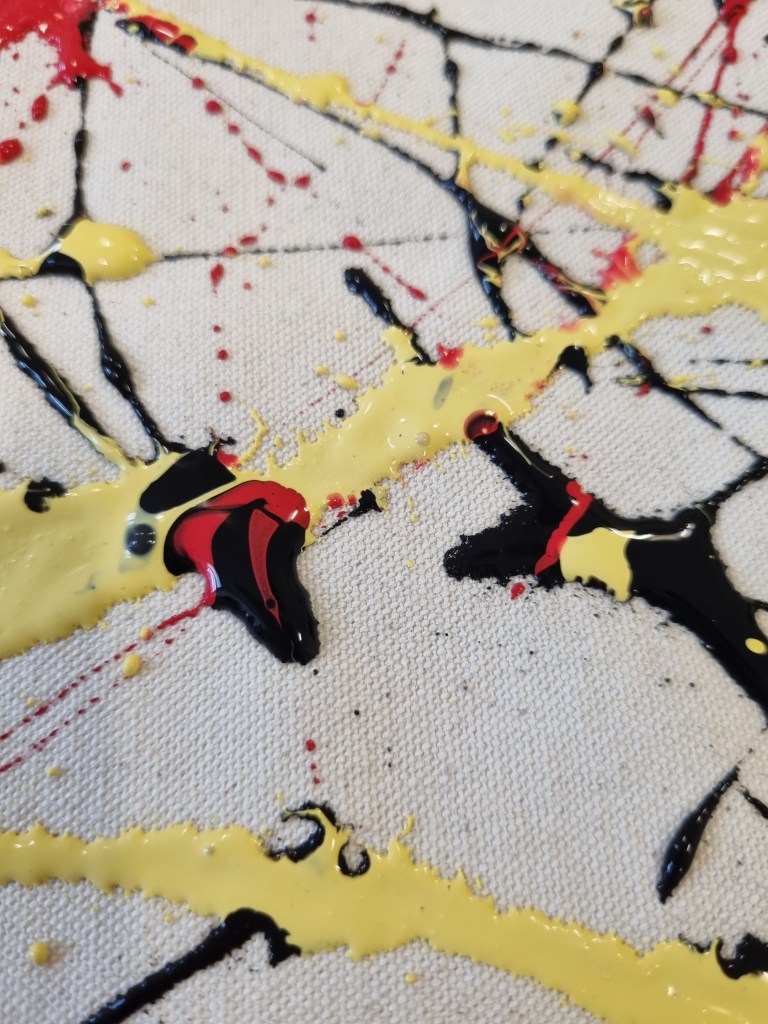
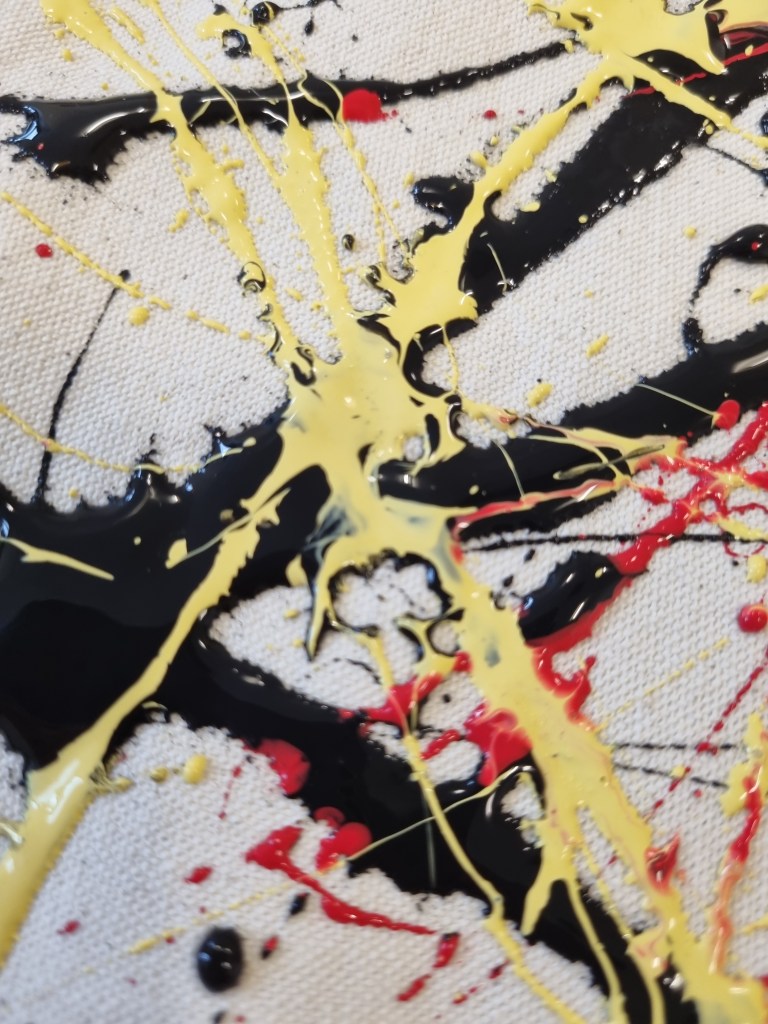
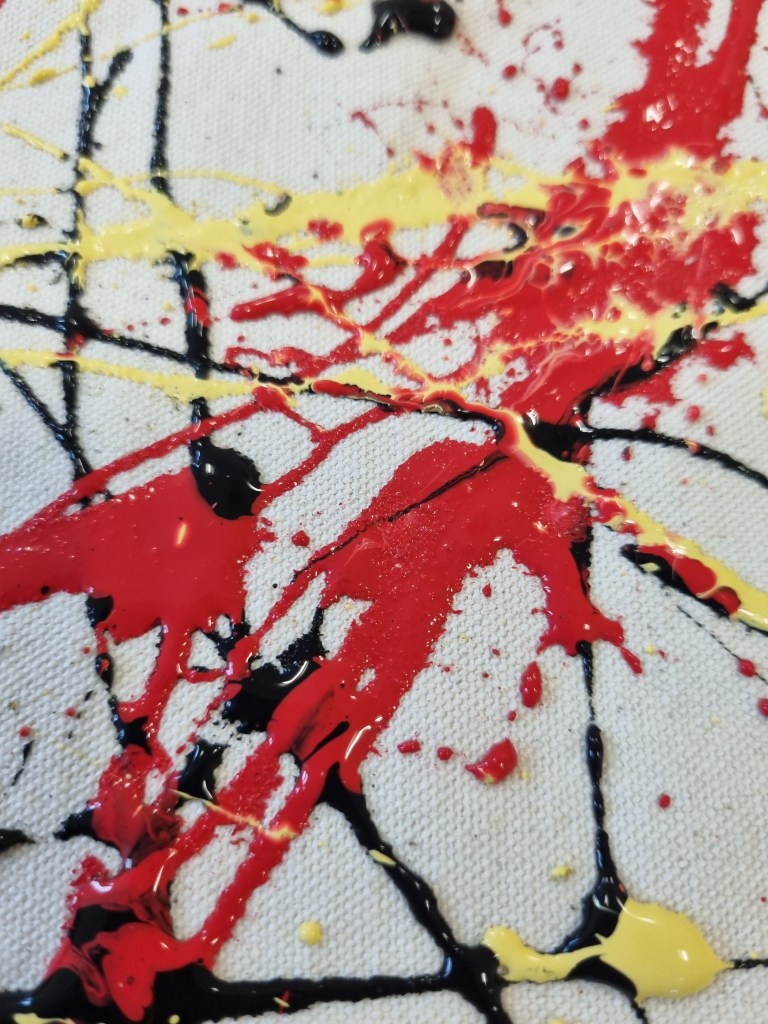
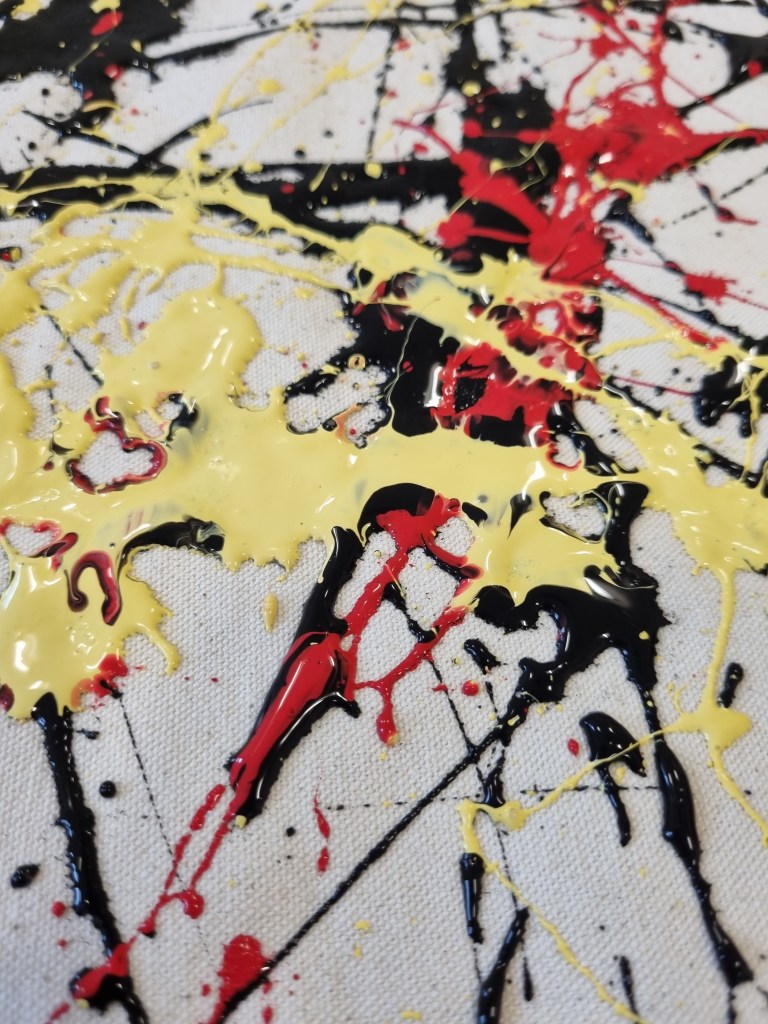
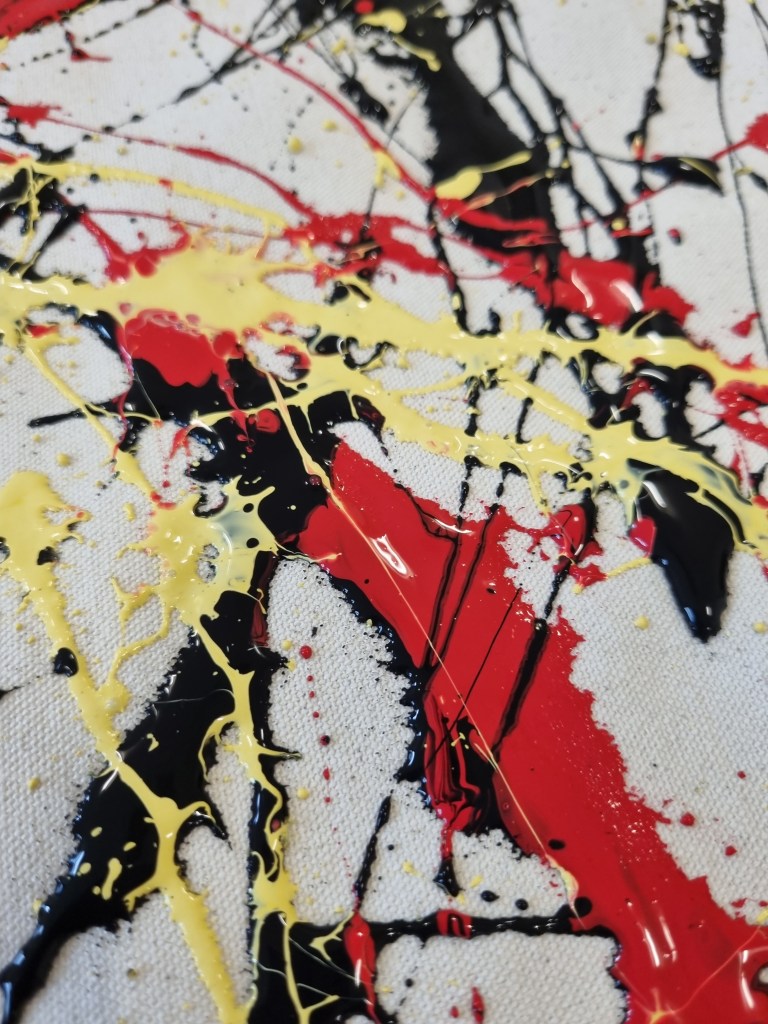
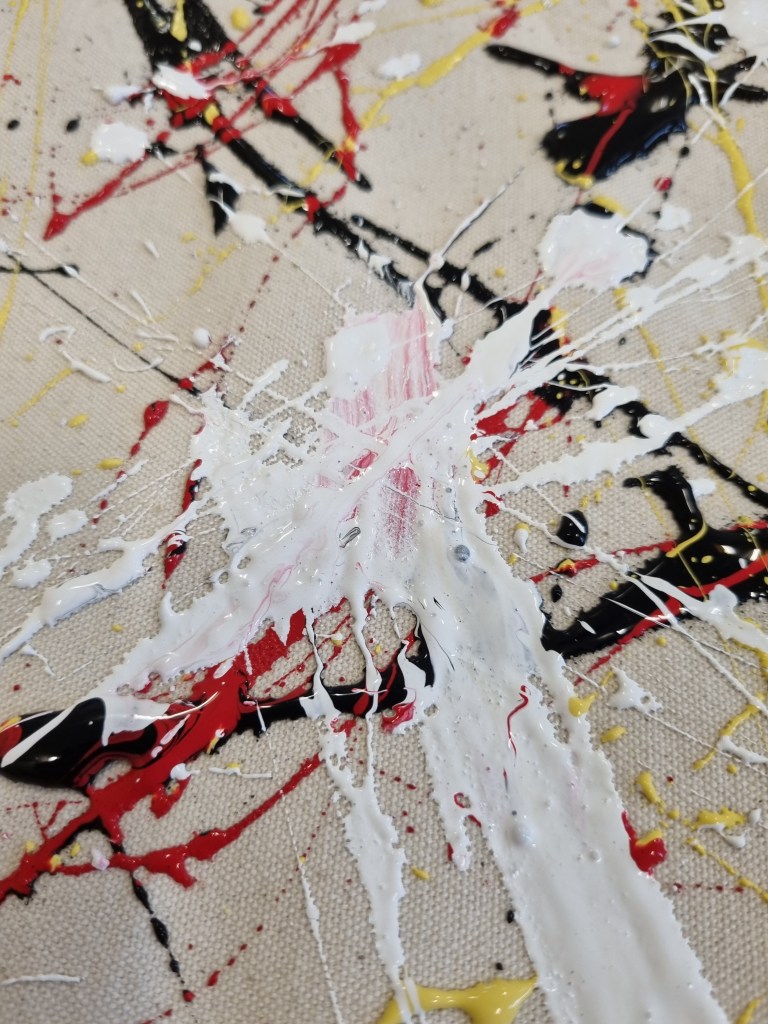
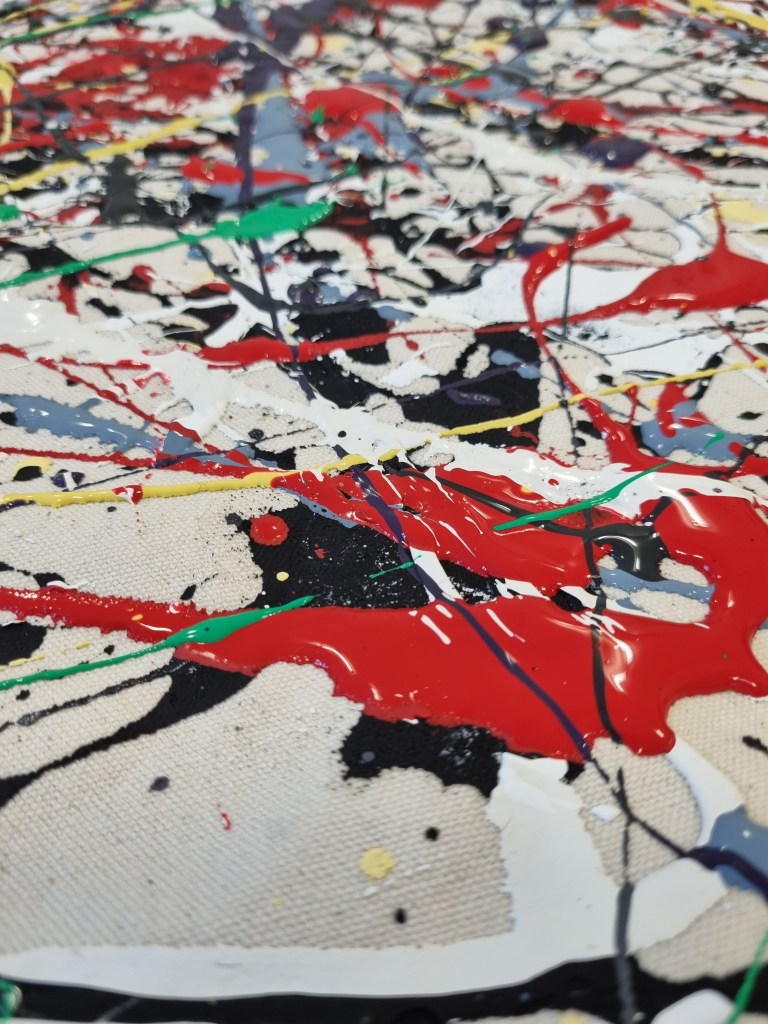
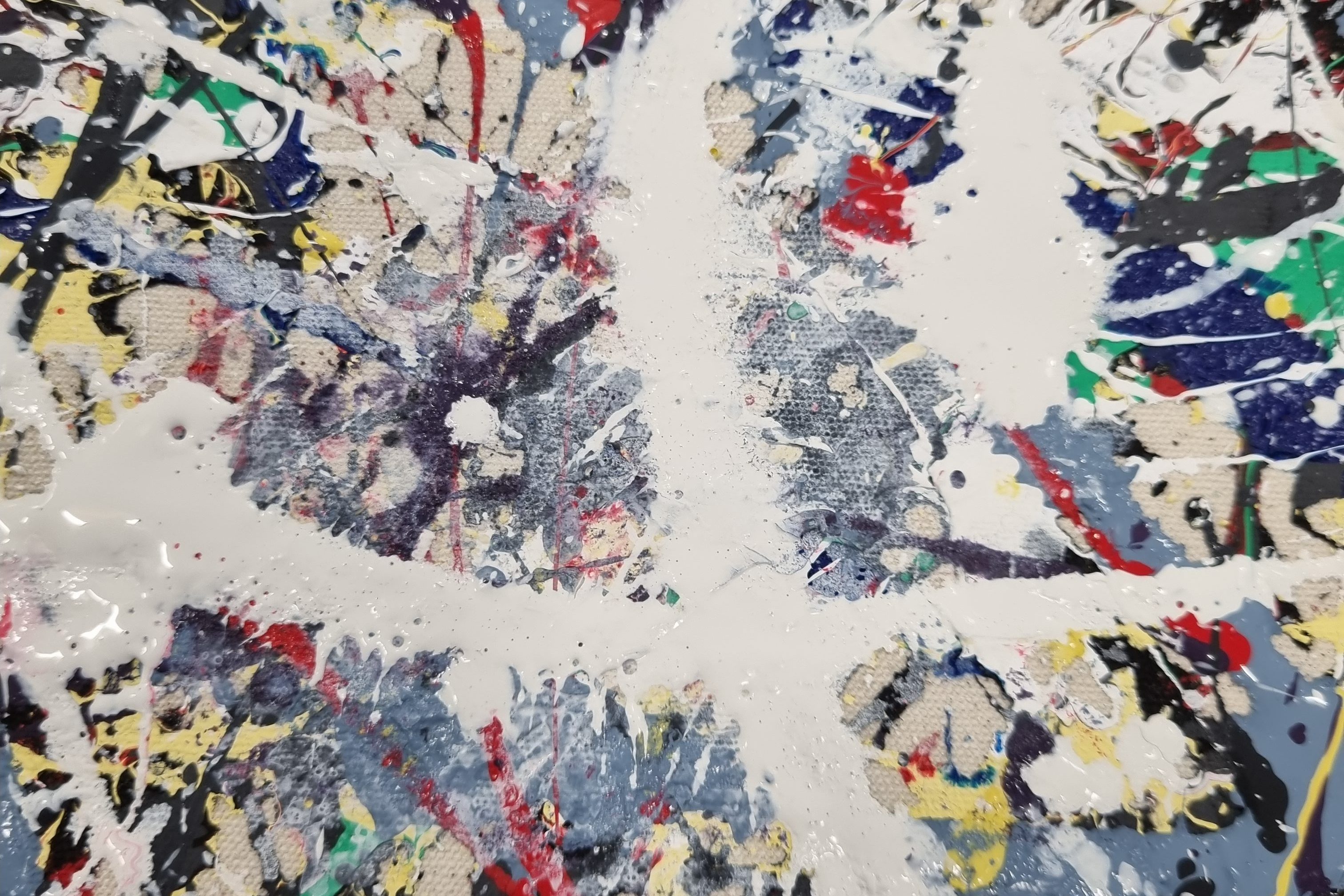
These close-ups were made because of the detailed contrast of the gloss effect before the paint dried. The marks were radiant and effective, the shine was high, and it looked like the enamel paint Jackson used in his work. However, once the paint dried off, it became dull and lifeless. So it proves that using enamel paint is the better option for creating a compelling painting.


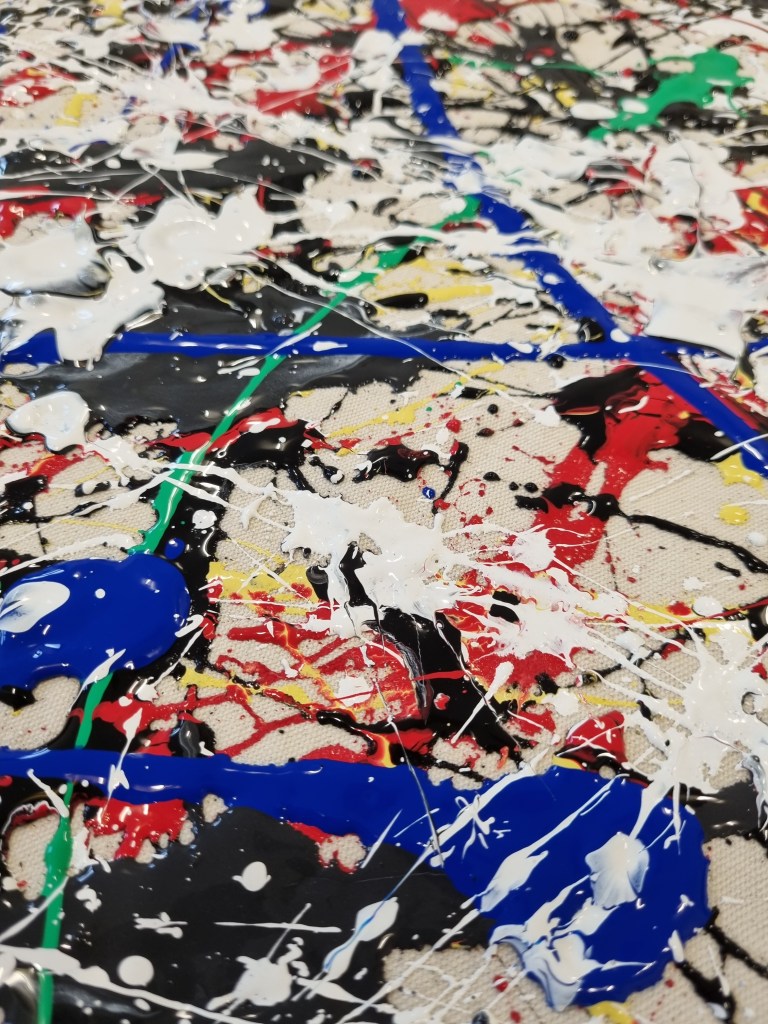
I did not wait for the paint to dry because I wondered if the colours would mix together or if they would stand for themself without too much interference. The colours overlapped but did not affect the marks too much and created little pools on the canvas.
The little pools sunken into canvas after the paint dried, making the marks flatter and less vibrant.
Second drip painting (experiment)
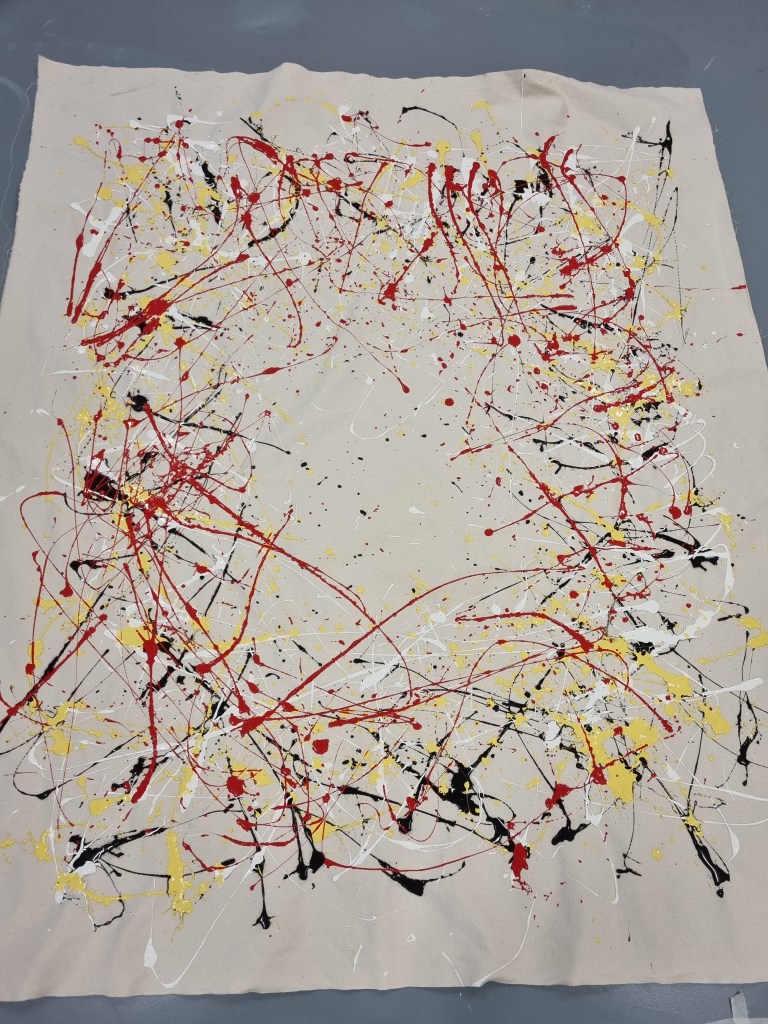
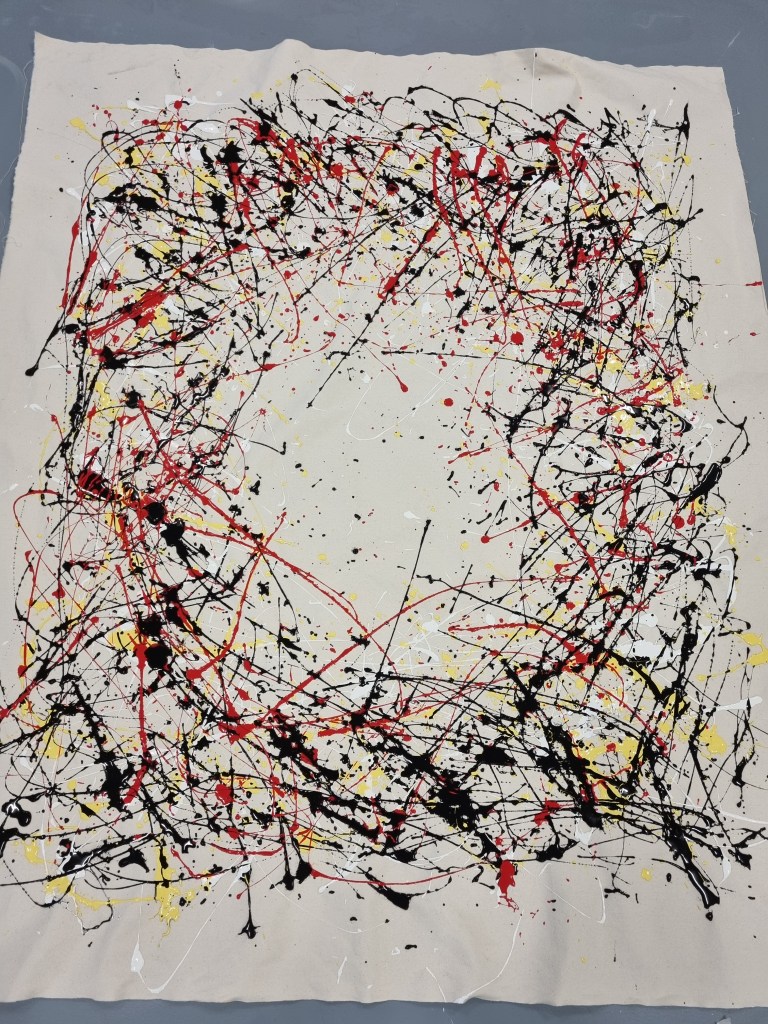
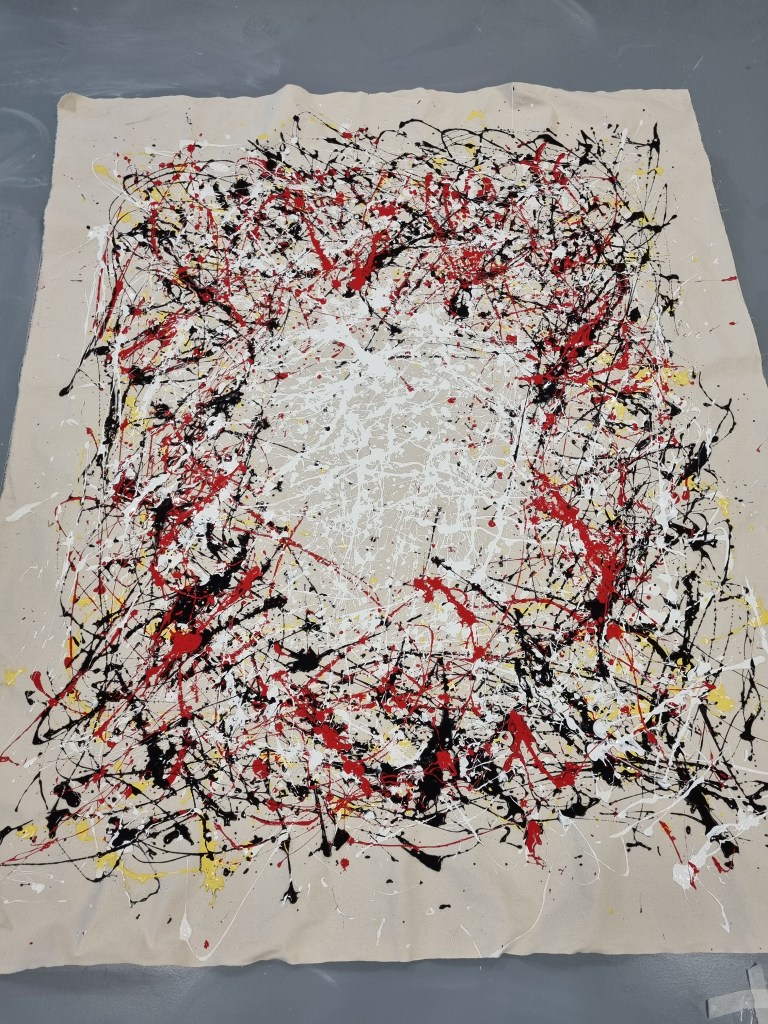
In this painting, I wanted to create a visual tunnel effect. So, I tried to avoid splashing the paint in the middle of the canvas. I wanted to try first with a white centre and then with a dark centre. (The darker piece experiment is still lined up)
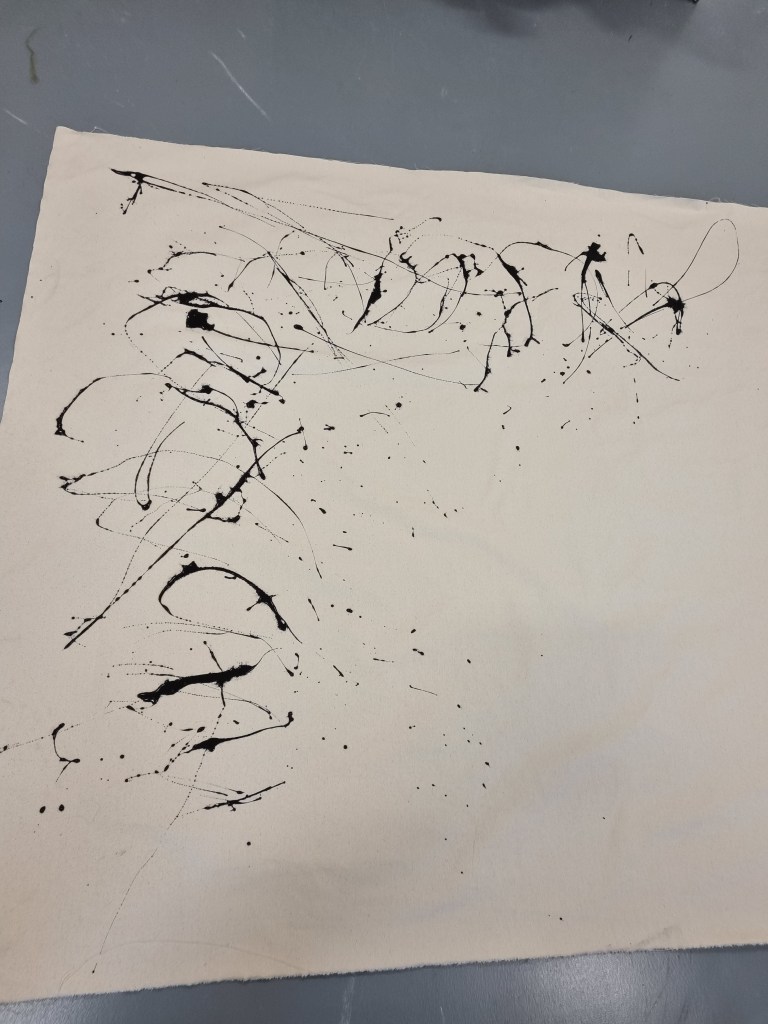
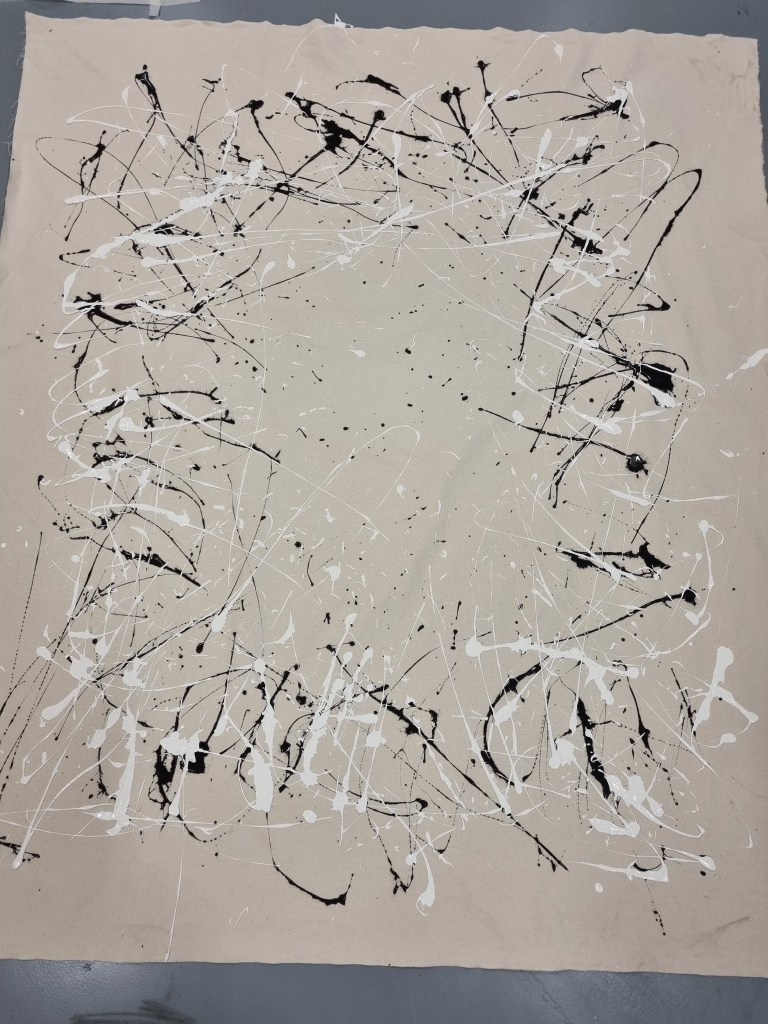
I used a limited colour palette in the second piece. While working on this project, I also wondered if selected music could affect the experience and give created marks strength or more dynamicity. So I listened to the track Cold Play and monitored the sensation for a start with Cold Play. There was an intense feeling that I would compare to excitement. However, I need to try again without anyone in the room so I can monitor the knowledge of being on my own to liberate myself from the pressure of judgment of the audience. I also need to use different rhythmical music resembling shamanistic dancing. The next step of this experiment will be on the second canvas to investigate the effect of the music on dynamicity.
Pollock’s drip painting is very dynamic and bold. While watching the film on YouTube “Jackson Pollock’s “Action Painting” expresses the inner turmoil that the artist seemed to incorporate effortlessly into his artwork. It felt like watching a dancer, perhaps a native American tribe dancer. With these unique techniques, the artist connected through movement and rhythm that created the painting in a specific way and moment. Pollock was interested in Native American culture. During the action, the rhythm resembled a connection through experience at the moment and time. It emerges as energy connects through him to the rhythmical movement that draws the artist deeper into the zone of unconscious mechanic movement. Watching Pollock’s movement while he is totally absorbed in the process of his work brings Shamanism to the surface.
Shamanism has a long and storied history, considered by some to have originated in Siberia, where members of indigenous tribes would gather the sometimes poisonous and highly psychoactive fly agaric or Amanita muscaria mushroom. But when this practice was recognized and classified as shamanism, it became apparent that many worldwide cultures conducted similar practices.
Shamanic Mysticism
It might just be the oldest spiritual practice in the world – one that is not necessarily based on faith in a particular god but rather based on animism, the belief that everything is living and has a spirit.
Shamanism has persisted worldwide since its inception in ancient native cultures, including Siberian, Indian, Native American, and South American Shamans. Shamanism has had to fight oppression from governments and religions worldwide that perceive it as a manic and primitive tradition. But its mysticism and continued practice remain strong throughout disparate tribal cultures, many of whom had little to no contact for centuries, despite their similar traditions, beliefs, and rituals.
So what is shamanism?
Shamanism is thought to be the key to existence — as long as shamanic rituals are practised, we will continue to exist. Shamans are a link between our planes and higher planes of existence. They link to the spirit world to heal, contact deceased ancestors, influence the weather, and uplift consciousness. (Gaia, 2019)
The Sound & Vibration
“If you want to know the secrets of the Universe, think in terms of energy, frequency and vibration. “
Nikola Tesla
Ancient civilisations worldwide had known the power of sound, frequency, and vibration for thousands of years. In the essence of all religions and spiritual teachings, we can find how the ancients used the power of words. This power has been utilised in prayers for Christians and Muslims, mantras for Hindus and Buddhists, and chants for the Shamanic traditions. All of this shows us how words and vibrations have an immense power, which the ancients often utilised and used for many purposes.
Pollock’s Alchemy inspired the experimental work. It is the pattern in the painting that captured my attention. Tesla’s statement indicates the energy, frequency and vibration I am seeking in the artwork of this artist. The energy is visible in the short video on YouTube, where Pollock is performing the drip painting techniques. This is the element that I am experimenting with in this project. Here
The painting “Alchemy” was the painting from which I drew inspiration for this module.
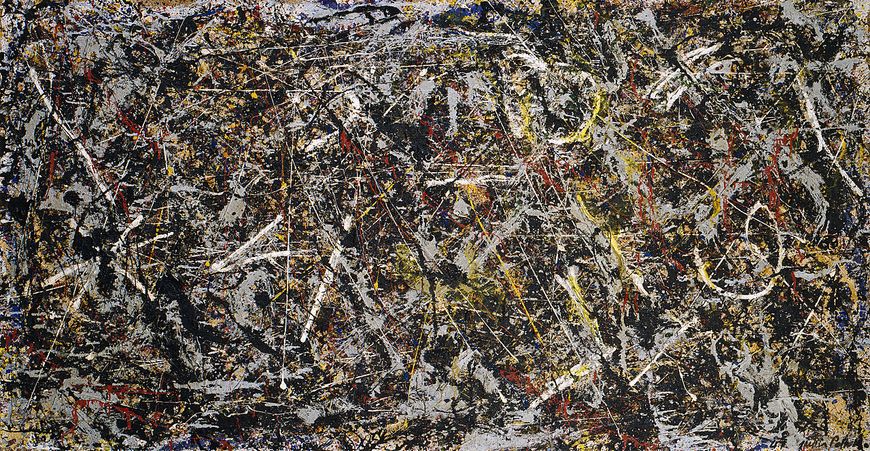
Jackson Pollock (28th January 1912 – 11th August 1956) Cody, Wyoming. Died in East Hampton, New York
Title: Alchemy 1947
Medium: Oil, aluminium, and alkyd enamel paint with sand, pebbles, fibres, and wood on commercially printed fabric.
Dimensions: 45 1/8 x 87 1/8 inches (114.6 x 221.3 cm)
Alchemy is one of Jackson Pollock’s earliest poured paintings, executed in the revolutionary technique that constituted his most significant contribution to twentieth-century art. After long deliberation before the empty canvas, he used his entire body in a picture-making process that can be described as drawing in paint. By pouring streams of commercial paint onto the canvas from a can with a stick, Pollock made obsolete the conventions and tools of traditional easel painting. He often tacked the unstretched canvas onto the floor in an approach he likened to that of the Navajo Indian sand painters, explaining that “on the floor, I am more at ease. I feel nearer, more a part of the painting, since this way I can walk around it, work from the four sides and be in the painting.” ¹ Surrealist notions of chance and automatism are given full expression in Pollock’s classic poured paintings, in which line no longer serves to describe the shape or enclose form but exists as an autonomous event, charting the movements of the artist’s body. As the line thins and thickens, it speeds and slows, its appearance modified by chance behaviour of the medium such as bleeding, pooling, or blistering.
When Alchemy is viewed from a distance, its large scale and even emphasis encourage the viewer to experience the painting as an environment. The layering and interpenetration of the tangled skeins give the whole a dense and generalised appearance. The textured surface is like a wall on which primitive signs are inscribed with white pigment squeezed directly from the tube. Interpretations of these markings have frequently relied on the title Alchemy; however, this was assigned not by Pollock but by Ralph Manheim and his wife, neighbours of the Pollocks in East Hampton. (Flint, L. 2018)
The artwork of some artists is a way of experiencing a metaphysical truth which is not accessible in any other way. The lived experience of making artwork is a portal into hidden energy that could be induced by the method of making. The energy that connects something transcendental through the artwork is conveyed in the piece’s manifestation. The search for connections to the core of human beings, to energy expressed through their art practice, could be perceived in a performative method that Jackson Pollock expressed through making. Although I believe humans are spiritual beings, the phenomenon I sense in Pollock’s artwork might not be perceived by other viewers.
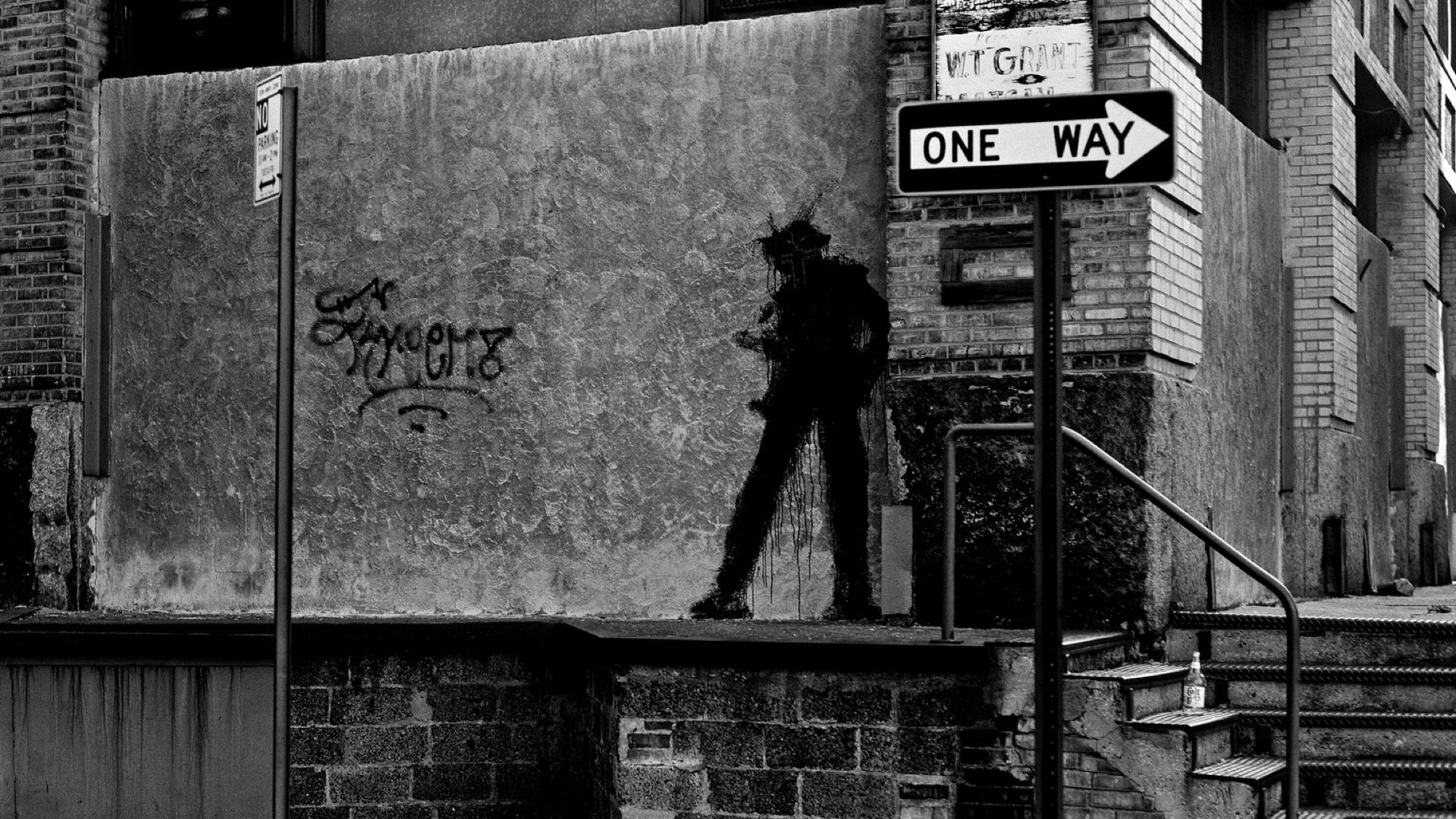
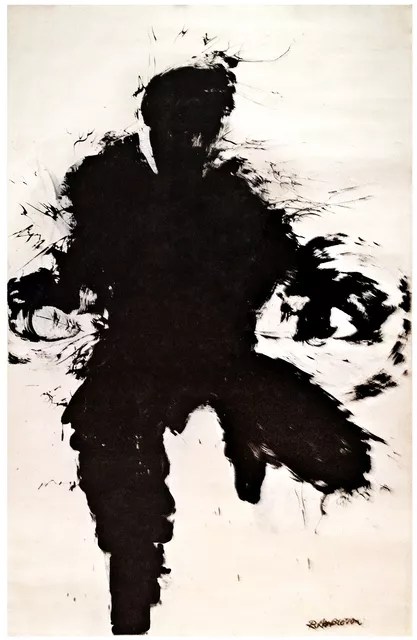
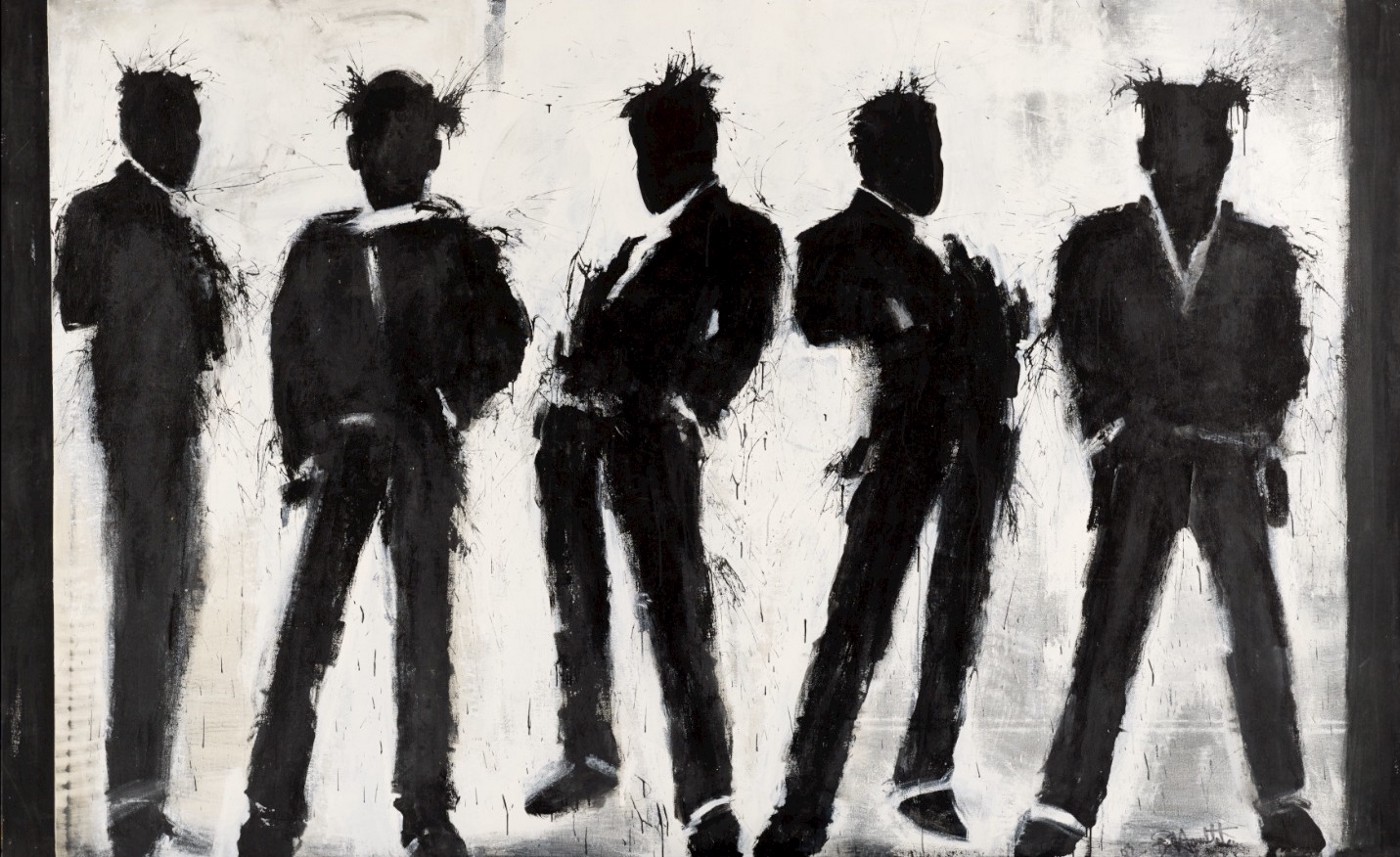
Richard Hambleton (1952 – 2017)
Richard is another artist who captured my attention with the energy in his work, especially the black shadow figures. Richard was born in Tofino, Vancouver Island, BC and relocated to NYC in the late ’70s. Richard Art Hambleton, the Godfather of Public Art, used the urban canvas to evoke a public reaction.
In the 1980s, Richard Hambleton was the Shadowman, a spectre in the night who painted hundreds of startling silhouettes on the walls of Manhattan and, along with Keith Haring and J.M. Basquiat, sparked the street art movement. At the height of his first success, Hambleton was featured in LIFE magazine and acclaimed at the Venice Biennale. Critics revered him as a definitive American Pop-Expressionist artist. But uncomfortable with his success, he alienated those around him, from art dealers to close friends. Finally, after drug addiction and homelessness sent him spinning out of the art scene for 20 years, the Shadowman got a second chance. Unfortunately, Richard’s addiction took over his life. Shadowman (Documentary, 2017) Here
Directed by Oren Jacoby. With Richard Hambleton, Andrew Valmorbida, Mette Madsen, and John Woodward.
Work in progress
I added more colour drips to the canvas. The other paint was also water-based matt light blue colour. Unlike the wall paint I used initially, this paint is suitable for interior and exterior use. However, the drips are less fluid than I tried to achieve to create the energy of the painting. The paint for the external environment would hold the fullness of the drips and not go flat, as happened during the experiment.
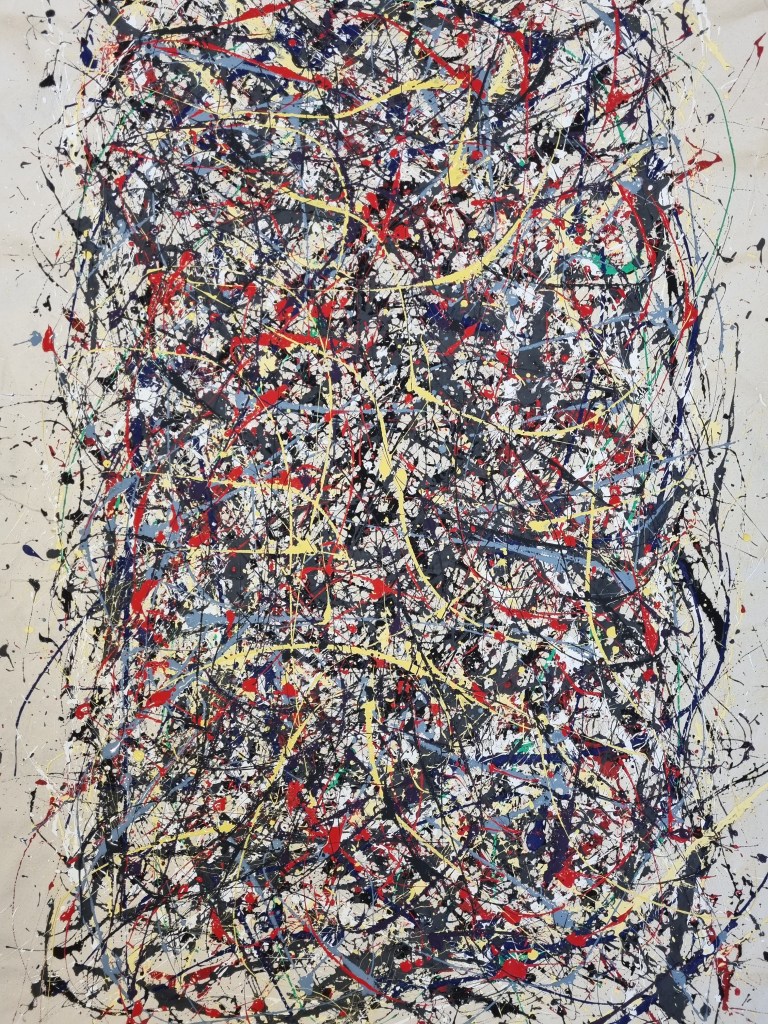
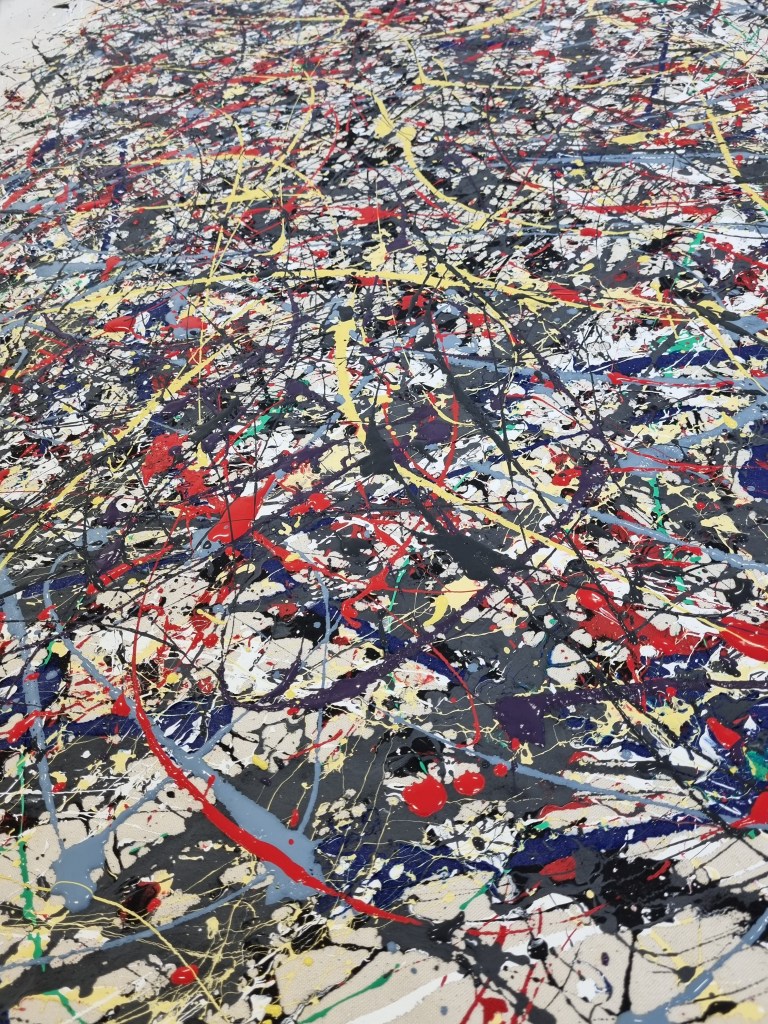
Unfortunately, I diluted the paint too much and spilt the white colour while applying it onto the canvas. I tried to soak it up with a tissue without interfering with the created pattern.
I managed to soak out the excess paint. However, the colour absorbed the canvas, so I dripped more layers of paint to disguise the accident.
Bibliography
NCGSArt, (2009), Jackson Pollock Action Painting. [Film]. Online, Available at (89) Jackson Pollock Action Painting – YouTube [ Last accessed 11th November 2022]
Hunt, T. (2018). The Hippies Were Right: It’s All about Vibrations, Man! [Online]. Scientific American. Last Updated: 05th December. Available at: https://blogs.scientificamerican.com/observations/the-hippies-were-right-its-all-about-vibrations-ma [Last accessed 11th November 2022].
Guthrie, C. E. (2021). Jackson Pollock. [Online]. EDS. Available at: https://eds.p.ebscohost.com/eds/detail/detail?vid=1&sid=9f309fdc-5440-4504-a6ed-92545a71a550%40redis [Last accessed 11th November 2022].
The Art Assignment, (2016). The Case for Abstraction, [Online] PBS Digital Studios, Available at (89) The Case for Abstraction | The Art Assignment | PBS Digital Studios – YouTube, [Last Accessed 12th November 2022]
Hilton K. (1999). Jackson Pollock & the New York School, II. EDS. Vol. 17(Issue 6,), p.p1. [Online]. Available at: https://eds.p.ebscohost.com/eds/detail/detail?vid=6&sid=d44b212f-9e05-4ea7-989d-99e0570e6e1d%40redis [Accessed 25th November 2022].
Adami, E., Diamantopoulou, S. and Lim, F.V. (2022) ‘Design in Gunther Kress’s social semiotics’. London Review of Education, 20 (1), 41. DOI: https://doi.org/10.14324/LRE.20.1.41. [Last accessed 26th November 2022]
The Artist Editorial. (2021). 12 Unknown Facts About Mark Rothko. [Online]. The Artist. Last Updated: 25th October 2021. Available at: https://www.theartist.me/art/12-unknown-facts-about-mark-rothko/ [Last accessed 26th November 2022].
 Milena (Filipova) Smith BA (Hons) Fine Art 2022/2023
Leave a comment